

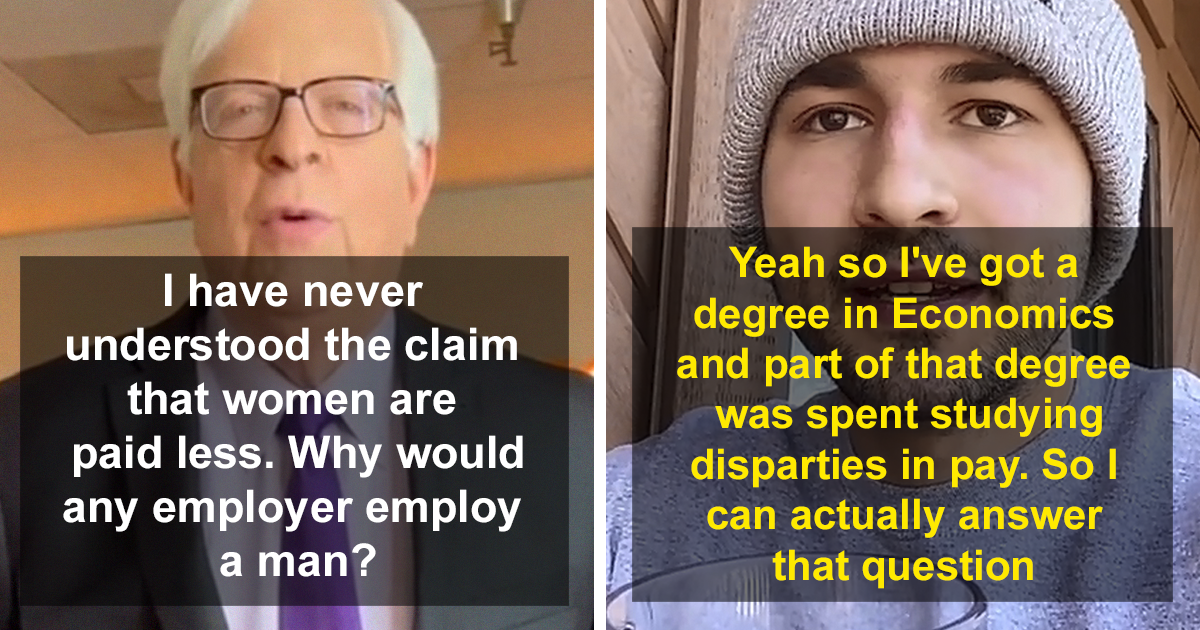
The internet loves a complicated economic debate almost as much as it loves compressing that debate into a video shorter than the time it takes to microwave leftover pizza. In 2021, economics graduate James Ray went viral after responding to a familiar claim about the gender pay gap: if women truly cost employers less than men, profit-hungry companies would simply hire women and enjoy the bargain.
Ray’s response was fast, pointed, and built around a basic lesson from labor economics: markets do not operate in a vacuum filled with perfectly informed employers, identical workers, frictionless hiring, and absolutely no bias. Real labor markets are messy. Employers can discriminate. Customers and coworkers can carry preferences that influence hiring. Workers cannot instantly move to every better-paying job. Caregiving responsibilities shape availability. Promotions depend on subjective judgments. In other words, the market is not a giant spreadsheet that automatically deletes unfairness before lunch.
The clip became popular because it punctured an argument that sounds clever until its assumptions are examined. Yet the full gender pay gap cannot be explained in less than a minute. To understand it properly, we need to separate several questions that are often tossed into one argumentative blender.
What Was the Viral Economics Argument About?
The original exchange centered on an argument associated with conservative media content: if employers could pay women less for equally productive work, companies seeking lower labor costs would hire only women. Competition would then raise women’s wages or eliminate discriminatory employers. Therefore, the argument concludes, a persistent gender pay gap cannot reflect discrimination.
Ray objected because this reasoning assumes the conclusion it is trying to prove. It imagines employers care only about labor cost and productivity, possess perfect information, face no customer pressure, and make decisions without stereotypes. The original story reported that Ray used his economics training to challenge the idea that profit incentives alone make discrimination impossible.
First, Define the Gender Pay Gap
The Raw Gap Is Not a Same-Job Comparison
The broad or “unadjusted” gender pay gap compares the earnings of women and men across a defined population. It does not automatically compare a woman and a man with the same title, employer, experience, schedule, performance, and responsibilities. That distinction matters because critics often attack the broad statistic for failing to answer a question it was never designed to answer.
Different Methods Produce Different Numbers
There is no single magical pay-gap percentage because researchers measure different groups and different kinds of earnings. According to the U.S. Bureau of Labor Statistics, women working full-time in wage and salary jobs had median weekly earnings equal to 82.7% of men’s in 2024. Their median weekly earnings were $1,043, compared with $1,261 for men. Among hourly-paid workers, however, women’s median hourly earnings were 91% of men’s.
A Pew Research Center analysis that included full-time and part-time workers found that women’s median hourly earnings were 85% of men’s in 2024. Among workers ages 25 to 34, the ratio was much narrower at 95%. Meanwhile, the Census Bureau’s annual-income measure for full-time, year-round workers placed the 2024 female-to-male earnings ratio at 80.9%. These figures are not contradictions. They use different surveys, populations, definitions, and time units.
That is why saying “the number changed, so the gap is fake” is like claiming rain is fake because one app reports inches and another reports millimeters. Before comparing results, check what was measured.
Does “Equal Pay” Mean Every Woman Earns Less Than Every Man?
It does not mean employers may legally hand a male employee a larger salary merely because he is male. The Equal Pay Act requires equal pay for substantially equal work in the same workplace, with job contentnot decorative job titlesdetermining whether roles are substantially equal. The law covers salary, overtime, bonuses, stock options, benefits, and other forms of compensation. Title VII separately prohibits sex discrimination in compensation.
Illegal unequal pay can contribute to the overall gap, but the broad gap also reflects how people enter occupations, receive assignments, gain experience, take leave, work overtime, and move into leadership. The difference between those concepts is not an excuse to ignore the gap. It is the beginning of analyzing it correctly.
Why Wouldn’t Companies Hire Only Lower-Paid Women?
Discrimination Can Be Economically Costly and Still Persist
A discriminatory preference can function like any other preference for which someone is willing to pay. An employer might knowingly sacrifice productivity or accept higher labor costs to maintain a male-dominated team. If enough decision-makers share that preference, competition may weaken discrimination without eliminating it.
Bias can also come from outside the executive suite. A business may believe customers prefer male salespeople, investors trust male founders, or clients respond better to male advisers. Those beliefs may be exaggerated or wrong, but they can still affect hiring and pay. A biased market does not become unbiased merely because a textbook introduced a supply curve.
Employers Do Not Perfectly Observe Productivity
Hiring is a forecast. Managers estimate future performance from résumés, interviews, recommendations, and signals. When information is incomplete, stereotypes can sneak into the forecast. A manager may assume a mother will be less available, a young woman will soon take leave, or a man is more “leadership material.” Even when such assumptions are statistically sloppy and ethically embarrassing, they can influence offers and promotions.
Research on promotion decisions has found that subjective assessments of “potential” can contribute to gender gaps even when women later outperform male colleagues. That is an especially expensive form of bias: the organization pays for prejudice and misses talent at the same time.
Workers Cannot Move Costlessly Between Jobs
Competitive-market stories often assume an underpaid worker can immediately take a better offer elsewhere. Real people have leases, school schedules, health insurance, spouses with jobs, aging parents, commute limits, and an understandable reluctance to relocate three states away for a manager who uses the phrase “we’re a family here.”
What Actually Produces the Gender Earnings Gap?
Occupation and Industry
Women and men remain unevenly distributed across occupations and industries. Jobs dominated by women often pay less than jobs dominated by men, and high-paying technical, executive, and certain trade roles remain disproportionately male. Field of study contributes too, although education alone does not erase the gap. Census research has found sizable earnings differences even among graduates at similar education levels, with college major, occupation, and industry explaining portions of the difference.
Hours, Overtime, and the Price of Constant Availability
Some jobs reward long or inconvenient hours at a disproportionate rate. Working 20% more hours may produce much more than 20% additional pay because the employee is available at night, on weekends, or whenever a client panics about a presentation font.
Economist Claudia Goldin has argued that the remaining gap among many highly educated workers is closely connected to how employers reward temporal flexibility. When firms pay a large premium for continuous availability and inflexible schedules, the partner who handles more family responsibilities often accepts a more flexible and less highly rewarded role. Redesigning work so employees can substitute for one another and hand off clients can reduce that premium.
The Child Penalty
Parenthood affects mothers’ and fathers’ earnings differently. NBER research using U.S. data from 1968 through 2020 found that employment and earnings moved similarly for women and men before a first child, then diverged sharply afterward. The estimates associated parenthood with a 25% reduction in women’s employment and a 33% reduction in women’s earnings relative to men, with effects persisting over time.
This does not mean children mechanically reduce skill. It reflects changes in hours, leave, job choice, travel, commuting, promotions, and who becomes the household’s emergency contact for every fever, snow day, and mysteriously missing left shoe. Fathers may receive a wage boost or maintain their trajectory, while mothers are more likely to absorb career interruptions.
Promotion and Managerial Discretion
Management data reveal that the gap is not confined to low-paid work. A Government Accountability Office analysis found large differences among full-time managers and substantial variation by industry, age, race, education, marital status, and parenthood. The agency emphasized that its descriptive figures did not by themselves prove discrimination, which is exactly the kind of statistical caution social media debates tend to leave at the door.
What the One-Minute Explanation Got Right
Ray’s strongest point was not that one statistic proves every cause. It was that a simplistic profit argument cannot disprove the gender pay gap or the possibility of discrimination. Competitive pressure can reduce unfair practices, but it does not guarantee an instant, complete correction when markets contain bias, incomplete information, search costs, unequal caregiving, and institutional habits.
What Can Narrow the Gender Pay Gap?
Make Compensation Systems Visible
Employers can publish salary ranges, define bonus criteria, conduct regular pay audits, and correct unexplained differences. Transparency does not make every salary identical, but it makes suspicious patterns harder to hide behind “market rate,” the corporate equivalent of waving a smoke bomb and leaving the meeting.
Reward Results Without Worshiping Face Time
Flexible schedules, predictable hours, remote-work options, job sharing, and reliable handoffs can reduce the premium attached to being constantly available. The goal is not to eliminate demanding work. It is to distinguish genuinely necessary availability from traditions maintained because someone in 1997 owned a pager.
Treat Caregiving as an Economic Issue
Affordable child care, paid family leave, predictable scheduling, and meaningful parental leave for fathers can reduce the career penalty attached to care. When men are encouraged and expected to take leave, employers have less reasonlegitimate or otherwiseto view women as the default caregivers.
Standardize Hiring and Promotion
Structured interviews, clear performance rubrics, documented promotion criteria, and diverse review panels reduce the room available for “gut feeling.” Guts are excellent for digesting tacos. They are less reliable for evaluating leadership potential.
Experiences Behind the Statistics: What the Debate Looks Like in Real Life
The following examples are composites based on common workplace patterns, not claims about specific individuals.
The Two Analysts Who Start Together
Imagine Maya and Ben joining a financial firm in the same month with similar credentials. Their salaries begin nearly equal. Ben is assigned a client who schedules late calls and travels frequently. Maya is assigned an internal account after a manager assumes she would prefer stability. Nobody cuts Maya’s salary because she is a woman. Yet Ben receives more billable hours, stronger client exposure, and a larger bonus. Two years later, the pay gap looks like a performance difference, although an early subjective assignment helped create the performance record being measured.
The Parenthood Fork in the Road
Now picture Elena and Marcus, married engineers with a new baby. Child care closes at 6 p.m., and both employers occasionally demand late work. Marcus earns slightly more, so the family decides Elena will choose the flexible role. The decision is rational for their household. It also increases Marcus’s experience, raises his promotion odds, and widens the earnings difference that shaped the original decision. A small gap becomes a feedback loop wearing sensible shoes.
The Salary-History Echo
Danielle was underpaid early in her career. At each new job, recruiters ask what she earned before and offer a modest percentage increase. Her original disadvantage follows her like an unwanted subscription. A male applicant with the same current skills but a higher salary history receives a larger offer because the employer treats previous pay as evidence of market value. No one at the final company created the first gap, but its hiring process imports and compounds it.
The Promotion Meeting
Priya and Daniel are both candidates for director. Priya’s reviews praise her results but describe her as not yet displaying enough executive presence. Daniel’s reviews call him a high-potential leader despite a comparable record. The language sounds neutral, yet one candidate is judged mainly on proven performance while the other receives credit for an imagined future. Unless the company tests whether “potential” predicts results, the label can become a polished container for bias.
The Hourly Worker With No Schedule Control
Tasha works in retail and wants more hours, but her schedule changes weekly. She cannot accept every last-minute shift because she shares child care with relatives. A male coworker with fewer care constraints collects more overtime and becomes the obvious choice for shift supervisor. Their hourly rate may be identical, meaning no same-job pay violation is visible. Their annual earnings and advancement opportunities still separate because control over time is itself an economic resource.
These experiences show why the gender pay gap is neither a single villain nor an imaginary number. It can emerge through direct discrimination, uneven assignments, opaque promotion systems, caregiving constraints, occupational sorting, and rewards for availability. Often the process contains no dramatic memo saying “pay women less.” It is built from dozens of ordinary decisions that appear harmless when viewed alone.
Conclusion: One Minute Can Start the Conversation, Not Finish It
The viral economics explanation succeeded because it challenged an overly tidy myth: that competition automatically prevents discriminatory outcomes. Markets are powerful, but they are built from human decisions, institutional rules, family arrangements, and imperfect information. They can punish bias in some circumstances and preserve it in others.
The best analysis does not claim that every cent of the raw gender pay gap represents illegal discrimination. It also does not pretend that adjusting for occupation, hours, or parenthood makes the issue meaningless. Those factors reveal the mechanisms through which different earnings outcomes develop.
The productive questions are straightforward: Which gap is being measured? What population does it cover? How much is connected to working hours, occupation, experience, caregiving, promotion, and discrimination? Which workplace structures widen those differences, and which reforms reduce them?
Answering all of that takes longer than a TikTok. Fortunately, it is still shorter than most office meetings that could have been an email.
Note: Gender pay-gap estimates vary because agencies and researchers use different surveys, worker populations, earnings definitions, and time periods. The figures above should be interpreted according to their stated methodology rather than treated as interchangeable.