

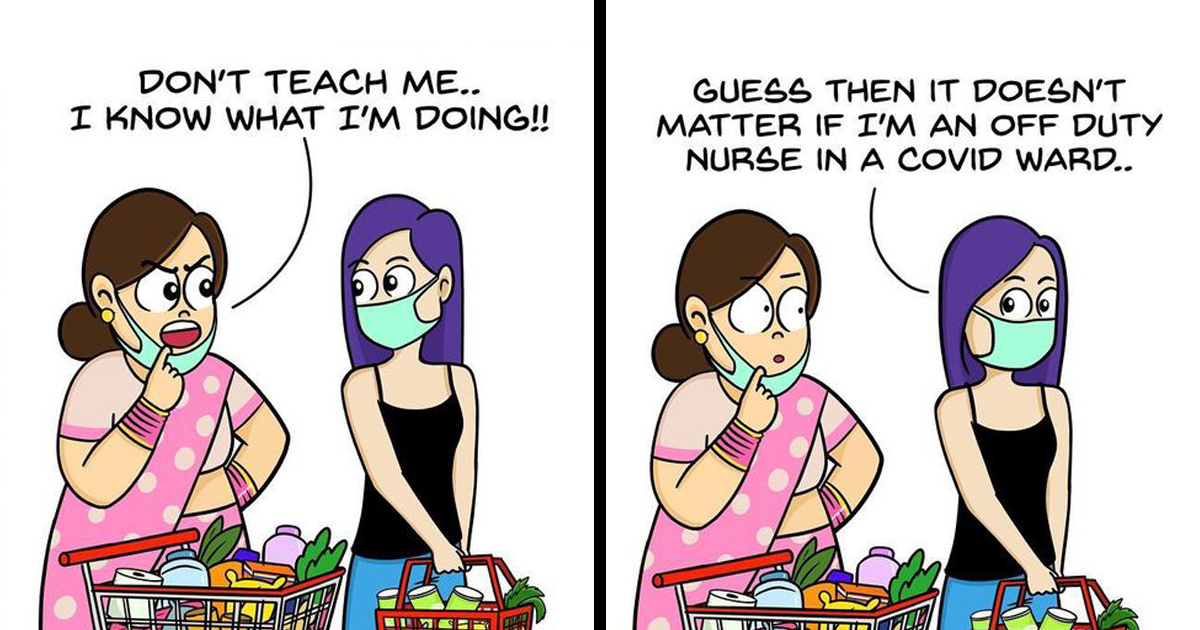
Adult life is full of dramatic moments. Unfortunately, most of them involve an empty refrigerator, a dying phone battery, a forgotten password, or the discovery that the “quick five-minute task” has somehow eaten an entire afternoon. These ordinary disasters may not earn us movie deals, but they are perfect material for funny everyday life comics.
Indian comic artist Amby Vaingankar has built her work around precisely these small, recognizable experiences. Known through her online comic page and the handle gotta_sketchum_all, she transforms relationships, family conversations, creative struggles, awkward thoughts, and the general confusion of adulthood into colorful visual jokes. The 45 comics in this collection work because they do not pretend life is organized. They understand that most of us are improvising while trying to look as though we read the instructions.
Some strips are silly, some are unexpectedly sweet, and others are so accurate that laughing may feel suspiciously like being personally attacked. Together, they show how a talented cartoonist can turn everyday inconvenience into a shared experienceand make thousands of strangers say, “Wait, I do that too.”
Meet Amby Vaingankar, the Artist Behind the Comics
Amby is a self-taught artist whose comics are inspired primarily by her own life. Her recurring cast is not assembled from distant fantasy kingdoms or secret superhero organizations. It includes the people closest to her, particularly her mother and romantic partner, along with a cartoon version of Amby herself.
She began publishing comics in 2017, but drawing had been part of her life for much longer. As a child and student, she doodled whenever paper and a pen were available. Newspapers, textbooks, and even money could apparently become emergency sketchbooks. Years of casual drawing helped her develop a recognizable style before she ever treated cartooning as a serious online project.
Her technical journey was refreshingly unglamorous. She first drew on paper, photographed the result, and posted it online. Later, she discovered a drawing app and spent about a year creating comics directly on a smartphone with her fingers. Only after the audience began growing did she invest in a tablet. It is an encouraging origin story for beginners who believe artistic success requires a studio containing seventeen monitors and a chair designed by NASA.
By the time she was profiled in 2021, Amby had been making comics for more than four years and had attracted over 129,000 Instagram followers. Her creator page describes the project as comics based on “day-to-day relatable screwups,” which may be one of the most honest artistic mission statements on the internet.
Why These Everyday Life Comics Feel So Relatable
They Find Comedy in Ordinary Adult Problems
Relatable comics rarely need complicated plots. The funniest setup may be nothing more than a person entering a room confidently and immediately forgetting why. Another comic might begin with ambitious plans for the day and end with the character wrapped in a blanket, eating snacks, and watching something she has already seen twice.
Amby understands that adulthood is less a smooth journey toward wisdom and more a collection of strange administrative duties. You pay bills, answer emails, make appointments, forget appointments, and reward yourself for surviving the appointments. By exaggerating familiar reactions, she converts routine frustration into comedy.
The exaggeration matters. A minor inconvenience can become an emotional apocalypse inside a comic panel. A character may collapse dramatically after one awkward conversation or react to an unexpected expense as though the economy has personally declared war. The response is absurd, yet the feeling underneath it is recognizable.
Her Mother Is Both Family and a Professional Roaster
Some of Amby’s favorite strips feature her mother, although the cartoon version of Mom is not always gentle with the artist’s dignity. Family members have a special talent for identifying our weaknesses with the speed and accuracy of advanced radar. They know our habits, old embarrassments, questionable fashion eras, and every confident prediction that later went spectacularly wrong.
These mother-daughter comics gain warmth from that familiarity. The jokes may involve teasing, blunt observations, or a perfectly timed response that defeats Amby in a single panel. Beneath the roasting, however, is the comfort of a relationship in which both people know each other extremely well.
The result is affectionate comedy rather than cruelty. Readers may recognize their own parents, siblings, or relatives in the exchanges. Every family has at least one person capable of ending an argument with a sentence that is both devastating and annoyingly correct.
Relationships Are Romantic, Messy, and Occasionally Ridiculous
Amby has also drawn from the experience of a long-distance relationship. That creates plenty of material: missed physical closeness, video calls, digital misunderstandings, affectionate messages, strange schedules, and the challenge of making ordinary moments feel shared from far away.
Instead of presenting romance as a permanent sunset filled with coordinated outfits, her comics allow couples to be playful and awkward. Love can mean sincere emotional support, but it can also mean sending a terrible picture at the perfect moment or arguing about something so minor that neither person remembers how the debate started.
This mixture of affection and foolishness makes the relationship comics believable. Healthy intimacy is often less about performing perfection and more about finding someone who accepts your weird routinesand develops new jokes about them.
A Colorful Style Built for Quick Visual Storytelling
Amby’s comics use bright colors, expressive faces, recognizable characters, and compact sequences. The drawings are approachable rather than overloaded with detail, allowing readers to understand the situation quickly. A raised eyebrow, exhausted posture, suspicious glance, or dramatically open mouth can communicate the emotional setup before the dialogue delivers the punchline.
This is one of the special strengths of comics. Readers actively connect one panel to the next, imagining the movement, timing, and missing moments between them. A pause represented by a silent panel can be as important as a paragraph of dialogue. Facial expressions and body language may tell one story while the words tell another.
Amby often develops additional ideas while drawing. A basic joke may gain an alternate ending, an extra reaction, or an entirely new comic. She has also included bonus panels for regular followers who know to continue scrolling after the apparent conclusion. It rewards attentive readers and turns the audience into participants in a small recurring game.
That relationship between artist and reader is essential to the appeal of webcomics. A strip is published, followers react, comments add new jokes, and the creator learns which experiences resonate. The finished comic may be short, but the conversation around it can keep expanding.
The Surprisingly Demanding Work Behind a Simple Comic
A short comic can be consumed in seconds, but producing it may require hours. Amby has said that a strip can take approximately two to four hours when she remains focused. Focus, however, must survive several natural predators, including snacks, procrastination, and ideas arriving at three in the morning.
Some comics stretch across two days because the creative process refuses to follow a sensible schedule. Her fastest project came from a follower’s challenge to make a pizza and create a comic about making it within one hour. That combines cooking, drawing, storytelling, and deadline panicessentially a tiny reality show with carbohydrates.
Art block can be especially frustrating because comics have become an important part of her daily life. At the same time, a strong idea can create an immediate burst of excitement. When inspiration appears, she may begin working regardless of the hour. This tension will sound familiar to many creative people: no ideas when time is available, twelve ideas when everyone else is asleep.
Amby has described comic-making as something that brings her happiness and helps her process life. The fact that other people laugh and relate is an additional reward. That attitude helps explain why the strips feel personal without becoming overly polished or emotionally distant. They are not manufactured observations from a committee. They come from someone noticing the comedy in her own day and deciding to draw it.
Why Funny Webcomics Spread So Easily
Everyday humor has a long history in comic art. Long before social media, newspaper strips found jokes in marriage, work, neighbors, family routines, embarrassing mistakes, and repetitive daily obligations. Digital platforms changed the distribution system, but the basic pleasure remains familiar: readers enjoy seeing ordinary behavior reflected back at them with sharper timing and funnier expressions.
Webcomics also fit naturally into visual social platforms. A reader can understand the premise quickly, enjoy the punchline, and share the strip with the exact friend who always cancels plans to stay home. A relatable comic becomes more than entertainment; it becomes a message. Sending it can mean, “This is us,” “You did this yesterday,” or “I have found documentary evidence of your behavior.”
Visual posts frequently earn strong engagement online because they demand less initial effort than a long block of text. A colorful comic can attract attention while someone scrolls, yet still offer enough narrative detail to reward a slower look. That balance makes short-form comics especially effective on Instagram and similar platforms.
The importance of webcomics has also been recognized beyond social media. The Library of Congress preserves born-digital comics, and professional cartooning organizations now maintain award categories for online work. Platforms such as WEBTOON organize enormous libraries that include comedy and slice-of-life stories alongside fantasy, romance, horror, and action. The webcomic is no longer merely a digital imitation of the newspaper strip. It is a major storytelling format of its own.
What to Notice While Viewing the 45 Comics
The Setup Is Usually Fast
Amby does not need a lengthy introduction to establish a familiar situation. The character’s goal is often visible immediately: she wants food, sleep, affection, productivity, privacy, or five peaceful minutes without someone commenting on her choices. Once that goal is clear, the comic can move directly toward the complication.
Expressions Often Deliver the Real Punchline
Read the dialogue, but watch the faces. The final reaction may turn an amusing exchange into a great one. Shock, defeat, smug satisfaction, and silent judgment are recurring tools in visual comedy, particularly when one character realizes she has confidently walked into a conversational trap.
The Characters Feel Consistent
Because the cast is based on real relationships, personalities continue from one strip to another. Readers learn who is likely to tease, who will overreact, who will remain calm, and who will introduce chaos. This consistency gives individual jokes the feeling of chapters from a larger life.
The Humor Is Personal but Not Exclusive
The specific events belong to Amby, yet the underlying emotions are widely understandable. You may not have experienced the precise conversation shown in a panel, but you probably know the embarrassment, excitement, irritation, hunger, or affectionate annoyance behind it. The details make the comic distinctive; the emotion makes it shareable.
The Experience of Reading 45 Painfully Familiar Comics
Reading a large collection of relatable comics produces a strange progression. At first, you are simply observing someone else’s funny life. You smile at a dramatic reaction, appreciate the timing, and continue scrolling with the calm confidence of an objective art critic.
Then a comic describes one of your private habits.
Perhaps the character rehearses a simple conversation in advance and still says the wrong thing. Maybe she plans to sleep early, checks her phone “for a minute,” and suddenly finds herself awake at an hour normally associated with bakers and paranormal activity. The comfortable distance between reader and subject disappears. You are no longer reviewing a cartoon. You are being investigated.
A few panels later, the collection may remind you of your family. A mother makes an observation that sounds suspiciously similar to something said in your own home. You remember an argument in which you had prepared excellent points, only to be defeated by one brutally practical sentence. The comic becomes funny twice: once because of the artist’s joke and again because it awakens a personal memory.
The relationship strips create another kind of recognition. Couples often imagine that their habits are unique until a cartoonist draws the exact same disagreement, affectionate ritual, or ridiculous exchange. Long-distance partners may especially recognize the emotional mixture of missing someone deeply while also using technology to annoy that person across several time zones.
By the middle of the gallery, the recurring characters begin to feel familiar. You anticipate the mother’s comeback. You recognize when Amby’s confidence is about to become a problem. You understand that an apparently normal activity may end in a snack-related emergency. This familiarity creates the comfortable rhythm of a sitcom, but the episodes fit inside a handful of panels.
The collection also offers a small release from the pressure to appear perfectly organized. Social media often displays spotless rooms, ambitious routines, flawless meals, and people who allegedly wake before sunrise because they enjoy it. Relatable comics provide a useful counterweight. They admit that motivation disappears, plans collapse, emotions become unreasonable, and adults sometimes eat strange combinations of food because grocery shopping did not happen.
That honesty is comforting. A joke about procrastination will not complete your unfinished work, but it may reduce the shame surrounding it long enough for you to begin. A comic about awkwardness cannot rewrite an embarrassing conversation, but it can remind you that awkward behavior is not a rare personal defect. It is practically a group activity.
Humor creates connection by exposing a recognizable truth in a safe, playful form. We laugh because the situation is exaggerated, but we also laugh because it is close enough to reality. The comic tells us that another person has experienced the same confusion and survived long enough to add speech bubbles.
After 45 pictures, the strongest impression is not that Amby’s life is unusually chaotic. It is that ordinary life becomes entertaining when someone observes it carefully. A delayed reply, an unwanted opinion, a late-night craving, or a failed attempt at productivity may seem insignificant while it happens. In the hands of a cartoonist, however, it becomes a complete story with character, tension, timing, and a final expression of absolute defeat.
That may be the secret of the collection. It encourages readers to notice the accidental comedy already happening around them. Your next minor disaster may still be inconvenient, but at least part of your brain can whisper, “This would make a good comic.”
Conclusion: Everyday Chaos Makes Excellent Art
Amby Vaingankar’s funny and relatable everyday life comics prove that artists do not need epic adventures to tell engaging stories. A family conversation, a relationship misunderstanding, a creative block, or a snack-fueled delay can become memorable when it is observed honestly and drawn with personality.
Her work succeeds because it combines colorful visual storytelling with recognizable emotions. Readers laugh at the characters, laugh at themselves, and occasionally reconsider how much personal information their daily habits have apparently leaked to cartoonists.
Most importantly, the comics make ordinary imperfection feel communal. Life may remain messy after the final panel, but it feels lighter when someone else understands the joke.
Note: The 45 images are best enjoyed in sequence, since recurring characters, visual reactions, and occasional bonus panels build on the artist’s ongoing relationship with her audience. All featured artwork should remain credited to Amby Vaingankar and its original publishing accounts.