

Some television shows ask you to suspend disbelief. Mockumentaries ask you to believe that a camera crew somehow received unlimited access to an incompetent boss, a chaotic family, several ancient vampires, or an entire police department that should probably have its badges collected by lunchtime.
By combining documentary-style interviews, handheld camerawork, awkward silences, and suspicious glances aimed directly at the lens, the best mockumentary TV shows make fictional disasters feel wonderfully real. Characters can lie to the filmmakers, contradict themselves in confessionals, or expose their true feelings with one perfectly timed stare. The result is comedy that feels spontaneous even when every uncomfortable pause has been carefully planned.
Whether you love workplace sitcoms, supernatural comedy, true-crime satire, or family chaos, this list offers ten mockumentary series worth placing at the top of your watchlist. Clear the weekend, locate the snacks, and prepare to become emotionally invested in people who make terrible decisions while being filmed from three feet away.
What Makes a Great Mockumentary TV Show?
A mockumentary presents fictional events using the visual language of nonfiction filmmaking. Instead of a traditional sitcom setup, viewers often see shaky cameras, sudden zooms, talking-head interviews, and characters acknowledging the crew behind the lens. The format creates an illusion of authenticity while giving writers more ways to deliver jokes.
A character may confidently explain a brilliant plan during an interview, only for the next scene to reveal that the plan has already caught fire. Another character may say nothing at all and simply look at the camera as if asking the audience to call a responsible adult.
The strongest mockumentary comedies do more than use documentary techniques as decoration. They turn the camera into an invisible cast member. Characters perform for it, hide from it, flirt with it, manipulate it, and occasionally forget it is present. That tension between public behavior and private truth is where much of the humor lives.
The 10 Best Mockumentary TV Shows for Your Next Binge
1. The Office
The Office remains the gateway show for many mockumentary fans. Set inside the Scranton branch of the Dunder Mifflin paper company, the series transforms routine office life into a painfully recognizable comedy about management, ambition, friendship, romance, and meetings that absolutely could have been emails.
Michael Scott desperately wants to be seen as a beloved leader, entertainer, and mentor. Unfortunately, he usually achieves none of those goals at the same time. Around him, Jim quietly pranks Dwight, Pam tries to understand what she wants from life, and the supporting employees turn ordinary workplace irritations into ongoing personal feuds.
The documentary format is essential to the humor. Jim’s looks toward the camera frequently say more than a page of dialogue, while private interviews reveal how differently each employee interprets the same event. The early episodes can be more uncomfortable than cozy, but the series gradually develops into a warm ensemble comedy without losing its sharp edge.
Best for: Workplace humor, slow-burn romance, memorable supporting characters, and secondhand embarrassment strong enough to count as exercise.
2. Parks and Recreation
If The Office finds comedy in people enduring their jobs, Parks and Recreation finds it in people who occasionally care far too much about them. The series follows Leslie Knope, an energetic public servant working in the parks department of Pawnee, Indiana.
Leslie’s unstoppable optimism collides with budget problems, eccentric residents, political obstacles, and coworkers who range from deeply committed to aggressively uninterested. Ron Swanson distrusts government despite working for it, Tom Haverford treats every municipal event like a branding opportunity, and April Ludgate approaches customer service with the enthusiasm of a cat being offered a bath.
The show takes time to find its identity, but once its ensemble settles into place, it becomes one of television’s most generous comedies. Its characters are ridiculous without being disposable. Their friendships develop naturally, their careers change, and even Pawnee’s strangest traditions begin to feel oddly comforting.
Best for: Optimistic comedy, lovable ensembles, small-town absurdity, and viewers who believe waffles deserve their own section on the food pyramid.
3. Abbott Elementary
Abbott Elementary brings the workplace mockumentary into a Philadelphia public school, where dedicated teachers try to help their students while coping with limited resources, administrative confusion, and a principal whose confidence operates independently from her qualifications.
Janine Teagues begins as an enthusiastic young teacher convinced that determination can fix almost any problem. Her optimism is tested by malfunctioning facilities, bureaucratic obstacles, and veteran educators who have learned that caring deeply also requires patience, boundaries, and a reliable emergency snack drawer.
The series balances sharp jokes with sincere respect for teachers. It acknowledges institutional problems without turning every episode into a lecture. The camera catches workplace crushes, professional rivalries, questionable announcements, and tiny victories that feel meaningful because the characters genuinely care about their students.
Best for: Modern workplace comedy, warm character relationships, school humor, and jokes that can land before the principal finishes misusing a motivational quote.
4. What We Do in the Shadows
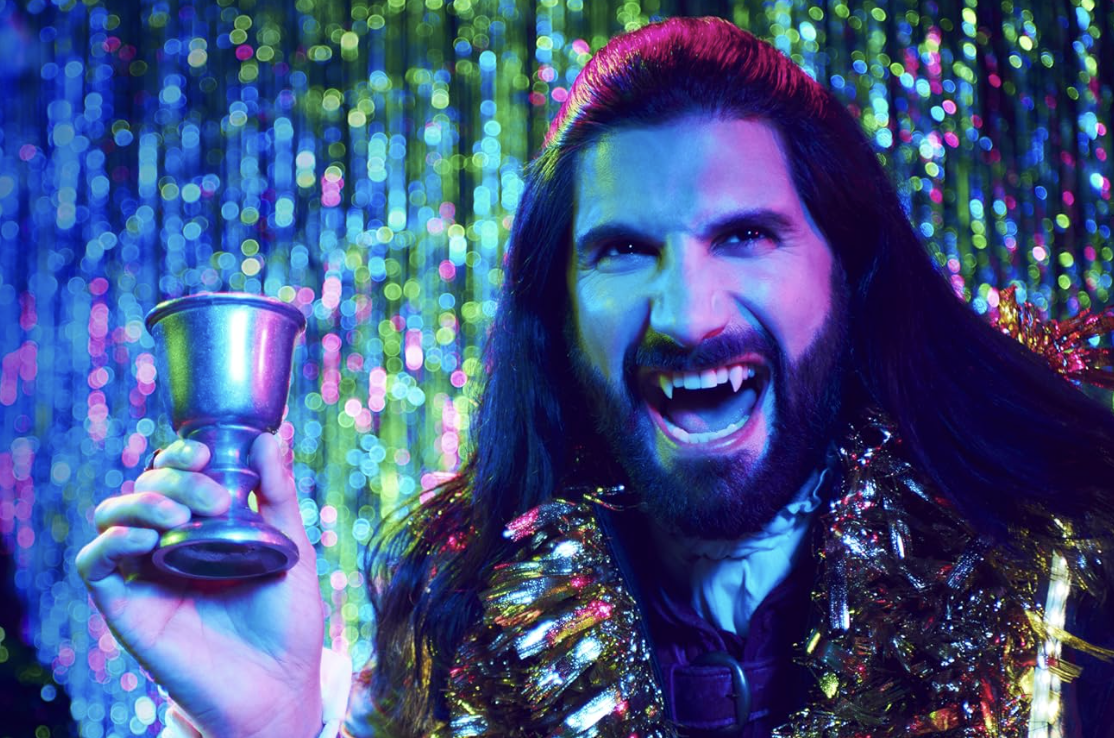
What We Do in the Shadows answers an important question: What would immortal vampires do after centuries of existence? Apparently, they would argue over household responsibilities, organize disastrous ceremonies, annoy their neighbors, and struggle with basic modern technology.
The series follows vampire roommates Nandor, Laszlo, Nadja, and Colin Robinson as they navigate life on Staten Island with Guillermo, Nandor’s long-suffering former familiar. The supernatural world is expansive, but the comedy often comes from treating extraordinary creatures like dysfunctional roommates who need a chore chart.
Its documentary crew follows the vampires into situations no sensible camera operator would approach, including dangerous rituals, nightclub disputes, and supernatural council meetings. The show also excels at elaborate language, visual gags, and committed performances that make even the most ridiculous mythology sound historically important.
Best for: Horror-comedy fans, supernatural absurdity, quotable dialogue, and anyone who has ever suspected that office small talk is a form of energy extraction.
5. Modern Family
Modern Family expands the mockumentary format beyond one workplace by following three connected households. The families differ in age, background, parenting style, and ability to complete a simple gathering without causing an avoidable misunderstanding.
Jay and Gloria navigate an age-gap marriage and a blended household. Claire and Phil raise three very different children while disagreeing about discipline, technology, and whether Phil’s latest idea is charming or likely to damage the garage. Mitchell and Cameron balance parenthood with two personalities that can turn a minor social event into a theatrical production.
The talking-head interviews allow relatives to explain their intentions, defend their mistakes, and confidently misrepresent conversations viewers have already witnessed. Although the comedy is broad, the emotional foundation is strong. Family members frustrate one another constantly, but their affection remains believable.
Best for: Family comedy, fast jokes, large ensembles, and viewers who enjoy watching a birthday party collapse with impressive logistical efficiency.
6. American Vandal
American Vandal applies the language of prestige true-crime documentaries to mysteries involving juvenile vandalism and high-school humiliation. The contrast sounds like a one-joke premise, but the series develops into a surprisingly thoughtful investigation of reputation, social media, adolescence, and the damage caused by public suspicion.
In the first season, student filmmakers Peter Maldonado and Sam Ecklund investigate whether class clown Dylan Maxwell was responsible for spray-painting obscene images on faculty cars. Every interview, timeline reconstruction, digital clue, and dramatic revelation is presented with the seriousness of a major criminal case.
The humor comes from meticulous execution rather than simple vulgarity. The teenage investigators are observant but inexperienced, witnesses are unreliable, and seemingly trivial details acquire enormous importance. Beneath the parody, the series asks how easily a person can become trapped by the identity others have assigned to them.
Best for: True-crime fans, mystery lovers, high-school comedy, and viewers who appreciate absurd questions investigated with professional-grade graphics.
7. Documentary Now!
Documentary Now! is the ideal mockumentary series for viewers who already love documentaries. Instead of following one continuing cast and setting, the anthology adopts a new nonfiction style in nearly every story, lovingly parodying celebrated documentary films and filmmaking traditions.
Fred Armisen, Bill Hader, and an impressive collection of guest performers disappear into characters drawn from political reporting, music documentaries, food films, artistic profiles, and intimate character studies. Helen Mirren introduces the fictional productions with such authority that the absurdity becomes even funnier.
The show’s greatest strength is its craftsmanship. Costumes, lenses, editing rhythms, narration, locations, and musical choices frequently mirror the source material with remarkable precision. Familiarity with the original documentaries adds another layer, but the episodes are carefully built comedies that can still work on their own.
Best for: Film buffs, anthology fans, sophisticated parody, and anyone who wants a comedy binge that may accidentally expand a documentary watchlist.
8. Reno 911!
Long before every fictional workplace seemed to have a documentary crew, Reno 911! was sending cameras into the daily operations of a spectacularly unprepared sheriff’s department. The series parodies reality police programs through loosely structured scenes, improvisation, outrageous suspects, and officers who often create more trouble than they prevent.
Lieutenant Jim Dangle leads a collection of deputies whose personal insecurities regularly interfere with law enforcement. Routine calls spiral into confusion, public demonstrations go badly, and official briefings reveal that nobody has learned anything from the previous emergency.
The humor is deliberately chaotic and frequently inappropriate, so it is less gentle than many workplace mockumentaries. Its improvisational energy gives scenes a sense of danger: performers appear to be discovering the disaster at the same moment as the audience.
Best for: Improvised comedy, police-show parody, outrageous characters, and viewers who prefer their fictional law enforcement with absolutely no quality control.
9. Trailer Park Boys
Trailer Park Boys follows Ricky, Julian, and Bubbles through life in Nova Scotia’s fictional Sunnyvale Trailer Park. Their plans usually involve quick money, questionable legality, and confidence levels unsupported by preparation.
The rough visual style makes the series feel as though a documentary crew simply wandered into the park and became unable to escape. Characters argue with the filmmakers, attempt to manage their public images, and continue speaking to the camera while criminal schemes collapse behind them.
Ricky’s mangled expressions, Julian’s permanent drink, and Bubbles’ mixture of innocence and exasperation create an unusual comic rhythm. The show can be crude and chaotic, but its long-running appeal comes from the loyalty among its central characters. They may make terrible choices, but they rarely abandon one another when consequences arrive.
Best for: Cult comedy, low-budget charm, antiheroes, creative misuse of language, and schemes with a success rate of approximately zero percent.
10. Jury Duty
Jury Duty pushes the mockumentary concept into experimental territory. Its original courtroom setup placed one unsuspecting participant inside a fictional civil trial surrounded by actors. The humor depended on carefully planned scenarios, improvisation, and the reactions of a real person who believed the proceedings were genuine.
James Marsden appears as an exaggerated version of himself, using celebrity privilege in increasingly absurd ways while the other jurors create problems that test the patience of Ronald Gladden, the show’s unwitting central figure. The later Company Retreat installment carries the documentary-style social experiment into a different setting.
What makes the series special is its surprising kindness. The joke is not simply that one person has been deceived. Much of the tension comes from watching that person respond to bizarre behavior with generosity, calm, and good humor. It becomes both a comedy and an accidental examination of character.
Best for: Reality-comedy hybrids, social experiments, elaborate improvisation, and viewers who enjoy elaborate chaos with an unexpectedly wholesome center.
How to Choose the Right Mockumentary Series
Start with The Office, Parks and Recreation, or Abbott Elementary when you want a character-driven workplace comedy. Choose Modern Family for domestic chaos, What We Do in the Shadows for supernatural silliness, or American Vandal when you want a mystery that is smarter than its ridiculous subject matter initially suggests.
Documentary Now! rewards familiarity with nonfiction filmmaking, while Reno 911! and Trailer Park Boys offer rougher, more improvisational comedy. Jury Duty is the best choice when you want something that blurs the boundary between scripted television and reality.
Episode length matters as well. A 20-to-30-minute comedy can turn “just one episode” into six episodes with alarming efficiency. Anthologies are easier to sample, while long-running ensemble sitcoms offer bigger emotional payoffs as relationships develop.
Bonus: What the Perfect Mockumentary Binge Actually Feels Like
A mockumentary binge often begins innocently. You choose one familiar episode while eating dinner because committing to a new drama feels like paperwork. Twenty minutes later, autoplay begins. Then another episode starts. Eventually, you realize you have spent an entire evening inside a fictional paper company or municipal department, and the characters now feel more familiar than several people in your phone contacts.
The format is unusually binge-friendly because it creates instant intimacy. Talking-head interviews make viewers feel like trusted confidants. Michael Scott explains why his latest management strategy is brilliant, even though everyone else has already identified it as a fire hazard. Leslie Knope shares an ambitious civic plan with complete sincerity. A teacher at Abbott quietly admits what really happened during a staff dispute. These private comments create the feeling that viewers know the characters better than their coworkers do.
Group viewing adds another layer. Mockumentaries produce highly specific reactions: the groan before an embarrassing speech, the laugh caused by a camera zoom, or the synchronized shout of “Do not say that” when a character is clearly about to say exactly that. Watching with friends turns every disastrous meeting and family gathering into a miniature sporting event.
For a themed binge night, choose three shows with different flavors rather than watching ten similar episodes in a row. Begin with the warmth of Abbott Elementary, move into the supernatural chaos of What We Do in the Shadows, and finish with an episode of American Vandal or Jury Duty. The format stays consistent while the subject matter shifts from classrooms to vampires to elaborate investigations.
Snacks should require minimal attention. Mockumentary jokes often hide in facial expressions, background action, or quick camera movements. This is not the ideal time to prepare a complicated recipe that demands constant stirring. Popcorn, pizza, chips, and anything that can survive an awkward pause are safer choices.
It also helps to resist skipping the quieter episodes. Ensemble comedies build their strongest emotional moments gradually. A small conversation in one season may give meaning to a major decision much later. The best binge is not only a race toward famous episodes; it is an opportunity to notice relationships, recurring jokes, and character changes that weekly viewers originally experienced over several years.
Finally, accept that mockumentary habits may follow you into real life. After enough episodes, you may glance toward an imaginary camera during a ridiculous meeting. You may mentally frame a family argument as a confessional interview. You may begin ranking coworkers according to which fictional documentary crew would follow them. This is normal. Probably.
The most satisfying part of the experience is discovering that these shows are rarely cynical all the way through. Their characters can be selfish, incompetent, dramatic, or impressively delusional, yet the strongest series eventually reveal affection beneath the embarrassment. The camera records the mistakes, but it also captures loyalty, growth, romance, and small acts of kindness. That emotional balance is what turns a funny premise into a show worth revisiting.
Final Thoughts
The best mockumentary TV shows make ordinary situations feel unpredictable and impossible situations feel strangely believable. From Dunder Mifflin’s conference room to Sunnyvale Trailer Park and the vampire residence of Staten Island, these series use documentary techniques to expose the distance between who people are and who they imagine themselves to be.
Begin with the title that best matches your sense of humor, but do not be surprised when one show leads to another. The camera is already rolling, the characters are oversharing, and your carefully planned bedtime is about to become a fictional concept.
Note: Streaming availability may vary by country, subscription plan, and date. Check your preferred service before planning a full-series binge.