

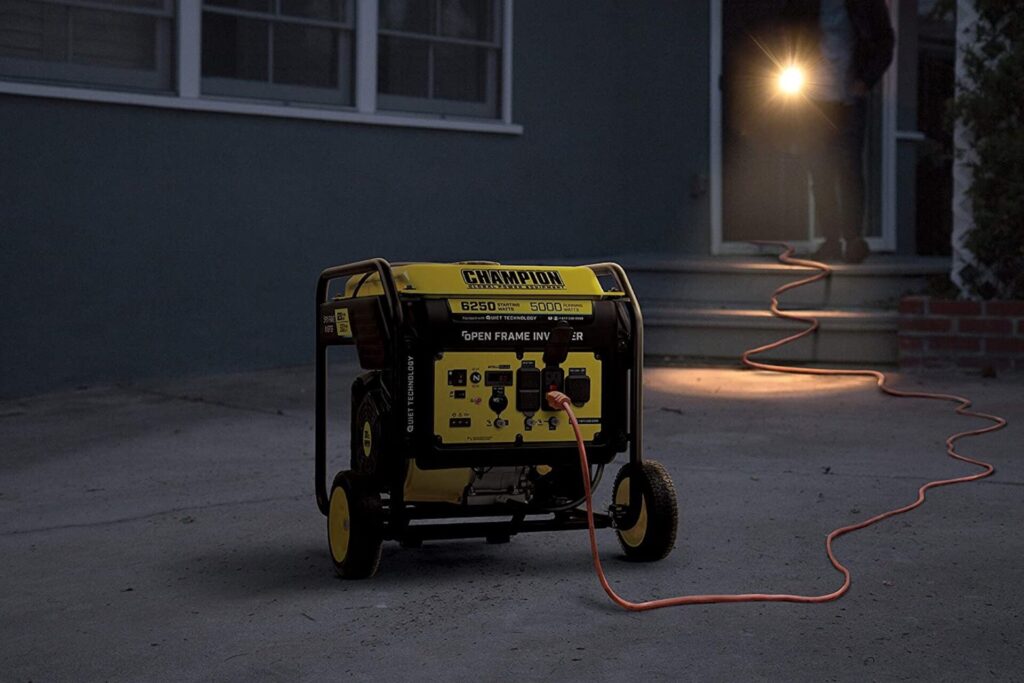
A power outage rarely arrives politely. It does not knock, check your calendar, or wait until the refrigerator is empty. It usually appears during the hottest afternoon, the coldest night, or the exact moment your sump pump decides it has career ambitions.
The best home generators keep essential appliances operating without creating new problems involving noise, fuel shortages, overloaded circuits, or unsafe exhaust. However, “best” means different things for different homes. A permanently installed standby generator may be ideal for automatic whole-house backup, while a portable tri-fuel model can provide strong emergency power at a lower upfront cost. Battery power stations offer another option for homeowners who value quiet operation, indoor usability, and solar charging.
This guide compares the strongest choices across those categories, using current manufacturer specifications, practical ownership considerations, and established U.S. generator-safety guidance.
Best Home Generators at a Glance
| Generator | Best For | Rated Output or Capacity | Fuel or Energy Source |
|---|---|---|---|
| Generac Guardian 18kW | Best overall standby generator | 18,000 running watts | Natural gas or propane |
| KOHLER 26RCA | Best premium whole-house generator | 26kW | Natural gas or propane |
| Champion 14kW Home Standby | Best value standby generator | 14kW propane; 12.5kW natural gas | Natural gas or propane |
| Westinghouse WGen9500TFc | Best portable home generator | 9,500 running watts on gasoline | Gasoline, propane, or natural gas |
| DuroMax XP13000HXT | Best high-output tri-fuel generator | 10,500 running watts on gasoline | Gasoline, propane, or natural gas |
| Honda EU7000iS | Best quiet inverter generator | 7,000-watt class | Gasoline |
| EcoFlow DELTA Pro Ultra | Best expandable battery backup | 7.2kW to 21.6kW; 6kWh to 90kWh | Grid, solar, EV charger, or generator |
| Jackery Explorer 5000 Plus | Best portable 120/240V power station | 7,200W output; 5,040Wh capacity | Grid or solar charging |
Our Picks for the Best Home Generators
1. Generac Guardian 18kW: Best Overall Standby Generator
The Generac Guardian 18kW occupies a practical middle ground between an essentials-only unit and an oversized system that could power a small moon base. Its 18,000-watt output is suitable for many medium-size homes, particularly when paired with load management that prevents several large appliances from starting simultaneously.
It runs on a permanent natural-gas or liquid-propane supply and starts automatically after utility power fails. That makes it especially useful for homeowners who travel frequently, rely on a sump pump, need dependable climate control, or simply do not want to wrestle with extension cords during a thunderstorm. Available remote-monitoring features also make it easier to check system status and maintenance alerts.
Best features: Automatic operation, strong dealer support, remote monitoring, weather-resistant enclosure, and enough power for many whole-home installations.
Consider before buying: Installation may require a concrete or composite pad, electrical work, gas-line upgrades, permits, and an automatic transfer switch. The equipment price is only one member of the final-cost family.
2. KOHLER 26RCA: Best Premium Whole-House Generator
The KOHLER 26RCA is designed for homeowners who want broad backup coverage rather than a carefully choreographed appliance rotation. Its 26kW rating can support heating and cooling equipment, pumps, kitchen appliances, electronics, and other major loads when the installation is sized correctly.
KOHLER says the unit can restore backup power in less than 10 seconds and offers a 90-second exercise option that reduces unnecessary weekly runtime. Remote monitoring is available through the company’s energy-management app. At a reported sound level as low as 56 dBA under specified conditions, it is also unusually neighborhood-friendly for a high-output air-cooled standby generator.
Best features: High output, quiet operation, durable enclosure, remote management, and strong support for larger homes.
Consider before buying: A 26kW generator consumes substantially more fuel at heavy loads than a smaller model. Confirm that the home’s natural-gas meter, regulator, or propane storage can supply the required volume before installation.
3. Champion 14kW Home Standby: Best Value Standby Generator
Champion’s 14kW standby generator is a sensible choice for homeowners who want automatic backup without paying for capacity they may never use. It produces 14,000 watts on propane and 12,500 watts on natural gas, enough for a carefully selected group of major systems in many small or medium-size homes.
Available packages include automatic transfer switches and load-management technology. The 24-volt starting system is designed to operate in very cold weather, while the manufacturer rates certain versions at approximately 62 dBA. That combination makes the Champion especially attractive in northern climates, where an outage can turn a comfortable house into a walk-in freezer with throw pillows.
Best features: Competitive capacity, automatic starting, cold-weather capability, bundled transfer-switch options, and relatively quiet operation.
Consider before buying: Its output is lower on natural gas than on propane. A professional load calculation is necessary if you expect it to start central air conditioning, an electric water heater, or a well pump.
4. Westinghouse WGen9500TFc: Best Portable Home Generator
The Westinghouse WGen9500TFc offers the flexibility many emergency plans need. It can run on gasoline, propane, or natural gas, allowing homeowners to switch fuels when one becomes difficult to find. On gasoline, it produces up to 12,500 peak watts and 9,500 running watts.
That is enough to operate a refrigerator, freezer, lights, communications equipment, furnace blower, sump pump, and selected 240-volt appliances when connected through an approved transfer switch or interlock. Remote electric start, a fuel gauge, a wheel kit, and a carbon-monoxide shutdown sensor make it easier to manage than a bare-bones jobsite generator.
Best features: Tri-fuel capability, 120/240V output, strong running wattage, remote start, and long gasoline runtime at reduced loads.
Consider before buying: It is heavy, loud compared with inverter generators, and must be moved outdoors before operation. Natural gas also produces less output than gasoline, so size the system using the wattage available from the fuel you actually plan to use.
5. DuroMax XP13000HXT: Best High-Output Tri-Fuel Generator
The DuroMax XP13000HXT is one of the most powerful practical portable options for residential backup. It delivers 13,000 peak watts and 10,500 running watts on gasoline, 12,000 peak and 9,500 running watts on propane, or 11,000 peak and 8,500 running watts on natural gas.
Those numbers provide useful breathing room for pumps, refrigerators, lighting circuits, a furnace, and selected cooling equipment. The tri-fuel design also helps homeowners avoid depending entirely on gasoline stations that may be closed or overwhelmed during a regional outage.
Best features: High output, three fuel choices, electric and remote starting, 120/240V service, CO alert technology, and a substantial gasoline tank.
Consider before buying: This is a large machine, not something most people will casually lift into a pickup. Plan its storage location, operating position, weather protection, fuel connections, and route to the transfer inlet before the sky turns green.
6. Honda EU7000iS: Best Quiet Inverter Generator
The Honda EU7000iS is the refined option for homeowners who value clean power, lower operating noise, and fuel efficiency more than maximum watts per dollar. It provides 120/240V inverter power suitable for sensitive electronics as well as household equipment.
Electric starting, Bluetooth monitoring, Honda’s CO-MINDER system, and an enclosed design make it considerably more polished than a conventional open-frame generator. It is a good match for refrigerators, freezers, lights, communications equipment, a furnace, and selected pumps or appliances managed through a transfer switch.
Best features: Stable inverter output, quiet operation, excellent fuel efficiency, electric start, app connectivity, and carbon-monoxide monitoring.
Consider before buying: The premium price is high for the wattage. Buyers primarily paying for raw output can find larger conventional generators for less, although those models may sound like a motorcycle arguing with a lawn mower.
7. EcoFlow DELTA Pro Ultra: Best Expandable Battery Backup
The EcoFlow DELTA Pro Ultra is not an engine generator. It is a modular battery-and-inverter system that can power appliances without gasoline, exhaust, oil changes, or the background soundtrack of internal combustion.
A single configuration provides 7.2kW of output and 6kWh of storage. The platform can expand to 21.6kW of output and as much as 90kWh of capacity, depending on system design. It can recharge from the grid, solar panels, compatible generators, or other supported sources and can integrate with EcoFlow’s Smart Home Panel 2 for automatic backup.
Best features: Silent operation, indoor usability, expandable storage, solar compatibility, app-based energy management, and no direct exhaust emissions.
Consider before buying: Batteries store a finite amount of energy. A 6kWh battery could run a 600-watt average load for roughly 10 hours before conversion losses, but a central air conditioner can consume that energy much faster. Capacity matters as much as output.
8. Jackery Explorer 5000 Plus: Best Portable 120/240V Power Station
The Jackery Explorer 5000 Plus combines a 5,040Wh battery with 7,200W of 120/240V output. That makes it capable of supporting significantly larger appliances than a typical camping power station while remaining movable between home-backup and off-grid uses.
It is particularly appealing to renters, homeowners avoiding permanent fuel systems, and households that want quiet overnight power for refrigeration, internet equipment, medical devices, lighting, or electronics. Solar-panel packages can extend its usefulness during multi-day outages when sunshine cooperates.
Best features: Split-phase output, strong inverter capacity, no engine exhaust, solar charging, and simpler maintenance than fuel-powered generators.
Consider before buying: The 5,040Wh base capacity is not equivalent to having 7,200 watts available all day. Output describes how much equipment can run at once; watt-hours describe how long it can run. Confusing the two is how a battery backup becomes an expensive night-light.
How to Choose the Best Generator for Your Home
Calculate Running and Starting Watts
List every appliance you want to operate during an outage. Add their continuous running watts, then account for the largest starting surge. Motors in air conditioners, refrigerators, well pumps, and sump pumps may briefly require considerably more power when they start.
Do not simply add the square footage of the house and choose the biggest generator in the store. Two similar-size homes can have completely different electrical demands. One may use natural-gas heating and cooking, while the other has an electric range, heat pump, water heater, well pump, and EV charger.
Choose Essential-Circuit or Whole-House Backup
A 7,000- to 10,000-watt portable generator may handle carefully managed essentials. Standby systems around 12kW to 14kW can cover major needs in smaller homes, while 18kW to 22kW models commonly support broader coverage. Large homes, multiple HVAC systems, or all-electric appliances may require 24kW to 26kW or more. These are general ranges, not substitutes for a professional load calculation.
Compare Fuel Availability
Gasoline is widely available but difficult to store for long periods. Propane stores more cleanly and can remain usable for years in a sound tank. Natural gas eliminates manual refueling but may be unavailable after certain disasters and usually reduces a portable generator’s maximum output.
Battery systems are quiet and easy to use, but their runtime depends on stored watt-hours and access to recharging. A hybrid approachbattery power overnight and a fuel generator for daytime chargingcan reduce noise and fuel consumption during long outages.
Check Transfer Equipment and 240V Support
Central air conditioners, electric dryers, well pumps, and many other large appliances require 240V. Confirm that both the generator and transfer equipment support the loads you intend to power.
A licensed electrician should install the transfer switch, generator inlet, or approved interlock used to connect a portable generator to household circuits. Never connect a generator to the home by plugging it into a wall outlet. That practice can backfeed utility lines, damage equipment, start fires, and endanger lineworkers. FEMA guidance identifies transfer switches as the safe method for isolating generator power from utility service.
Plan for Maintenance Before the Outage
Engine generators need oil checks, periodic oil changes, fresh fuel, battery maintenance, and scheduled test runs. Standby generators should generally receive professional service at least annually, even when they have not been used during an outage. Battery systems require less mechanical maintenance but still need firmware updates, temperature-appropriate storage, cable inspections, and periodic charging checks.
Essential Home Generator Safety
Operate every fuel-burning portable generator outdoors, at least 20 feet from the house, with the exhaust directed away from doors, windows, vents, garages, and neighboring buildings. Never run one in a garage, basement, shed, crawl space, enclosed porch, or carporteven when doors are open. Install working carbon-monoxide alarms inside the home, including near sleeping areas.
Keep the generator dry without enclosing it in an unsafe homemade box. Use a properly ventilated, fire-resistant running cover designed for the model. Connect appliances with heavy-duty, outdoor-rated cords that are correctly sized for the electrical load. Allow the engine to cool before refueling, and store fuel in approved containers away from living areas and ignition sources.
What Owning a Home Generator Is Really Like: Practical Experience and Lessons
The first lesson of generator ownership is that preparation matters more than advertised wattage. A powerful generator stored behind six bicycles, three holiday-decoration boxes, and a lawn mower with a flat tire is not an emergency system. It is an obstacle course. Owners have a much easier time when the generator has a dedicated storage position, a clear path outdoors, labeled cables, a nearby transfer inlet, and written startup instructions.
Fuel planning is another reality that brochures tend to describe with suspicious optimism. Runtime figures are usually measured at partial load. During a real outage, refrigerators cycle, pumps start, family members switch on lights, and somebody inevitably decides that emergency conditions are the perfect time to use a hair dryer. Actual fuel use can rise quickly. Keeping several approved fuel containers is helpful, but rotating gasoline and treating stored fuel are necessary if the generator does not run regularly.
Tri-fuel ownership offers welcome flexibility, although each fuel changes the experience. Gasoline usually provides maximum power but requires refilling and careful storage. Propane is easier to store, yet small cylinders may empty sooner than expected under a heavy load. Natural gas is wonderfully convenient when the supply remains available, but the generator produces fewer watts and may need a properly sized hose, regulator, and meter. Testing the exact planned setup is far better than discovering a fuel-pressure problem at 2 a.m.
Noise also feels different during an outage. A generator that seems acceptable during a five-minute demonstration can become exhausting after eight hours, particularly at night. Positioning it farther from bedrooms helps, provided the required cable length and safety clearances are maintained. Inverter generators and battery systems are significantly easier on sleeping families and neighbors, but battery capacity must be managed carefully.
Load management quickly becomes a household skill. A medium-size portable generator may run a refrigerator, freezer, furnace blower, lights, internet equipment, and sump pump comfortably, but starting the well pump while the microwave and portable heater are operating could trip a breaker. Labeling essential circuits and creating a simple appliance schedule prevents confusion. The system should be tested with real loads before storm season, not introduced to the family during a blackout.
Automatic standby generators remove much of this hands-on work. They detect an outage, start, transfer the electrical load, and shut down after utility service returns. That convenience is especially valuable for older adults, second homes, medical needs, and properties with sump or sewage pumps. Still, automatic does not mean maintenance-free. Weekly exercise cycles, oil levels, starter batteries, air filters, fault codes, and nearby vegetation all need attention.
Battery backup creates a different rhythm. Instead of listening to an engine and watching a fuel gauge, users watch an energy-flow display. Refrigeration and electronics consume relatively modest amounts, while electric resistance heaters, ovens, water heaters, and central air conditioning can drain storage rapidly. Owners who understand their average load often get far more useful runtime than those who treat a battery system like an endless wall outlet.
The most successful home backup plans usually prioritize comfort and safety rather than trying to recreate normal life perfectly. Refrigeration, basic lighting, communications, heating or limited cooling, water systems, medical equipment, and sump pumps come first. Laundry, electric ovens, pool heaters, and simultaneous high-demand appliances can wait. An outage is inconvenient, but it does not have to become an electrical reenactment of a luxury resort.
Final Verdict
The Generac Guardian 18kW is the best all-around choice for homeowners seeking automatic standby power with broad service support. The KOHLER 26RCA is better suited to larger homes and buyers prioritizing premium performance, while Champion’s 14kW unit offers strong value for essential or managed whole-home coverage.
Among portable models, the Westinghouse WGen9500TFc balances output, fuel flexibility, and convenience particularly well. The DuroMax XP13000HXT is preferable when maximum portable power is the priority, while the Honda EU7000iS is the quieter, more refined option. For exhaust-free backup, the EcoFlow DELTA Pro Ultra offers exceptional expandability, and the Jackery Explorer 5000 Plus provides a capable portable alternative.
No generator is automatically right for every house. The best home generator is the one sized for your actual circuits, compatible with locally available fuel, safely connected, professionally installed when required, and tested before an outage begins.
SEO Information
Note: Product specifications and safety guidance were checked against current manufacturer information, Consumer Reports guidance, FEMA material, the U.S. Consumer Product Safety Commission, the CDC, the American Red Cross, and electrical-safety resources available in July 2026. Prices, packages, warranties, specifications, and local installation requirements may change.