

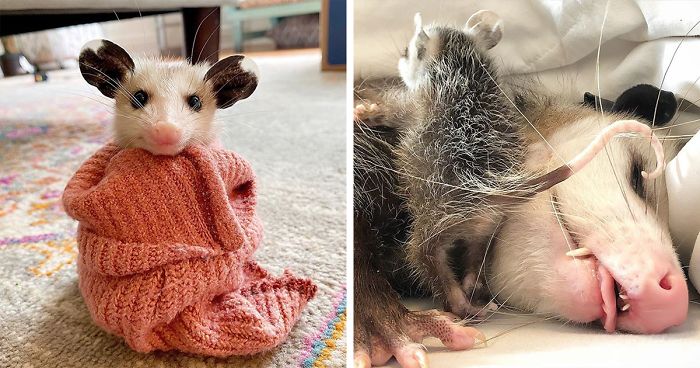
Opossums have a public relations problem. They waddle out at night with tiny black eyes, a pink nose, a tail that looks like it was borrowed from a Halloween decoration, and an expression that says, “I have seen things in your trash can.” For many people, that is enough to label them creepy, dirty, or even dangerous. But spend a few minutes looking at rescue opossumsespecially orphaned babies wrapped in tiny blankets, recovering adults nibbling fruit, or non-releasable ambassadors calmly meeting schoolchildrenand the whole “scary pest” story starts to fall apart.
The Virginia opossum is North America’s only native marsupial, which means baby opossums grow in a pouch like tiny, undercooked jellybeans before becoming the surprisingly charming backyard wanderers we recognize. They are nocturnal, shy, and usually more interested in cleaning up fallen fruit than causing drama. In fact, most of the “aggressive” behavior people noticehissing, drooling, showing teeth, or playing deadis defensive theater. Think less “tiny monster” and more “overworked actor in a low-budget haunted house.”
This article takes inspiration from the heart-melting world of rescue opossum photography: the sleepy pouch babies, the bottle-fed orphans, the recovering road-injury survivors, and the gentle educational animals that help humans rethink what wildlife deserves. By the end, you may not want an opossum as a roommateand please do not try to make one a petbut you might see the next one in your yard with a little more respect and a lot less screaming.
Why Do People Think Opossums Are Scary?
Opossums look unusual because they are unusual. Their pointed faces, hairless tails, gray coats, and wide toothy mouths make them easy targets for myths. Add the fact that they appear at night near garbage cans, porches, garages, and pet bowls, and people often assume they are up to something sinister. In reality, they are usually just looking for an easy meal and a quiet place to pass through.
One major reason opossums get mistaken for pests is their defense behavior. When frightened, an opossum may open its mouth and hiss. That mouth contains many teeth, so the display can look intense. But this is mostly a bluff. If the bluff fails, the animal may enter an involuntary state commonly called “playing possum,” appearing limp, drooling, and motionless. It is not a clever trick rehearsed in opossum drama school; it is a stress response designed to make predators lose interest.
Unfortunately, humans often misread these behaviors. A hissing opossum is not plotting to chase you down the driveway. A still opossum may not be dead. A mother with babies on her back is not “infesting” the neighborhood. She is simply trying to survive in a world full of cars, dogs, lawn equipment, and people who are not always kind to misunderstood animals.
Meet the Real Opossum: Awkward, Helpful, and Mostly Harmless
The Virginia opossum is an adaptable omnivore. It eats a wide variety of foods, including insects, snails, slugs, fallen fruit, carrion, small rodents, and scraps people accidentally leave behind. This flexible diet is one reason opossums do so well in suburbs and cities. They are not picky. If the animal kingdom had a refrigerator-cleanout night, the opossum would arrive early with a napkin tucked into its fur.
Despite their reputation, opossums are typically non-aggressive. They do not want to fight people or pets. They are slow, vulnerable animals with short lifespans in the wild, often facing danger from traffic, predators, cold weather, and habitat loss. Their odd appearance hides a gentle survival strategy: avoid conflict, eat what is available, move on, and try not to become dinner.
They also play a useful ecological role as scavengers. By consuming carrion and organic waste, they help clean the environment. Gardeners may appreciate them for eating slugs, snails, and insects. The popular claim that opossums are tick-eating machines has been challenged by newer research, so it is better not to oversell them as magical tick vacuums. They do not need a superhero résumé to matter. They are valuable because they are part of the ecosystem, not because they perform unpaid pest-control labor for humans.
What Rescue Opossums Teach Us
Rescue opossum photos have a way of rewiring the human brain. One minute you think opossums are creepy. The next minute you are looking at a baby opossum wrapped in fleece like a burrito with ears and thinking, “I would protect this tiny garbage prince with my life.”
They Are Smaller and More Fragile Than People Realize
Baby opossums are born extremely underdeveloped and must crawl to their mother’s pouch, where they continue growing. Later, they ride on her back, clinging tightly as she travels. When a mother is hit by a car, injured by a dog, or killed by another accident, the babies may still be alive. Wildlife rehabilitators often remind people to check deceased female opossums for young, but only with proper caution and, ideally, guidance from a licensed professional.
Orphaned opossums need specialized care. They are not the kind of animal that can be raised successfully with cow’s milk, random internet advice, and good intentions. Feeding the wrong formula, keeping them at the wrong temperature, or handling them too much can harm them. Rescue photos may look adorable, but behind each picture is usually a trained rehabilitator doing careful, exhausting work.
They Are Not Pets in Tiny Pajamas
Some rescue opossums become non-releasable ambassadors because of injuries, neurological issues, blindness, or other conditions that prevent survival in the wild. These animals may appear calm around people, but that does not mean opossums make good pets. Wildlife belongs in the wild whenever possible. In many states, keeping native wildlife without permits is illegal, and even where rules vary, opossums require highly specific diets, housing, enrichment, and veterinary knowledge.
The best rescue stories end with release: a healthy opossum returning to a safe habitat, disappearing into the brush with the confidence of a tiny, gray night goblin who has an appointment with a fallen pear.
Why “Pest” Is the Wrong Word
The word “pest” usually says more about human inconvenience than animal behavior. Opossums do not invade homes to be rude. They show up because people unintentionally create buffets and shelters: unsecured trash, outdoor pet food, open compost, fallen fruit, brush piles, gaps under decks, and crawl spaces that look cozy to a tired nocturnal traveler.
Calling an opossum a pest makes it easier to justify fear or cruelty. Calling it a wild neighbor encourages better solutions. Humane prevention works better than panic. Secure trash lids. Bring pet food indoors at night. Close openings under sheds after confirming no animal is inside. Use motion-activated lights or sprinklers if needed. Keep dogs supervised. Most opossums are transient; they often move through rather than settle permanently.
If an opossum is injured, visibly sick, trapped, very young, or in immediate danger, contact a licensed wildlife rehabilitator or local wildlife agency. Do not attempt to relocate it yourself unless instructed by authorities. Relocation can be illegal, stressful, and dangerous for the animal. A kind response is not always a dramatic rescue; sometimes it is simply giving wildlife space and removing the attractants that brought it too close.
The 40-Pic Effect: How Rescue Photos Change Minds
A gallery of 40 rescue opossum photos can do what a lecture cannot. Facts are important, but images make people pause. A rescued baby tucked into a soft pouch shows vulnerability. A recovering adult eating grapes shows personality. A mother opossum carrying babies shows dedication. A sleepy ambassador opossum in a rehab center shows that “ugly” is often just unfamiliarity wearing a bad costume.
Picture the Tiny Orphans
The first kind of rescue photo that melts people is the baby opossum group shot: several pink-nosed youngsters lined up like a very confused choir. Their ears look too big. Their paws look too delicate. Their faces suggest they have just heard taxes exist. These images remind us that every adult opossum started as a fragile animal fighting long odds.
Picture the Survivors
Many rescued opossums arrive because of vehicle strikes, dog attacks, falls, or accidental entrapment. Rehabilitation photos often show animals recovering in quiet enclosures with proper warmth, nutrition, medication, and limited human contact. The goal is not to turn them into social media stars. The goal is healing. Still, those photos can show people that an animal they once dismissed as disposable is capable of suffering, recovery, and resilience.
Picture the Ambassadors
Some non-releasable opossums become educational ambassadors. They help schools, community groups, and wildlife centers explain marsupial biology, urban wildlife coexistence, and humane problem-solving. When people meet an opossum calmly held by a trained educator, fear often turns into curiosity. Curiosity is where compassion gets its running shoes on.
Common Myths About Opossums
Myth 1: Opossums Are Aggressive
Most opossums would rather avoid conflict. Hissing and showing teeth are defensive displays. Biting is not their first plan, second plan, or probably even their third plan. Their main strategy is “please leave me alone while I pretend to be terrifying.”
Myth 2: Opossums Are Dirty
Opossums groom themselves and are not inherently filthy. Like any wild animal, they can carry parasites or disease, so people should not handle them casually. But “wild” does not mean “dirty villain.” It means they belong outdoors, living according to their biology.
Myth 3: Opossums Always Carry Rabies
Rabies is possible in any mammal, but opossums are considered unlikely carriers compared with common rabies-vector species such as bats, raccoons, skunks, and foxes. Still, never touch a wild animal with bare hands, and always contact professionals if an animal behaves strangely, appears injured, or has bitten someone.
Myth 4: Opossums Destroy Everything
Opossums may knock over lightweight containers, eat accessible pet food, or shelter under structures. But they are not chewing through houses like beavers with a grudge. Most conflicts can be solved by removing food sources and sealing entry points humanely.
What to Do If You Find an Opossum
If you see a healthy adult opossum walking through your yard at night, the best action is usually no action. Let it pass. Keep pets indoors or supervised. Enjoy the weird little wildlife moment from a respectful distance.
If you find a baby opossum alone, size matters. Young opossums that are large enough may already be independent. Very small opossums, especially those under about seven inches from nose to rump, may need help from a licensed rehabilitator. If you find babies attached to a dead mother, or if an opossum is bleeding, stumbling, covered in flies, attacked by a pet, or trapped, call a wildlife professional quickly.
Do not feed an injured or orphaned opossum unless a rehabilitator instructs you to do so. Do not give milk. Do not post a “What should I do?” video and wait six hours for comments from strangers named BackyardBeastFan92. Wildlife care is time-sensitive, and correct care can mean the difference between survival and suffering.
How to Keep Opossums Out Without Being Cruel
Humane opossum prevention is mostly common sense with a lid on it. Secure garbage cans. Feed pets indoors. Pick up fallen fruit. Keep compost covered. Remove unnecessary brush piles near the house. Repair broken vents and gaps under decks after checking that no animals are inside. If you use fencing, make sure it is installed properly and does not trap wildlife.
Avoid poisons, glue traps, mothballs, ammonia, or harsh repellents. These can hurt opossums, pets, children, and other wildlife. They also do not solve the real problem if food and shelter remain available. The goal is not to punish an animal for noticing your yard has snacks. The goal is to stop accidentally sending a neon sign that says, “Free buffet, open nightly.”
Why Rescue Stories Matter for Urban Wildlife
Opossums are not rare celebrities of the wilderness. They are everyday wildlife, which makes them easy to ignore. But everyday animals are often the ones most affected by human habits. Cars, pesticides, loose dogs, habitat loss, uncovered pools, and unsecured trash all shape their lives. Rescue stories remind us that compassion is not reserved for majestic animals with calendar potential.
It is easy to love eagles, wolves, sea turtles, and whales. They arrive with built-in drama. Opossums arrive looking like they slept in a compost bin and woke up late for a meeting. But wildlife does not need to be glamorous to deserve humane treatment. A rescue opossum in a tiny recovery enclosure may teach more about kindness than a thousand perfect nature documentaries.
500-Word Experience Section: How Rescue Opossums Can Change the Way We See the Night
The first time many people see an opossum up close, the reaction is not exactly poetic. It is usually something like, “What is that?” followed by a dramatic backward step and possibly the dropping of a snack. That reaction is understandable. Opossums do not look like the cute animals we are trained to love. They are not fluffy in the teddy-bear way. Their tails are bare. Their mouths open wide. Their walk has the confidence of someone wearing shoes two sizes too big.
But rescue stories create a different experience. Imagine seeing a tiny orphaned opossum curled in a soft cloth, its paws no bigger than grains of rice. Imagine a wildlife rehabilitator warming a fragile baby after its mother was struck by a car. Imagine a recovering adult who arrived frightened and injured, then slowly began eating, grooming, and moving normally again. Suddenly the animal is no longer “that thing by the trash can.” It is a life with needs, fear, pain, habits, and a chance to return home.
People who volunteer with wildlife often describe a shift in perspective. At first, they may arrive wanting to help the “cute” animals: rabbits, squirrels, songbirds, fawns. Then an opossum comes in, and the lesson changes. Opossums are not designed to impress us. They do not perform affection like dogs or pose elegantly like foxes. Their charm is quieter and stranger. It appears in the way a baby grips a blanket, the way an adult freezes when nervous, the way a mother carries her young through a dangerous landscape with stubborn determination.
That experience can follow you home. The next time you hear rustling near the fence at night, you may feel curiosity instead of alarm. You may remember to bring in the cat food. You may slow down on a dark road. You may check before sealing a crawl-space opening. You may explain to a neighbor that the opossum under the deck is probably temporary and not a monster assembling an army.
Rescue opossums also remind us that coexistence does not require turning wild animals into pets. Compassion can mean distance. It can mean calling a rehabilitator instead of improvising. It can mean teaching children to observe wildlife without grabbing it. It can mean accepting that our neighborhoods are shared spaces, not sterile outdoor living rooms designed only for humans and patio furniture.
The most powerful part of looking at 40 rescue opossum pictures is not simply realizing that opossums can be cute. It is realizing how quickly fear changes when knowledge enters the room. The same animal that once looked scary can become fascinating. The same “pest” can become a neighbor. The same nighttime visitor can become a small reminder that the world is full of lives we barely notice. And honestly, if a creature with a pink nose, prehistoric vibe, and dramatic fainting skills can teach us empathy, maybe it deserves a little applauseand a securely closed trash can.
Conclusion: Give the Opossum a Rebrand
Opossums are not monsters, villains, or dirty little invaders. They are shy, adaptable marsupials doing their best in landscapes humans have heavily changed. Rescue opossums make that truth impossible to ignore. Their photos show vulnerability, resilience, and a surprising amount of personality packed into one odd little body.
The next time you see an opossum, skip the panic. Give it space. Secure your trash. Protect your pets. Call a licensed wildlife rehabilitator if the animal is injured or orphaned. Most of all, remember that “strange-looking” is not the same as “bad.” Sometimes the animal we fear is simply the animal we have not understood yet.
Note: This article is written for educational and humane-awareness purposes. Wild opossums should not be handled, fed, relocated, or kept as pets. When in doubt, contact a licensed wildlife rehabilitator or local wildlife authority.