

Jet lag is the tiny travel goblin that waits until you finally reach Paris, Tokyo, New York, or Los Angeles, then whispers, “Congratulations, your body still thinks it is 3:12 a.m. in a different zip code.” Your eyes are open, your suitcase is allegedly nearby, and your brain is running on airport carpet fumes. The good news: one of the simplest ways to help your body adjust is not exotic, expensive, or sold in a tiny bottle at the duty-free shop. It is breakfast.
More specifically, a solid breakfast in your new time zone may help shorten jet lag by giving your internal clock a clear signal: “We live here now.” While light exposure remains the strongest cue for resetting circadian rhythm, meal timing also matters. Eating at local meal times, especially starting with a real morning meal, helps align digestion, energy, hunger, and sleep patterns with the place you have landed. Think of breakfast as a polite but firm calendar invite for your body.
This does not mean pancakes can defeat a 14-hour time jump single-handedly. Jet lag is a circadian rhythm problem, not a waffle shortage. But when breakfast is paired with daylight, hydration, short naps, and smart caffeine use, it becomes a practical travel strategy that can make the first few days feel less like you are starring in a low-budget zombie documentary.
What Jet Lag Really Is
Jet lag happens when you cross time zones faster than your body clock can adjust. Your watch changes immediately. Your biology, however, files a complaint with management. The result is a mismatch between your internal circadian rhythm and the local light-dark cycle at your destination.
Your circadian rhythm is a roughly 24-hour internal system that influences sleepiness, alertness, digestion, body temperature, hormones, and even mood. When it is aligned, mornings feel like mornings and nights feel like nights. When it is scrambled by long-distance travel, breakfast can feel like midnight, dinner can feel like breakfast, and your hotel room can become the world’s most expensive nap cave.
Common Jet Lag Symptoms
Jet lag symptoms vary from person to person, but the usual suspects include:
- Daytime fatigue and heavy sleepiness
- Insomnia or waking up too early
- Brain fog, poor focus, and slower reaction time
- Irritability or low mood
- Headache or a general “not quite human” feeling
- Digestive issues, appetite changes, bloating, or stomach discomfort
Traveling east is often harder than traveling west because it usually requires your body to fall asleep earlier than it wants to. Westward travel may leave you waking too early or fading too soon in the evening. Either way, your body is looking for signals. Breakfast is one of the easiest signals to control.
Why Breakfast Can Help Reset Your Body Clock
Light is the master cue for your central body clock, but food is a powerful cue for your peripheral clocks, especially the clocks in your liver, gut, muscles, and metabolism. In plain English: your brain watches the sunrise, while your stomach watches the breakfast plate.
When you eat breakfast according to the local time zone, you help tell your digestive and metabolic systems that the day has begun. That matters because jet lag does not only affect sleep. It also affects hunger, digestion, blood sugar rhythm, and energy. A well-timed breakfast can support a smoother transition from “home time” to “destination time.”
Recent circadian-rhythm research has specifically highlighted the value of eating a substantial breakfast in the destination time zone, particularly for travelers who are more vulnerable to jet lag. The idea is not complicated: avoid confusing your internal clocks with late-night meals, then reinforce the new morning with a satisfying breakfast. Basically, do not land in Rome and feed your body like it is still arguing with yesterday in Chicago.
What Counts as a Solid Jet Lag Breakfast?
A solid breakfast is not necessarily a huge breakfast. It is balanced, satisfying, and timed correctly. You want enough food to wake up your system without creating a breakfast-shaped brick in your stomach.
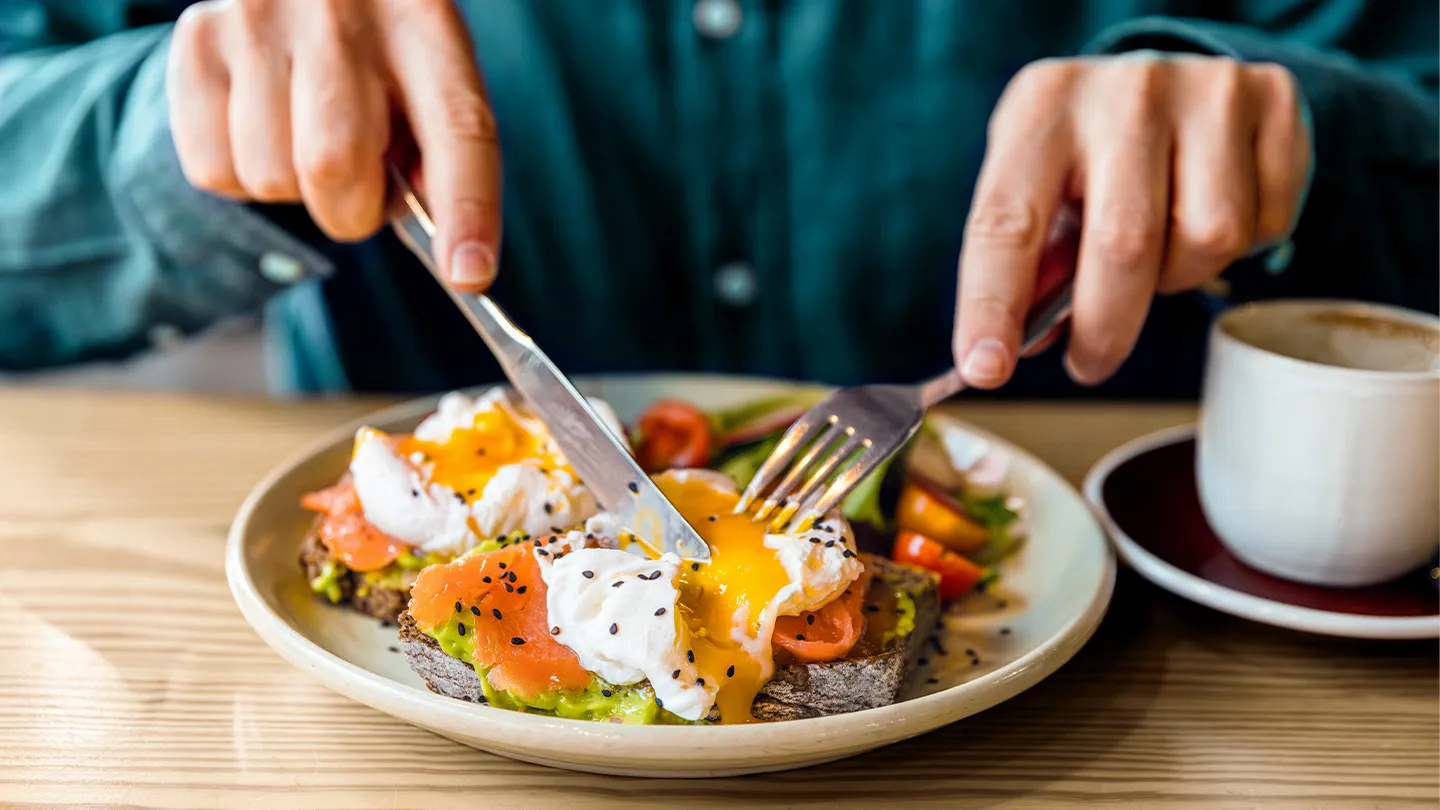
The best jet lag breakfast includes protein, fiber-rich carbohydrates, healthy fats, and fluids. This combination supports steady energy, digestion, and alertness. It also helps reduce the temptation to survive on three cappuccinos and a croissant the size of a travel pillow. Lovely? Yes. Complete strategy? Not quite.
Good Breakfast Examples After a Long Flight
- Eggs with whole-grain toast, fruit, and water
- Greek yogurt with berries, nuts, and oats
- Oatmeal with banana, nut butter, and a side of protein
- Avocado toast with eggs or smoked salmon
- A breakfast bowl with rice, vegetables, egg, tofu, or chicken
- Whole-grain cereal with milk, nuts, and fruit
- A smoothie with protein, fruit, spinach, and yogurt
If your stomach feels delicate after the flight, start smaller. A banana, yogurt, toast, and water can be enough to send the message. You can eat a more complete meal an hour or two later. The goal is alignment, not punishment. Your stomach did not personally delay the flight.
Timing Matters More Than Perfection
The most important rule is simple: eat breakfast when it is breakfast time at your destination. If you land at 7:00 a.m., try to eat a local breakfast soon after arrival, even if your home clock thinks it is dinner. If you land in the afternoon, do not force a giant breakfast just because you read this article and now feel emotionally committed to oatmeal. Instead, join the local schedule from that point forward.
For example, if you fly from New York to London overnight and arrive in the morning, skip the heavy middle-of-the-night airplane meal if you can, drink water, and eat breakfast after landing. If you fly from Los Angeles to Tokyo and arrive in the evening, eat a light local dinner, avoid overeating late, and have a good breakfast the next morning.
The breakfast strategy works best when it is part of a broader rhythm: local breakfast, local lunch, local dinner, local bedtime. Your body loves consistent signals. It is less fond of “breakfast at 4:00 p.m., dinner at 1:00 a.m., emergency cookie at 3:20 a.m.” That plan has charm, but mostly as a cry for help.
Pair Breakfast With Morning Light
If breakfast is the anchor, morning light is the captain. Natural light exposure is one of the strongest tools for resetting your circadian rhythm. After you eat breakfast, go outside if possible. A walk in daylight helps your brain understand that the local day has started.
This is especially useful after eastward travel, when your body needs help shifting earlier. Morning sunlight can advance your body clock, making it easier to feel sleepy earlier that night. If you traveled west and need to stay awake later, afternoon or early evening light may be more useful, but morning light still helps you feel alert and oriented.
Hotel breakfast buffet plus a walk around the block is not glamorous in a movie-trailer way, but it works better than collapsing under blackout curtains until noon and then wondering why you are wide awake at 2:00 a.m. Your circadian rhythm is not trying to ruin your trip; it just needs instructions.
Avoid the Late-Night Meal Trap
One of the biggest mistakes travelers make is eating a heavy meal late at night because their body is still on home time. Unfortunately, late large meals can confuse your digestive clock and make sleep harder. They may also worsen reflux, bloating, and that mysterious post-flight feeling best described as “inflated suitcase with opinions.”
If you arrive late, keep food light. Choose soup, yogurt, fruit, toast, a small sandwich, or a simple protein-and-vegetable plate. Then let breakfast do the heavy lifting the next morning. A destination-time breakfast is a cleaner signal than a midnight feast eaten while sitting on the edge of the hotel bed in one sock.
Hydration: The Quiet Jet Lag Helper
Dehydration can make jet lag symptoms feel worse. Airplane cabins are dry, travel days are long, and many people drink less water because they do not want to climb over two strangers to reach the bathroom. Understandable? Yes. Helpful? Not really.
Start hydrating before the flight, drink water during the trip, and continue after landing. At breakfast, include water, herbal tea, or milk. Coffee can be useful, but it should not be your entire hydration plan. Coffee is a tool, not a personality.
Use Caffeine Strategically
Caffeine can help you stay alert during the day in your new time zone, but timing matters. A morning coffee with breakfast is reasonable for many travelers. A double espresso at 5:30 p.m. because “vacation rules” may return later as insomnia with jazz hands.
As a general travel rule, use caffeine earlier in the local day and avoid it in the late afternoon or evening. If you are very sensitive to caffeine, keep your dose smaller than usual. The goal is alertness, not vibrating through a museum tour like a haunted phone.
Should You Fast Before Breakfast?
Some jet lag advice suggests a short fast before arrival, followed by breakfast in the destination time zone. The logic is that a period without food may make the first local meal a stronger timing cue. This can work for some people, especially on overnight flights where airplane meals arrive at awkward times.
However, fasting is not right for everyone. People with diabetes, pregnancy, certain medical conditions, a history of eating disorders, or medication schedules tied to food should not casually experiment with fasting. If skipping food makes you shaky, nauseated, anxious, or furious at innocent airport signage, eat something light. A gentle version is often enough: avoid heavy meals during the “wrong” night and start fresh with breakfast after landing.
How to Build a One-Day Jet Lag Breakfast Plan
Here is a practical plan for your first morning in a new time zone:
Step 1: Wake Up at a Reasonable Local Time
Even if sleep was imperfect, try to get up within a normal local morning window. Sleeping until early afternoon can delay adjustment.
Step 2: Eat Within One to Two Hours
Have a balanced breakfast fairly soon after waking. It does not have to be enormous, but it should be more than a lonely mint from your backpack.
Step 3: Get Daylight
After breakfast, step outside for a walk. If the weather is bad, sit near a bright window or use indoor light, but natural daylight is ideal.
Step 4: Move Lightly
A gentle walk, stretching, or easy exercise can reinforce wakefulness. Save intense workouts for later if you feel rough.
Step 5: Keep Naps Short
If you must nap, aim for 15 to 30 minutes. Long naps can steal sleep from the local night.
Breakfast Ideas by Destination Scenario
Jet lag breakfast should fit the place, your appetite, and your schedule. Here are a few examples:
Business Trip Arrival
Choose eggs, fruit, toast, and coffee before your first meeting. Add water. Avoid a huge greasy meal unless your presentation topic is “Why I Need a Nap Immediately.”
Family Vacation
Pick a hotel breakfast with protein and fiber: yogurt, fruit, oatmeal, eggs, or whole-grain toast. Kids may adjust better with familiar foods, so do not make breakfast the moment everyone must suddenly love fermented fish.
Adventure Travel
Eat something substantial before hiking, sightseeing, or long transfers. A breakfast with oats, eggs, fruit, nuts, and water can prevent midmorning energy crashes.
Luxury Vacation
Enjoy the pastry. Just give it some friends: yogurt, fruit, eggs, or smoked salmon. A croissant alone is a poem. A croissant plus protein is a plan.
What Not to Do on the First Morning
To shorten jet lag, avoid turning the first morning into chaos. Try not to:
- Skip breakfast and rely only on caffeine
- Eat a huge late-night meal, then sleep through local morning
- Stay indoors in dim light all day
- Take a three-hour “quick nap” after breakfast
- Drink alcohol to force sleep
- Overpack your schedule before your body has any idea what continent it is on
Jet lag recovery is not about being perfect. It is about giving your body repeated, sensible cues. Local breakfast is cue number one. Daylight is cue number two. A sane bedtime is cue number three. Repeat until your brain stops asking why lunch is happening in the middle of the night.
Does Breakfast Cure Jet Lag?
No, breakfast does not cure jet lag by itself. If it did, airports would have medical oatmeal stations and frequent-flyer pancake clinics. Jet lag recovery still depends on the number of time zones crossed, travel direction, sleep debt, age, light exposure, hydration, and individual sensitivity.
But breakfast is useful because it is simple, safe for most people, and easy to combine with other proven strategies. It gives your body a clear morning signal. It can stabilize energy. It can reduce the digestive confusion that often comes with travel. Most importantly, it helps you behave like you are already in the new time zone, which is exactly the message your body needs.
Personal Travel Experience: The Breakfast Reset in Real Life
The breakfast trick sounds almost too simple until you try the opposite. Imagine landing after a long-haul flight with noble intentions. You will stay awake. You will hydrate. You will be the kind of traveler who adjusts immediately and says things like, “I find jet lag manageable.” Then you reach the hotel, the room is not ready, and suddenly you are eating a mystery snack from your bag while staring at a lobby plant like it owes you money.
On trips where breakfast is ignored, the first day tends to become a blur. You snack at strange times, drink coffee whenever consciousness begins to flicker, and eat dinner too late because your appetite finally wakes up at the wrong hour. By bedtime, your stomach is busy, your mind is oddly alert, and your body has received a full orchestra of mixed signals. The next morning feels like your brain has been wrapped in a hotel towel.
Now compare that with a destination-time breakfast approach. After landing in the morning, you resist the urge to treat the flight schedule as a food schedule. You drink water, move through immigration, find your bag, and eat breakfast according to local time. It might be eggs and toast, yogurt and fruit, oatmeal, rice and vegetables, or whatever the destination considers normal morning fuel. The specific food matters less than the message: this is morning, we are awake, and the day has started.
The difference often shows up by early afternoon. You may still feel tired, but the tiredness is cleaner. Instead of drifting through the day like a screensaver, you have enough structure to keep going. A walk after breakfast adds daylight. A light lunch keeps you on schedule. A short nap, if needed, does not become an accidental hibernation event. By evening, you are more likely to feel naturally sleepy at a local bedtime.
This strategy is especially helpful on trips where the first day matters. Maybe you have a conference, a wedding, a tour, or a family gathering where showing up as a mildly functional human is preferred. Breakfast becomes a low-effort ritual: eat, hydrate, step outside, move. It creates a rhythm before the day can dissolve into “What time is it, and why am I holding two coffees?”
There is also a psychological benefit. Travel can make you feel unmoored. Airports, delays, security lines, and unfamiliar streets all create friction. A real breakfast gives the morning a beginning. It is a small act of control in a day full of variables. You may not control turbulence, baggage claim, or the person reclining into your knees, but you can control whether your first local morning includes protein, water, and sunlight.
One helpful habit is to plan breakfast before you fly. Look up whether your hotel serves breakfast, whether there is a café nearby, or whether you should pack something simple like nuts, oats, or a protein bar. This prevents the classic jet lag breakfast of “whatever is available near Gate 42,” which somehow always turns out to be coffee and a pastry with the structural integrity of a sofa cushion.
Another useful experience-based rule: do not make the first breakfast too adventurous if your stomach is already confused. Save the bold culinary expedition for lunch or dinner. Jet lag can affect digestion, and a gentle breakfast is often smarter than proving your bravery at 8:00 a.m. local time. Choose foods that are satisfying but familiar enough that your digestive system does not send a complaint letter.
After several trips, the pattern becomes obvious. The first breakfast does not erase jet lag, but it shortens the awkward phase. It helps the body accept the new schedule faster. It gives you energy without overloading your system. And it turns the first morning from a survival scene into a reset ritual. Not glamorous, perhaps, but deeply effective. Sometimes the most powerful travel hack is not a gadget, supplement, or secret airline trick. Sometimes it is just breakfast, eaten at the right time, in the place where you actually are.
Conclusion
To shorten jet lag, do not wait for your body clock to figure everything out alone. Help it. A solid breakfast in your new time zone is one of the easiest ways to reinforce local morning, support digestion, and build daytime energy. Pair that breakfast with natural light, water, gentle movement, short naps, and a local bedtime, and you give your circadian rhythm the clearest possible instructions.
Jet lag may still follow you through baggage claim like an unwanted travel companion, but it does not have to run the whole trip. Eat breakfast when the new day begins. Step into the light. Drink water. Be patient with your body. It just crossed time zones at 500 miles per hour; the least you can do is offer it eggs.
Note: This article is for general educational purposes and is not a substitute for personal medical advice. Travelers with medical conditions, pregnancy, diabetes, medication schedules, or sleep disorders should ask a healthcare professional before using fasting, melatonin, or major schedule changes.