

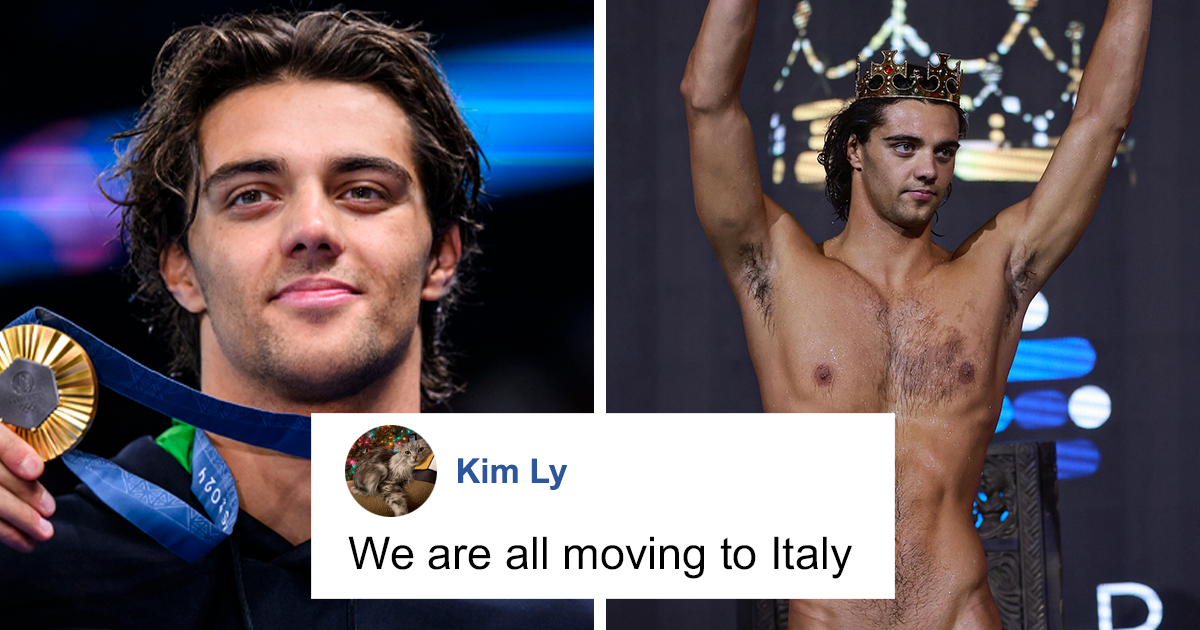
Every Olympics creates its own cast of unforgettable characters. Some athletes go viral for breaking records. Some go viral for crying during the anthem. Some go viral because the internet collectively discovers they have the bone structure of a Renaissance statue and the swimming speed of a torpedo. Italian swimmer Thomas Ceccon somehow managed to check more than one box at the 2024 Paris Olympics.
The phrase “Holy Smokes” started bouncing around social media after a lighthearted wardrobe malfunction during a medal ceremony pushed Ceccon from elite swimming star to full-blown internet obsession. The moment itself was brief, accidental, and not exactly the kind of thing an athlete puts on a training plan between laps. Still, fans clipped it, reposted it, commented on it, and turned Ceccon into one of the surprise heartthrobs of the Games.
But here is the important part: Thomas Ceccon was not just “the swimmer from that viral clip.” He was already a serious force in the pool. In Paris, he helped Italy win bronze in the men’s 4×100-meter freestyle relay, then captured gold in the men’s 100-meter backstroke with a time of 52.00 seconds. The internet may have arrived for the accidental fashion moment, but his Olympic résumé gave everyone a very good reason to stay.
Who Is Thomas Ceccon?
Thomas Ceccon is an Italian swimmer known for his versatility, long frame, smooth technique, and ability to compete across multiple events. Born in Italy in 2001, Ceccon entered the Paris Olympics already carrying a reputation as one of Europe’s most exciting swimming talents. Before Paris, he had set a world record in the men’s 100-meter backstroke and won world championship gold, making him one of the names experts were watching closely.
To casual viewers, however, the Olympics often work like a giant global talent show. Millions of people who do not follow swimming year-round suddenly tune in and discover athletes they had never heard of. That is exactly what happened with Ceccon. One minute, he was known mainly to swimming fans. The next, he was trending across TikTok, X, Instagram, and entertainment websites, with users asking, in various levels of dramatic capitalization, where this Italian swimmer had been hiding.
The Wardrobe Malfunction That Lit Up Social Media
The viral moment happened during the medal ceremony for the men’s 4×100-meter freestyle relay, where Italy earned bronze behind Team USA and Australia. While Ceccon and his teammates were posing with their medals, part of his team jacket shifted open briefly. It was a tiny, accidental moment, but the internet treated it like someone had dropped a surprise trailer during the Super Bowl.
Fans reacted with jokes, compliments, memes, and plenty of “I was just trying to watch swimming” energy. Some compared the Italian team’s podium look to a fashion campaign. Others joked that Olympic coverage had suddenly become dangerously distracting. The reaction was playful, fast, and very 2024: one clip, one unexpected visual, and suddenly an athlete who had trained for years was being discussed by people who could not define backstroke but could absolutely identify charisma.
There is a reason the moment traveled so quickly. It combined several things social media loves: Olympic glamour, an attractive athlete, a harmless surprise, and a little bit of accidental comedy. It was not scandalous in any meaningful sense. It was more like the sports version of your jacket betraying you at the exact moment the world’s cameras are watching. We have all had clothing betray us; most of us are just lucky enough not to be wearing a medal when it happens.
Why Fans Went Into a Frenzy
Viral sports moments rarely depend on the event alone. They depend on timing, personality, and the emotional mood of the audience. During the Olympics, fans are already primed to admire athletes. Everyone is watching people do impossible things while wearing national colors and looking heroic under arena lighting. Add a small unscripted moment, and the internet has all the ingredients it needs.
1. The Olympics Make Athletes Feel Like Movie Characters
Unlike regular sports seasons, the Olympics compress years of sacrifice into a few dramatic days. Athletes appear on screen with flags, medals, tears, and slow-motion replays. Ceccon’s viral moment landed inside that larger emotional theater. Fans were not just reacting to a wardrobe slip; they were reacting to the whole image: an Olympic medalist, representing Italy, standing on the podium, looking confident and slightly unaware that the internet had just adopted him.
2. Ceccon Backed Up the Buzz With Gold
The online reaction might have faded quickly if Ceccon had not followed it with one of the biggest swims of his career. In the men’s 100-meter backstroke final, he surged to victory in 52.00 seconds, beating China’s Xu Jiayu and American star Ryan Murphy. That win made him the first Italian man to claim Olympic gold in the event. Suddenly, the viral heartthrob was also a historic Olympic champion. That combination is powerful: good meme, great athlete.
3. Social Media Loves Accidental Authenticity
Modern fans respond strongly to moments that feel unscripted. Carefully polished sponsor posts are fine, but accidental humanity often travels further. Ceccon did not stage the clip. He did not appear to be chasing attention. The fact that it happened naturally made it more shareable. Audiences like feeling as though they discovered something rather than being sold something.
Thomas Ceccon’s Gold Medal Moment Deserves the Spotlight
As funny as the wardrobe malfunction chatter became, it should not overshadow Ceccon’s actual athletic achievement. Winning Olympic gold in the 100-meter backstroke is not a casual little errand. It requires explosive starts, perfect underwater work, sharp turns, and the ability to maintain speed while swimming backward at a level that makes normal pool users look like confused sea cucumbers.
In Paris, Ceccon did not dominate from the first stroke. He had to build his race, stay composed, and finish with power. Xu Jiayu pushed hard, and Ryan Murphy brought years of Olympic experience. Ceccon’s win was not just a victory; it was a statement that Italy had arrived as a major force in Olympic swimming. Alongside other Italian performances in the pool, his gold helped create one of the country’s most memorable swimming campaigns.
That is why the viral narrative works best when it is treated as an entry point, not the whole story. Yes, fans shouted “Holy Smokes.” Yes, social media did what social media does. But beneath the jokes was an athlete who had earned his moment through years of training, pressure, and discipline.
The Olympic Village Plot Twist
Ceccon’s Paris story also included another viral moment: he was spotted resting outdoors after publicly commenting on difficult conditions in the Olympic Village. Reports around the Games described athlete complaints about heat, noise, food, and sleep quality. Ceccon said the lack of air conditioning, uncomfortable conditions, and trouble sleeping made recovery more difficult.
That episode added a strange layer to his public image. One day, he was a podium sensation. Another day, he was the exhausted gold medalist trying to find a quiet place to rest. If the wardrobe malfunction made him look like an internet heartthrob, the outdoor nap made him look like every overworked person who has ever thought, “Honestly, this patch of grass will do.”
It also reminded fans that Olympic athletes are not just highlight machines. They are people dealing with stress, fatigue, imperfect accommodations, and the brutal schedule of elite competition. The contrast made Ceccon more relatable. He could win gold, trend online, and still need a nap. That may be the most human Olympic storyline imaginable.
How a Viral Moment Changes an Athlete’s Public Image
In the past, Olympic fame was mostly shaped by television coverage and newspaper headlines. Today, an athlete’s image can change overnight because of a ten-second clip. Ceccon became part of a Paris 2024 pattern in which athletes went viral not only for medals, but also for style, personality, facial expressions, behind-the-scenes moments, and unexpected internet charisma.
For athletes, this can be both a gift and a challenge. On the positive side, viral attention can bring new fans, sponsor interest, and broader recognition for a sport. Swimming gets more attention when casual viewers care about the swimmers. Ceccon’s sudden popularity likely introduced many people to backstroke, relay strategy, and Italian swimming success.
On the other hand, viral attention can flatten a person into a meme. Athletes work for years to become world-class, then the internet sometimes remembers one funny clip more than the race itself. The best coverage should do both: enjoy the harmless humor, but also respect the work. Ceccon can be a viral sensation and an Olympic champion at the same time. Those two truths do not need to fight in the group chat.
Why the Phrase “Holy Smokes” Fits the Moment
“Holy Smokes” is the kind of phrase that captures surprise without needing to be mean, explicit, or overdramatic. It fits because the reaction was less about scandal and more about collective astonishment. Fans were startled, amused, and entertained. The wardrobe malfunction was not a serious controversy; it was a blink-and-you-miss-it moment that became internet fuel because the athlete at the center of it was already magnetic.
In SEO terms, that phrase also has strong headline energy. It signals surprise, emotion, and shareability. Readers understand immediately that something unexpected happened. The key is making sure the article does not rely only on shock. A strong piece should explain why the moment mattered, what actually happened, and why Ceccon’s athletic success gives the story substance.
What Brands and Media Can Learn From Ceccon’s Viral Rise
Ceccon’s sudden popularity shows how modern sports fame works. Performance still matters most, but personality and visual storytelling can amplify everything. A medal gets attention. A medal plus a viral clip gets conversation. A medal plus a viral clip plus a relatable Olympic Village nap becomes a complete internet arc.
For brands, the lesson is not to chase every meme blindly. The best athlete partnerships feel natural. Ceccon’s appeal comes from the combination of excellence and authenticity. He did not need a scripted campaign to become interesting. He simply competed, won, reacted, rested, and accidentally gave social media a moment it could not resist.
For publishers, the lesson is similar. A headline can be playful, but the article needs context. Readers may click for the wardrobe malfunction, but they stay longer when the story explains the race, the medal, the fan response, and the broader Olympic culture around viral athletes.
The Viewer Experience: Why This Moment Felt So Shareable
From a viewer’s perspective, the Thomas Ceccon frenzy felt like one of those classic “the internet found a new favorite character” moments. You might start by watching a medal ceremony casually, maybe half-paying attention while checking your phone. Then someone posts a clip. A caption appears. A friend sends it with “Wait, who is this?” Suddenly, you are not just watching the Olympics; you are participating in the global side conversation that makes the Games feel alive.
This is part of the fun of Olympic viewing in the social media era. Fans are no longer limited to official commentary. They create their own highlights. They notice facial expressions, outfits, warm-up routines, team reactions, and tiny unscripted details that broadcasters may not emphasize. Ceccon’s wardrobe moment worked because it gave viewers something light and funny to talk about between races. It did not require deep swimming knowledge. It was instantly understandable.
There is also a shared “discovery” experience. Many casual fans had never heard of Ceccon before Paris. After the clip went viral, they searched his name, learned he was Italian, discovered his world-class backstroke credentials, and then watched him win gold. That sequence creates a stronger attachment than simply being told, “Here is a favorite to win.” It feels personal, as if fans stumbled into the story themselves.
For sports fans, that is the sweet spot. A viral moment opens the door, but athletic performance builds the house. Ceccon’s gold medal gave the online attention legitimacy. Fans could joke about the podium moment while also celebrating a genuinely historic swim. The result was a rare balance of humor and respect.
Writers and editors can learn from this experience too. When covering a viral athlete story, the best approach is to avoid turning the person into a punchline. The better angle is curiosity: Why did this spread? What does it say about Olympic fandom? What did the athlete actually accomplish? How did fans respond? What larger trend does it reveal? That approach creates an article that feels entertaining without becoming shallow.
For readers, the Ceccon moment is a reminder that the Olympics are not only about medals. They are also about personality, surprise, beauty, exhaustion, weird sleeping arrangements, and the occasional jacket that decides to become famous. That mix is exactly why people keep watching. The Games are polished, but the best stories often come from the unpolished seconds in between.
Conclusion
The “Holy Smokes” reaction to Thomas Ceccon’s wardrobe malfunction was funny, fast, and very internet. But the reason the story had staying power is that Ceccon was more than a viral clip. He was a gold medalist, a relay bronze medalist, a world-class backstroker, and one of the standout personalities of the Paris Olympics.
The moment showed how quickly modern sports fame can expand beyond the scoreboard. A small accident during a medal ceremony introduced Ceccon to millions of casual viewers. His Olympic gold then gave those viewers a real achievement to celebrate. In the end, the frenzy was not just about what fans saw for a second on the podium. It was about the complete Olympic package: talent, timing, charm, pressure, exhaustion, and one unforgettable internet spark.
Note: This article is based on verified public reporting, official Olympic results, and reputable sports and entertainment coverage. It presents the viral wardrobe moment in a tasteful, non-explicit way while emphasizing Ceccon’s athletic achievements and cultural impact.