

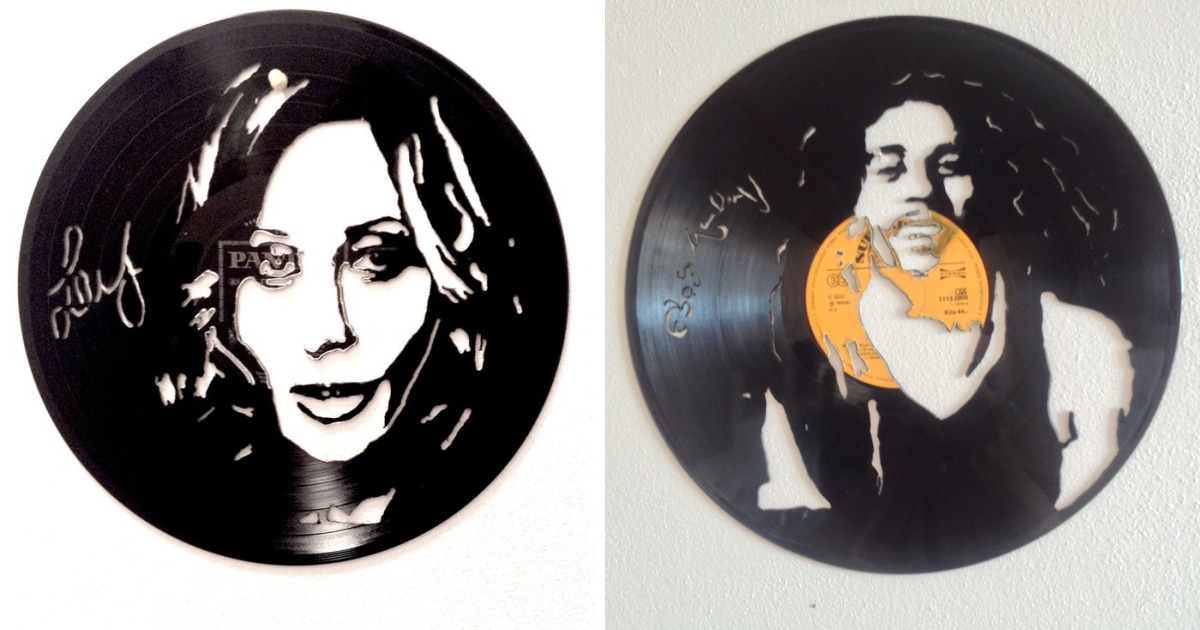
Some people see a stack of scratched old vinyl records and think, “Well, there goes the garage sale profit.” I saw them and thought, “Excellent. Circular canvases with built-in nostalgia.” That is how my experiment with making art from old vinyls began: one dusty crate, several unplayable records, a few questionable design decisions, and the bold optimism of someone who had not yet learned how stubborn black PVC can be when it wants to stay boring.
Vinyl records are more than music storage. They are objects with mood. They have weight, shine, grooves, labels, history, and that satisfying roundness that makes even a blank wall look like it suddenly joined a jazz club. Turning old records into recycled vinyl art is not just a clever craft project; it is a small act of rescue. Instead of sending damaged records to the trash, you can transform them into wall decor, portraits, clocks, jewelry, sculptures, mixed-media pieces, or dramatic conversation starters that say, “Yes, I own a craft knife and no, I will not be supervised.”
This guide explores how I made art from old vinyls, why the material works so well, what to avoid, and how to create something stylish without accidentally ruining a rare pressing or turning your kitchen into a plastic-scented crime scene.
Why Old Vinyl Records Make Such Great Art Material
The best thing about old vinyl records is that they already look designed. Even before you touch them, they bring a strong graphic shape, a glossy surface, and a cultural association with music, memory, and rebellion. A record on the wall instantly feels intentional. A record with carved silhouettes, painted portraits, gold leaf, or layered collage? That feels like the wall got a personality upgrade.
Most modern vinyl records are made from polyvinyl chloride, better known as PVC. That gives them durability, flexibility under controlled heat, and a smooth surface that can be painted, cut, engraved, or mounted. The grooves catch light beautifully, especially when acrylic paint or metallic accents skim over the ridges. The center label adds a built-in focal point, almost like the pupil of an eye. In other words, the record does half the composition work before you even open the paint tube.
There is also a sustainability angle. Vinyl is not the easiest material to recycle through normal curbside systems, and damaged records often end up in thrift-store bins, storage boxes, or landfills. Upcycling old vinyl records into handmade art gives an unwanted object a longer, better life. It will not save the planet single-handedly, but it is better than letting a cracked polka record from 1973 spend eternity judging us from a landfill.
First Rule: Do Not Destroy Playable or Valuable Records
Before grabbing scissors, heat tools, or paint, pause. Some records are collectible. Some are sentimental. Some look worthless but may be worth more than your entire craft drawer, including the fancy glue you bought during a moment of false confidence. Always check the artist, pressing, condition, and market value before altering a record.
For my projects, I only use records that are already scratched, warped, cracked, moldy beyond safe cleaning, or musically unwanted. Thrift stores, estate sales, flea markets, and record shops often have bargain bins filled with albums that are no longer playable. These are ideal for vinyl record crafts. The goal is to rescue the forgotten, not vandalize a first pressing that would make a collector weep into their turntable mat.
The Tools I Used for Recycled Vinyl Art
You do not need a professional studio to make art from old vinyls, but you do need the right tools and a little patience. My basic setup includes acrylic paint, paint pens, painter’s tape, a soft pencil, transfer paper, craft blades, small files, sandpaper, a cutting mat, protective gloves, a dust mask for sanding, and strong hanging hardware. For pieces that require shaping, I use gentle heat with extreme caution and plenty of ventilation.
For painted vinyl record art, acrylic paint works well because it adheres nicely when the surface is cleaned and lightly scuffed. Paint pens are excellent for fine lines, lettering, mandalas, constellations, and tiny details that make you question your life choices halfway through. For collage, I like archival glue, paper scraps, old album sleeves, magazine cutouts, and small found objects such as ticket stubs or broken guitar picks.
If cutting is involved, a rotary tool can help, but it should be used carefully because vinyl dust is not something you want to inhale. Manual cutting is slower but gives more control. For beginners, painting, stenciling, decoupage, or simple wall arrangements are safer and easier than elaborate cutout silhouettes.
Safety Matters More Than Aesthetic Drama
Old vinyl art is fun, but PVC is still a plastic material that deserves respect. Do not burn records. Do not overheat them. Do not use high-temperature tools indoors without ventilation. When vinyl is heated too aggressively, it can release unpleasant and potentially harmful fumes. Keep the process low, slow, and well-ventilated, and never use an oven for craft heating if you are uncomfortable with the idea of warming plastic near food equipment.
When sanding or cutting, wear eye protection and a mask, work outside or in a ventilated workspace, and clean dust with a damp cloth rather than blowing it around like a tiny indoor weather event. If a record smells strongly chemical, is sticky, moldy, or shedding strange residue, skip it. Art should be expressive, not medically interesting.
How I Designed My First Vinyl Record Artwork
My first idea was simple: make wall art that kept the record recognizable while adding a new story on top. I chose an old black LP with scratches deep enough to make any needle file a formal complaint. The center label was faded orange, which felt warm and retro, so I built the design around it.
I sketched a night-sky theme: a crescent moon, tiny stars, a skyline silhouette, and a few flowing lines that followed the grooves. The circular shape naturally suggested orbit, rhythm, and movement. Instead of fighting the record’s form, I used it. That is the secret to good upcycled vinyl art: let the object tell you what it wants to become. Sometimes it whispers “cosmic wall decor.” Sometimes it screams “clock for a person who owns too many houseplants.” Listen politely.
Step 1: Clean the Record
I wiped the record with a soft microfiber cloth and a small amount of mild soap and water, avoiding soaking the center label. Once it dried completely, I lightly scuffed the areas I planned to paint. This helps acrylic paint grip the glossy surface. If you skip this step, paint can bead up like it is allergic to commitment.
Step 2: Map the Composition
Because a record is round, balance matters. I placed the main design off-center so the label remained visible. I used painter’s tape to mark a few straight skyline lines and a soft pencil for the moon and stars. For more detailed portraits, transfer paper can help move a sketch onto the vinyl without freehand panic.
Step 3: Paint in Thin Layers
Thin paint layers work better than thick blobs. The grooves create texture, and heavy paint can fill them in too much. I started with matte white for the moon, then added gray shadows and small metallic dots for stars. The skyline was painted in deep black-on-black gloss, which sounds ridiculous until light hits it and the city appears like a secret.
Step 4: Add Details That Respect the Grooves
The grooves are the star of the show. I used them as natural guide lines for orbit marks and tiny constellations. This gave the piece motion, as if the night sky was spinning. That is the magic of vinyl record wall art: even when it is no longer playable, it still feels like it contains sound.
Step 5: Seal and Hang
Once the paint cured, I sealed the surface with a clear acrylic sealer. I attached a small sawtooth hanger to the back using strong adhesive suitable for plastic. Some people simply use the center hole and a decorative nail, which works for lightweight pieces. Either way, make sure the record sits flat and secure. A falling record is not a sculpture; it is a dramatic coaster.
Creative Ideas for Making Art From Old Vinyls
Once I finished the first piece, the ideas multiplied quickly. Old vinyls can become many types of art, from simple beginner crafts to detailed gallery-style work.
Painted Portraits on Vinyl Records
Portraits look striking on records because the round format frames the face naturally. Musicians are a popular subject, especially when painted on albums connected to their genre or era. A blues singer on a weathered LP, a punk icon on a scratched 45, or a jazz legend painted in gold linework can feel both modern and archival.
Carved Silhouette Records
Some artists cut silhouettes directly into records, creating negative-space images of skylines, animals, famous faces, guitars, forests, or movie scenes. This style is bold and graphic, especially when mounted slightly away from the wall so shadows become part of the artwork. It requires patience and careful cutting, but the result can be stunning.
Vinyl Record Clocks
The center hole makes records perfect for clock mechanisms. You can leave the record plain for a minimalist look or paint numbers, abstract shapes, planets, flowers, or song lyrics around the edge. It is functional art, which is great because you can tell people you are “checking the time” when you are actually admiring your own craft skills.
Album Cover Collage
Do not ignore the sleeves. Album covers are often packed with typography, photography, color, and attitude. Even damaged sleeves can be cut into collage elements. I like combining sleeve fragments with the record itself, creating a mixed-media piece where the music object becomes both canvas and material.
Vinyl Jewelry and Small Decor
Small pieces of old vinyl can be shaped into earrings, pendants, ornaments, bookmarks, plant tags, and decorative charms. The grooves create subtle texture, and painted edges can add color. This is best done with scraps from already broken records, because using an entire LP for two earrings feels like buying a pizza and eating one olive.
Design Tips for Better Vinyl Record Wall Art
Good recycled vinyl art needs more than enthusiasm and a playlist. It needs contrast, restraint, and a plan. Black vinyl is naturally dramatic, so white, gold, silver, red, turquoise, and neon colors stand out beautifully. Matte paint against glossy vinyl creates a sophisticated finish. Metallic paint catches the grooves and creates movement.
Try not to cover the entire record unless the concept calls for it. Leaving some original surface visible honors the material. The viewer should still recognize the object as a record. That recognition is what gives the piece charm: it is not just a circle; it is a former song.
Scale also matters. A single record can look elegant in a small space, but a grid of nine records can become a statement wall. Mix painted records with untouched ones, album covers, framed lyrics, or small shelves for a music-themed gallery wall. If you are decorating a studio, home office, listening room, café, or creative workspace, vinyl wall art instantly adds warmth and personality.
Common Mistakes I Learned the Hard Way
The first mistake is rushing. Paint needs time to dry, sealers need time to cure, and your hand needs time to stop shaking after you attempt a perfect circle. The second mistake is using too much heat. Vinyl softens quickly, and once it warps in the wrong direction, it can look less like art and more like a sad tortilla.
The third mistake is ignoring dust. Records attract dust as if they signed a lifelong partnership agreement. Clean your surface before painting and again before sealing. The fourth mistake is using weak hanging methods. Vinyl is light, but gravity is famously committed to its job.
The fifth mistake is choosing a design that does not fit the record. A circular canvas wants movement, symmetry, or intentional imbalance. Designs that work beautifully on rectangular paper may look awkward on vinyl. Sketch small thumbnails first. Your future self will thank you, probably while covered in paint.
Why This Craft Feels Different From Ordinary DIY
Making art from old vinyls feels different because the object already had a life. It may have played at someone’s wedding, sat in a teenager’s bedroom, survived three apartments, or spent decades in a box labeled “miscellaneous,” which is where human ambition goes to nap. Even when the record is no longer playable, it carries a sense of memory.
That emotional layer is what makes upcycled vinyl art so appealing. You are not starting with a blank canvas. You are collaborating with an artifact. The scratches, labels, and worn sleeves become part of the final story. A perfect new canvas is quiet. An old record has gossip.
Experience Notes: What Making Art From Old Vinyls Taught Me
After several projects, I learned that the best vinyl record art begins before the first brushstroke. It starts in the hunt. Digging through old bins teaches you to notice texture, typography, label color, record weight, and condition. I used to look for “good” records. Now I look for interesting failures: a cracked edge that could become a mountain line, a faded label that looks like a sunset, a sleeve with water damage that can be reborn as collage clouds. The more imperfect the material, the more personality it brings.
I also learned that restraint is powerful. My early pieces suffered from what I call “craft buffet syndrome.” I wanted paint, glitter, collage, carving, metallic ink, and maybe a small feather because apparently I briefly became a decorative bird. The best pieces happened when I chose one strong idea and let the record breathe. A white botanical line drawing on black vinyl looked better than six competing techniques fighting for custody of the viewer’s eyeballs.
Another lesson: music matters while working. Not because the record being painted can still play, but because the right soundtrack changes your rhythm. Jazz made my lines looser. Old rock made the pieces bolder. Folk music made me add tiny moons and trees. A silent workspace made me overthink everything until one star took twenty minutes. Playing music reminds you that vinyl is connected to sound, not just shape.
The most satisfying project I made was a three-record wall set: one painted with a moon, one with a desert road, and one with a tiny figure standing under oversized stars. None of the records matched originally, but together they looked like scenes from the same strange road trip. Visitors kept asking where I bought them, which is the highest compliment a DIY project can receive, right after “Please make me one” and “I did not realize that was covering a hole in the wall.”
I also became more careful about materials. I stopped using any record that seemed collectible. I avoided heavy heating. I tested sealers on scrap pieces first. I started wearing eye protection when cutting, even for quick trims, because confidence is not a safety plan. The work became cleaner, safer, and more enjoyable once I treated vinyl as a real art material rather than a novelty object.
Most importantly, making art from old vinyls changed how I see discarded things. A scratched record is not just broken music. It is a circle, a memory, a surface, a design challenge, and sometimes a surprisingly elegant piece of wall decor waiting for someone to notice it. Upcycling does not have to look rustic or messy. Done thoughtfully, recycled vinyl art can be modern, personal, and beautiful. It can honor music while creating something new. And yes, it can also make you feel like a genius for rescuing a fifty-cent record from a dusty bin and turning it into something people actually want to stare at.
Conclusion
I made art from old vinyls because I wanted to give forgotten records another chance to be seen, not just heard. What began as a simple DIY experiment became a creative practice built around memory, sustainability, music culture, and design. Old vinyl records are durable, graphic, nostalgic, and surprisingly versatile. They can become painted portraits, carved silhouettes, clocks, collage pieces, jewelry, or entire gallery walls.
The key is to choose damaged or unplayable records, work safely, respect the material, and let the circular form guide the design. Do that, and an unwanted record can become something with rhythm again. Maybe it will not spin on a turntable anymore, but it can still make a room sing.
Note: This article is an original, publish-ready synthesis based on real information about vinyl record preservation, PVC safety considerations, upcycling methods, vinyl art examples, and current interest in records as collectible design objects.