

Note: This original, web-ready article synthesizes reputable U.S. recipe, nutrition, and food-safety guidance into fresh copy without source links, copied passages, or unnecessary publishing artifacts.
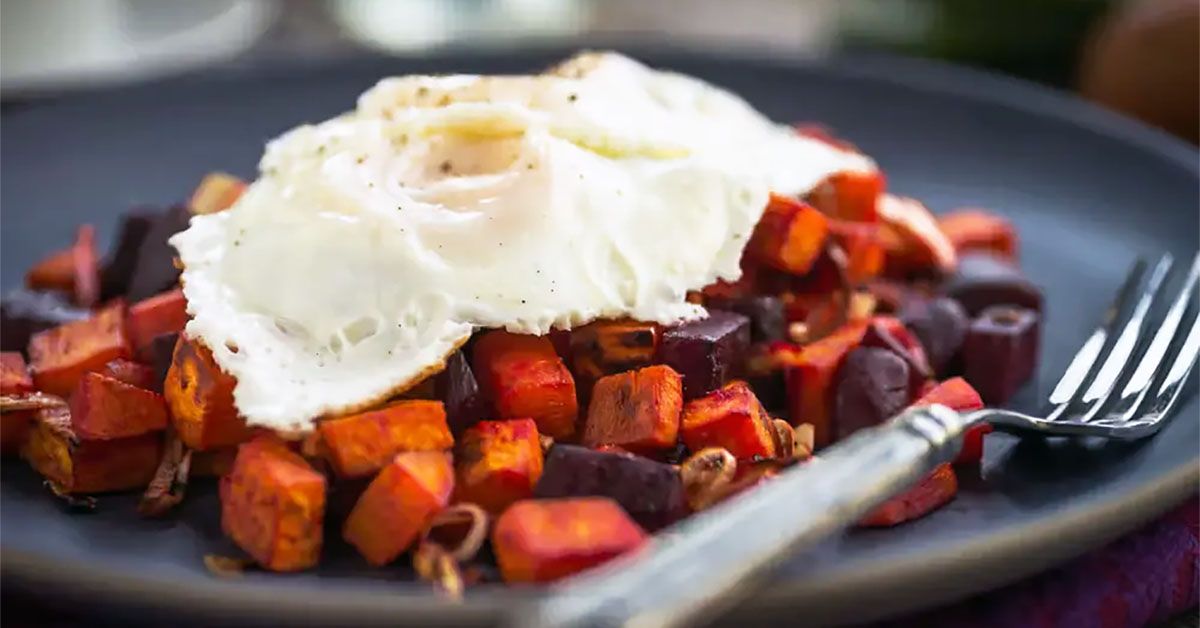
If breakfast had a color wheel, Beet, Leek, and Sweet Potato Hash with Eggs would be the overachiever who brought markers, glitter, and a backup spreadsheet. This skillet meal is earthy, sweet, savory, hearty, and bright enough to make your average bowl of cereal quietly rethink its life choices.
At its heart, this dish is a vegetable hash built from three humble ingredients that know exactly what they are doing. Beets bring deep earthiness and dramatic ruby color. Sweet potatoes add natural sweetness, creamy centers, and caramelized edges. Leeks deliver a mild onion flavor that feels elegant without requiring you to pronounce anything in French. Add eggs on top, and suddenly you have a complete brunch, breakfast-for-dinner, or meal-prep situation that looks fancy but behaves like a one-pan weeknight recipe.
This recipe works because it balances texture and flavor. The sweet potatoes brown and soften, the beets become tender and slightly nutty, the leeks melt into the background like savory confetti, and the eggs steam gently in little vegetable nests. It is simple, colorful, filling, and deeply satisfyingthe kind of skillet breakfast that makes people ask, “Did you follow a recipe?” while you casually pretend you always cook like this.
Why This Beet, Leek, and Sweet Potato Hash Works
A good hash is not just a pile of chopped vegetables having a meeting in a pan. It needs contrast. You want crisp edges, tender centers, savory depth, and enough moisture to keep everything from tasting like roasted confetti. This version succeeds because each ingredient brings a different strength.
Sweet potatoes are the backbone. Their starch helps the hash feel substantial, while their natural sugars brown beautifully in a hot skillet. Cut them small and evenly, and they cook faster without turning mushy.
Beets add earthy flavor and a slightly firm bite. They also stain everything pink, which is either charming or alarming depending on your relationship with laundry. In this recipe, that color is part of the appeal. The hash turns jewel-toned and rustic, like something you would eat at a farmhouse brunch where everyone owns linen napkins but pretends not to care.
Leeks are the quiet luxury ingredient. They have a gentler flavor than onions and become silky when cooked. The trick is cleaning them well, because leeks tend to hide grit between their layers like they are saving it for retirement.
Eggs transform the hash from a side dish into a full meal. When cracked directly into wells in the vegetables, they cook gently with a covered skillet. The whites set, the yolks can stay soft or firm depending on your preference, and the whole dish becomes brunch-ready without dirtying a second pan.
Ingredients for Beet, Leek, and Sweet Potato Hash with Eggs
This recipe is flexible, but the best results come from cutting the vegetables into similar-sized pieces and seasoning in layers. Below is a practical version for four servings.
Main Ingredients
- 2 medium sweet potatoes, peeled if desired and diced into 1/2-inch cubes
- 2 medium beets, peeled and diced into 1/2-inch cubes
- 2 medium leeks, white and light green parts only, sliced and thoroughly rinsed
- 2 tablespoons olive oil or avocado oil
- 1 tablespoon butter or additional oil
- 4 large eggs
- 1/2 teaspoon kosher salt, plus more to taste
- 1/2 teaspoon black pepper
- 1/2 teaspoon smoked paprika
- 1/4 teaspoon garlic powder
- 1 tablespoon chopped parsley, chives, or dill
- Optional: grated Parmesan, crumbled feta, hot sauce, lemon juice, or avocado
Recommended Equipment
- A large cast-iron or heavy nonstick skillet
- A sharp chef’s knife
- A cutting board that does not panic at beet juice
- A lid for the skillet
- A spatula
How to Prepare the Vegetables
The secret to a great vegetable hash is not mystery. It is knife work. Small, even cubes cook at the same speed, brown more evenly, and prevent the dreaded “one piece is raw, one piece is mashed potato” situation.
How to Clean Leeks
Trim off the dark green tops and root ends, then slice the white and light green parts lengthwise. Rinse between the layers under cool water, then slice into half-moons. For extra insurance, place the sliced leeks in a bowl of water, swish them around, and lift them out with your hands. The grit will sink to the bottom, where it belongs.
How to Cut Beets Without Turning the Kitchen Into Modern Art
Peel the beets with a vegetable peeler, then dice them into small cubes. Use gloves if you want clean hands, or skip the gloves and enjoy explaining to everyone that no, you did not lose a fight with a printer cartridge. If your cutting board stains easily, place parchment paper underneath the beets while chopping.
How to Dice Sweet Potatoes
Peel the sweet potatoes if you prefer a smoother texture, or leave the skins on for extra rustic appeal. Cut into planks, then strips, then cubes. Aim for pieces about 1/2 inch wide. Larger cubes are fine, but they will need more cooking time.
Step-by-Step Recipe
Step 1: Warm the Skillet
Place a large skillet over medium heat and let it warm for a minute or two. Add the olive oil. A properly heated pan helps the vegetables brown instead of steam. Browning is where the flavor lives, and flavor pays rent in this recipe.
Step 2: Cook the Sweet Potatoes and Beets
Add the diced sweet potatoes and beets to the skillet. Season with salt, pepper, smoked paprika, and garlic powder. Stir to coat the vegetables in oil, then spread them into an even layer. Let them cook undisturbed for 4 to 5 minutes so the bottom can brown.
Stir, then continue cooking for 12 to 15 minutes, stirring every few minutes. If the vegetables start browning too quickly before they become tender, add 1 to 2 tablespoons of water and cover the skillet for 2 minutes. This gives the roots a quick steam bath without sacrificing all the browned bits.
Step 3: Add the Leeks
When the sweet potatoes and beets are nearly tender, stir in the sliced leeks and butter. Cook for 5 to 7 minutes, until the leeks soften and become fragrant. The mixture should look glossy, colorful, and slightly caramelized.
Step 4: Make Wells for the Eggs
Use a spoon or spatula to create four small wells in the hash. Crack one egg into each well. Sprinkle the eggs with a pinch of salt and pepper.
Step 5: Cover and Cook
Cover the skillet and cook for 4 to 6 minutes, or until the egg whites are set and the yolks are cooked to your liking. For fully firm eggs, cook a few minutes longer. For food safety, eggs should be cooked until both whites and yolks are firm, especially when serving children, older adults, pregnant people, or anyone with a compromised immune system.
Step 6: Finish and Serve
Remove the skillet from the heat. Sprinkle with fresh herbs and add your favorite toppings. A squeeze of lemon juice brightens the earthy vegetables. Parmesan adds salty richness. Feta brings tang. Hot sauce wakes everything up like a tiny breakfast alarm clock.
Flavor Variations
Once you understand the basic method, this sweet potato beet hash becomes easy to customize. Think of it as a reliable template wearing different outfits.
Make It Spicy
Add a pinch of cayenne, red pepper flakes, or diced jalapeño with the leeks. Finish with hot sauce or chili crisp for extra personality.
Make It Herby
Dill, parsley, chives, and cilantro all work beautifully. Dill pairs especially well with beets, while chives flatter the eggs and leeks.
Make It Cheesy
Sprinkle feta, goat cheese, Parmesan, or sharp cheddar over the finished hash. Add cheese after the eggs cook so it softens without disappearing into the pan.
Make It Heartier
Add cooked sausage, turkey bacon, black beans, chickpeas, or leftover shredded chicken. If using meat, cook it first, remove it from the pan, then return it near the end.
Make It Vegan
Skip the eggs and top the hash with crispy chickpeas, sautéed mushrooms, avocado, or a spoonful of dairy-free yogurt. You can also add tofu cubes seasoned with turmeric and nutritional yeast.
Nutrition Highlights
This beet, leek, and sweet potato hash with eggs is colorful for a reason. Brightly colored vegetables often bring a mix of fiber, vitamins, minerals, and plant compounds. Sweet potatoes are known for beta-carotene, which the body can convert to vitamin A. Beets contribute fiber, folate, and earthy sweetness. Leeks belong to the allium family and add flavor without needing heavy sauces. Eggs provide protein and help make the dish more filling.
The result is a balanced skillet meal that includes complex carbohydrates, vegetables, protein, and satisfying fat. It feels indulgent because of the caramelized edges and rich eggs, but it is built mostly from whole-food ingredients. That is the kind of kitchen math we like.
Common Mistakes to Avoid
Cutting the Vegetables Too Large
Big chunks may look rustic, but they take longer to cook. If the pieces are too large, the outside can brown before the inside softens. Keep the cubes small and consistent.
Overcrowding the Pan
If the skillet is packed too tightly, the vegetables steam instead of brown. Use a large pan, and spread everything into an even layer whenever possible.
Adding Leeks Too Early
Leeks cook faster than beets and sweet potatoes. Add them after the root vegetables have had time to soften. Otherwise, the leeks may burn before the rest of the hash is ready.
Forgetting Acid at the End
Root vegetables are naturally sweet and earthy, so a little acid makes the whole dish brighter. Lemon juice, vinegar, pickled onions, or a spoonful of salsa can make the flavors pop.
Serving Ideas
This hash can stand alone, but it also plays well with extras. Serve it with toasted sourdough, warm tortillas, a simple green salad, sliced avocado, or roasted tomatoes. For brunch, pair it with fruit and coffee. For dinner, add a side of sautéed greens or a bowl of soup.
It also makes a beautiful holiday breakfast because the colors are naturally dramatic. Red beets, orange sweet potatoes, pale green leeks, golden eggsthis dish does not need a filter. It arrives camera-ready.
Storage and Meal Prep Tips
The vegetable hash can be made ahead and stored without the eggs. Cook the beets, sweet potatoes, and leeks, let the mixture cool, then refrigerate it in an airtight container for up to 4 days. Reheat it in a skillet with a splash of oil, then add fresh eggs and cover until cooked.
If you already cooked the eggs into the hash, leftovers can still be refrigerated, but the eggs will firm up when reheated. For the best texture, make the vegetable base ahead and cook the eggs fresh.
You can also roast the beets and sweet potatoes in advance. Spread the diced vegetables on a sheet pan, toss with oil and seasoning, and roast until tender. Later, warm them in a skillet with the leeks, then add eggs. This shortcut is perfect for busy mornings when your brain is technically awake but still buffering.
My Kitchen Experience with Beet, Leek, and Sweet Potato Hash with Eggs
The first time I made a beet, leek, and sweet potato hash with eggs, I underestimated the beet. This was not my finest moment. I treated it like a polite little root vegetable, only to discover that beets have the color confidence of a Broadway costume designer. Within minutes, my cutting board looked like it had hosted a very small but emotionally intense tomato festival. The good news? The finished hash was so beautiful that I forgave the beet immediately.
What surprised me most was how well the flavors worked together. Sweet potatoes are familiar breakfast territory. They are cozy, soft, and dependable. Beets, however, bring a deeper flavor that makes the hash feel less ordinary. They add a slightly earthy note that keeps the sweetness from becoming too dessert-like. Then the leeks slide in with that gentle onion flavor, tying everything together without shouting. It is the culinary equivalent of a good group chat: everyone contributes, nobody dominates, and the eggs show up late but somehow get all the attention.
I have learned that patience matters with this dish. The best version happens when the vegetables get enough contact with the pan. If you stir constantly, you interrupt the browning. It is tempting, especially when the kitchen smells good and you want to feel useful. But hash rewards restraint. Let the cubes sit. Let the skillet do its job. When you finally turn the vegetables and see those golden edges, you will understand why patience is not just a virtueit is a brunch strategy.
Another lesson: season in stages. A little salt with the root vegetables, another small pinch after adding the leeks, and a final adjustment before serving makes a huge difference. Beets and sweet potatoes can handle seasoning. Without enough salt and acidity, the dish tastes pleasant but sleepy. Add lemon juice at the end, and suddenly everything wakes up. It is like opening the curtains in flavor form.
I also prefer cracking the eggs directly into the hash instead of frying them separately. It looks rustic, saves a pan, and lets the eggs settle into the vegetables. The covered skillet method gently cooks the tops of the eggs while keeping the hash warm underneath. For guests who like firm yolks, I leave the lid on longer. For people who enjoy softer yolks, I pull the pan sooner. Either way, the presentation is charming: little eggs tucked into a colorful vegetable landscape like they own vacation homes there.
This recipe has become one of those meals I make when I want something nourishing but not boring. It works on slow weekends, but it also makes sense on weeknights when dinner needs to be hearty, fast, and made from ingredients that can survive in the pantry or fridge for more than three emotional days. It is flexible, forgiving, and cheerful. Plus, it makes you feel like the sort of person who casually cooks with leeks, and honestly, sometimes we all deserve that kind of personal branding.
Conclusion
Beet, Leek, and Sweet Potato Hash with Eggs is proof that a healthy skillet meal does not have to be bland, beige, or emotionally uninspiring. With sweet potatoes for comfort, beets for color and earthiness, leeks for savory depth, and eggs for protein-rich satisfaction, this dish earns its place at breakfast, brunch, lunch, or dinner.
The key is simple: cut the vegetables evenly, give them time to brown, add the leeks after the roots begin to soften, and finish with fresh herbs and a bright splash of lemon. The result is a colorful, hearty, one-pan recipe that feels special enough for guests but easy enough for a regular Tuesday. In other words, it is the kind of hash that makes your skillet look like it has its life togethereven if the rest of the kitchen strongly disagrees.