

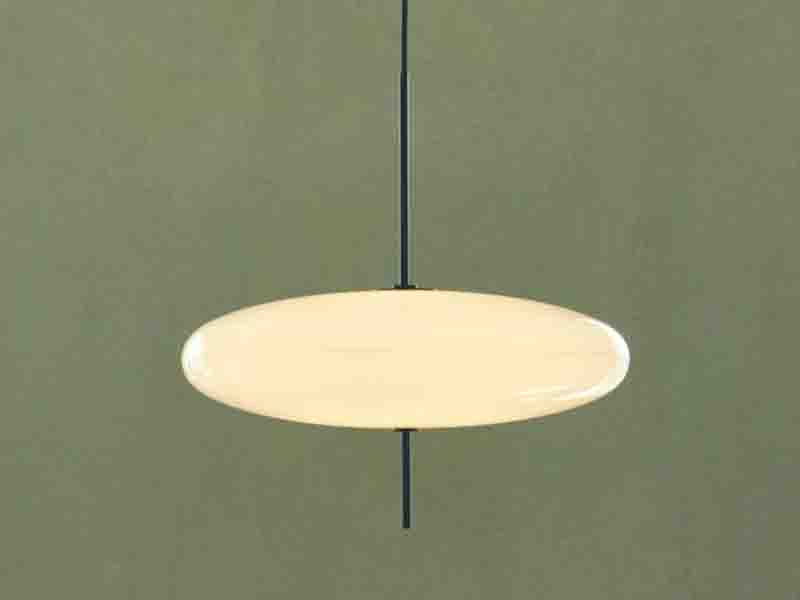
The Astep Model 2065 Pendant Light is one of those rare fixtures that manages to look futuristic, historical, minimal, and slightly theatrical all at once. It has the calm confidence of Italian modern lighting, the clean restraint of Scandinavian design, and the visual personality of a small flying saucer that has chosen good manners over world domination. In other words, it is not just a pendant light. It is a design conversation hanging from the ceiling.
Originally designed in 1950 by legendary Italian lighting designer Gino Sarfatti, the Model 2065 was later reissued by Astep for contemporary interiors. Its defining feature is beautifully simple: two joined opaline methacrylate saucer-shaped diffusers suspended from a slim structure and a black-painted aluminum canopy. The result is a pendant lamp that feels light, balanced, and almost weightless, despite its generous size and impressive presence.
For homeowners, designers, architects, and lighting enthusiasts, the Astep Model 2065 Pendant Light is especially appealing because it does not scream for attention. It glows, floats, and quietly wins the room. Whether placed above a dining table, in a living room, over a kitchen island, or in a boutique hospitality setting, it brings atmosphere without becoming visually bossy. And honestly, that is a rare talent in a world where some pendant lights appear to be auditioning for a superhero movie.
What Is the Astep Model 2065 Pendant Light?
The Astep Model 2065 is a modern suspension lamp based on Gino Sarfatti’s original 1950 design. Its form is built around two opaline methacrylate diffusers that meet to create a flattened, elliptical silhouette. The lamp is suspended from the ceiling by a slender support system, with an aluminum structure providing contrast and stability.
The fixture’s beauty lies in the tension between simplicity and technical intelligence. At first glance, it looks almost effortless: a glowing disc, a slim line, a quiet canopy. Look closer, and the engineering becomes more interesting. The broad diffuser helps distribute light softly, while the multiple-bulb configuration provides enough illumination for larger rooms. The material choice keeps the fixture lighter than glass, which was especially forward-thinking when Sarfatti first experimented with methacrylate in the mid-century period.
Key Product Details
- Designer: Gino Sarfatti
- Original design year: 1950
- Reissue: Astep contemporary production
- Type: Suspension pendant light
- Materials: Opaline methacrylate diffusers and aluminum structure
- Approximate dimensions: About 21.5 inches in diameter and 21.2 inches high
- Typical hang height range: Approximately 33.9 to 133.9 inches, depending on installation
- Lighting: Designed for multiple LED bulbs, creating soft ambient illumination
- Common applications: Dining rooms, living rooms, kitchens, foyers, lounges, offices, and boutique interiors
The Design Story: Gino Sarfatti and the Beauty of Experimentation
To understand the Astep Model 2065 Pendant Light, it helps to understand Gino Sarfatti. Sarfatti was not merely someone who designed lamps. He helped reshape how modern lighting could be imagined. In 1939, he founded Arteluce in Milan, a company that became closely associated with Italian modern lighting and design innovation.
Sarfatti approached lighting with the mindset of an engineer and the eye of a poet. He was interested in new materials, new technologies, and new ways of using light in architecture. The Model 2065 reflects that experimental spirit. At a time when glass was still a dominant material for lighting, methacrylate offered a lighter, more flexible alternative. Sarfatti saw potential where others might have seen only a strange new plastic sheet and a manufacturing headache.
The result was a pendant light that looked unlike the heavy fixtures of earlier decades. Its saucer form was streamlined, clean, and modern. It had a space-age feeling before “space-age” became a full-blown design mood. Yet it avoided gimmickry. The Model 2065 is playful, but not silly; sculptural, but not fussy; iconic, but still very usable.
Why the Astep Model 2065 Still Feels Modern Today
Many vintage-inspired designs rely heavily on nostalgia. They look backward with a sentimental sigh, wearing mid-century style like a costume. The Astep Model 2065 Pendant Light is different. It still feels fresh because its design logic remains relevant: lightweight materials, soft diffusion, simple geometry, and visual clarity.
Modern interiors often need lighting that can balance function and atmosphere. Open-plan living spaces, dining areas, and kitchens are no longer just practical zones. They are social stages. People cook, work, chat, snack, host, and occasionally stand under the pendant light wondering why they entered the room. The Model 2065 works well in these flexible spaces because it creates an even ambient glow while acting as a sculptural centerpiece.
Its circular form softens rooms with straight lines. Its white diffuser complements minimalist interiors, while the black hardware adds a crisp graphic accent. In a neutral room, it brings form. In a colorful room, it brings calm. In a room full of design pieces, it does not start a furniture argument.
Materials and Construction: Lightness With Substance
The Astep Model 2065 Pendant Light is known for its opaline methacrylate diffuser. This material gives the lamp its signature soft glow and airy presence. Compared with glass, methacrylate can feel visually lighter and physically easier to manage, which is part of what makes the fixture appear to float rather than hang heavily.
The aluminum structure keeps the fixture refined and precise. The black-painted canopy creates contrast against the diffuser, helping the pendant feel crisp rather than cloudy. Depending on the finish selected, the cord and diffuser combination can lean more monochromatic or more graphic. White-on-white feels serene and architectural; white with a black cable feels sharper; black-and-white versions bring extra visual drama.
The lamp’s rounded profile also helps diffuse light gently across a room. Instead of producing one harsh spotlight, the Model 2065 creates a broad, atmospheric effect. This makes it especially useful above dining tables, where flattering light matters. Nobody wants dinner guests illuminated like they are being questioned by airport security.
Lighting Performance: Soft, Bright, and Livable
The Model 2065 uses multiple LED bulbs, which allows it to provide generous ambient illumination. U.S. listings commonly describe it with warm LED lamping, often around the cozy 2700K range, which is ideal for dining and living areas. Warm white light flatters wood tones, natural stone, upholstery, and human faces. Cool office lighting has its place, but that place is not above your risotto.
Because the diffuser is opaline, the light is softened before it reaches the room. This helps reduce glare and creates a more comfortable visual experience. The pendant can be paired with a compatible dimmer when the correct bulbs and electrical setup are used, giving homeowners more control over mood. Bright for homework, medium for dinner, low for late-night conversations, and nearly invisible for pretending not to see the dishes.
As with any designer pendant light, bulb selection matters. Choose high-quality LED bulbs with consistent color temperature and good color rendering. A beautiful fixture with mismatched bulbs is like wearing a tailored suit with one sock from the gym bag. It may technically function, but everyone knows something has gone wrong.
Where to Use the Astep Model 2065 Pendant Light
Above a Dining Table
The dining room is one of the best places for the Astep Model 2065 Pendant Light. Its wide, rounded diffuser naturally suits round, oval, and rectangular tables. For most dining installations, a common guideline is to hang the bottom of the pendant about 30 to 36 inches above the tabletop. This height usually provides comfortable illumination without blocking sightlines across the table.
Because the Model 2065 has a strong visual identity, it can anchor the dining area without requiring additional decorative clutter. Pair it with a wood table for warmth, a marble table for sophistication, or a simple white table for a gallery-like effect.
In a Living Room
In a living room, the Model 2065 works well as a central ambient light. It is especially effective in rooms with mid-century modern furniture, Scandinavian sofas, low-profile coffee tables, textured rugs, and art-filled walls. Its soft geometry makes the room feel intentional without making it feel staged.
If the living room has a lower ceiling, careful measurement is essential. The pendant has presence, and it needs enough air around it to feel elegant. In taller rooms, the longer suspension range can create a dramatic floating effect.
Over a Kitchen Island
For kitchen islands, the Model 2065 is best used when the island has enough scale to support a single statement fixture. In many kitchens, designers use several small pendants, but one large sculptural pendant can look more refined when properly centered. The key is proportion. The fixture should feel deliberate, not like a UFO that got lost on its way to the pantry.
A common placement range for pendants over counters is about 30 to 36 inches above the countertop. However, because the Model 2065 is broad and sculptural, always consider ceiling height, sightlines, and how people use the space.
In Commercial and Hospitality Spaces
The Astep Model 2065 Pendant Light is also a strong choice for restaurants, boutique hotels, lounges, galleries, and design-forward offices. It has enough personality to create a memorable impression but enough restraint to remain timeless. In hospitality design, that balance is valuable. Guests remember atmosphere, even when they cannot name the pendant light. Though, if they can name it, you probably have very stylish guests.
How to Style the Astep Model 2065 Pendant Light
The Model 2065 pairs beautifully with interiors that value clean lines, quality materials, and thoughtful contrast. It does not need a room full of Italian classics to look good, although it certainly would not complain. It can work with contemporary minimalism, mid-century modern interiors, Japandi spaces, Scandinavian homes, and even eclectic rooms that mix vintage and modern pieces.
For a warm look, combine it with walnut furniture, tan leather, natural linen, and soft white walls. For a gallery-inspired setting, use it with matte black accents, pale oak, sculptural chairs, and oversized art. For a more dramatic interior, place the black-and-white version against a moody wall color such as charcoal, deep olive, or navy.
The fixture’s broad white diffuser also makes it useful in rooms that already have busy textures. If your space includes patterned rugs, veined stone, bookshelves, plants, and that one chair everyone swears they will reupholster someday, the Model 2065 can bring visual calm from above.
Buying Considerations Before You Choose the Model 2065
Measure the Room Carefully
The Model 2065 is not tiny. With a diameter of just over 21 inches, it has enough size to matter. Before buying, measure the room, the table or island below it, the ceiling height, and the desired drop. Use painter’s tape or a cardboard mockup if needed. It may feel ridiculous to tape a pretend pendant to the air, but it is much less ridiculous than installing a luxury light at the wrong height.
Check the Electrical Requirements
Always confirm compatibility with your home’s voltage, bulb base, dimmer type, and local electrical standards. U.S. product listings may differ from European specifications, especially regarding bulb bases and included lamps. A licensed electrician can help ensure safe installation and proper dimming performance.
Think About Maintenance
Like most white diffusers, the Model 2065 benefits from regular dusting. Use a soft, dry microfiber cloth and avoid harsh cleaners unless the manufacturer specifically recommends them. The goal is to preserve the smooth opaline surface, not challenge it to a chemical duel.
Choose the Right Finish
The finish changes the mood. A white diffuser with a white cable feels quiet and seamless. A white diffuser with a black cable adds graphic definition. A black-and-white option feels more dramatic and design-forward. Choose based on the room’s architecture, furniture, and contrast level.
Pros and Cons of the Astep Model 2065 Pendant Light
Pros
- Iconic design by Gino Sarfatti
- Soft, diffused ambient light
- Lightweight visual appearance
- Strong statement without excessive ornament
- Works with mid-century, Scandinavian, modern, and eclectic interiors
- Generous scale for dining rooms and living spaces
- Contemporary reissue with updated production values
Cons
- Premium pricing compared with ordinary pendant lights
- Requires careful installation height and proportion planning
- May be too large for very small rooms or low ceilings
- White diffuser surfaces require periodic cleaning
- Bulb and dimmer compatibility should be checked before installation
Is the Astep Model 2065 Pendant Light Worth It?
The Astep Model 2065 Pendant Light is worth considering if you want a fixture with authentic design history, elegant proportions, and long-term visual relevance. It is not the cheapest pendant light, and it is not trying to be. Its value lies in its combination of heritage, material innovation, and everyday usability.
This pendant is especially worthwhile for spaces where lighting is meant to define the room. In a dining room, it becomes the centerpiece. In a living room, it becomes an architectural feature. In a design studio or boutique space, it signals taste without shouting. It is the kind of light that makes people pause and say, “That’s beautiful,” rather than “Wow, that is aggressively expensive-looking.” There is a difference, and the Model 2065 understands it.
Experience Section: Living With the Astep Model 2065 Pendant Light
Living with the Astep Model 2065 Pendant Light is less about flipping a switch and more about changing the mood of a room. The first thing most people notice is the way it floats. Because the diffuser is broad, pale, and softly rounded, the fixture has a quiet hovering quality. It does not feel heavy, even though it has enough diameter to hold attention. In a dining room, this can make the entire table feel more composed, as if the furniture suddenly remembered its posture.
One practical experience that stands out is how forgiving the light feels during evening use. Some pendant lights are stunning at noon and slightly hostile after sunset, throwing shadows across faces or creating bright spots on the table. The Model 2065’s opaline diffuser softens the output, making dinner feel warmer and more relaxed. It is the kind of fixture that encourages people to linger. Coffee becomes a second cup. Dessert becomes “just a small piece,” which somehow becomes half the cake. Lighting cannot be blamed for everything, but it is definitely an accomplice.
In open-plan homes, the pendant also helps create a visual zone. Place it above a dining table between a kitchen and living area, and suddenly the dining area feels like its own destination. No wall required. This is especially useful in apartments, lofts, and modern homes where one large room has to perform several jobs. The Model 2065 draws a soft circle of attention without making the space feel divided.
Another experience worth noting is how well the fixture handles different decor styles over time. A trendy pendant can look wonderful for three years and then begin quietly begging for retirement. The Model 2065 has a more durable design language. Change the chairs, repaint the walls, swap the rug, or move from warm woods to cooler stone finishes, and the pendant still makes sense. That flexibility matters for anyone who enjoys updating interiors without replacing major fixtures every time a new Pinterest board appears.
Maintenance is straightforward but should not be ignored. Dust is the natural enemy of beautiful white lighting. A gentle microfiber wipe keeps the diffuser looking crisp. Because the form is smooth and uncomplicated, cleaning is not a dramatic event. No tiny crystals, no ornamental crevices, no medieval chandelier workout. Just a calm surface that rewards basic care.
Installation height may be the most important real-world lesson. Too high, and the pendant loses intimacy. Too low, and guests may feel like they are dining under a very elegant ceiling mushroom. Over a dining table, starting around 30 to 36 inches above the tabletop is usually sensible, then adjusting for ceiling height, table size, and personal preference. In a living room or foyer, the goal is clear walking space and balanced sightlines. When installed correctly, the Model 2065 feels natural, as if the room had been waiting for it all along.
Overall, the daily experience of the Astep Model 2065 Pendant Light is one of quiet luxury. It does not rely on sparkle, excess, or novelty. It relies on proportion, diffusion, and history. That is why it works so well in real homes. It gives the room a focal point, improves the evening atmosphere, and looks good even when the table is covered with laptops, mail, and one mysterious charging cable nobody will claim.
Conclusion
The Astep Model 2065 Pendant Light is a refined example of how great design can travel across decades without losing relevance. Designed by Gino Sarfatti in 1950 and reintroduced for modern interiors by Astep, it combines opaline methacrylate diffusers, an aluminum structure, soft LED illumination, and an unmistakable saucer-like silhouette. It is elegant without being cold, iconic without being impractical, and playful without becoming a novelty.
For dining rooms, living rooms, kitchens, and hospitality spaces, the Model 2065 offers both atmosphere and architectural character. It rewards careful placement, quality bulbs, and thoughtful styling. Most importantly, it proves that a pendant light can do more than brighten a room. It can shape how the room feels, how people gather, and how design quietly improves everyday life.