

Bringing home an adopted mutt is a little like opening a mystery box with paws. You may see Labrador ears, a terrier tail, a shepherd stare, and the dramatic sigh of a retired theater actor. Naturally, you want to know: “What kind of dog did I just adopt?”
The honest answer is: your dog is probably a one-of-a-kind blend, and that is exactly what makes mutts so wonderful. Identifying an adopted mutt is not about slapping a perfect breed label on your dog and calling it science. It is about understanding your dog’s size, coat, behavior, energy level, health risks, grooming needs, and personality so you can give them the best life possible.
This guide walks you through 10 practical steps to identify your adopted mutt using appearance, behavior, veterinary input, DNA testing, and good old-fashioned observation. You may not end up with a neat answer like “50% Beagle, 25% Border Collie, 25% Tiny Gremlin,” but you will learn how to read the clues your dog gives you every day.
Why Identifying Your Adopted Mutt Matters
Knowing your mixed-breed dog’s possible background can help you make smarter decisions about exercise, training, grooming, diet, and preventive health care. A dog with herding ancestry may need more mental work. A dog with short legs and a long back may need careful jumping rules. A dog with a thick double coat may require regular brushing before your home turns into a floating fur festival.
Still, breed is only one piece of the puzzle. Your dog’s past, socialization, environment, training, age, health, and individual temperament matter just as much. Two dogs with similar DNA results can behave very differently. One may be a hiking machine; the other may consider walking to the mailbox an extreme sport.
Step 1: Start With What You Know From the Shelter or Rescue
Your first clue is the information you received during adoption. Shelter paperwork may include age estimate, weight, vaccination history, medical notes, behavior observations, and a guessed breed label. Treat that breed label as a starting point, not a final answer.
Many shelters use visual identification because they have limited information about a dog’s parents. Staff members may make an educated guess based on body shape, coat, color, and behavior. However, visual breed identification can be unreliable, especially for mixed-breed dogs with several breeds in the family tree.
What to look for in adoption records
Check for details such as where the dog came from, whether they arrived as a stray, whether they were surrendered by a previous owner, and whether littermates were present. If siblings were adopted with your dog, photos of those siblings can reveal useful clues. One puppy may look like a tiny German Shepherd, while another looks like a Corgi who accidentally joined a rock band. Mixed litters can surprise everyone.
Step 2: Measure Your Dog’s Size and Body Structure
Size is one of the easiest clues to document. Measure your dog’s height at the shoulder, body length from chest to rump, chest depth, neck size, and weight. These details can help you compare your dog with breed groups rather than individual breeds.
A deep chest and narrow waist may suggest sighthound influence. A sturdy frame and broad head may point toward working or guardian breeds. Long body, short legs, and turned-out paws can suggest dwarfism traits seen in breeds like Dachshunds, Corgis, and Basset Hounds. A square, athletic body may hint at retriever, herding, or bully-type ancestry.
Use proportions, not just weight
A 45-pound dog can be tall and lean, short and stocky, or built like a furry coffee table. Weight alone does not identify breed background. Body proportions tell a better story. Take clear side-view and front-view photos every few months, especially if your adopted dog is still growing.
Step 3: Study the Head, Ears, Tail, and Muzzle
Your dog’s head shape can offer clues, though it should never be used as proof. A long narrow muzzle may suggest collie, sighthound, or shepherd influence. A shorter muzzle might point toward boxer, bulldog, pug, or other brachycephalic breeds. A broad skull with strong cheek muscles may resemble several working or terrier-type breeds.
Ears can be hilariously unhelpful and still worth studying. Pricked ears, floppy ears, rose ears, button ears, and one-up-one-down “satellite dish mode” can all appear in mixed breeds. Tail carriage also varies. Some dogs curl their tails over the back, some carry them straight, and some wag so hard the whole back half of the dog becomes a windshield wiper.
Remember that puppy features change
If your mutt is young, do not get too attached to early guesses. Puppies change shape quickly. Ears pop up, coats thicken, legs stretch, and a round puppy face may become sleek and adult-looking. Identifying a puppy’s breed mix by appearance is extra tricky.
Step 4: Look Closely at Coat Type, Color, and Shedding
Coat type can help narrow possibilities. Is your dog smooth-coated, wire-coated, curly, long-haired, double-coated, silky, or patchy? Do they shed lightly, seasonally, or with the enthusiasm of a confetti cannon?
A thick double coat may suggest northern, herding, or retriever ancestry. A wiry coat may point toward terrier influence. Curly or wavy hair may suggest poodle or water-dog ancestry, though many mixes can produce unexpected textures. Merle coloring, ticking, brindle, saddle patterns, black masks, and white spotting can all be clues, but none are exclusive to one breed.
Coat clues can be misleading
Some coat traits are shared by many breeds. A black-and-white dog is not automatically a Border Collie. A yellow dog is not automatically a Labrador. A spotted dog is not automatically a Dalmatian. Dogs apparently did not receive the memo about making human identification easy.
Step 5: Observe Energy Level and Working Style
Behavior can be more useful than appearance when you are trying to understand your adopted mutt’s needs. Watch how your dog moves, plays, learns, and solves problems. Do they stalk and stare at toys before chasing them? Do they sniff every inch of the sidewalk like a detective with overtime pay? Do they retrieve naturally, dig obsessively, guard the yard, or herd children into the kitchen?
Herding-type dogs often show quick responses, strong eye contact, high trainability, and a need for mental stimulation. Hounds may follow scent trails with intense focus. Terriers may be bold, busy, and very interested in small moving things. Retrievers may enjoy carrying toys, greeting people, and swimming. Guardian or working breeds may be more watchful and slower to trust strangers.
Behavior is not destiny
Breed tendencies are tendencies, not guarantees. Training, socialization, trauma, age, and health can strongly affect behavior. A dog who seems shy in the first week may become outgoing after decompression. A dog who seems hyper may simply be stressed, under-exercised, or confused by a new home.
Step 6: Give Your Dog Time to Decompress
Do not judge your adopted mutt too quickly. Many dogs need days, weeks, or even months to show their real personality after adoption. Shelter life can be stressful. A newly adopted dog may sleep a lot, pace, bark, hide, refuse food, or cling to you like a furry shadow.
As your dog settles in, their true habits will become clearer. You may discover that the “lazy couch potato” is actually a weekend athlete. Or the “high-energy maniac” may become a relaxed companion once they learn the house routine and stop worrying that the vacuum cleaner is a monster with wheels.
Track changes over the first 90 days
Keep a simple journal. Note appetite, sleep, favorite toys, fears, reactions to dogs, reactions to strangers, walking style, training progress, and energy patterns. This helps you identify not only possible breed traits but also your individual dog’s emotional needs.
Step 7: Ask Your Veterinarian for a Health-Based Assessment
Your veterinarian may not be able to identify your mutt’s exact breed mix by sight, but they can assess health, structure, age, dental condition, weight, gait, skin, coat, and risk factors. This is far more useful than winning a breed-guessing game at the dog park.
A vet can help you decide whether your dog needs joint support, weight management, dental care, allergy treatment, parasite prevention, or breed-related screening. For example, dogs with long backs may need extra care to protect the spine. Deep-chested dogs may require discussion about bloat risk. Flat-faced dogs may need breathing and heat-safety guidance.
Bring photos and behavior notes
If you want your vet’s input on possible ancestry, bring clear photos and your observation journal. Ask practical questions: “What health concerns should I watch for based on my dog’s build?” and “What exercise level is safe?” These answers matter more than whether your dog is 14% Something Fancy.
Step 8: Consider a Dog DNA Test
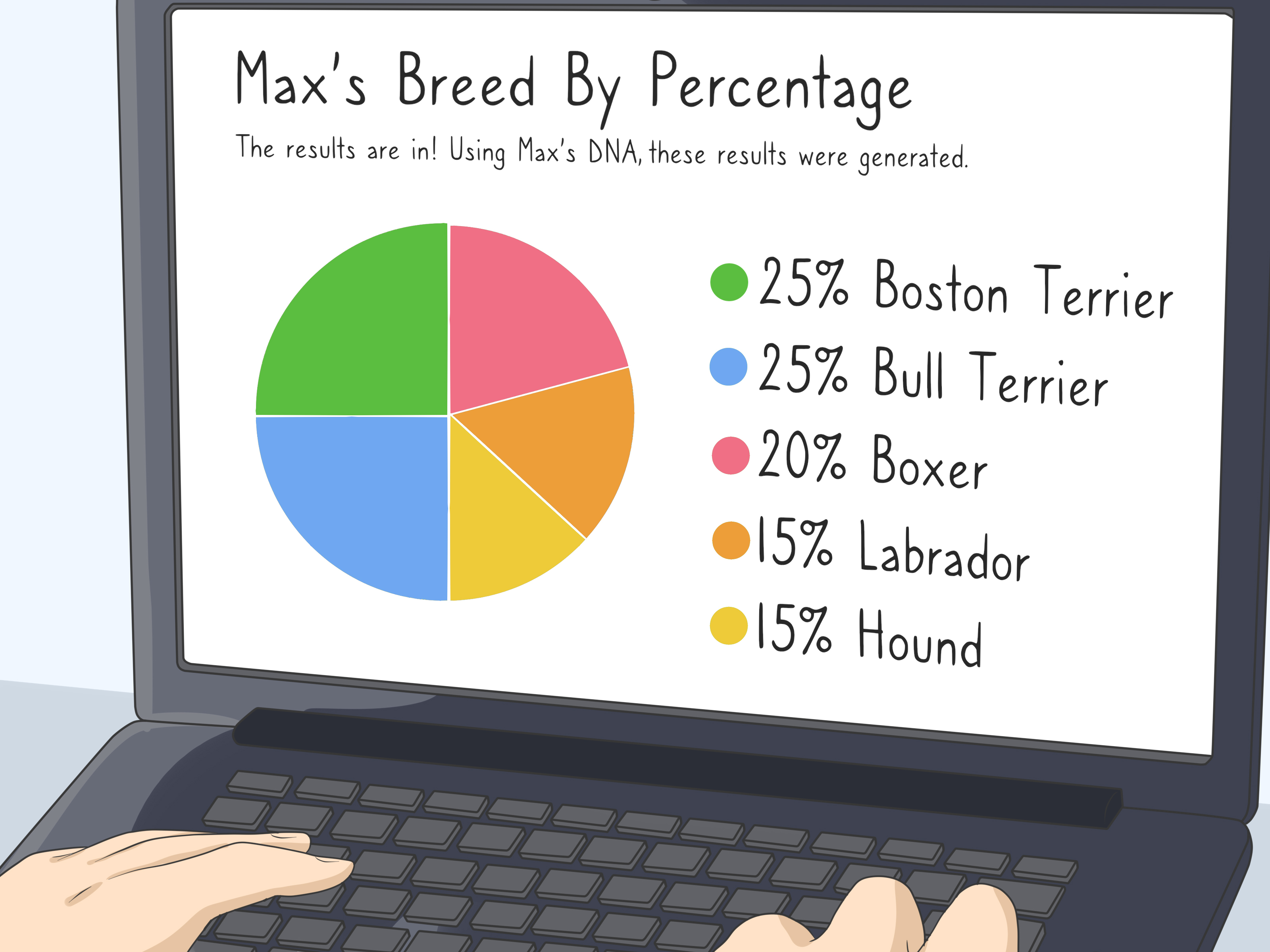
A dog DNA test can be the most direct way to explore your mutt’s ancestry. Most tests use a cheek swab that you mail to a lab. Results may include breed percentages, possible relatives, genetic traits, coat predictions, adult size estimates, and health markers depending on the test you choose.
DNA testing can be especially helpful when your dog’s appearance is confusing or when you want health-related insights. If your dog has herding breed ancestry, for example, certain medication sensitivity discussions may be worth having with your veterinarian. If results suggest breeds prone to joint, eye, heart, or skin conditions, your vet can help you interpret what that means for real-life care.
Choose the test carefully
Not all dog DNA tests use the same breed database, markers, or reporting methods. Look for a company with a large reference database, transparent explanations, health screening options, and clear disclaimers. Also remember that breed heritage testing is not the same as official pedigree proof. It estimates ancestry by comparing your dog’s DNA to reference populations.
Step 9: Interpret DNA Results With Common Sense
DNA results can be fascinating, funny, and occasionally humbling. You may look at your 18-pound dog and discover Great Pyrenees somewhere in the family tree. You may swear your dog is mostly Beagle and find out they are part Chihuahua, part Australian Cattle Dog, part Poodle, and part “supermutt,” which is the scientific term for “your family tree got spicy.”
Use results as a guide, not a personality verdict. A small percentage of a breed may not strongly influence appearance or behavior. A high percentage may still show up differently depending on which genes your dog inherited. Genetics is not a smoothie where every ingredient blends evenly.
Share results with your vet
If your test includes health markers, do not panic over a risk result. A genetic predisposition does not mean your dog will definitely develop a disease. It means you may have information worth discussing with a professional. Your veterinarian can help separate “interesting” from “actionable.”
Step 10: Identify the Dog in Front of You
The final and most important step is to identify your adopted mutt as an individual. Breed clues are useful, but your dog’s daily behavior tells you what they need right now.
Does your dog relax after a long sniff walk? Add more sniffing time. Do they love puzzle toys? Feed meals in enrichment toys. Do they panic around bicycles? Work on gradual desensitization. Do they shed like they are trying to knit a second dog? Upgrade your brush and accept your destiny.
Your adopted mutt may never fit neatly into one breed category, and that is fine. The goal is not to solve your dog like a crossword puzzle. The goal is to understand them well enough to build a happy, healthy life together.
Common Mistakes When Trying to Identify a Mutt
Mistake 1: Trusting appearance too much
Many mixed-breed dogs do not look like their actual ancestry. A dog can carry genes from several breeds without showing obvious visual traits from all of them. Guessing by appearance is fun, but it is not highly reliable.
Mistake 2: Assuming breed explains everything
If your dog barks, pulls, hides, or jumps, breed may play a role, but it is not the whole story. Training history, fear, excitement, boredom, medical discomfort, and environment can all contribute.
Mistake 3: Ignoring health because the dog is mixed
Mutts can benefit from genetic diversity, but mixed-breed dogs are not magically immune to disease. They still need regular veterinary care, vaccines, parasite prevention, dental care, weight management, and appropriate screening.
Mistake 4: Using breed guesses to limit your dog
Do not assume your mutt cannot learn, cannot live with other pets, cannot enjoy sports, or cannot be calm based on a guessed label. Observe, train, and support the dog you actually have.
Real-Life Experience: Living With the Mystery of an Adopted Mutt
Ask anyone who has adopted a mutt, and you will hear a familiar story: “The shelter said Lab mix.” Somehow, every mystery dog in America has been called a Lab mix at least once. It is the little black dress of shelter descriptions: simple, safe, and used for everything.
One adopter may bring home a medium-sized black dog labeled “Labrador mix,” only to discover a dog who does not retrieve, hates water, points at squirrels, and sings dramatically when the toaster pops. Another family may adopt a “terrier mix” who grows into a 70-pound athlete with shepherd ears, hound-level sniffing skills, and a deep personal commitment to reorganizing the couch pillows.
The experience of identifying an adopted mutt often begins with curiosity and quickly becomes comedy. You compare your dog to breed photos online. You hold your phone next to your dog’s face. You ask friends. You ask strangers at the park. Everyone has a theory. “Definitely part Cattle Dog.” “No, that is a Basenji tail.” “My cousin had a dog exactly like that, and he was part Schnauzer.” By the end, your dog has been assigned more identities than a secret agent.
The more useful approach is to turn the mystery into a learning process. Start with daily life. If your dog needs two long walks and still wants a puzzle toy, you may be dealing with a working-type brain. If your dog prefers sniffing every mailbox over chasing a ball, scent work may be more satisfying than fetch. If your dog loves people but gets overwhelmed in busy places, social confidence may matter more than breed history.
DNA testing can add a fun chapter to the story. Many owners open the results expecting confirmation and instead get a plot twist. That “Boxer mix” may include Husky, American Staffordshire Terrier, Chow Chow, Poodle, and a sprinkle of unresolved ancestry. At first, the results may seem strange. Then you look again: the curled tail, the stubborn streak, the soft coat, the intense stare. Suddenly your dog becomes a walking family reunion.
The best part of identifying your adopted mutt is that the process deepens your bond. You notice how your dog learns. You understand what makes them nervous. You discover which treats are apparently worth performing Olympic-level obedience for. You learn that the dog who looked “shy” in the shelter is actually goofy, loyal, clever, and deeply committed to sleeping diagonally across the bed.
In the end, your mutt’s exact breed mix may be less important than the relationship you build. The label can guide your care, but love happens in the details: the morning tail thump, the happy sneeze before a walk, the suspicious inspection of a new toy, the way your dog leans into you after a long day. Identifying your adopted mutt is not just about ancestry. It is about learning their language.
Conclusion
Learning how to identify your adopted mutt is part science, part observation, and part joyful detective work. Start with shelter records, study your dog’s physical traits, observe behavior over time, ask your veterinarian for practical guidance, and consider a DNA test if you want deeper insight. But do not let any label define your dog completely.
Your adopted mutt is more than a breed mix. They are a living, wagging collection of habits, preferences, instincts, fears, talents, and adorable nonsense. Whether your dog turns out to be part Beagle, Boxer, Chihuahua, Shepherd, Poodle, or “who knows, but very cute,” the most important identification is simple: this is your dog, and they are home.