

Note: This original article synthesizes practical guidance from current smartphone, camera, photography, travel-safety, and venue-policy information. It is written as clean publishable HTML with no visible source artifacts.
Introduction: The Selfie Stick Is Not Just a Stick
A selfie stick is one of those gadgets that looks ridiculous until the exact moment it saves the photo. Then suddenly it becomes the hero of the trip, the family historian, the group-shot negotiator, and the person who says, “No, no, we can fit everyone in.” Except it is not a person. It is a telescoping pole with confidence.
Learning how to use a selfie stick is not only about stretching your arm farther. Used well, it helps you take sharper group photos, record smoother travel videos, capture wide backgrounds, and avoid the classic “giant forehead, tiny monument” composition. Used badly, it becomes a public hazard, a phone-dropping machine, or the reason strangers step three feet away from you at tourist attractions.
This guide explains 3 ways to use a selfie stick: for better selfies and group photos, for hands-free videos and tripod-style shots, and for creative travel or action angles. Along the way, you will learn how to connect a Bluetooth selfie stick, how to frame your shot, where not to use one, and how to avoid looking like you are fencing with your smartphone.
Way 1: Use a Selfie Stick for Better Selfies and Group Photos
The most common reason people buy a selfie stick is simple: arms are short, memories are large. A selfie stick gives your phone more distance from your face, which creates a wider frame and a more flattering perspective. Instead of capturing only three faces, half a hat, and one suspiciously large nose, you can fit the whole group and the background into one clean shot.
Step 1: Secure Your Phone Before You Extend the Stick
Before taking any photo, place your phone firmly in the holder. The clamp should grip the phone from both sides without pressing the power or volume buttons accidentally. If your phone has a thick case, wallet case, pop socket, or camera bump, check that the mount still holds it evenly.
Give the phone a gentle shake test while the selfie stick is still collapsed. Do not perform a dramatic sword-swing test unless you enjoy expensive lessons. If the phone moves, adjust the clamp. The best selfie photo starts with one boring but important truth: your phone should stay attached.
Step 2: Connect the Bluetooth Remote or Use the Timer
Many modern selfie sticks include a Bluetooth remote shutter. Turn on the remote, open your phone’s Bluetooth settings, and pair it with the device name shown by the manufacturer. Once connected, open the camera app and press the remote button to take a photo or start recording video.
If your selfie stick does not have a working remote, use the camera timer. On many phones, you can choose a short delay such as 3, 5, or 10 seconds. This gives you time to press the shutter, settle your pose, lower your hand, and stop wearing the facial expression of someone defusing a tiny bomb.
Step 3: Extend the Stick Slowly and Angle It Slightly Above Eye Level
For flattering selfies, extend the stick far enough to include your shoulders, the group, and some background. Hold the camera slightly above eye level and angle it down just a little. This usually looks more natural than shooting from below, which can turn even a peaceful vacation photo into a dramatic documentary about chins.
Keep your elbow relaxed and your wrist steady. If the stick is fully extended, use two hands when possible. The longer the extension, the more tiny hand movements become visible in the frame. A stable grip improves sharpness and keeps the photo from looking like it was taken during a mild earthquake.
Step 4: Compose the Shot Like a Real Photo, Not a Panic Button
Turn on gridlines in your camera app if available. The grid helps you apply the rule of thirds, where important subjects are placed along the lines or near their intersections instead of always dead center. For group selfies, place faces in the upper third of the frame and leave enough background to show where you are.
Pay attention to lighting. Face toward soft natural light when possible. Early morning, late afternoon, shaded areas, and window light are usually kinder than harsh midday sun. If everyone is squinting like detectives at a crime scene, move a few steps or turn your group slightly.
Best Situations for This Method
This method works beautifully for family vacations, reunions, hikes, beach days, birthdays, road trips, campus tours, and quick “we were here” moments. It is especially useful when no one wants to hand a phone to a stranger or when the only available stranger is already carrying three coffees and a map.
Way 2: Use a Selfie Stick as a Mini Tripod for Hands-Free Photos and Videos
Many selfie sticks are no longer just sticks. A lot of them unfold into small tripods, making them surprisingly useful for hands-free shooting. This is the secret upgrade: instead of holding the camera, you can place it on a table, sidewalk, rock, bench, or hotel desk and step into the frame like a person who has their life together.
Set Up the Tripod Base on a Stable Surface
If your selfie stick has tripod legs, open them fully and place the base on a flat, stable surface. Avoid ledges, windy railings, wet rocks, soft sand, and anything that makes your inner voice whisper, “This seems fine.” It is probably not fine.
For indoor use, a table, shelf, counter, or desk works well. Outdoors, look for wide, level ground away from foot traffic. A compact tripod selfie stick can be useful for solo travelers, content creators, fitness videos, cooking clips, product demos, and family photos where everyone wants to be in the picture.
Use the Rear Camera for Better Quality
The front camera is convenient because you can see yourself, but the rear camera often delivers better image quality, stronger detail, and better low-light performance. When using a selfie stick tripod, consider switching to the rear camera and using a timer, remote, voice command, or palm gesture if your phone supports it.
Take one test shot first. Check the framing, exposure, and focus. Then adjust the angle before taking the final version. This extra 20 seconds can save you from discovering later that your perfect group photo is actually a detailed portrait of the ceiling fan.
Record Smooth Talking Videos
A selfie stick tripod is excellent for short videos. Place the phone at chest or eye level, step back, and record. This setup works well for travel vlogs, quick tutorials, dance practice, outfit videos, unboxing clips, or social media introductions.
For better audio, stand close enough for the phone microphone to capture your voice clearly. If you are outside, avoid strong wind, traffic, fountains, and enthusiastic leaf blowers. If possible, use a small wireless microphone for clearer sound. Your viewers can forgive a casual background; they are less forgiving when your audio sounds like it was recorded inside a potato.
Try Time-Lapse and Before-and-After Shots
Tripod mode is perfect for time-lapse videos. You can record a sunset, a room makeover, a drawing process, a recipe, a workout session, or a crowded city scene. Because the phone remains fixed, the final video looks more polished than handheld footage.
For before-and-after photos, mark your standing position with a small object, take the first shot, make the change, then return to the same spot. This works for home projects, fitness progress, haircuts, fashion styling, garden updates, and anything else where the comparison matters.
Best Situations for This Method
Use the tripod method when you need stability, distance, or repeatable framing. It is ideal for solo photos, couple shots, family portraits, short videos, tutorials, livestreams, time-lapses, and any moment when asking another person to take the photo would turn into a 12-minute photography workshop.
Way 3: Use a Selfie Stick for Creative Travel, Action, and Wide-Angle Shots
The third way to use a selfie stick is where things get fun. A selfie stick can help create angles that are difficult to capture by hand. You can shoot from above a crowd, behind your shoulder, low near the ground, out over a scenic overlook while staying safely behind the barrier, or slightly away from your body for a more cinematic travel look.
Create a Wider Sense of Place
One of the biggest benefits of a selfie stick is environmental context. Instead of taking a close-up face photo that could have been captured in your kitchen, you can include mountains, murals, beaches, city streets, concert lights, hiking trails, or the giant roadside dinosaur you absolutely did not plan your route around.
To create a better travel photo, think of the background as part of the story. Keep the horizon straight, avoid cutting off important landmarks, and leave space around your subject. If the scene is busy, move a few steps until the background looks cleaner.
Shoot from High and Low Angles
Hold the selfie stick above your head for a lively overhead group shot. This works well at dinner tables, picnics, festivals, parties, and family gatherings. It creates energy and shows the setting more clearly.
You can also lower the stick close to the ground for dramatic walking shots, pet videos, skateboard clips, hiking steps, or creative “follow me” footage. When shooting low, move slowly and keep the phone secure. The goal is cinematic movement, not a phone meeting the pavement at speed.
Use It with Action Cameras
Many selfie sticks and extension poles support action cameras. These are useful for skiing, snorkeling, biking, kayaking, hiking, and other activities where a phone might not be the best choice. A waterproof remote, wrist strap, floating grip, or dedicated mount can make the setup safer and more practical.
When using an action camera, keep the pole out of other people’s space. Be aware of trails, slopes, waves, crowds, and wildlife. The wider the camera lens, the easier it is to capture the scene without extending the pole into someone’s personal bubble.
Respect Rules, Safety, and Other Humans
Some venues do not allow selfie sticks. Theme parks, museums, stadiums, concerts, rides, and crowded attractions may restrict them for safety and guest experience. Always check the rules before entering. If staff says no, collapse the stick and move on. The vacation photo is not worth becoming a policy example.
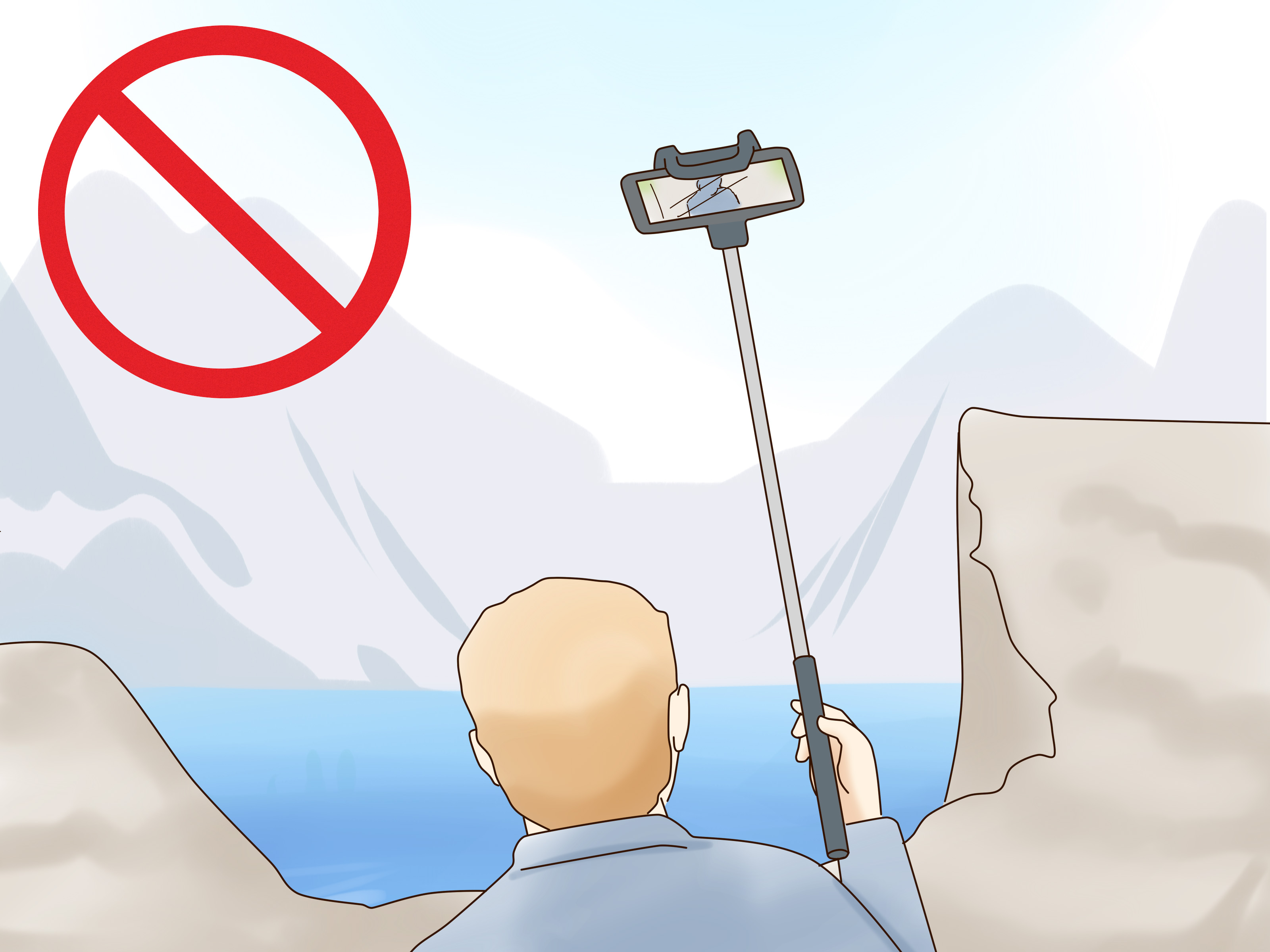
In nature, stay on marked trails, behind barriers, and away from cliff edges, wildlife, hot springs, unstable rocks, and fast-moving water. A good photo is never worth risking injury. If you are close enough to an animal for a selfie, you are too close. Use distance, zoom, and common sensethe original safety filter.
Best Situations for This Method
This method is best for travel creators, outdoor adventurers, families, vloggers, and anyone who wants photos that feel more dynamic. It helps capture movement, scenery, scale, and context. Used politely, it is a creative tool. Used wildly, it is a metal mosquito.
Common Selfie Stick Mistakes to Avoid
Extending It Too Far in Crowds
A fully extended selfie stick can become annoying or unsafe in crowded places. Keep it short in busy areas, and avoid blocking walkways, views, or performances. If people are ducking under your phone like it is a low bridge, it is time to collapse the stick.
Ignoring the Background
Before pressing the shutter, scan the frame. Look for trash cans, strangers making interesting faces, bright signs growing out of your head, or awkward reflections. A clean background makes even casual photos look more polished.
Using Digital Zoom Too Much
Digital zoom can reduce image quality. Instead of zooming aggressively, move the stick, move your feet, or use your phone’s optical lens options if available. The selfie stick already gives you distance, so use that physical advantage.
Forgetting to Clean the Lens
Smartphone lenses collect fingerprints, dust, sunscreen, snack residue, and mysterious pocket fog. Wipe the lens with a soft cloth before important shots. This tiny step can dramatically improve clarity.
Not Testing the Remote Before the Moment
Bluetooth remotes can disconnect, lose battery, or pair with the wrong device. Test the shutter before the big photo. Nothing ruins a sunset group shot quite like everyone smiling beautifully while the camera does absolutely nothing.
How to Choose the Right Selfie Stick
Choose a selfie stick based on how you actually plan to use it. For casual photos, a lightweight Bluetooth model is usually enough. For travel, look for a compact design that fits easily in a backpack. For video, consider a tripod base and a detachable remote. For action cameras, choose a mount designed for that camera system.
Check the maximum phone width, clamp strength, extension length, weight, grip comfort, battery type, and whether the head rotates between vertical and horizontal shooting. If you create social media content, vertical shooting matters. If you print photos or post on blogs, horizontal shooting is still useful.
A good selfie stick should feel sturdy when extended. If it wobbles like a fishing rod in a storm, your photos and videos will show it. The right model does not need to be expensive, but it should hold your device securely and fold small enough that you will actually bring it.
of Real-World Experience: What Using a Selfie Stick Actually Feels Like
The first experience most people have with a selfie stick is mild embarrassment. You pull it out in public and suddenly become very aware that you are holding a telescoping device designed to photograph your own face. Then you take the picture, see that everyone fits, and the embarrassment quietly packs its bags.
On family trips, a selfie stick solves the ancient problem of choosing who gets left out of the photo. Without one, the tallest person often becomes the unpaid photographer and appears in the vacation album only as a reflection in sunglasses. With a selfie stick, everyone gets included: parents, kids, grandparents, cousins, and the one uncle who blinks in every picture but insists he does not.
For solo travelers, the experience is even more practical. Instead of balancing a phone against a water bottle or asking a stranger to take five photos and hoping they understand the assignment, a selfie stick tripod gives you control. You can set the frame, use the timer, walk into position, and take several options. The result feels less rushed and more intentional.
The biggest surprise is how useful a selfie stick can be for video. A handheld phone often creates shaky footage, especially while walking. Extending the phone slightly away from your body can make the shot feel smoother and more natural. It also lets you record yourself with the background visible, which is helpful for travel clips, event recaps, and quick social posts.
There are awkward moments, of course. The Bluetooth remote may refuse to connect at the exact second everyone is ready. The wind may turn the extended stick into a tiny sail. Someone may walk behind you making a face that deserves its own documentary. These things happen. The solution is to take multiple shots, stay patient, and review your photos before leaving the location.
Another lesson from real use: shorter is often better. You do not always need the stick fully extended. A moderate extension gives better control, less shake, and fewer annoyed looks from nearby humans. In restaurants, museums, markets, and city sidewalks, compact use is more polite and usually produces better photos.
Selfie sticks also teach you to think about the whole frame. Because the camera is farther away, you notice the sky, buildings, signs, landscapes, and other people. That extra space encourages better composition. Instead of simply documenting your face, you start documenting the moment.
The best experience comes when the selfie stick disappears as a gadget and becomes part of the routine. Secure the phone, check the light, frame the shot, smile naturally, take several photos, and move on. No drama. No public performance. No accidental jousting. Just better pictures with less stress.
In the end, a selfie stick is not about vanity. It is about control, creativity, and inclusion. It lets people appear in their own memories instead of always standing behind the camera. And if that means carrying a collapsible pole in your bag, so be it. History has seen stranger tools.
Conclusion: Stretch the Stick, Not Everyone’s Patience
A selfie stick is simple, but using it well takes a little technique. For better selfies and group photos, secure your phone, use a remote or timer, and compose with light and background in mind. For hands-free shooting, use tripod mode to capture stable photos, videos, time-lapses, and solo travel shots. For creative travel or action content, experiment with high, low, wide, and moving angles while respecting safety rules and public spaces.
The best selfie stick photos do not scream, “Look, I own a selfie stick.” They simply look wider, steadier, cleaner, and more complete. Use the tool thoughtfully, stay aware of your surroundings, and remember the golden rule: the perfect shot is not worth dropping your phone, bothering a crowd, or leaning over anything with a warning sign.