

Note: This article discusses unusual baby names with humor, but the joke is aimed at questionable naming decisionsnot at children or adults who live with those names.
When a Baby Name Becomes a Whole Conversation
Every parent wants their child to stand out. That is sweet, noble, and occasionally the first step toward a kindergarten roll call that sounds like a rejected Wi-Fi password. In the age of personalized onesies, baby-name apps, celebrity announcements, and social media “name reveal” videos, naming a child has become less like filling out a birth certificate and more like launching a tiny personal brand.
That is how the internet ends up obsessed with names like Mary Christmas, Moonshine, Alexxzander, Reignbeaux, and Kai’l. Some are clever. Some are charming in the right context. Some make teachers pause, blink twice, and wonder whether the attendance sheet has been pranked by a substitute elf.
The viral fascination with weird baby names is not just about laughing at odd spelling or dramatic creativity. It reveals something deeper about modern parenting: the tug-of-war between individuality and practicality. Parents want a name that feels special, meaningful, and memorable. But children have to carry that name into classrooms, job interviews, doctor’s offices, airport security lines, coffee shops, and, eventually, group chats where nobody knows how to spell anything anyway.
Why Parents Choose Weird, Wild, and Wonderful Names
Unusual baby names do not appear out of nowhere. They are usually born from love, family history, pop culture, faith, geography, personal taste, or one very intense conversation in a hospital room after zero sleep. Many parents are not trying to be ridiculous. They are trying to give their child a name that says, “You are one of one.”
That instinct makes sense. The Social Security Administration’s baby-name data shows how powerful naming trends can be in the United States. Names rise, fall, disappear, and return wearing vintage cardigans. Olivia and Liam have held top spots in recent years, while names like Charlotte, Emma, Noah, Oliver, Theodore, and Amelia remain familiar favorites. When popular names dominate, some parents naturally swing in the opposite direction. Nobody wants their kid to be “Liam B.”, “Liam with the blue backpack,” or “Liam who definitely did not eat the glue.”
But uniqueness can become a slippery banana peel. A name can be rare without being confusing. It can be creative without requiring a pronunciation seminar. It can honor culture, faith, or family without turning the child into a walking punchline. The trouble starts when a name seems designed more for adult applause than for the person who has to answer to it for the next 80 years.
42 Weird Names and Naming Patterns People Say They Have Seen
Online threads and parenting communities are full of reported examples of unusual names. These stories are usually anecdotal, so they should be read as “people say they encountered this” rather than verified legal records. Still, they show the kinds of naming choices that make the internet collectively whisper, “Was there nobody in the room with a clipboard and courage?”
- Mary Christmas – festive, unforgettable, and probably tired of December jokes by age six.
- Moonshine – whimsical to some, but a little too close to a mason jar with a warning label.
- Alexxzander – Alexander after it fought a keyboard and won.
- Kai’l – a creative spelling of Kyle that may require punctuation-based coaching.
- Latrina – a name that demonstrates why sound-alike testing matters.
- Tiki and Torch – twin names that sound like a patio party theme.
- Faith, Hope, Grace, and Submit – three virtue names and one command.
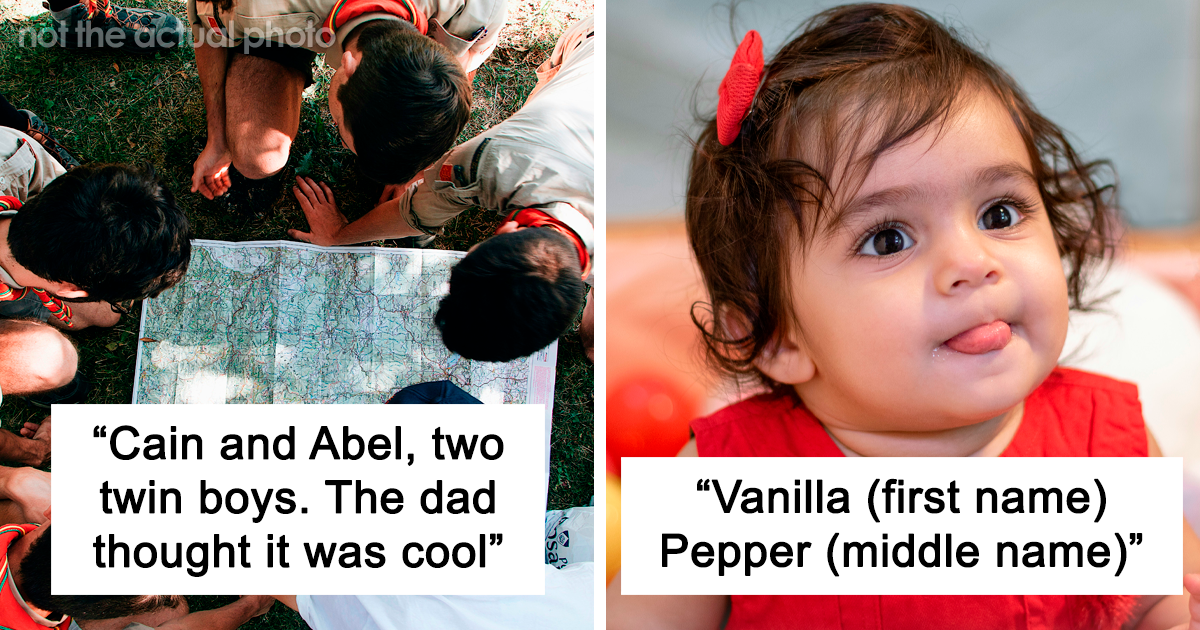
- Cain and Abel – biblical twins with a storyline most parents would prefer not to foreshadow.
- Cafeteria – nickname Café, because sometimes the jokes write themselves and ask for lunch money.
- Reignbeaux – Rainbow with a royal spelling and a French hat.
- Vanilla Pepper – a full spice cabinet in first-and-middle-name form.
- Baby Girl – cute in the hospital, awkward on a mortgage application.
- Ryiot – Riot with a “why,” which is also what many people ask.
- Xzayvyer – Xavier after a Scrabble tile emergency.
- Profit – ambitious, but perhaps too quarterly-earnings-call for a toddler.
- Sativah – a name likely to trigger side-eyes in official settings.
- Deronica – Veronica’s mysterious cousin from another keyboard layout.
- Rest – lovely concept, difficult classroom instruction: “Rest, please sit down.”
- Savior – a lot of pressure for someone still learning shoelaces.
- Mention – sounds less like a child and more like a social media notification.
- Alexis-Rebel-Ann – three names, one tiny birth certificate workout.
- Lolipop Lick – sweet in theory, but not every dessert belongs on a legal document.
- Charging Buffalo – powerful imagery, though roll call may need a drumbeat.
- Chianti – elegant sound, complicated association.
- Chambord – fancy, but also very “menu at a restaurant with tiny portions.”
- Robin Hood – heroic, but hard to say without expecting a bow and arrow.
- Roux – charming if you love cooking, confusing if everyone hears “Rue.”
- Pepper – cute, zippy, and already halfway to a superhero sidekick.
- Sprout – adorable on a baby, uncertain on a 47-year-old accountant.
- Lemon – fresh, bright, and also what people call a bad used car.
- Bootslee and Bronco – sibling names that sound like a country music duo.
- Samurai and Rainbow – two very different assignment instructions in one family.
- Corvette and Chevette – car-inspired sibling names with very different resale energy.
- Rebel and Riot – perfect if your household theme is “parent-teacher conference.”
- Cash and Diezel – bold, loud, and possibly sold at a gas station.
- Dandelion – sweet nature name, but “Dandy” does a lot of heavy lifting.
- Reef – breezy and oceanic, though spelling is doing all the work.
- Canyon – rugged, scenic, and likely to echo in gym class.
- Cloud – soft and dreamy, unless the child becomes an IT specialist.
- Pixel and Pixie – adorable sibling set or a tech startup mascot team.
- Younique – unique, but also determined to explain itself forever.
- Ya’Majesty – majestic indeed, but possibly too much throne for one backpack cubby.
The Difference Between Unique and Difficult
There is nothing wrong with an uncommon name. In fact, many once-unusual names later become stylish, classic, or completely ordinary. Apple sounded surprising when it entered celebrity-baby-name history, but today it barely registers compared with the names being launched into the world like limited-edition sneakers.
The real issue is not rarity. It is usability. A name becomes difficult when it creates constant obstacles for the child: repeated mispronunciation, confusing spelling, teasing potential, awkward meanings, or a mismatch between the name’s style and real-life situations. A name can be rare and still work beautifully. Names like Juniper, Atlas, Maren, Phoenix, Soren, Wren, and Calliope may be distinctive, but they have recognizable sounds and a sense of structure. They feel unusual without seeming like they were assembled during a power outage.
On the other hand, a familiar name with extreme spelling can become a daily admin problem. If “Alexander” becomes “Alexxzander,” the child may spend a lifetime saying, “No, two Xs after the first X, then Z, thenactually, I’ll just write it down.” That might not sound like a big deal, but small hassles become large when repeated across school records, medical forms, email addresses, standardized tests, sports registrations, and government documents.
Baby Naming Laws in the United States
In the United States, baby naming rules are generally handled at the state level, not through one national list of approved names. That means parents usually have broad freedom, but states can reject names for technical or legal reasons. Restrictions often involve numbers, symbols, emojis, obscenity, or characters that a state’s vital records system cannot process.
This is why a parent may be allowed to choose a highly unusual word name but not a name filled with numerals or symbols. In practical terms, “Moonbeam” might pass, while “M00nbeam!!!” may not. The law is not usually judging taste; it is judging whether the name can function inside official systems. The government may not save a child from being named after a condiment, but it may save the database from a tiny lightning-bolt emoji.
Can a Weird Name Affect a Child?
A name is not destiny. Plenty of people with unusual names grow up confident, successful, and proud of their identity. Some even love having a name that sparks conversation. A distinctive name can become a signature, a story, or a memorable advantage. If everyone remembers you after one introduction, that can be powerful.
Still, names do shape first impressions. Research on names has explored how pronunciation, spelling, gender expectations, and cultural associations can influence how people are perceived. Easier-to-pronounce names may create smoother first impressions, while unusually spelled names can invite assumptions that have nothing to do with the child’s character or ability. That does not mean parents should only choose names from the top 20 list. It means they should consider the child’s future audience: teachers, classmates, coaches, employers, clients, and the barista who will write “Braydynneigh” as “Brian” and move on with life.
Bullying is never the fault of a name. Children should be taught kindness, respect, and curiosity toward people whose names are unfamiliar. But parents can still ask whether a name gives cruel peers an easy target. A child deserves a name that feels like a gift, not a group project in damage control.
Why the Internet Loves Weird Baby Name Lists
Weird baby name lists go viral because they combine comedy, disbelief, and a tiny jolt of moral panic. Readers are not just laughing. They are judging. They are imagining the child’s first day of school, the DMV employee’s face, the wedding invitation, and the moment someone named “Rest” gets told to calm down.
These lists also let people debate a question that has no perfect answer: how much individuality is too much? One person sees “Reignbeaux” and thinks it is imaginative. Another sees it and hears a substitute teacher quietly retiring. One person hears “Canyon” and thinks of nature, strength, and open skies. Another thinks, “Please do not name the siblings Ravine and Parking Lot.”
The humor works because naming is deeply personal and strangely public. Parents choose the name, but the child has to live with it in the world. That tension creates endless discussion, especially online, where everyone suddenly becomes a naming consultant with the confidence of a Supreme Court justice.
How Parents Can Choose a Unique Name Without Regret
Say the Full Name Out Loud
First name, middle name, last namesay the whole thing. Say it in a happy voice, a serious voice, and the voice a principal uses over the intercom. If it sounds like a joke, a product, a menu item, or a spell from a fantasy novel, pause before signing paperwork.
Test the Initials
Initials matter. A beautiful name can turn unfortunate when the initials spell something awkward. Children notice these things. So do monogrammed backpacks, wedding programs, and email systems.
Check the Meaning and Associations
A name may sound beautiful but carry a meaning or association parents did not expect. Search the name, say it slowly, ask a few trusted people, and check whether it resembles a brand, slang term, famous villain, medical word, or fictional kingdom with dragons and questionable leadership.
Respect Culture, Not Just Aesthetics
Many names that seem unusual in one community are completely normal in another. Jesus, Basil, Rune, Thiago, Aoife, Ximena, and many other names may confuse people unfamiliar with their origins, but that does not make them “weird.” There is a big difference between a culturally meaningful name and a random mashup created because the letter X looked lonely.
Imagine the Name on an Adult
Babies are babies for a short time. Adults are adults for decades. Before choosing a name like Sprout, Princess-Pickle, or Captain Glitterbean, imagine it on a resume, a lease agreement, a business card, a medical chart, and a courtroom oath. If the name still works, wonderful. If not, maybe save it for a goldfish with charisma.
Experiences and Reflections: What Weird Names Teach Us
Anyone who has worked in a school, clinic, office, summer camp, call center, or customer service job has probably encountered a name that made them pausenot always because it was bad, but because it was unexpected. The most memorable experiences often happen during roll call. A teacher starts strong, confidently reading Emma, Noah, Ava, Mason, and Sophia. Then suddenly the list offers a name with three apostrophes, two silent letters, and the emotional energy of a treasure map. The teacher inhales, takes a brave little run at it, and the student gently says, “It’s pronounced Tyler.”
These moments can be funny, but they also reveal how much patience names require. A person with an uncommon name may grow up explaining it hundreds of times. Some handle that with pride. They enjoy having a built-in conversation starter. Others get tired of correcting people and may choose a nickname for convenience. That is why a parent’s creative thrill should be balanced with empathy. The question is not only “Do I love this name?” but also “Will my child enjoy introducing themselves with this name?”
There is also a difference between a name that is unusual and a name that feels careless. A rare cultural name, a revived vintage name, or a meaningful nature name can carry beauty and identity. But a name chosen mainly for shock value can feel like the parent is using the child as a billboard for their own cleverness. Children are not accessories, hashtags, or limited-edition collectibles. They are people who will eventually have opinions about the thing shouted across playgrounds, printed on diplomas, and written on every form from kindergarten to retirement.
One useful experience is the “coffee shop test.” Give the name at a café and see what happens. If the barista hears it, writes it correctly, and calls it out without summoning ancient spirits, the name may be practical enough. If the cup comes back looking like a ransom note, the spelling may need reconsideration. The “grandparent test” is another classic. If three relatives pronounce it three different ways and one asks whether it is a prescription medication, that is useful feedback.
Another common experience comes from sibling sets. Parents often love themes: flowers, virtues, cities, colors, seasons, or names beginning with the same letter. Done gently, this can be adorable. Lily and Violet? Lovely. Autumn and Summer? Sweet. Faith and Grace? Classic. But when the theme becomes too intense, siblings can start sounding less like individuals and more like a gift basket. Children deserve names that connect them to family without trapping them inside a naming gimmick.
The best baby-name advice is surprisingly simple: choose a name with love, then run it through real life. Write it. Say it. Spell it over the phone. Imagine a substitute teacher reading it. Imagine a teenager rolling their eyes while saying it. Imagine an adult using it professionally. If it survives all those scenes, it may be unique in the best way. If it collapses under the weight of its own punctuation, perhaps the middle name slot is a safer playground.
In the end, the weirdest names people have seen are entertaining because they sit at the intersection of creativity and consequence. “Mary Christmas” makes people laugh because it sounds like a holiday card became a person. But behind every strange name is a real human being who deserves respect. So enjoy the list, giggle at the spellings, raise an eyebrow at the choices, and remember the golden rule of naming: the baby may be tiny, but the name has to grow up.
Conclusion
Unusual baby names are not automatically bad. Some are beautiful, meaningful, and unforgettable in exactly the right way. But the funniest weird names remind us that creativity needs a seatbelt. A name should help a child feel distinct, not constantly explain a parental brainstorm from 2:00 a.m.
Parents can absolutely choose names outside the mainstream. They can honor heritage, nature, literature, faith, family, or personal dreams. The key is to choose with imagination and responsibility. A child’s name is one of the first gifts they receive. Ideally, it should feel less like a prank and more like a door they can walk through confidentlywhether they become an artist, a scientist, a teacher, a chef, or the world’s most patient person named Mary Christmas.