

“`
If your kitchen has ever smelled like “almost perfect cookies” for 30 seconds before turning into “campfire with raisins,” you already understand the humble power of a kitchen timer. The Ikea 300.667.25 Ordning Timer is one of those small, shiny tools that does not ask for attention until it saves dinner. It is compact, stainless steel, delightfully analog, and refreshingly free from apps, passwords, charging cables, software updates, and suspiciously cheerful notification sounds.
The IKEA ORDNING timer belongs to the same practical design universe that made the brand famous: simple household objects that look clean, work easily, and do not require a ceremonial reading of a 200-page manual. This little mechanical kitchen timer is often searched by its product number, 300.667.25, because availability can vary and many buyers look for it through online marketplaces, resale listings, imported-goods shops, or older IKEA product references. In other words, it has become the kind of kitchen gadget people remember by name, number, and occasionally by the sound it makes when pasta has crossed the line from al dente to noodle confetti.
So, is the Ikea 300.667.25 Ordning Timer worth hunting down? Let’s twist the dial and find out.
What Is the Ikea 300.667.25 Ordning Timer?
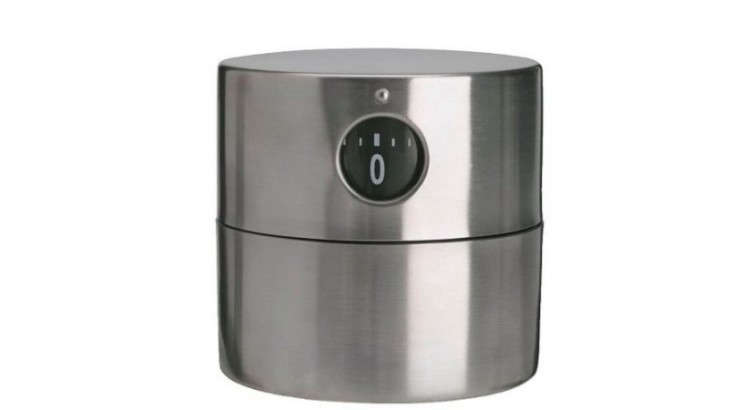
The Ikea 300.667.25 Ordning Timer is a small mechanical countdown timer made with a stainless steel exterior and a simple twist-to-set design. It was designed by IKEA of Sweden and is commonly associated with IKEA’s ORDNING line of stainless steel kitchen tools. The product is known for its cylindrical shape, brushed-metal look, and no-nonsense operation.
Unlike a digital kitchen timer, this model does not rely on a screen, tiny buttons, or batteries. It uses a spring-driven mechanical movement. You wind it, set your desired time, and let it count down with that classic faint ticking sound. When time is up, it rings. No drama. No subscription plan. No app called “Timerly Pro Max Kitchen Sync.” Just timekeeping, the way your grandmother would respect and your smartphone would find emotionally threatening.
Key Features at a Glance
Compact Stainless Steel Design
The ORDNING timer is usually listed with a diameter and height of approximately 2 3/8 inches, or about 6 cm. That makes it small enough to sit on a countertop, shelf, breakfast tray, or desk without acting like it owns the room. Its stainless steel finish gives it a clean, modern look that pairs well with other metal kitchen tools, white cabinets, dark counters, open shelving, and the universal kitchen décor style known as “I tried.”
Mechanical Countdown Function
This is a mechanical kitchen timer, which means it uses internal clockwork rather than digital circuitry. The main appeal is simplicity. There is no battery compartment to open, no display to fade, and no need to wonder whether your timer has quietly died right before Thanksgiving dinner.
Up to About 55–60 Minutes of Timing
The ORDNING timer is designed for everyday cooking tasks such as boiling eggs, steeping tea, baking cookies, roasting vegetables, resting dough, timing homework breaks, or reminding yourself that laundry exists. For very long cooking projects, such as slow-cooked barbecue, overnight proofing, or multi-hour braises, a digital timer or phone alarm may be more practical. But for daily kitchen timing, this little metal cylinder covers the sweet spot.
Loud, Clear Ring
One reason analog timers remain useful is that they do one thing loudly. The IKEA ORDNING timer is known for a noticeable ring when properly wound. That matters in a real kitchen, where water is running, pans are sizzling, somebody is opening a bag of chips with the volume of a thunderstorm, and your oven fan sounds like it is preparing for takeoff.
How to Use the IKEA ORDNING Timer Correctly
Here is the part many people miss: mechanical timers need to be wound properly. With the IKEA ORDNING 300.667.25 timer, the best practice is to turn the dial clockwise first to about 55 minutes. This tightens the internal spring. Then turn it back counterclockwise to the time you actually want.
For example, if you need 12 minutes for boiled eggs, do not simply nudge the timer from zero to 12 and hope for the best. Turn it clockwise to 55 first, then back to 12. That little ritual helps the timer ring clearly when the countdown ends. Think of it as stretching before exercise, except the timer is the athlete and the event is “don’t ruin the eggs.”
One important warning: do not turn the timer counterclockwise directly from the zero position. That can damage the clockwork mechanism. Mechanical timers are charming, but they are also a bit like tiny metal grandpas. Treat them with respect and they will keep showing up on time.
Why Stainless Steel Makes Sense in the Kitchen
Stainless steel is popular in kitchen tools because it looks clean, resists corrosion, and fits easily into both modern and traditional spaces. The ORDNING timer’s brushed stainless steel finish gives it the same visual language as colanders, utensil holders, dish drainers, appliances, and mixing bowls. It does not shout for attention. It simply joins the kitchen team and looks useful while doing it.
Another advantage is easy care. A stainless steel exterior can usually be wiped with a damp cloth. Since the timer is mechanical, it should not be soaked, submerged, or treated like a soup ingredient. A quick wipe is enough for everyday cleaning. If flour dust, oil mist, or mysterious kitchen speckles appear, clean gently and dry it afterward.
Design: Small Object, Big IKEA Energy
The ORDNING timer captures a familiar IKEA idea: make the everyday object attractive enough to leave out. Many kitchen gadgets are banished to drawers because they look like they were designed during a committee meeting in a beige office. This timer, by contrast, has a clean cylindrical form and a neutral finish. It belongs on the counter.
Its design also reflects practical restraint. There are no unnecessary buttons, lights, menus, modes, or decorative roosters wearing chef hats. You twist it, it ticks, it rings. That is the whole performance. In an era when even refrigerators want Wi-Fi, the ORDNING timer feels almost rebellious. It says, “I will count minutes, and I will not ask to connect to Bluetooth.” Brave little timer.
Analog vs. Digital Kitchen Timers
Digital timers can be excellent. Many offer multiple countdowns, large screens, memory settings, adjustable volume, magnets, stands, backlights, and stopwatch functions. If you regularly cook several dishes at once, a digital multi-timer can be a lifesaver. Thanksgiving dinner, for instance, may require a timer strategy that resembles air traffic control.
But analog timers still have a place. A mechanical timer is fast to set, easy to understand, and free from batteries. It provides a visual reminder because the dial physically moves as time passes. The gentle ticking can even create a sense of focus. For short, single-task cooking, the IKEA ORDNING timer is exactly the kind of simple tool that makes sense.
The best choice depends on how you cook. If you need one timer for eggs, tea, cookies, pasta, or 20-minute cleanup sprints, the ORDNING is wonderfully straightforward. If you are managing three pans, two ovens, and a sauce that demands emotional support, a digital triple timer may be better.
Best Uses for the Ikea 300.667.25 Ordning Timer
Cooking Pasta
Set the timer according to the package instructions, then taste a minute early. Pasta has a dramatic personality. One minute it is perfect; the next minute it is auditioning for glue.
Boiling Eggs
A mechanical kitchen timer is ideal for eggs because timing makes a real difference. Whether you like soft-boiled, jammy, or firm yolks, consistency matters. Set the timer, step away, and stop staring at the pot like it owes you money.
Baking Cookies
Cookies often continue to firm up after leaving the oven, so a timer helps prevent overbaking. The ORDNING timer’s ring gives you a clear cue to check the tray before golden brown becomes “archaeological brown.”
Tea and Coffee
Tea steeping is another perfect use. Green tea, black tea, herbal tea, and French press coffee all benefit from consistent timing. The timer helps turn “I forgot” into “I meant to do that.”
Focused Cleaning Sessions
The ORDNING timer is not limited to food. Set it for 10 or 15 minutes and clean one area fast. It turns chores into a tiny race against a metal cylinder, which is strangely motivating.
Who Should Buy the IKEA ORDNING Timer?
The IKEA 300.667.25 Ordning Timer is a strong fit for people who like simple, attractive, battery-free kitchen tools. It is especially appealing if you enjoy IKEA’s stainless steel kitchen accessories, prefer analog gadgets, or want a timer that can sit on the counter without looking like office equipment.
It is also a good option for small kitchens. Because it is compact, it does not demand drawer space or counter real estate. Apartment cooks, dorm cooks, minimalist kitchens, and people who own exactly one saucepan and feel very proud of it can all appreciate the size.
However, it may not be the best choice for everyone. If you need silent alerts, multiple timers, second-by-second precision, extra-long countdowns, or a display readable from across the room, a digital kitchen timer may serve you better. The ORDNING is simple by design. That is its charm, and also its limitation.
Buying Tips: Availability, Price, and Authenticity
Because the Ikea 300.667.25 Ordning Timer is not always easy to find directly from IKEA U.S., shoppers often look through marketplaces, imported-goods sellers, or resale platforms. When comparing listings, check the product number, dimensions, material description, and seller reputation. If a listing describes the timer as digital but also says it is mechanical, proceed carefully. Product pages sometimes mix categories or use generic marketplace labels.
Look for details such as “IKEA ORDNING,” “300.667.25,” “stainless steel,” “mechanical,” “wind-up,” and “kitchen timer.” Photos should show the round stainless steel body and numbered dial. Since pricing can vary widely depending on availability, shipping, and import costs, compare total cost rather than just the item price. A cheap timer with expensive shipping may become less charming at checkout.
Pros and Cons
Pros
The ORDNING timer looks modern, feels simple, requires no batteries, and fits small kitchens beautifully. Its stainless steel design coordinates with many kitchen styles. It is easy to use once you understand the proper winding method, and the audible ring is helpful for everyday cooking.
Cons
It is limited to relatively short countdowns, does not provide digital precision, and cannot manage multiple timers at once. Availability may also be inconsistent, especially for buyers searching by the original product number. Like many mechanical timers, it needs proper handling to avoid damaging the internal movement.
Practical Care and Maintenance
To keep the IKEA ORDNING timer working well, use it gently. Wind clockwise first, then set your chosen time. Avoid forcing the dial. Keep it away from water, steam-heavy areas, and direct heat. Do not place it on a hot stove, near a burner, or on top of an oven. It may look like a tough little stainless steel warrior, but it is still a clockwork device, not a cast-iron skillet.
For cleaning, wipe the exterior with a damp cloth and dry it. Avoid abrasive cleaners that can scratch the surface. Also avoid submerging it, because water inside a mechanical timer is basically an eviction notice for reliability.
Real-World Experience With the Ikea 300.667.25 Ordning Timer
Using the Ikea 300.667.25 Ordning Timer feels pleasantly old-school in the best way. The first thing you notice is the weight and texture. It is small, but the stainless steel finish makes it feel more like a proper kitchen object than a disposable gadget. On a countertop, it blends in beside a kettle, knife block, coffee canister, or utensil holder. It does not look like clutter; it looks intentional.
The twist action is satisfying once you get used to the correct method. At first, many people instinctively turn the dial straight to the desired time. That may seem logical, but the timer performs better when you wind it clockwise to about 55 minutes first and then rotate it back to your selected time. After doing it a few times, the motion becomes automatic. It is like learning the secret handshake of analog kitchen timing.
In daily cooking, the timer is most useful for tasks that need attention but not laboratory precision. It is great for 8-minute pasta, 12-minute eggs, 15-minute roasted nuts, 20-minute sheet-pan vegetables, and quick baking checks. It also works nicely for non-cooking routines. Set it for 10 minutes to tidy the kitchen, 25 minutes for a focused study session, or 5 minutes to remind yourself that the tea bag is not supposed to move in permanently.
The ring is part of the experience. It is not a soft spa chime. It is a kitchen alert with opinions. That can be helpful if you tend to walk into another room while something cooks. The ticking sound may be noticeable in a quiet space, but many users find it reassuring. It creates the feeling that something is actively keeping watch. In a kitchen full of distractions, that little tick can be oddly comforting.
There are a few realistic limitations. The timer is not ideal when you need exact second-level timing. It is also not the best tool for complex cooking sessions with several dishes. If you are making soup, bread, roasted vegetables, and dessert at the same time, you may want a digital timer with multiple channels. The ORDNING is more of a single-task specialist. It does one job with style and a tiny metallic ring of authority.
Another experience worth noting is how visible it is. Phone timers are easy to set, but phones wander. They end up on the couch, in a pocket, under a cookbook, or in the mysterious zone between counter and charger. A physical kitchen timer stays where the cooking happens. That alone can reduce mistakes. When you see the timer on the counter, you remember the food. When your phone is in another room, the cookies are on their own, and cookies are not known for self-preservation.
Over time, the ORDNING timer becomes part of the kitchen routine. It is the thing you grab without thinking. It makes a small click, starts ticking, and suddenly the kitchen feels a little more organized. That is the real charm of this IKEA timer. It is not fancy. It does not pretend to be revolutionary. It simply helps you cook with fewer burnt edges, fewer forgotten pots, and fewer moments of standing in front of the oven whispering, “How long has that been in there?”
Final Verdict
The Ikea 300.667.25 Ordning Timer is a compact, stylish, mechanical kitchen timer for people who appreciate simple tools that look good and work without fuss. Its stainless steel design makes it feel at home in modern kitchens, while its analog movement gives it a practical, timeless personality. It is best for everyday countdown tasks under an hour, from eggs and pasta to cookies and quick cleaning sessions.
If you want multiple alarms, a huge screen, silent mode, or ultra-precise digital timing, choose a modern digital timer. But if you want a battery-free kitchen timer with IKEA charm, stainless steel style, and a satisfying old-school ring, the ORDNING timer remains a lovely little tool. It may be small, but in the battle against burnt toast, over-steeped tea, and forgotten noodles, it punches above its weight.
Note: Availability and pricing may vary because the IKEA ORDNING Timer 300.667.25 is often found through third-party sellers, imported product listings, or resale marketplaces rather than consistently through IKEA U.S. retail channels.