

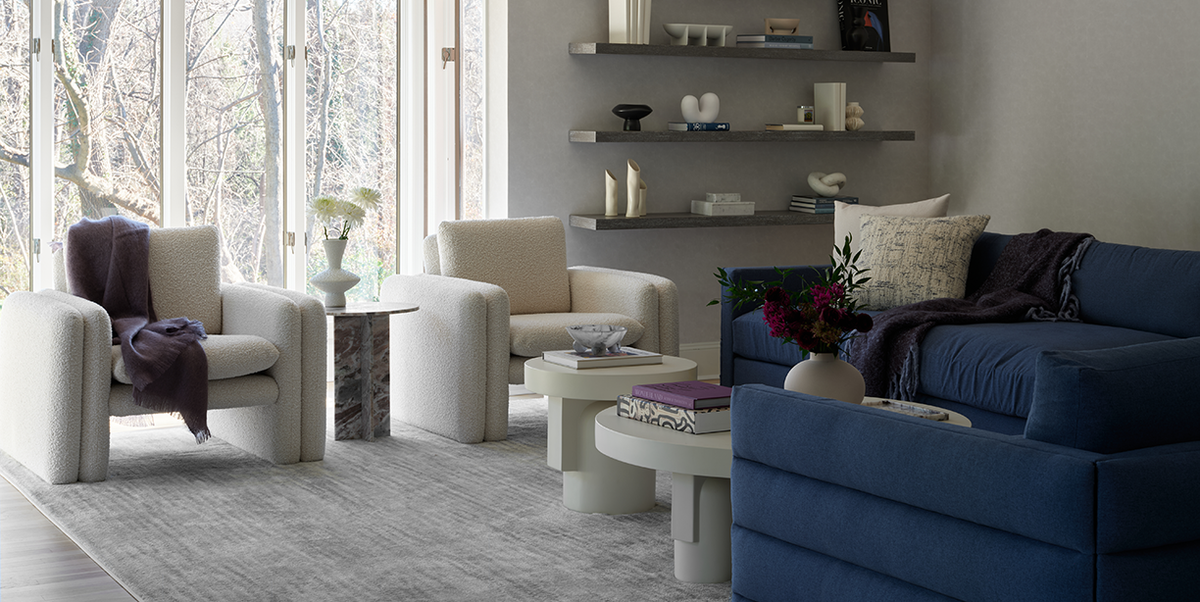
There is a decorating habit so common it has practically become a rite of passage: move into a room, spot the walls, and immediately shove every major piece of furniture against them like the room is being searched by airport security. Sofa? Wall. Chairs? Wall. Console? Wall. Suddenly the middle of the room is wide open, and yet somehow the space still feels awkward, chilly, and a little like it is waiting for a middle-school dance to start.
Here is the design twist: pushing furniture against the wall does not automatically make a room look bigger. In many cases, it does the exact opposite. It can emphasize the room’s edges, create a giant dead zone in the middle, weaken conversation, and make the layout feel more accidental than intentional. In other words, your living room starts looking less like a well-designed retreat and more like it lost a bet.
If you want a room that feels warmer, smarter, and easier to live in, it helps to think less about hugging the perimeter and more about creating a purpose. The best furniture layouts are not just about squeezing pieces in. They are about shaping movement, comfort, balance, and connection. Once you understand why designers often pull furniture away from the walls, you may never go back to the old “everything to the edge” trick again.
Why wall-hugging furniture is such a popular mistake
Let’s be fair: this habit did not come from nowhere. Most people assume that if they clear out the center of the room, the space will feel bigger. On paper, that logic sounds perfectly reasonable. More visible floor area should equal more spaciousness, right? Not always.
What often happens instead is that the room’s boundaries become more obvious. The eye travels from wall to wall, notices the empty center, and reads the room as one giant box. Rather than feeling open and airy, the space can feel disconnected. Your seating is too far apart, the coffee table looks stranded, and the room stops functioning like a place where actual humans might sit down and enjoy each other’s company.
This is especially true in living rooms, family rooms, and open-concept spaces. These rooms need zones, not just square footage. When everything is flattened against the perimeter, the room loses shape. A good layout should guide how the room is used, not just where the walls happen to be.
Reason #1: It creates a weird empty void in the middle
The biggest issue with pushing furniture against the wall is that it often leaves an awkward pool of empty space in the center of the room. And no, that empty space is not automatically stylish. Sometimes it is just… empty. Like “we forgot to finish decorating” empty.
That dead zone usually serves no real purpose. It is too wide to feel cozy, too undefined to feel intentional, and too random to function well. Instead of making the room feel expansive, it makes the layout feel unfinished. A sofa parked several feet away from a coffee table or chairs scattered around the perimeter do not invite people in. They make the room feel like it is waiting for instructions.
Floating at least some furniture inward helps solve this. The middle of the room becomes active rather than vacant. A coffee table suddenly makes sense. Accent chairs can actually talk to the sofa. The room gains a center of gravity, and that is when it starts to feel designed.
Reason #2: It hurts conversation and comfort
A living room should support living. Revolutionary thought, I know. But that means people need to be able to sit comfortably, make eye contact, reach a side table, and talk without feeling like they are calling across a small parking lot.
When furniture is plastered to the walls, seating often ends up too far apart. Conversation becomes less natural because the layout is working against human behavior. A room arranged for connection usually brings seating closer together into a conversation zone. That might mean a sofa facing two chairs, a pair of swivel chairs near a coffee table, or a sectional anchored with a rug that keeps everything visually connected.
Comfort is not just about soft cushions. It is also about proximity, scale, and reach. If someone has to perform a yoga stretch to set down a coffee mug, the layout is not doing its job.
Reason #3: It can actually make a room feel smaller
This is the part that surprises many homeowners. Pulling furniture slightly away from the walls can make a room feel larger, not smaller. Why? Because it creates visual breathing room.
When a sofa, console, or chair sits flush against the wall, the room’s edges feel rigid. The eye sees the boundaries immediately. But when there is a little space behind the furniture, even just a few inches, the room gains depth. That shadow line and sense of separation create dimension, which can make the space feel more layered and expansive.
Think of it like wearing clothes that actually fit instead of squeezing into something one size too small. The room can breathe. It stops looking tense.
Reason #4: It weakens flow and traffic patterns
A well-arranged room should make it easy to move through without cutting through the heart of the seating area like a distracted airport traveler. Furniture pushed against the walls often seems like it would improve movement, but it can create strange circulation instead.
Sometimes people end up walking directly through the conversation zone because the layout has no defined pathways. Other times the empty middle becomes an oversized “walkway” that steals square footage from the actual living area. Neither situation is ideal.
When you float furniture, you can create intentional paths around the seating area rather than through it. This makes the room feel calmer and more organized. It also helps each section of the room do its own job without tripping over the next one.
Reason #5: It wastes the power of rugs, lighting, and focal points
Furniture arrangement is not a solo act. It works best when it teams up with area rugs, lighting, art, fireplaces, windows, built-ins, and even the television. When furniture is jammed against the wall, it becomes much harder to create a cohesive composition around those elements.
A rug, for example, should usually help define a seating area. If the sofa is far away and chairs are drifting near the corners, the rug can end up looking too small, poorly placed, or decorative instead of functional. The same goes for coffee tables and side tables. These pieces should support the layout, not chase it around the room.
Floating furniture allows you to build a real zone. The rug anchors it. The lighting layers it. The focal point gives it direction. Suddenly the room is not just furnished. It is composed.
What to do instead
1. Start with the room’s purpose
Before you move a single chair, ask what the room is actually for. Watching TV? Hosting friends? Reading? Family game night? Taking suspiciously long naps on Sunday afternoon? The purpose should drive the layout.
If the main goal is conversation, arrange seating to face inward. If the television matters, include it without letting it dominate every angle of the room. If the room has multiple uses, break it into zones so one area does not try to do everything.
2. Pull furniture in, even a little
You do not need to float every piece dramatically in the middle of the room like it is auditioning for a design magazine cover. Sometimes pulling a sofa just 12 to 18 inches off the wall is enough to improve the look and feel of the space. Even a few inches can help if the room is tight.
3. Create a conversation zone
Use the main seating pieces to form a central grouping. A sofa and two chairs, a loveseat and a pair of side chairs, or a sectional with movable accent seating can all work. The key is to make the arrangement feel like people are meant to gather there.
4. Anchor the layout with a rug
An area rug helps prevent floating furniture from looking random. Ideally, the front legs of the main seating pieces should sit on the rug, or all legs if the room and rug are large enough. This visually ties the zone together and makes the room feel grounded.
5. Respect spacing rules
Good layouts also depend on practical distances. Leave enough room to walk comfortably around furniture. Keep the coffee table close enough to reach without lunging. Allow side tables and lamps to feel useful rather than decorative obstacles. This is where function stops being boring and starts being beautiful.
When it is okay to put furniture against the wall
Not every room can or should float all its furniture. Tiny apartments, narrow living rooms, unusual floor plans, or rooms with multiple doors and windows may need a more perimeter-friendly setup. Design is not a religion. Nobody is going to revoke your throw-pillow privileges if one side of the room touches a wall.
The goal is not to avoid walls at all costs. The goal is to avoid defaulting to wall placement without thinking. In small rooms, one major piece may need to anchor the perimeter while smaller items float. A console, bookshelf, desk, or storage cabinet may belong against the wall because that is exactly where it functions best.
The smartest layouts use balance. Let some pieces anchor the room, while others create movement, intimacy, and depth.
Best rooms for floating furniture
This strategy works especially well in large living rooms, open-concept spaces, family rooms, and square-shaped rooms that need stronger definition. In open floor plans, floating a sofa can help separate the living area from the dining area or kitchen without adding actual walls. It is like giving the room a polite boundary instead of a dramatic one.
It can also work beautifully in small rooms when done with restraint. A compact sofa with visible legs, a slim chair, and a properly sized rug can make a tiny room feel far more intentional than a bulky layout mashed into the edges.
Common mistakes to avoid when pulling furniture off the wall
There is one important warning here: moving furniture away from the wall is not a magic trick if everything else is off. A poorly planned floating layout can look just as awkward as a perimeter-heavy one.
Avoid using furniture that is too large for the room. Avoid rugs that are too small. Avoid blocking natural pathways. Avoid placing a coffee table so far away that it becomes an emotional support table instead of a useful one. And avoid floating furniture without a visual anchor, because that can make it look like the room is mid-renovation.
Done well, floating furniture looks effortless. Done badly, it looks like you gave up halfway through a move.
Experience-based insights: what people often notice after moving furniture away from the wall
One of the most interesting things about this design change is how often people say the room feels different before they can fully explain why. Homeowners who pull a sofa even a foot away from the wall often expect the room to feel tighter. Instead, many describe the opposite. The room feels softer, more welcoming, and oddly more expensive, even though nothing new was purchased. That is the beauty of layout: it changes the personality of the room without touching your wallet.
A common experience is that conversation improves almost immediately. A family that used to sit scattered around the room suddenly finds that the seating area feels more natural. Guests stop hovering awkwardly near the doorway and actually sit down. The coffee table becomes usable. Side chairs stop feeling like lonely extras and start behaving like part of the team.
Another thing people notice is that the room photographs better. Before, the space may have looked wide but flat, with every piece lined up around the perimeter like students during a fire drill. Afterward, the room has layers. There is a foreground, a center, and a background. The layout reads as intentional, which is exactly what gives professionally designed spaces that polished look.
People in smaller homes often report the biggest surprise of all: they gain function, not just style. Pulling furniture inward can create room behind a sofa for a slim console table, extra lighting, baskets, or even hidden charging space. In some layouts, a chair that was once stuck in a corner becomes useful seating. A rug that once looked too small suddenly makes sense because it is now anchoring a real seating zone.
There is also a comfort factor that sneaks up on people. Rooms with floated furniture often feel less formal and less rigid. You are not staring at a giant empty center or feeling like everything has been parked along the walls for safekeeping. The space feels lived in. Relaxed. Human. It invites people to settle in rather than perch and leave.
Of course, the experience is not identical in every home. Some people find they only need a few inches of breathing room behind the sofa to get the effect. Others discover that one chair, moved off the wall and closer to the main seating area, changes everything. In open layouts, floating a sofa can suddenly make the room feel organized instead of vague. In narrow rooms, even a small adjustment can improve traffic flow enough that the space feels less cramped day to day.
Perhaps the biggest real-world lesson is this: most rooms do not need more furniture. They need better relationships between the furniture already there. That is what homeowners, renters, and designers keep learning over and over again. The room was never the problem. The layout was. Once the furniture stops clinging to the walls for emotional support, the room can finally do what it was supposed to do all along: welcome people in, help them connect, and make everyday life feel just a little better.
Final thoughts
If your furniture is pressed flat against the walls and your room still feels off, the problem may not be your sofa, your rug, or your taste. It may just be the layout. Pulling furniture away from the wall helps create depth, improve conversation, define zones, and make the room feel more balanced. It can also make a space feel warmer, more functional, and far more intentional.
So no, you do not need to stage a rebellion against every wall in your home. But you should question the old habit of treating the perimeter as the only acceptable parking spot for furniture. Sometimes the best thing you can do for a room is give it a little breathing room. Your sofa might not write you a thank-you note, but your living room will absolutely show its gratitude.