

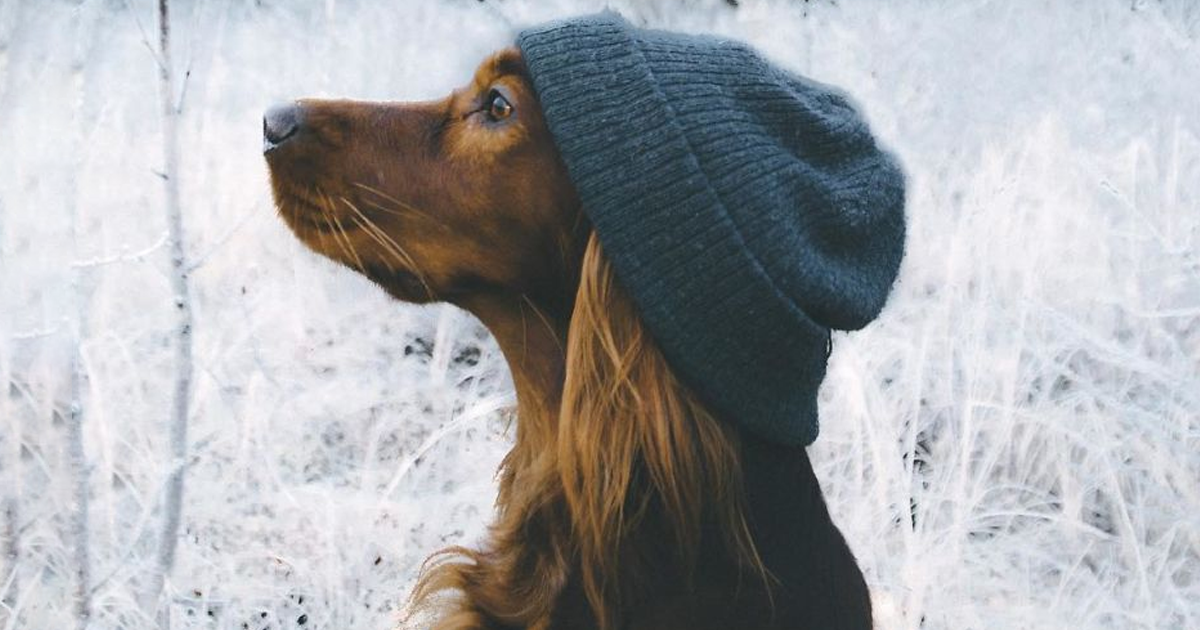
Some people collect postcards. Some people collect coffee mugs that quietly multiply in the back of a cabinet. And then there are George Rotan and Troja, an Irish Setter with enough wilderness charisma to make a mountain goat question its career choices.
Together, this Norwegian photographer and his four-legged adventure partner have turned hikes through Norway’s dramatic wilderness into a visual story that feels equal parts epic, peaceful, funny, and slightly unfair to everyone currently sitting under fluorescent office lights. Their images capture the kind of moments that make you want to trade your inbox for a backpack, your desk chair for a mossy rock, and your Monday meeting for a misty mountain ridge.
But the real magic is not just the scenery. Norway has no shortage of jaw-dropping fjords, forests, waterfalls, snowfields, and cliffs that look as though they were designed by an overachieving fantasy novelist. What makes George and Troja’s photos memorable is the relationship at the center of them: one person, one dog, and a shared enthusiasm for going somewhere beautiful before breakfast.
Meet George and Troja: Norway’s Most Photogenic Hiking Duo
George Rotan is a Norwegian photographer whose outdoor images often feature Troja, his Irish Setter, exploring the country’s wild landscapes. Troja is not merely a dog who occasionally appears in the background while somebody adjusts a camera tripod. She is the co-star, trail scout, wind-sniffer, stick inspector, and emotional director of the expedition.
In the photos, Troja can be seen standing proudly on rocky overlooks, moving through forest paths, bounding across snowy terrain, and staring into the distance with the focused expression of a dog who has just been told there may be squirrels beyond the next ridge.
The series has become popular because it does something many outdoor photo collections fail to do: it gives wilderness a pulse. Instead of treating Norway as a giant, polished travel brochure, the images make the landscape feel lived in. Troja’s muddy paws, alert ears, and joyful presence remind viewers that adventure is not always about conquering the biggest summit. Sometimes it is about getting outside with a companion who thinks every trail is the greatest trail ever invented.
Why These Norwegian Wilderness Photos Feel So Epic
Epic hiking photography is usually associated with enormous landscapes: sharp mountain ranges, waterfalls thundering into valleys, fog rolling over cliffs, and lakes reflective enough to make people wonder whether gravity has been temporarily canceled.
George and Troja’s photos certainly have those elements. Norway’s natural scenery provides a spectacular backdrop of forests, fjords, snow, stone, and changing weather. Yet the images work because they do not rely only on scale. They also show personality.
Troja Gives the Landscape a Sense of Story
A giant mountain is impressive. A giant mountain with a windswept Irish Setter standing on it like the newly elected mayor of Adventure Town is even better.
Troja gives viewers a sense of scale, but she also gives each photo emotional warmth. A lone human figure in a landscape can look dramatic. A dog in that same landscape can make it feel inviting. Suddenly, the wilderness is not just distant and intimidating. It becomes a place where curiosity, loyalty, playfulness, and a slightly suspicious stick can coexist.
That balance is a big part of why dog hiking photography resonates online. People do not only see a beautiful place. They see a relationship. They imagine their own dog beside them, probably wearing a harness, refusing to walk past a puddle, and trying to eat something that definitely should not be eaten.
The Photos Feel Earned Instead of Staged
Outdoor images can look glamorous, but anybody who has spent time hiking knows the truth: there are wet socks, sudden weather changes, wrong turns, snack breaks, and moments when a backpack somehow becomes heavier despite containing fewer snacks than it did an hour ago.
George and Troja’s photographs feel special because they suggest a real routine of exploration. The images do not present the wilderness as an exclusive playground for professional athletes with perfect hair. They suggest that meaningful outdoor experiences are built one walk, one hike, one early morning, and one muddy paw print at a time.
Norway Is More Than a Backdrop
Norway’s wilderness is practically a supporting character in this story. The country is known for rugged coastlines, dramatic fjords, alpine routes, thick forests, waterfalls, Arctic landscapes, and long summer days in northern regions. It is the kind of place where a short walk can suddenly turn into a scene that looks like a desktop wallpaper with an unreasonable amount of confidence.
For photographers, Norway offers constantly changing conditions. One hour may bring low fog drifting through trees. The next may reveal blue skies above a lake. A winter hike can turn the landscape into a silent world of snow and ice, while autumn can paint the forest in deep golds, reds, and browns.
For a dog like Troja, the environment offers something even more valuable: approximately nine million mysterious smells per square foot.
That is one reason the pictures feel alive. Troja does not appear to be posing for a brand campaign. She appears to be enjoying herself. Her body language reflects alertness, curiosity, and the simple canine belief that walking somewhere new is a perfectly reasonable reason to celebrate.
The Real Secret Behind Great Human-and-Dog Adventure Photos
The breathtaking scenery helps, of course. It is hard to take a boring photo when there is a Norwegian valley behind you and your dog is standing dramatically on a ridge. But the deeper secret is trust.
Hiking with a dog requires communication. A dog needs to understand basic commands, remain close when needed, and respond calmly around other hikers, animals, and unfamiliar environments. The human needs to recognize when the dog is tired, cold, thirsty, nervous, overstimulated, or simply ready to go home and file a complaint with the household management team.
That trust appears in the best outdoor photographs. The dog is relaxed because the person is prepared. The person is focused because the dog is part of the journey, not just a prop for social media.
That distinction matters. Adventure with a dog should never become a performance where the animal is pushed into unsafe terrain, extreme weather, or exhausting distances just to create a dramatic post. The most memorable dog hiking photos come from responsible exploration, not risky stunts.
What Every Dog Owner Can Learn From Troja’s Outdoor Adventures
You do not need to live in Norway, own a professional camera, or have access to a fjord that looks like it belongs in a movie trailer. You can still take inspiration from the George-and-Troja approach to outdoor time.
Start With Your Dog’s Fitness Level
A dog who spends most days napping on the couch should not suddenly be asked to complete an all-day mountain trek. Begin with shorter walks, easy trails, and gradual increases in distance. Pay attention to how your dog behaves after activity. A happy, energetic dog may be ready for more. A dog who is limping, lagging, panting heavily, or acting unusually quiet needs rest.
Age, breed, health history, coat type, and joint condition all matter. Puppies are still growing, senior dogs may need gentler routes, and some dogs are simply better suited to shorter adventures. A trail companion does not have to be an endurance athlete. Sometimes the best hike is a shady one-mile loop followed by an excellent nap.
Bring Water, Snacks, and a Backup Plan
Dogs need water breaks just as much as people do, especially during long hikes, warm weather, or steep climbs. Pack fresh water, a collapsible bowl, food or treats for longer outings, and enough supplies to handle unexpected delays.
A small dog first-aid kit is also worth carrying. Include items appropriate for minor paw scrapes, small cuts, insect bites, or other trail problems. Check with a veterinarian before planning a long or remote hike, particularly if your dog has existing health concerns.
And yes, pack waste bags. Nature is beautiful. Dog waste bags hanging from tree branches like sad plastic ornaments are not.
Respect Wildlife, Other Hikers, and Trail Rules
A dog can be friendly and still be disruptive to wildlife, other dogs, horses, cyclists, or hikers who are nervous around animals. Keep your dog leashed where rules require it, where wildlife is present, or where the trail is busy. A reliable leash is not a punishment. It is a safety tool.
Trail rules can vary dramatically by park, forest, preserve, and country. Some areas welcome leashed dogs, while others restrict dogs from trails to protect wildlife and fragile ecosystems. Always check local regulations before heading out. The goal is to leave the place as beautiful as you found it, ideally with no emergency calls, no lost gear, and no dog attempting to negotiate ownership of a marmot.
How to Capture Better Dog Hiking Photos Without Turning the Hike Into a Photo Shoot
The best adventure photos usually happen when everybody is enjoying the experience. You do not need to stop every 30 seconds and announce, “Wait, Troja, give me wilderness chic.” Dogs do not work that way. They work on snacks, encouragement, and a deeply personal belief that every leaf deserves investigation.
Photograph Movement, Not Just Poses
Some of the best dog hiking photos happen when the dog is walking ahead, looking back, running through snow, drinking from a bowl, resting beside a backpack, or standing naturally at the edge of a viewpoint. Movement makes the image feel honest.
Instead of forcing a dog to sit in one location for ten minutes, take photos during normal breaks. Let your dog explore safely, then capture the small moments that show its personality.
Use the Environment to Tell the Story
A photo becomes more powerful when it includes the trail, weather, water, trees, mountains, or the human-dog connection. A close-up of a dog’s face is adorable. A close-up of a dog’s face with a misty Norwegian valley behind it is a tiny piece of visual poetry.
Try wide landscape shots, low-angle photos that make the dog look heroic, and quiet candid moments during rest stops. The goal is not to make the dog look like an influencer. The goal is to show what the hike felt like.
Know When to Put the Camera Away
The most important image may never make it onto your phone. It may be the moment your dog sits beside you at a viewpoint, breathing calmly after a climb. It may be the sound of water moving through a forest. It may be the feeling of your dog leaning against your leg while you both take a break.
Photos preserve memories, but presence creates them. Even Troja probably understands that eventually the camera needs to go away so the stick can be properly attacked.
Why Human-and-Dog Hiking Stories Matter
Stories like George and Troja’s are appealing because they show a kind of adventure that feels both grand and accessible. Most people may never hike through the exact Norwegian landscapes seen in the images. But they can understand the feeling of being outside with a dog that is thrilled by the world.
Dogs have a way of making ordinary outings feel more meaningful. A walk around the neighborhood becomes a patrol mission. A forest trail becomes an archaeological expedition. A muddy puddle becomes a luxury spa experience nobody asked for.
That enthusiasm is contagious. Hiking with a dog can encourage people to spend more time outdoors, slow down, notice their surroundings, and take better care of both their own well-being and their pet’s quality of life.
George and Troja’s photos are not just beautiful because they show wild Norway. They are beautiful because they show companionship in its simplest form: two beings moving through a big world together, one taking pictures and the other making sure no suspicious sticks are left unexamined.
Additional Experiences: What Hiking With a Dog Really Feels Like
Hiking with a dog is one of those experiences that sounds simple until you try it. On paper, it is just walking outdoors with a leash, a backpack, and a companion with four paws. In reality, it is a moving lesson in patience, preparation, weather forecasting, snack management, and the extraordinary importance of knowing exactly where your dog has decided to stop and sniff.
The first few minutes of a hike often feel easy. Your dog is excited. You are excited. The trail is quiet, the air feels fresh, and everybody is convinced this was an excellent decision. Then your dog discovers a patch of grass that apparently contains the complete history of the universe. You stand there for three minutes while your hiking partner studies it with the focus of a detective solving a cold case.
That is part of the charm. Dogs do not hike for distance, elevation gain, or bragging rights. They hike for smells, movement, companionship, and the possibility that something interesting may happen around the next bend. Their excitement can reset your own perspective. A route you have walked before becomes new again because your dog reacts to it as though the forest has just opened for the first time.
There is also something grounding about sharing a quiet outdoor moment with a dog. At a scenic overlook, people often reach for their phones. Dogs usually reach for a drink of water, a place to sit, or a nearby breeze. They remind you that not every good moment needs to be optimized, posted, or turned into proof that you are living correctly.
Of course, hiking with a dog also comes with responsibility. You become the person carrying extra water, snacks, waste bags, towels, a leash, and enough emergency supplies to prepare for the possibility that your dog may step in mud precisely two seconds before getting into the car. You monitor the trail surface, weather, wildlife, and your dog’s energy level. You learn that a happy tail does not always mean a dog is ready for five more miles.
But the reward is enormous. A dog that trusts you on the trail often becomes more confident over time. You become more observant, too. You notice changes in weather. You learn the difference between excited panting and tired panting. You start planning routes around shade, water, terrain, and rest spots. You become a better hiking partner because your dog depends on you to make good decisions.
Perhaps that is why the George and Troja images strike such a chord. They are not simply photos of a dog in beautiful places. They represent the pleasure of having a companion who never complains about the view, never asks whether there is Wi-Fi, and never judges you for eating trail mix directly out of the bag.
In the Norwegian wilderness, Troja looks fearless, joyful, and completely at home. Yet the feeling behind those photographs can happen anywhere: on a wooded path near home, beside a quiet lake, on a local trail, or during a sunrise walk before the day gets busy. Adventure does not always require a passport. Sometimes it begins when your dog sees you pick up the leash and decides that today is going to be legendary.
Conclusion: The Best Hiking Buddy Has Four Paws and Zero Interest in Your Schedule
George Rotan and Troja show why human-and-dog adventures are so endlessly appealing. Their Norwegian wilderness photos are visually spectacular, but the true story is companionship. Troja is not just a subject in the frame. She is part of the journey, part of the rhythm of the trail, and part of the reason the landscapes feel so alive.
Whether you are planning a major hiking trip or a simple walk through a nearby park, the lesson is clear: bring preparation, respect the trail, watch your dog carefully, and leave room for joy. The view may be incredible, but the company is what makes the adventure unforgettable.