

Note: This article is written as original, publication-ready content synthesized from reputable U.S. home design, renovation, hardware, and installation resources.
Introduction: The Door That Refused to Stay on the Farm
Sliding barn doors have traveled a surprisingly long distance without ever needing a hinge. Once built for agricultural buildings, they now appear in modern apartments, suburban family homes, renovated lofts, cozy cabins, pantry walls, laundry rooms, closets, home offices, and the occasional bathroom where privacy becomes a lively household debate. As an architectural element, the sliding barn door is more than a decorative slab of wood on a rail. It is a space-saving solution, a visual focal point, a flexible room divider, and sometimes the design equivalent of saying, “Yes, this hallway needed a little drama.”
The appeal is easy to understand. A traditional swinging door needs floor clearance, while a sliding barn door glides along the wall. That single movement can free up precious square footage in tight rooms. It can also introduce texture, warmth, color, contrast, or industrial edge depending on the material and hardware. A reclaimed wood barn door whispers farmhouse charm. A black steel-and-glass version announces urban loft energy. A painted Shaker-style door says, “I am practical, but I also own nice throw pillows.”
Still, sliding barn doors are not perfect for every opening. They do not seal like standard prehung doors, they require enough wall space to slide, and they depend on strong hardware and careful installation. Used thoughtfully, however, they can make a home feel more intentional, more flexible, and more architecturally layered.
What Is a Sliding Barn Door?
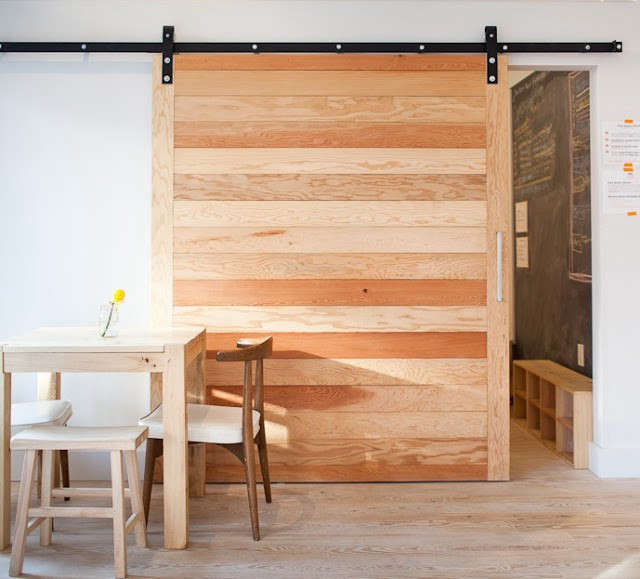
A sliding barn door is an interior or exterior door mounted on a visible track system. Instead of swinging inward or outward, the door rolls horizontally on hangers attached to the top edge. The hardware is usually exposed, which is part of the design. The rail, rollers, stops, floor guide, spacers, and handles become visible architectural details rather than hidden mechanics.
Interior sliding barn doors are commonly used to close off closets, pantries, laundry rooms, mudrooms, bathrooms, bedrooms, offices, dining areas, and wide room openings. They are especially popular where a hinged door would collide with furniture, block a walkway, or make a small room feel even smaller.
Why Sliding Barn Doors Became a Design Favorite
They Save Floor Space
The biggest practical advantage of sliding barn doors is space efficiency. A hinged door needs a swing radius. In a compact bathroom, pantry, hallway, or laundry area, that swing can interfere with cabinets, toilets, appliances, beds, or traffic flow. A barn door slides flat against the wall, leaving the room easier to use.
They Add Instant Character
Some architectural elements work quietly in the background. Sliding barn doors do not. Even a simple white barn door can become a focal point because the exposed track creates a strong horizontal line. Wood grain, paneling, glass, metal framing, oversized pulls, and matte black hardware can all help the door become part of the room’s personality.
They Divide Open Spaces Without Making Them Feel Closed Off
Open floor plans are great until someone wants to take a video call, watch a movie, cook loudly, or pretend not to hear the dishwasher. Sliding barn doors allow homeowners to separate spaces when needed and open them again when the house should feel connected. Double barn doors can be especially effective between a dining room and living room, a den and hallway, or a bedroom and sitting area.
Best Places to Use Sliding Barn Doors
Pantries
A pantry is one of the best locations for a sliding barn door. It hides clutter, allows quick access, and gives the kitchen a design feature that does not have to match the cabinets exactly. A wood barn door can warm up a white kitchen, while a painted door can echo an island color, window trim, or accent wall.
Closets
Closet doors are often treated as an afterthought, which is unfair considering they occupy a lot of visual space. Sliding barn doors can turn a basic closet into a finished design element. They are useful in bedrooms where furniture placement makes swinging doors awkward. Mirrored barn doors can also reflect light and make a small room feel larger.
Laundry Rooms and Mudrooms
Laundry rooms are hardworking spaces, and barn doors fit that energy well. A sliding door can hide appliances, cleaning supplies, backpacks, shoes, pet gear, and the mysterious basket of socks waiting for justice. Because laundry rooms often connect to hallways or kitchens, a stylish door helps the utilitarian space blend into the home.
Home Offices
A barn door can give a home office visual separation without the formality of a traditional door. For better privacy, choose a solid-core door and quality hardware. For borrowed light, use frosted or reeded glass. Just remember that sound control will not equal a properly sealed hinged door, so the door may not protect your conference call from a blender, barking dog, or enthusiastic toddler.
Bathrooms: Useful, But Choose Carefully
Bathrooms are where barn doors become controversial. They can save space and look beautiful, especially in tight en-suite layouts. However, they usually leave small gaps at the sides, bottom, and sometimes between the door and trim. That means less sound control, less odor control, and less visual privacy than a standard door. For a powder room used by guests, a barn door may not be the most diplomatic choice. For a private primary suite, it can work if the household understands the trade-offs.
Design Styles for Sliding Barn Doors
Rustic Wood Barn Doors
The classic version uses wood planks, visible grain, knots, stains, and black iron-style hardware. It pairs well with farmhouse, cabin, cottage, rustic, and transitional interiors. To keep the look fresh, avoid overloading the room with too many barn-inspired details. One barn door is charming. Five barn doors, a wagon wheel chandelier, and a “Gather” sign may cause guests to check for livestock.
Modern Shaker Barn Doors
Shaker-style barn doors use clean rails and stiles, flat panels, and simple proportions. Painted white, gray, black, navy, or soft green, they can fit modern, transitional, coastal, and minimalist interiors. This style is ideal for homeowners who like the sliding function but do not want the room to look like a country store.
Glass Barn Doors
Glass barn doors are excellent for spaces that need light flow. Frosted, reeded, fluted, or smoked glass can provide partial privacy while keeping the room bright. They work well for offices, pantries, closets, and interior room dividers. Clear glass is beautiful but less forgiving when the room behind it contains cereal boxes, laundry piles, or exercise equipment pretending to be used tomorrow.
Metal and Industrial Barn Doors
Steel-framed barn doors bring an architectural, loft-like feeling. They pair well with exposed brick, concrete floors, black window frames, and modern lighting. A slim metal frame with glass panels can feel elegant rather than heavy, especially when balanced with warm wood or soft textiles.
Painted Statement Doors
A sliding barn door is an easy place to add color. Deep green, terracotta, charcoal, navy, muted red, or even a cheerful yellow can turn the door into wall art with a handle. For a calmer look, paint the door the same color as the wall so the texture and hardware stand out quietly.
Hardware: The Jewelry and the Engineering
Barn door hardware is both decorative and structural. Most systems include a rail or track, rollers or hangers, spacers, mounting brackets, door stops, a floor guide, anti-jump discs, fasteners, and sometimes a soft-close mechanism. The hardware finish should coordinate with the room’s other metals, but it does not have to match every knob and faucet perfectly. Matte black remains popular because it looks crisp and works with rustic, industrial, and modern styles. Brushed brass, oil-rubbed bronze, stainless steel, and raw steel can also be effective.
Track length matters. As a practical rule, the track should be at least twice the width of the door so the door can fully clear the opening. The wall must also have enough open space on one side of the doorway for the door to slide. If there is a light switch, outlet, artwork, window trim, thermostat, or bookcase in the way, the door will not politely go around it.
Measuring for a Sliding Barn Door
A barn door should be wider than the opening it covers. Many installers recommend adding a few inches to each side so the door overlaps the frame and reduces visible gaps. Height also matters. The door must clear the floor while still covering the opening. Too low, and it drags like a dramatic movie villain. Too high, and it leaves a gap large enough to make privacy feel theoretical.
Before ordering or building a door, measure the opening width, opening height, wall space beside the opening, ceiling clearance above the opening, baseboard thickness, trim projection, and the distance to nearby switches or outlets. Also check whether the wall has studs or will need a header board. A sliding barn door is heavy, and drywall alone is not a structural strategy; it is a future repair bill wearing paint.
Installation Considerations
Support Is Non-Negotiable
The rail must be anchored securely into studs or into a solid header board attached to studs. This is especially important for solid-core doors, wide doors, double doors, or heavy wood designs. Always confirm the hardware’s weight rating and choose a system that comfortably exceeds the door’s weight.
Leveling Is Everything
A barn door track must be level. If the rail is even slightly off, the door may roll open or closed on its own. That can be funny once. It becomes less funny when the bathroom door slowly opens during a dinner party.
Use a Floor Guide
A floor guide keeps the bottom of the door from swinging away from the wall. Some guides fit into a groove cut into the bottom of the door, while others wrap around the door edge. Without a guide, the door may wobble, bang, or feel unstable.
Consider Soft-Close Hardware
Soft-close systems slow the door before it reaches the end of the track. This feature protects the wall, reduces noise, and helps prevent finger injuries. It is especially useful in homes with children, pets, or adults who treat doors like competitive sports equipment.
Pros and Cons of Sliding Barn Doors
Pros
Sliding barn doors save floor space, create visual impact, work in many design styles, and can be installed without opening up the wall like a pocket door. They are useful for tight rooms, wide openings, closets, pantries, and flexible living spaces. They can also be customized with paint, stain, glass, mirrors, paneling, or specialty hardware.
Cons
The drawbacks are real. Barn doors provide less sound control and privacy than traditional doors. They require open wall space, careful leveling, strong support, and enough clearance for hardware. They may not seal out light, smell, or noise. They also expose the track, which some homeowners love and others consider visual clutter.
How to Make Sliding Barn Doors Look Timeless
The key to a timeless barn door is restraint. Choose a design that fits the architecture of the home rather than chasing a trend. In a Craftsman-style house, a simple paneled wood door can feel appropriate. In a modern condo, a flat slab door with slim black hardware may look better. In a traditional home, painted Shaker panels can feel more integrated than distressed reclaimed boards.
Also consider scale. Oversized hardware on a small door can look cartoonish. A tiny handle on a massive double door can look like the door is wearing borrowed earrings. Proportion, finish, and placement make the difference between custom-looking and “ordered at midnight after watching renovation videos.”
Maintenance Tips
Sliding barn doors are generally low-maintenance, but they still need occasional attention. Dust the track, tighten loose fasteners, check the rollers, clean glass panels, inspect the floor guide, and touch up paint or stain as needed. If the door begins to squeak, wobble, or roll unevenly, address it early. Small hardware problems have a way of becoming loud household personalities.
Real-World Examples
In a small kitchen, a sliding barn door can conceal a pantry without stealing floor space from the cooking zone. In a primary bedroom, double barn doors can separate the sleeping area from a sitting room while adding symmetry. In a laundry hallway, a painted barn door can hide appliances and soften a utilitarian corner. In a home office, a frosted glass barn door can allow light to pass through while creating a professional boundary. In a renovated basement, large barn doors can close off storage or media equipment without needing a full framed wall.
Experience-Based Insights: Living With Sliding Barn Doors
After seeing sliding barn doors used in many homes, one lesson becomes obvious: the best installations begin with lifestyle, not Pinterest. A door can look beautiful in a photo and still annoy everyone who uses it twice a day. The first experience-related question should be simple: what problem is this door solving? If the answer is “the room is tight and a swing door gets in the way,” a barn door may be a smart architectural upgrade. If the answer is “I saw one online and now my bathroom needs personality,” slow down and measure twice emotionally.
In everyday use, barn doors shine in casual, semi-private spaces. Pantries, closets, laundry rooms, craft rooms, mudrooms, and offices tend to be successful locations because a perfect acoustic seal is not usually required. A pantry door can slide open while cooking and close quickly when guests arrive. A laundry door can hide visual mess without making the room feel boxed in. A closet barn door can make a bedroom feel more custom, especially when the door finish ties into furniture, flooring, or trim.
Bathrooms are the one place where experience teaches caution. A barn door on a bathroom can be attractive and space-saving, but it rarely behaves like a sealed door. Light may leak out at night. Sounds may travel. Gaps may bother guests. If the bathroom is inside a primary suite shared by people who are comfortable with the arrangement, it may be perfectly fine. For a hallway powder room used by visitors, a traditional door is usually kinder to everyone involved. Good design should not require guests to develop courage.
Another practical lesson is that hardware quality matters more than people expect. A cheap track can feel rough, noisy, or flimsy. A well-made smooth-glide system makes the door feel intentional and durable. Soft-close hardware is worth considering because it makes the experience quieter and safer. Handles also matter. A comfortable pull on the front and a recessed pull on the back can make the door easier to use from both sides.
Color and finish are also easier to live with when they connect to the rest of the home. A natural wood barn door looks best when it relates to flooring, beams, furniture, or shelving. A black door works well when repeated through lighting, window frames, cabinet hardware, or stair railings. A colorful barn door can be delightful, but it should feel like part of a palette rather than a random exclamation mark.
The final experience-based tip is to think about the wall, not just the door. The wall beside the opening becomes part of the doorway system. It must stay clear enough for the door to slide. That means no tall artwork, no protruding shelves, no badly placed light switches, and no furniture that blocks the travel path. A sliding barn door is graceful only when it has room to glide. Without that room, it is just a very stylish obstacle.
Conclusion: A Beautiful Door With a Few Ground Rules
Sliding barn doors remain one of the most recognizable architectural elements in modern residential design because they combine function and personality. They save space, frame openings beautifully, and transform ordinary transitions into design moments. They can feel rustic, modern, industrial, coastal, elegant, or playful depending on material, finish, and hardware.
The smartest approach is to treat a barn door as architecture, not just decoration. Measure carefully, choose strong hardware, respect privacy needs, and match the door to the home’s character. When used in the right place, a sliding barn door can make a room work better and look better. When used in the wrong place, it may become a charming reminder that not every trend belongs in every doorway.
In the end, the sliding barn door is not just a door. It is a moving wall, a design statement, a space-saving trick, and occasionally a test of household boundaries. Choose wisely, install securely, and let it glide.