

Hollywood has done a number on the public imagination. In movies, people wake up from a coma, blink twice, look vaguely fabulous for someone who has supposedly been unconscious for weeks, and ask for a cheeseburger or a shocking plot twist. Real life, unsurprisingly, is messier. The actual coma recovery experience is less like flipping on a light switch and more like watching a dimmer slowly, stubbornly inch upward while everyone in the room holds their breath.
Across public survivor stories, rehab accounts, ICU recovery discussions, and medical guidance, one truth keeps coming back: there is no single universal answer to what waking up from a coma feels like. Some people remember nothing at all. Some describe strange dreams, distorted voices, or terrifying confusion. Others say the biggest shock was not the coma itself, but the moment after: realizing time had vanished, their body no longer obeyed, and the world had continued without them.
So when people ask what it is actually like to wake up from a coma, the most honest answer is this: it can feel like darkness, a dream, a blur, a panic, a miracle, a grief, or all of those at once. The brain is astonishing, yes. It is also fragile. And when it is injured or overwhelmed, recovery rarely arrives in a clean, tidy package with a bow on top.
First, What A Coma Is And What It Isn’t
A coma is a deep state of unconsciousness. A person is alive, but they cannot be awakened or respond purposefully to what is happening around them. It can happen after traumatic brain injury, stroke, lack of oxygen, severe infection, seizures, overdose, or serious metabolic problems such as dangerously high or low blood sugar. In many cases, a coma does not last forever; it may last days or weeks, and recovery can be gradual, partial, or complicated.
That last part matters. People do not always go from coma to “back to normal.” Sometimes they move through stages of reduced awareness. Sometimes they wake with major physical, cognitive, or emotional difficulties. Sometimes they remember absolutely nothing. Sometimes they remember too much, just not accurately.
That is why so many doctors and rehab specialists say the same thing in different words: consciousness is a spectrum, not a magic trick. The brain does not punch a time clock and announce, “Good morning, everybody, I’m fully online.” If only it were that polite.
What Waking Up From A Coma Often Feels Like
1. For many people, it feels like missing time
One of the most common descriptions from people who survived coma is not a vivid memory but a blank. There is no epic tunnel, no heavenly waiting room, no neatly labeled dream sequence. There is just absence. Then, suddenly, they are somewhere else, often in a hospital bed, with no idea how much time has passed.
That missing-time effect can be emotionally jarring. Imagine falling asleep on a Tuesday and waking up in a different month with tubes, monitors, weak muscles, and a room full of people acting relieved in a way that suggests you missed a lot. Because, well, you did. Many survivors say the weirdest part is not what they remembered from the coma, but what they didn’t remember. Life simply vanished for a while.
2. For others, it feels like a dream stitched together by chaos
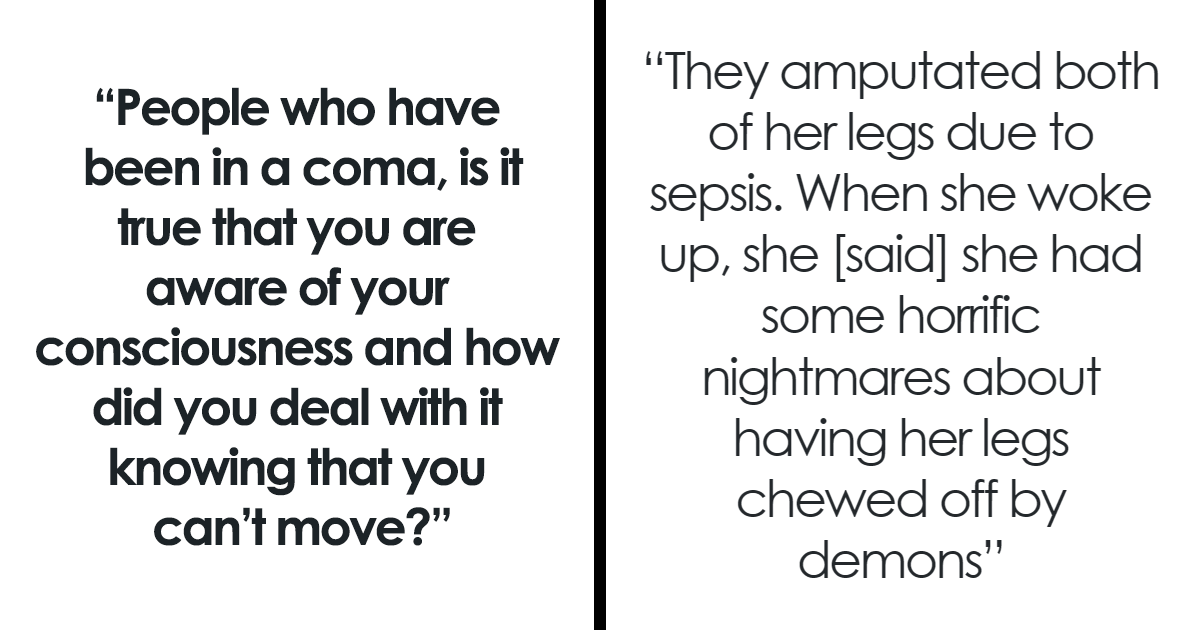
Some survivors do report dreamlike experiences, but they are not usually graceful or poetic. They are often surreal, fragmented, and emotionally intense. People describe hearing voices that seem far away, believing they are in another place, or feeling trapped inside a bizarre half-dream, half-reality state. This is one reason ICU delirium and post-ICU recovery are such important parts of the story.
Heavy sedation, mechanical ventilation, infection, inflammation, sleep disruption, pain medication, and the general sensory weirdness of intensive care can all distort perception. A beeping monitor can become part of a dream. A nurse’s conversation may drift into a false memory. A ceiling light can turn into a spotlight from another universe. The brain, trying to process limited information while severely stressed, can produce narratives that feel real even when they are wildly inaccurate.
3. The first clear feeling is often confusion, not clarity
When people imagine waking up from a coma, they often picture a dramatic return to awareness. In reality, early consciousness may be foggy. A person may open their eyes, track movement, squeeze a hand, or respond in tiny ways before they can speak clearly or understand what happened. Some survivors say they knew they wanted something to go home, to move, to get the tube out, to find a family member but could not express it.
That can be terrifying. One survivor account describes the experience as wanting to leave immediately without understanding why the body could not cooperate. Another describes it as waking into a world that felt almost like a parallel version of reality. Others say they were shocked to discover they had lost days, weeks, or even months.
Why The Memories Can Be So Strange
This is where the phrase “the brain is a fragile thing” stops sounding dramatic and starts sounding scientifically obvious. Memory is not a passive recording device. It is an active process. When the brain is injured, deprived of oxygen, under sedation, inflamed, or fighting for survival, memory formation can become patchy, distorted, or incomplete.
That is why many people who wake from a coma describe one of three broad patterns. First, complete blankness: nothing before, nothing during, and only faint awareness afterward. Second, partial fragments: a voice, a touch, a sensation of floating, pressure, fear, or thirst. Third, vivid but unreliable dream memories: stories the brain created while reality was slipping in through a cracked door.
Families sometimes find this hard to understand. If a loved one says, “I remember being kidnapped,” or “I thought I was underwater,” the instinct may be to correct them immediately. But recovery experts often note that these experiences can feel intensely real to the person who lived them. Even when the content is false, the fear is genuine. The emotional imprint can linger long after the factual details fall apart.
The Body Usually Wakes Up Grumpier Than The Mind Expects
Here is another detail that shows up again and again in recovery stories: survivors are often stunned by how weak they feel. After critical illness, coma, or prolonged ICU care, the body may be profoundly deconditioned. Standing can feel impossible. Speech may be halting. Swallowing may take effort. Arms and legs may not cooperate. Fine motor skills can vanish like socks in a dryer.
That is part of why the brain injury recovery or ICU recovery journey can feel so cruelly uneven. Someone may become more awake cognitively while still being unable to sit up, talk normally, walk, or remember simple things. It is frustrating. It is humbling. And for many survivors, it is one of the hardest emotional transitions: your mind says, “I’m here,” while your body says, “Please lower your expectations, buddy.”
Some people recover rapidly. Others need months or years of rehabilitation. Speech therapy, physical therapy, occupational therapy, counseling, and family support often become part of the new routine. Recovery may mean relearning basic tasks, rebuilding endurance, coping with fatigue, or finding new ways to communicate.
What Survivors Say Changes Afterward
Memory and concentration can feel scrambled
Even after the coma ends, many survivors say their thinking does not snap back into place. Short-term memory can be poor. Attention can wander. Words can feel just out of reach. Problem-solving may slow down. Everyday tasks that once felt automatic can suddenly require effort, planning, and rest breaks.
That does not mean recovery is impossible. It means the route is rarely straight. Some people make dramatic gains over time. Some plateau. Some continue to improve in small ways that outsiders barely notice but that feel enormous to them. A first word, a first step, a first full meal, a first clear memory these can become major milestones.
Emotionally, survival can come with grief
This part is often left out of clicky internet summaries, but it should not be. People who recover from coma or prolonged critical illness may feel grateful and devastated at the same time. They are alive, yes. They may also feel frightened, depressed, anxious, embarrassed, angry, or deeply alien in their own lives.
Some survivors say they feel like a different version of themselves. Some mourn lost time, lost abilities, lost independence, or a lost sense of certainty. That is not ingratitude. That is reality. Surviving something catastrophic does not automatically make every day feel inspirational and sun-dappled. Sometimes it makes every day feel like hard work.
The family often wakes up too
Coma recovery is not a solo event. Families live through a different version of the trauma: the waiting, the uncertainty, the medical language, the tiny signs that suddenly matter more than anything. Modern critical care now pays more attention to this because long ICU stays can affect loved ones as well. Anxiety, insomnia, stress, and trauma can ripple through the whole household.
In other words, when someone wakes from a coma, the story is not simply, “Great, it’s over.” More often it is, “Okay, a different chapter has started.”
Why Doctors Talk More About Post-Intensive Care Syndrome Now
Medical progress has saved more people who once might not have survived severe injury or illness. That is the good news. The next piece of news is more complicated: survival is not always the finish line. Many ICU survivors develop physical, cognitive, and emotional symptoms after discharge, a cluster often called post-intensive care syndrome.
This helps explain why so many people who wake from a coma describe lingering nightmares, confusion, fatigue, weakness, mood shifts, and attention problems. It is not “just in their head” in the dismissive sense. It is, quite literally, in the head, the body, the nervous system, and the lived experience of critical illness.
That growing awareness is important because it changes the conversation. Instead of asking only, “Did they survive?” clinicians and families are also asking, “What does recovery look like? What support do they need? What kind of life can they rebuild?” Those are harder questions, but they are the right ones.
So, What Was It Actually Like?
If you boil down dozens of public survivor accounts into a common language, the answer sounds something like this: waking from a coma can feel like surfacing through thick fog into a world that is familiar but off-kilter. It can feel like no time passed at all, or like you have been gone for a century. It can feel peaceful because there was nothing to remember, or terrifying because what you do remember makes no sense.
It can feel like hearing people before seeing them. It can feel like wanting to speak and not being able to. It can feel like waking up weak, confused, and emotionally raw. It can feel like relief mixed with grief. It can feel miraculous and awful in the same hour.
And that may be the most honest takeaway of all: there is no neat, one-size-fits-all coma experience. The stories differ in detail, but many agree on the same themes. Time breaks. Memory lies. Fear can linger. Recovery is slow. Tiny gains matter. The body remembers stress. The mind searches for meaning. And life after coma is often less about a dramatic awakening than about learning, step by step, how to live in the aftermath.
More Experiences Related To What Waking Up From A Coma Is Really Like
Read enough first-person accounts and a pattern emerges: people do not just “wake up.” They often surface in layers. A nurse may notice eye tracking before speech returns. A family member may celebrate a finger squeeze that would have gone unnoticed in everyday life. A survivor may later say they heard voices for days before they could understand where they were. Recovery, in that sense, can feel less like a grand entrance and more like tuning an old radio until a signal finally comes through.
Another common thread is embarrassment. Not because survivors did anything wrong, but because illness strips away privacy. Many wake to discover they need help with everything: eating, bathing, sitting up, speaking, even remembering the names of people they love. For fiercely independent adults, that can be emotionally brutal. One day you are managing a full life. The next, holding a spoon deserves applause. It is noble, yes, but it is also humbling in a way most healthy people never have to imagine.
Then there is the strange social whiplash. Family and friends are thrilled you are awake, but you may not feel triumphant. You may feel exhausted, irritated, frightened, or disconnected. People want good news. Survivors often have a more complicated report: “I’m here, but I’m not fully myself yet.” That gap between outside celebration and inside confusion can be lonely.
Many accounts also describe a surreal relationship to identity. Survivors may know who they are in a factual sense, but not feel like the same person emotionally. Changes in memory, voice, stamina, personality, or speed of thinking can make everyday life feel unfamiliar. Even when progress is strong, some people describe a quiet grief for the self they expected to return to. The hardest part is not always the coma. Sometimes it is meeting the post-coma version of yourself and learning to respect that person too.
And yet, alongside all of that, there is often stubborn hope. Survivors talk about tiny victories with the seriousness of Olympic medals: saying “Mom” again, standing for ten seconds, remembering a password, laughing at a joke, swallowing without fear, walking to the bathroom alone. These are not small things after severe brain injury or critical illness. They are proof that recovery is not only measured by scans and scores, but by ordinary moments becoming possible again.
That is what makes these coma recovery stories so compelling. They are not polished motivational posters. They are messy human reports from the edge of consciousness. Some are heartbreaking. Some are oddly funny in retrospect. Some are full of fog, fear, or blankness. But taken together, they show something profoundly important: waking from a coma is rarely one dramatic instant. It is a series of returns to awareness, to the body, to language, to memory, to relationships, and, eventually, to some workable version of life. Not always the old life. Not always an easy life. But a life that can still contain meaning, connection, and surprise.
Conclusion
If there is one myth worth retiring, it is the idea that waking from a coma is a clean cinematic moment. The real story is deeper and, frankly, more human. For some people, there is only darkness and a blank stretch of stolen time. For others, there are eerie dream fragments, false memories, panic, and confusion. For many, the hardest work begins after consciousness returns: rebuilding strength, repairing memory, managing fear, and grieving what changed.
But the public stories of coma survivors also offer something else: perspective. They remind us that recovery is often measured in inches, not headlines. A glance, a word, a swallow, a step, a good day after weeks of bad ones these are not footnotes. They are the plot. The brain is fragile, yes. It is also capable of adaptation that can feel almost unbelievable from the outside.
So what is it actually like to wake up from a coma? Usually not magical. Often disorienting. Sometimes traumatic. Frequently slow. And, for many people, deeply life-altering. But again and again, survivors show that even when memory is broken, the body is weak, and the future looks unfamiliar, recovery can still move forward in ways both ordinary and extraordinary.