

Note: This article is written for web publication in standard American English and is based on real pet-recovery practices, animal rescue knowledge, microchipping guidance, and dog photography experience.
The Kind of Story That Makes Dog Lovers Stop Scrolling
Some stories begin with a bark, a wagging tail, and a perfectly normal afternoon. Others begin with silencethe kind of silence that follows when a beloved dog disappears from the front yard and no one can explain where he went. That is what makes the story behind a dog who vanished without a trace 7 years ago finally reappeared, and I did his photoshoot so unforgettable. It has everything: heartbreak, hope, rescue, reunion, and, because life occasionally has excellent taste, a beach photoshoot with two Border Collies who look like they have seen both trouble and snacks.
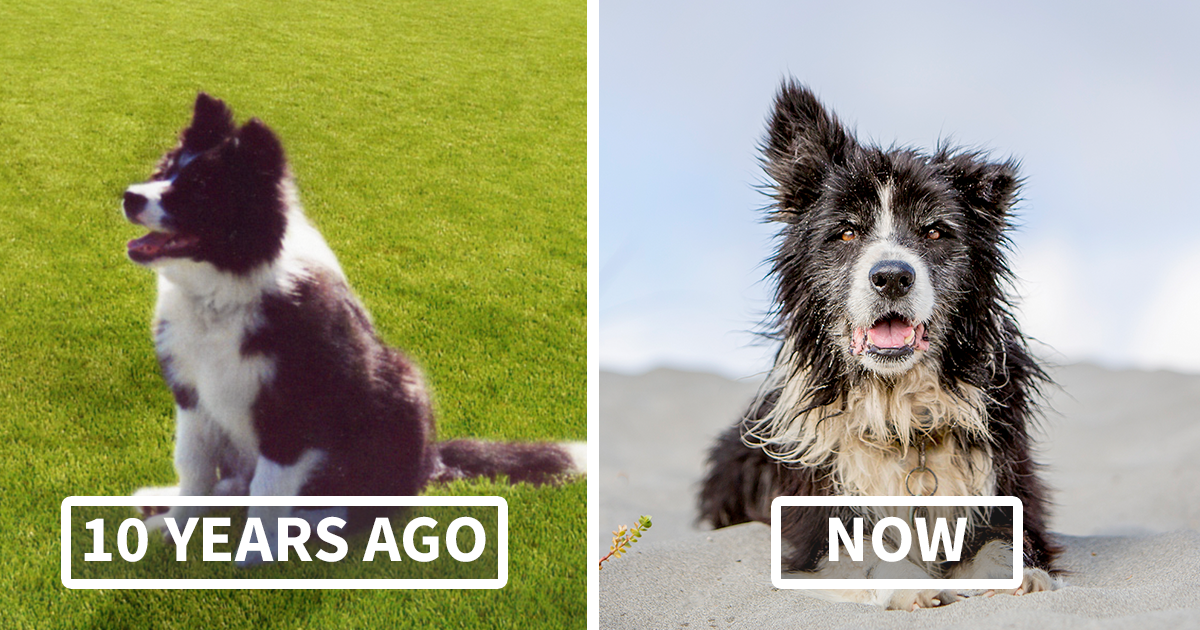
The dog at the center of this emotional story was Sam, a Border Collie who went missing as a young pup. One day, he was therefluffy, lively, loved by his familyand then he was gone. No clues. No neat explanation. No dramatic movie soundtrack swelling in the background. Just a family left wondering what happened to their dog, and a neighborhood that suddenly felt much larger, colder, and more mysterious.
Seven years later, a phone call changed everything. Sam had been found. He was older, weaker, and visibly marked by hardship, but he was alive. His return was not just a reunion; it was a reminder that lost pets can sometimes come back after years, and that identification, rescue networks, veterinary care, and community kindness can turn an impossible story into a homecoming.
Who Was Sam Before He Disappeared?
Sam was a young Border Collie, only around six months old when he vanished. Anyone who has ever lived with a Border Collie knows this breed does not simply occupy a homethey manage it. They monitor schedules, supervise humans, evaluate emotional stability, and occasionally act like they have a graduate degree in sheep logistics. Sam was still a puppy, but he already belonged deeply to his family.
He lived with Nikki and Simon, who loved him as part of the household. Then came the day that changed everything. Sam disappeared from the front yard, and despite efforts to find him, nobody seemed to know what happened. For families who lose a pet, this uncertainty can be the hardest part. When there is no answer, imagination fills the empty space, usually with the worst possible ideas.
In the years that followed, life continued. The family eventually welcomed another Border Collie named Billie, recognizable for his striking blue eye. Billie became part of the family, not as a replacementbecause dogs are not furniture, and you do not simply swap one for anotherbut as another chapter in a household that still carried Sam’s memory.
The Phone Call No One Expected After Seven Years
After seven long years, Sam’s family received a call from an animal rescue organization. Sam had been found and taken for veterinary care. For many pet owners, this is the phone call they dream about long after hope has become complicated. It is the call that says, “We found him.” Not “we think,” not “maybe,” not “someone saw a similar dog,” but found.
Sam was no longer the fluffy puppy who had disappeared. He was about ten years old by then, deaf, unsteady on his feet, and visibly aged by whatever he had endured. The exact details of those missing years remained unknown. That mystery is part of what makes the story so haunting. Where had he been? Who had seen him? How had he survived? There are questions that even a dog’s soulful eyes cannot answer, although they can absolutely convince you to hand over half your sandwich.
What mattered most was that Sam was alive and finally back within reach of the people who had loved him first. Animal rescue workers and veterinary staff played a crucial role in getting him safe, treated, and identified. Stories like Sam’s highlight why microchipping dogs and keeping contact information updated are not small chores; they are lifelines.
Why Microchipping Matters More Than Most Pet Owners Realize
One of the biggest lessons from Sam’s return is simple: microchip your dog. A collar and ID tag are helpful, but collars can break, slip off, or be removed. A microchip, by contrast, is a permanent form of identification placed under the pet’s skin by a veterinary professional. When a shelter or veterinarian scans the chip, they can access the registration information and contact the owner.
The catch is that a microchip only works well when the registration details are current. If a family moves, changes phone numbers, or forgets which registry holds the information, the chip can become a locked door with no working key. Pet owners should check microchip registration regularly, especially after moving, changing email addresses, or switching phone numbers. Think of it as updating your dog’s emergency business card, except your dog’s business is mostly sleeping diagonally across the couch.
Lost pet recovery experts often recommend using multiple layers of protection: a collar with an ID tag, a registered microchip, recent photos, and fast action when a pet goes missing. In modern pet recovery, photos also matter more than ever. Online lost-and-found databases, local social media groups, shelter websites, and even image-matching technology can help connect lost animals with their families.
The Photoshoot: Turning Survival Into a Celebration
When I photographed Sam and Billie, the goal was not to create perfect, glossy, magazine-style images where every hair behaved and every paw landed like a professional model. Dogs do not care about editorial standards. Dogs care about smells, snacks, wind, suspicious seagulls, and whether the photographer is holding anything edible.
The photoshoot took place at a dog beach, which was the perfect setting for two Border Collies with very different histories. Billie brought the energy of a dog who knew his place in the family. Sam brought something gentler: a quiet wisdom that seemed to surround him. He was older, physically fragile, and clearly changed by his missing years, but he still approached with warmth. His tail wagged. His body asked for kindness. His spirit, somehow, had not given up.
That is one of the powerful things about photographing rescue dogs or reunited pets. The camera captures more than fur and facial expressions. It records resilience. It catches the small details people might miss in the rush of emotion: the tilt of a head, the careful step, the trust in a dog’s eyes after that trust has every reason to be gone.
Photographing a Dog With a Difficult Past
A dog like Sam cannot be photographed with impatience. You do not march into the session expecting perfect obedience, sharp poses, and a neat row of Instagram-ready expressions. You slow down. You let the dog sniff. You allow breaks. You keep the atmosphere soft and predictable. The best images come when the dog feels safe enough to be himself.
For older dogs, especially those with mobility issues, a photoshoot should be built around comfort. Instead of asking the dog to run, jump, or hold difficult positions, the photographer should work with natural movement. A seated portrait, a slow walk along the sand, a moment beside a companion dog, or a simple close-up can tell the whole story.
What Sam’s Story Teaches About Lost Dog Recovery
Sam’s return after seven years may sound rare, but long-delayed reunions do happen. Dogs have been reunited with families after months or even years because someone scanned a microchip, recognized a photo, contacted a shelter, or refused to ignore a stray animal who looked like he needed help. The lesson is not that every missing dog will come home after seven years. The lesson is that hope and action work best together.
Act Quickly When a Dog Goes Missing
The first hours after a dog disappears matter. Owners should search the immediate area, alert neighbors, call local shelters, contact animal control, and notify nearby veterinary clinics. A frightened dog may hide close to home, especially in garages, sheds, wooded areas, alleys, or under porches. Calling calmly, using familiar sounds, and placing familiar-smelling items outside can help.
Use Clear, Recent Photos
A good lost dog photo should show the dog’s face, body shape, coat color, and any unique markings. Blurry photos of a dog sprinting through the living room with a stolen sock may be emotionally valuable, but they are not always useful for identification. Keep a few clear photos saved on your phone. Include front-facing, side-view, and full-body shots.
Contact Shelters More Than Once
Calling a shelter once is not enough. Lost dogs may enter the system days or weeks after they disappear. Owners should keep checking, send photos, visit in person when possible, and search nearby jurisdictions too. Dogs do not respect city boundaries. They also do not pause to read street signs, because they are dogs and already have enough responsibilities.
Beware of Lost Pet Scams
When a pet goes missing, emotions are high, and scammers know it. Some may claim they found the dog but demand money before providing proof. Pet owners should ask for specific identifying details, request a current photo, avoid sending payment without verification, and contact shelters or rescue groups directly through official channels.
The Emotional Side of a Dog Reunion
A reunion after seven years is not as simple as opening the door and returning to the old routine. For the family, it can bring joy, grief, guilt, shock, and relief all at once. For the dog, it can be confusing. The people smell familiar, but the house may be different. The dog’s body may be older. The household may include new pets, new furniture, new rules, and possibly a suspiciously comfortable couch that was not previously available.
Reunited dogs may need medical evaluation, quiet rest, and gradual reintroduction to family life. If the dog has experienced neglect, fear, or long-term stress, patience is essential. Some dogs bounce back quickly. Others need time to trust routines again. The important thing is to let the dog move at his own pace.
In Sam’s case, the presence of Billie added another layer to the story. The two Border Collies became part of the same visual narrative: the dog who stayed and the dog who came back. Billie was not a replacement for Sam; he was proof that love can expand. When Sam returned, the family did not have to choose between past and present. They got to hold both.
Why Dog Photos Matter After a Hard Journey
Some people think a dog photoshoot is just a cute luxury. And yes, sometimes it is exactly that. There is nothing wrong with wanting a portrait of your dog looking majestic, goofy, muddy, or like he just heard the word “treat” in three languages. But in stories like Sam’s, photography becomes something deeper.
Photos give families a way to mark survival. They say, “You were lost, but now you are here.” They preserve the version of the dog who made it home, even if he looks older, slower, or different from the puppy everyone remembers. A good photo does not erase the missing years. It honors the dog who lived through them.
For rescue organizations, strong photography can also help animals get adopted, reunited, or supported. A clear, compassionate image can make people stop and care. It can help a lost dog be recognized. It can help a senior dog find a home. It can help a frightened animal be seen not as a problem, but as a personality waiting for safety.
How to Photograph a Reunited or Rescue Dog
If you ever photograph a dog with a rescue background, start with empathy, not equipment. A fancy camera is helpful, but patience is the real professional tool. Let the dog explore the space. Keep voices calm. Avoid sudden movements. Bring treats only if the owner confirms they are safe for the dog. Use toys if the dog enjoys them, but do not force excitement from a dog who needs quiet.
Choose a Comfortable Location
A familiar yard, quiet park, or calm beach can work beautifully. The best location is not always the most dramatic one; it is the place where the dog can relax. For Sam, the beach offered open space, soft light, and room to move naturally.
Focus on the Eyes
In dog photography, the eyes often carry the emotional weight of the image. With senior dogs, rescue dogs, or reunited pets, the eyes can tell a story more honestly than any caption. Focus there whenever possible.
Let Imperfection Stay
Not every photo needs to be polished. A tilted ear, sandy paw, tired expression, or crooked sit can be part of the truth. Real dog photography is not about making a dog look flawless. It is about making the dog look loved.
Experiences Related to Photographing a Dog Who Came Back After Years
Photographing a dog like Sam changes the way you look at pet portraits. Before a session like this, you may think the job is about lighting, timing, composition, and getting both ears inside the frame. Afterward, you realize the real job is making space for a story that is bigger than the camera.
The first experience that stands out is the quietness. People expect emotional reunions to be loud, full of jumping, crying, and dramatic scenes worthy of a movie trailer. Sometimes they are. But often, the deepest moments are surprisingly still. An older dog leans into a hand. A family member watches him walk and notices the limp. Another dog sniffs him, not fully understanding the history but sensing that something important has shifted. The camera has to be ready for those quiet seconds.
Another lesson is that dogs do not perform grief or joy the way humans expect. A dog who has been missing for years may not run in circles like a puppy. He may simply rest near his people. He may follow slowly. He may sleep harder than expected because, for the first time in a long time, his body believes it is safe. As a photographer, you learn not to push for energy that is not there. The story is not less powerful because the dog is tired. In fact, the tiredness may be the story.
There is also the challenge of photographing what cannot be seen. You cannot photograph the seven missing years directly. You cannot capture every cold night, every stranger, every moment of confusion, or every act of survival. What you can photograph is the evidence that he endured. You can photograph the gray in his muzzle, the caution in his movement, the softness that returns when a familiar hand touches his head. You can photograph the family looking at him as if they are afraid to blink.
For pet owners, a reunion photoshoot can feel emotional in unexpected ways. Some may compare the returned dog to old puppy photos and feel a wave of sadness. Others may feel guilty for moving forward, adopting another pet, or eventually assuming the missing dog would never return. A good photographer respects those emotions. The session should not feel like a performance. It should feel like a gentle record of a family finding its way back to itself.
From a practical standpoint, these sessions require flexibility. Older or recovering dogs may need shorter shooting windows, shade, water, and breaks. The photographer may need to sit on the ground, crawl through sand, wait through sniffing breaks, or accept that the dog has chosen a completely different creative direction. In dog photography, the client may be human, but the art director has paws.
The most meaningful experience, though, is watching love adjust. Love does not always return to the same shape it had before. Sam was not the puppy who disappeared. His family was not living the same life they had seven years earlier. Billie was now part of the home. Time had moved, as time rudely insists on doing. But love made room. It stretched around the missing years, around the questions, around the pain, and around the old dog standing on the beach with his tail still willing to wag.
That is why a photoshoot after a lost dog returns matters. It is not just a set of pretty pictures. It is a witness statement. It says this dog existed, disappeared, survived, returned, and was loved. It says the family did not get every answer, but they got the one answer that mattered most: he was home.
Conclusion: A Lost Dog, a Second Chance, and a Camera Ready for the Miracle
The story of a dog who vanished without a trace 7 years ago finally reappeared, and I did his photoshoot is more than a heartwarming animal story. It is a reminder that pets are family, that microchips can change outcomes, that rescue workers and veterinarians often become the bridge between heartbreak and healing, and that photography can preserve the beauty of a second chance.
Sam’s return does not answer every question about where he was or what happened to him. But maybe some stories do not end by solving every mystery. Maybe they end with a dog on a beach, a family nearby, another Border Collie at his side, and a camera capturing proof that hope sometimes comes back with gray fur, tired legs, and a tail that still remembers how to wag.