

If you’ve ever heard the phrase “a missile hit Poland” and immediately thought, well, that’s it, cue the Article 5 siren and somebody hide the globe, you’re not alone. The words sound like the opening line of a nightmare briefing. Poland is a NATO member. Article 5 is NATO’s collective defense clause. One attack on one ally is treated as an attack on all. On paper, that can sound less like diplomacy and more like the world’s most expensive group chat turning into a war room.
But here’s the important reality: Article 5 is not a motion-activated trapdoor. It is not a giant red button under Brussels protected by dramatic lighting and the kind of key-turn ceremony Hollywood loves. A missile striking Polish territory is seriousextremely seriousbut whether NATO invokes Article 5 depends on what happened, who fired it, whether it was deliberate, and how the alliance decides to respond.
That distinction mattered enormously in the real-world case that made this headline feel terrifyingly plausible. In November 2022, a missile landed in the Polish village of Przewodów near the Ukrainian border, killing two people and sending a jolt of panic through NATO capitals. Early reports were messy. Initial assumptions flew around at the speed of social media doom-posting. But after emergency consultations and an investigation, NATO and Poland said the blast was most likely caused by a Ukrainian air-defense missile fired during a massive Russian attack on Ukrainenot a deliberate Russian strike on Poland.
That meant the answer to the big questionWill this invoke NATO Article 5?was no. At least not in that case. And understanding why tells you a lot about how NATO actually works, how the alliance thinks about escalation, and why one missile can create a political earthquake without automatically triggering a wider war.
What Article 5 Actually Means
Article 5 is NATO’s most famous line for a reason. It says that an armed attack against one member is considered an attack against them all. That sounds absolute, and in political terms it is meant to be. It is the core deterrent promise that tells any would-be aggressor: if you hit one ally, you are picking a fight with the alliance.
But the legal and strategic details matter. Article 5 does not say every member must respond in the exact same way, at the exact same level, with the exact same kind of force. Instead, each ally agrees to assist by taking “such action as it deems necessary”, which can include the use of armed force. That means NATO’s collective defense clause is powerful, but not mechanically automatic. The alliance must still determine what happened and what response fits the situation.
That’s why Article 5 should be understood as a political and military commitment, not a vending machine where you insert one missile and out comes World War III. The point is solidarity and deterrence. The implementation depends on facts, consensus, risk, and judgment.
There is also a lesser-known but hugely important companion clause: Article 4. If a member believes its territorial integrity, political independence, or security is threatened, it can request consultations with allies. Think of Article 4 as NATO’s urgent “we need to talk right now” option. It doesn’t commit the alliance to military retaliation, but it does trigger consultation, coordination, and often visible reassurance measures.
That distinction matters because the alliance has often reached for Article 4 in moments of danger and ambiguity. Article 5, meanwhile, has been invoked only once in NATO historyafter the September 11 attacks on the United States. So yes, Article 5 is real. It is ironclad. It is central to NATO’s credibility. But it is also rare, careful, and not casually deployed just because the phrase “missile strike” appears in a headline.
What Happened in Poland in the Real Case
In November 2022, Russia launched a large missile barrage against targets across Ukraine. During that attack, an explosion occurred in the Polish border village of Przewodów, killing two civilians. The location alone was enough to set off alarms. This was NATO territory. Poland is not some distant observer to the war in Ukraine; it is one of the alliance’s key eastern-flank states and one of Ukraine’s most important logistical lifelines.
At first, confusion reigned. Reports described a “Russian-made” missile. Leaders held emergency meetings. Analysts everywhere started dusting off their Article 5 explainers like they were old emergency candles. U.S. President Joe Biden quickly signaled that the missile’s trajectory made it unlikely to have been fired from Russia. NATO Secretary General Jens Stoltenberg later said preliminary analysis suggested the blast was likely caused by a Ukrainian air-defense missile fired to defend Ukrainian territory against Russian cruise missile attacks.
That conclusion did two things at once. First, it lowered the immediate risk of direct NATO-Russia military escalation. Second, it did not let Russia off the moral hook. NATO’s line was clear: even if the missile itself was likely launched by Ukrainian air defense, Russia bore ultimate responsibility because its mass attack on Ukraine created the conditions that led to the tragedy.
In other words, the alliance treated the event as a deadly consequence of Russia’s war, but not as a deliberate armed attack by Russia on Poland. And that is precisely why Article 5 was not invoked.
Why a Missile Hitting Poland Does Not Automatically Trigger Article 5
1. NATO has to determine whether it was an armed attack
Article 5 is built around the concept of an armed attack. That means the alliance has to determine whether the incident was deliberate, attributable, and serious enough to be understood as an attacknot merely a spillover event, accident, air-defense failure, or unclear border incident. A missile crossing into allied territory is grave. But grave is not always the same thing as an intentional attack.
2. Attribution matters
Who fired the missile? Was it Russian? Ukrainian? A drone? Debris? Something gone off course? In wartime, especially near borders, the first answers are often wrong or incomplete. NATO is allergic to making historic decisions based on rumor, adrenaline, and somebody’s very confident post on the internet. Before invoking Article 5, the alliance needs confidence in attribution.
3. Intent matters too
Was the strike deliberate, reckless, or accidental? If a missile hits Poland because it was aimed there, that is one category of crisis. If it lands there because air-defense interception went wrong during a barrage on Ukraine, that is another. NATO understands this difference because the consequences of misreading intent could be catastrophic.
4. Article 5 still leaves room for choice
Even if Article 5 were invoked, that would not automatically mean every ally launches missiles by lunchtime. Assistance can include military deployments, air defense reinforcement, intelligence sharing, cyber support, readiness increases, or other collective measures. So the phrase “invoke Article 5” should not be confused with “declare immediate all-out war.”
5. NATO prefers escalation control when facts are murky
NATO’s eastern flank lives close enough to the war in Ukraine that spillover risks are real. A mature alliance response is not about acting impulsively. It is about combining deterrence with discipline. That is why consultation, evidence review, and proportionality matter so much.
When Article 5 Would Become Much More Likely
If Russia were to intentionally strike a Polish city, a Polish military installation, or NATO troops on Polish soil, the pressure to invoke Article 5 would be immense. At that point, the “was this deliberate?” debate would become far less ambiguous. The alliance would likely move quickly from consultation to collective response planning.
The same would be true if there were repeated, clearly attributable attacks against Polish territory that showed a pattern rather than an isolated incident. NATO does not need to wait for a giant Pearl Harbor-style moment to recognize hostile intent. A sequence of deliberate violations could create the political and strategic case for Article 5 even if each individual incident was limited in scale.
But one of the lessons from the Przewodów case is that ambiguity changes everything. In a murky event, NATO’s first instinct is to gather facts, stabilize the situation, reassure the ally under pressure, and prevent a tragedy from turning into a miscalculation.
Why Poland Is So Central to This Question
Poland is not just another NATO map label. It is one of the alliance’s most important frontline states. It borders Ukraine, Belarus, and the Russian exclave of Kaliningrad. It has become a key transit hub for weapons, humanitarian aid, and political support flowing into Ukraine. It has also invested heavily in defense and hosted significant allied military activity as NATO has reinforced its eastern flank.
That makes Poland both vital and vulnerable. Any strike on Polish territory instantly raises broader questions about deterrence, credibility, and whether Russia is testing NATO’s nerve. The alliance knows that if it looks weak on Poland’s security, the signal would ripple across the Baltics, Central Europe, and beyond.
At the same time, NATO also knows that overreacting to an ambiguous incident could hand Moscow something it has long sought: a wider confrontation that fractures allied unity or creates panic-driven mistakes. So the balancing act is delicate. Defend every inch of allied territory, yes. But do it with evidence, not theater.
Article 4: The Clause That Often Does the First Heavy Lifting
Because headlines love Article 5, people sometimes overlook how often Article 4 does the practical work in tense moments. It allows a threatened ally to convene urgent consultations and coordinate a shared response. That can lead to stronger air policing, missile defense reinforcement, more intelligence sharing, higher alert levels, political statements, troop movements, or diplomatic pressure.
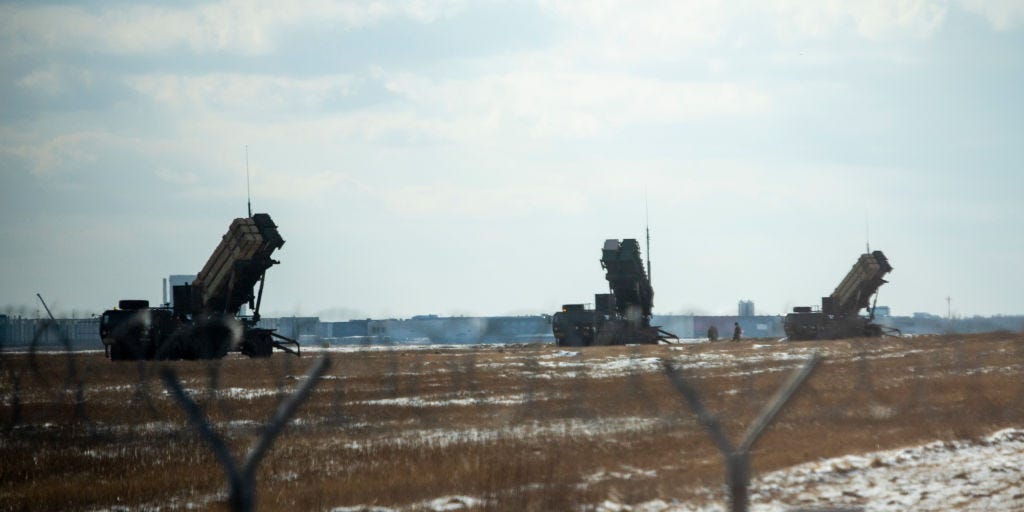
That is important because NATO’s real deterrent toolkit is bigger than one treaty clause. The alliance can scramble jets, move Patriots, strengthen surveillance, harden readiness, and signal resolve without immediately crossing into the most escalatory legal and political territory. In fact, later airspace incidents involving Poland showed exactly that pattern: more consultation, more defensive measures, and more visible allied supportwithout jumping straight to Article 5.
In plain English, NATO has a ladder. It does not go from “that was concerning” to “everybody into the apocalypse van” in one step.
So, Would a Missile Strike on Poland Invoke Article 5?
The honest answer is: not automatically. It could, if the strike were clearly a deliberate armed attack by Russia or another hostile actor. But it would not do so merely because a missile landed there. NATO would look first at attribution, intent, pattern, casualties, context, and the judgment of Poland itself in consultation with allies.
That is why the 2022 incident did not trigger Article 5. The facts pointed away from a deliberate Russian attack on Poland, even though the broader blame still landed on Russia’s war. The alliance responded with caution, solidarity, and an effort to prevent an already dangerous war from widening by mistake.
And that may be the most important takeaway of all: NATO credibility is not measured only by how fast it escalates, but by how smartly it distinguishes between a provocation, an accident, a warning sign, and an actual armed attack.
The Human Experience Behind the Headline
It is easy to discuss all of this as treaty language, radar tracks, and strategic signaling. It is harderand more honestto remember that incidents like this are first experienced by human beings before they become policy debates. In Przewodów, the story was not born in a conference room. It began with an explosion in a rural Polish community, two dead civilians, and the kind of shock that turns an ordinary afternoon into something people replay in their minds for years.
For people living near NATO’s eastern edge, the experience is not abstract. It is the sound of jets overhead. It is emergency alerts. It is wondering whether the war next door is still next door. Border communities do not consume “geopolitical spillover” as a concept; they experience it as anxiety, interruption, and the unsettling realization that maps do not stop shrapnel.
Then there is the experience inside government. Polish leaders, NATO officials, and allied militaries do not get the luxury of neat timelines. They get fragments: reports from first responders, radar data, early intelligence, contradictory claims, television speculation, and a thousand questions arriving before breakfast. Their job is to keep one tragedy from becoming two tragediesfirst the strike itself, then a catastrophic overreaction based on incomplete information.
There is also the Ukrainian side of the experience, which matters morally and strategically. Ukraine was under bombardment when the Polish incident happened. Air-defense crews were trying to stop missiles aimed at power infrastructure and civilian targets. That context does not erase the pain in Poland, but it explains the terrible mechanics of a modern missile war. Defensive action in one country can still produce deadly consequences beyond the border. War has a nasty habit of refusing to stay politely inside the lines diplomats prefer.
And then there is the experience of the broader publicthe one many of us know too well. A few notifications light up your phone. The words “missile,” “Poland,” and “NATO” appear in the same sentence. Suddenly everybody becomes an amateur treaty lawyer with a racing pulse. Social media fills with certainty long before governments have certainty. Some people assume immediate war. Others assume it is nothing. Usually, the truth is the least cinematic and the most important: dangerous, real, tragic, but still requiring patient fact-finding.
That emotional whiplash is part of the story now. Modern crises are lived in real time by millions of spectators who are also, in a strange way, participantssharing, reacting, amplifying, fearing. One reason NATO’s measured response matters is because alliance leaders are not just managing military escalation. They are also managing informational chaos.
So when we ask whether a missile striking Poland would invoke Article 5, we are really asking two questions at once. The first is legal and strategic. The second is human: How should a democratic alliance react when fear arrives before certainty? The 2022 answer was imperfect but instructive. Grieve the dead. Investigate fast. Reassure the ally. Avoid panic. Blame the broader aggressor where blame is due. And do not let one terrifying moment make policy for you while the facts are still coming into focus.
Conclusion
A missile striking Poland is the kind of event that instantly sounds like history cracking open. But NATO’s answer is more disciplined than dramatic. Article 5 is possible, not automatic. If there is a clear, deliberate armed attack on Poland, the alliance’s collective defense promise becomes central very quickly. If the event is accidental, ambiguous, or part of wartime spillover, NATO is more likely to begin with consultation, reassurance, and defensive measures while establishing the facts.
That may sound less thrilling than the internet’s favorite doomsday script, but it is actually the more serious answer. Alliances survive not by treating every alarm as the final battle, but by knowing which alarms signal attack, which signal danger, and which signal the urgent need for calm judgment. In the Poland case, NATO showed that deterrence is not just about force. Sometimes it is about refusing to let confusion write the next chapter.