

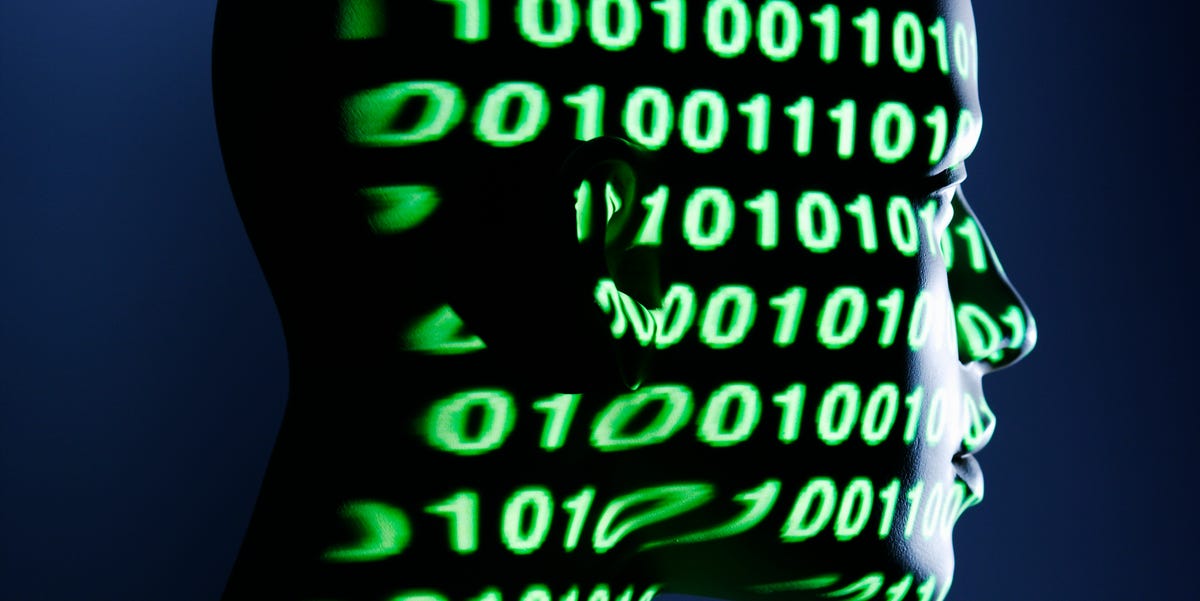
Every few years, the internet gets handed a fresh existential snack: a scientist suggests that reality may not be quite as “real” as we assumed. Cue the dramatic music, the Matrix references, and your friend who suddenly says, “I knew my printer was controlled by higher beings.” This time, the headline comes from physicist Dr. Melvin Vopson of the University of Portsmouth, whose work on information physics argues that the universe may operate less like a cosmic mystery box and more like an optimized computational system.
The claim is not that someone has found a blinking “Exit Simulation” button behind Jupiter. It is more subtleand more interesting. Vopson’s argument centers on the idea that information is not just an abstract concept floating around in hard drives, DNA sequences, and equations. Instead, he proposes that information may be physical, measurable, and governed by its own laws. His “second law of infodynamics” suggests that information entropy in many systems tends to decrease or remain minimized, which he believes resembles the logic of data compression in computer systems.
That sounds like science fiction wearing a lab coat, but it touches real debates in physics, cosmology, computing, and philosophy. Are the laws of nature mathematical because math is our best description of reality, or because reality itself is built from something like code? Is the universe continuous, like a smooth river, or discrete, like pixels on a screen? And if our world behaves efficiently, does that mean it was designed to run efficiently?
Let’s unpack the claim, the science behind it, the skepticism around it, and why this idea keeps crawling back into public imagination like a philosophical cat that refuses to stay off the keyboard.
What Does “Living in a Simulation” Actually Mean?
The simulation hypothesis suggests that what we experience as reality could be a highly advanced artificial environment created by a more advanced intelligence. In the most familiar version, future civilizations develop computing power so enormous that they can run detailed simulations of their ancestors. If they run many such simulations, simulated beings could vastly outnumber beings in “base reality.” Statistically, some philosophers argue, we might be more likely to be simulated than original.
This idea was famously sharpened by philosopher Nick Bostrom in his 2003 simulation argument. Bostrom did not simply say, “Relax, everyone, we are in a cosmic video game.” Instead, he framed a trilemma: either civilizations rarely survive to a posthuman technological stage, advanced civilizations are not interested in running ancestor simulations, or we are very likely living in one. It is a logic puzzle with a sci-fi wardrobe.
What makes Vopson’s approach different is that he is not relying only on probability or philosophical speculation. He is trying to point to physical clues: information, entropy, gravity, genetic mutation patterns, and the possibility that the universe behaves like a system constantly reducing computational complexity.
Who Is the Scientist Behind the Claim?
Dr. Melvin Vopson is a physicist whose research spans information theory, thermodynamics, materials science, and fundamental physics. His recent work has focused on what he calls information physics: the idea that information may be an essential component of the universe, not just a label humans use to describe things.
Vopson has proposed several provocative ideas. One is the mass-energy-information equivalence principle, which suggests that a bit of information may have a tiny but finite mass while it stores information. Another is an experimental protocol to test whether information has physical mass and energy. He has also suggested that information could behave like a “fifth state of matter,” joining the familiar list of solid, liquid, gas, and plasma.
Most recently, his work has explored whether gravity itself could be interpreted as a computational process. In that view, matter moves together not merely because gravity “pulls” in the traditional sense, but because the universe is reducing the information required to describe the positions of objects. In plain English: clustering objects together may be a form of cosmic data compression.
The Second Law of Infodynamics, Explained Without a Headache
To understand Vopson’s claim, start with entropy. In thermodynamics, entropy is often described as disorder, though physicists would wince slightly at that oversimplification. The second law of thermodynamics says that entropy in an isolated system tends to increase over time. That is why spilled coffee does not politely jump back into the cup, and why your bedroom does not naturally clean itself unless a parent enters the system.
Information theory has its own version of entropy, often associated with Claude Shannon. Shannon entropy measures uncertainty or information content in a message or system. A random string of characters has high information entropy because it is hard to compress. A repeated pattern, like “AAAAAA,” has low information entropy because it is predictable and easy to compress.
Vopson’s second law of infodynamics proposes that information entropy in information systems tends to decrease or remain constant over time. That is the twist. While physical entropy tends to rise, information entropy may trend toward optimization. According to Vopson, this could appear in digital storage, genetic systems, atomic physics, and even gravity.
Think of it like this: a computer programmer hates waste. Efficient code uses fewer resources. Compressed files take less storage space. Search engines, apps, and operating systems are constantly optimized so they do more with less. Vopson argues that the universe may show similar behavior, reducing informational complexity wherever possible. That, he says, is suspiciously simulation-like.
Why Information Might Be Physical
The phrase “information is physical” did not begin with Vopson. It has roots in twentieth-century physics, especially Rolf Landauer’s principle, which connects information erasure with heat and energy. In computing, deleting information is not a magical act. It has physical consequences, however tiny. Computers heat up. Energy is used. Information lives in physical states.
Vopson builds from that foundation and takes a bolder step. If erasing information has an energy cost, and energy relates to mass through Einstein’s famous equation, could stored information itself have mass? His 2019 mass-energy-information equivalence principle argues that it might. The calculated mass of one bit would be unimaginably small, but in a universe containing vast amounts of information, the idea becomes harder to ignore.
This is where things get deliciously strange. If information has mass, then information is not merely about matterit is part of matter’s physical accounting system. In Vopson’s view, the information contained in elementary particles, their properties, and their arrangements may help explain cosmic puzzles. Some popular coverage has even linked this idea to dark matter, although that remains highly speculative and far from proven.
Gravity as Data Compression: The Boldest Claim
Gravity is one of the most familiar forces in daily life. You drop your phone, and gravity enthusiastically assists. In standard physics, gravity is described by Einstein’s general relativity as the curvature of spacetime caused by mass and energy. It is not usually described as a file-zipping tool.
Vopson’s computational interpretation offers a different angle. If the universe contains information about the position and state of matter, then scattered objects require more information to describe than clustered ones. When matter attracts matter, the total information needed to describe the system may decrease. In this interpretation, gravitational attraction resembles an optimization process.
That does not mean Newton and Einstein should be escorted out of the building. Scientific theories often add new layers rather than simply replacing old ones. Newton’s laws still work beautifully for everyday motion. Einstein’s relativity explains gravity with greater depth. Vopson’s proposal tries to interpret gravity from an informational perspective, asking whether the force we observe may also reflect the universe minimizing informational entropy.
It is a fascinating idea because it connects physics with computation. Computers optimize. Algorithms compress. Simulations conserve processing power. If gravity reduces the “data burden” of the universe, then perhaps reality behaves like a system designed to run efficiently. That is the heart of the simulation claim.
Does This Count as Proof?
Here is where we must gently remove the sci-fi sunglasses. Vopson’s work is not universally accepted proof that we live in a simulation. It is a theoretical framework with testable components, provocative implications, and a long road ahead. The word “proof” in headlines is doing heavy liftingpossibly while wearing a cape.
In science, proof usually means something different from what it means in casual conversation. A mathematical proof can be definitive inside a formal system. Scientific evidence, however, accumulates through observation, experiment, prediction, replication, and criticism. A claim as massive as “the universe is simulated” would require extraordinary evidence.
Vopson’s strongest contribution may be that he is trying to move the simulation hypothesis from armchair speculation toward physics. His proposed tests about information mass, entropy trends, and computational behavior could potentially produce evidence for or against parts of his theory. But even if information has mass, or gravity can be described in informational terms, that would not automatically prove we are inside a simulation. It could simply mean the universe is informational at a deep level.
Why Scientists Are Skeptical
Many physicists and philosophers remain cautious because the simulation hypothesis can easily become unfalsifiable. If every observation can be explained as “part of the simulation,” then the idea becomes difficult to test. A theory that explains everything after the fact may explain nothing in the strict scientific sense.
For example, if we discovered a strange limit in physics that looked like pixelation, simulation believers might call it evidence of a digital universe. But if we discovered no such limit, they could say the simulation is simply too advanced for us to detect. That is a problem. Science needs predictions that could, at least in principle, be wrong.
Another challenge is that “computational” does not necessarily mean “simulated.” Many areas of modern physics use information-based language. Quantum information, black hole entropy, holographic principles, and thermodynamic computation are serious scientific fields. But describing nature mathematically or informationally does not prove there is a programmer outside the cosmos sipping coffee while our universe loads.
Why the Idea Still Matters
Even if the simulation hypothesis is never proven, it pushes valuable questions into the spotlight. What is information? Is it as fundamental as matter and energy? Does the universe process information? Could the laws of physics be understood as computational rules? These are not silly questions. They sit at the crossroads of physics, computer science, cosmology, and philosophy.
In black hole physics, information is already central. Scientists debate what happens to information when matter falls into a black hole. In quantum mechanics, information helps describe states, measurement, and entanglement. In genetics, biological life stores and transmits information through DNA. In computing, every digital system transforms physical states into meaningful patterns.
The simulation conversation may be flashy, but the deeper topic is profound: reality appears to be deeply mathematical and information-rich. Whether that means we live in a simulation, a quantum information structure, or a universe that is simply stranger than our primate brains expected, the investigation is worth taking seriouslywith a healthy serving of skepticism on the side.
Specific Examples That Make the Claim Feel Plausible
1. Digital Compression Looks Familiar
Modern technology constantly compresses information. Photos, videos, websites, and apps are optimized so they load faster and consume fewer resources. Vopson argues that similar optimization may appear in natural systems. If nature repeatedly favors low-information states, that resemblance to computation becomes intriguing.
2. Genetics Stores Information
DNA is often described as a biological code, though it is not code in exactly the same way as Python or JavaScript. Vopson has studied genetic mutations using Shannon information entropy and suggested that some mutation patterns may reduce information entropy over time. Critics may disagree with the interpretation, but the connection between biology and information is real and important.
3. Physics Uses Discrete Quantities
Quantum mechanics tells us that many physical properties come in discrete packets rather than smooth continuous amounts. That does not prove pixelated reality, but it makes the universe feel less like an endless watercolor painting and more like something with countable structure. Naturally, simulation fans hear that and immediately start looking for the cosmic graphics settings.
4. Gravity May Reduce Complexity
If matter clustering together reduces the amount of information needed to describe a system, gravity could be interpreted as an efficiency mechanism. This is not the standard explanation of gravity, but it is an example of how information theory may open new ways to think about old forces.
The Pop Culture Problem
One reason simulation theory spreads so quickly is that it is incredibly easy to visualize. We have video games, virtual reality, artificial intelligence, digital twins, and immersive worlds. A teenager with a gaming laptop can create a virtual landscape today that would have seemed magical a century ago. Scale that up by millions of years of technological progress, and the imagination starts doing backflips.
The danger is that pop culture can flatten nuance. “A scientist has proof” sounds much more exciting than “a physicist has proposed a controversial information-theoretic framework that may support a speculative interpretation of reality.” The first headline gets clicks. The second headline gets politely ignored at parties.
Still, pop culture is not useless. Movies like The Matrix gave millions of people a mental model for asking philosophical questions about reality, perception, and control. The trick is to let the curiosity pull us toward science, not away from it.
What Would Real Evidence Look Like?
Real evidence for a simulated universe would need to be specific, testable, and difficult to explain through ordinary physics. For example, scientists might look for physical limits that resemble computational constraints, unexpected patterns in fundamental constants, or measurable evidence that information has mass and energy beyond known effects.
Vopson’s proposed experiments involving information mass are important because they could test a narrow claim. If information can be shown to have measurable mass or produce predicted physical signatures, that would be a major development in information physics. It would not automatically prove simulation theory, but it would strengthen the idea that information is more physically fundamental than many people assume.
That is how science usually moves: not in one dramatic thunderclap, but in careful steps. One experiment tests one claim. Another study challenges the result. A better model emerges. The universe does not hand out spoiler alerts.
Experience Section: Living With the Simulation Idea in Everyday Life
Once you seriously consider the possibility that reality might be computational, ordinary life starts feeling a little different. Not necessarily in a paranoid waymore like walking through a familiar room after someone tells you the walls might be hiding secret doors. You still make coffee, answer emails, and wonder why socks disappear in the laundry. But the background texture of existence gets a little more mysterious.
One common experience is noticing patterns everywhere. You see traffic lights syncing across a city and think about optimization. You watch a flock of birds turn in near-perfect coordination and wonder how simple rules create complex beauty. You open a weather app and remember that even our best simulations struggle with chaotic systems. Reality starts to feel like a giant stack of interacting rules, some elegant, some messy, and some clearly written by whoever designed tax forms.
Another experience is humility. Simulation theory reminds us that our senses are not direct windows into ultimate reality. Human vision sees only a narrow slice of the electromagnetic spectrum. Our brains edit perception constantly. We already live inside a biological interface, whether or not the universe itself is digital. The world we experience is partly constructed by the nervous system. In that sense, the simulation conversation is not only about computers; it is also about perception.
There is also a surprisingly practical side. Thinking about reality as information can make you more aware of how much of daily life is shaped by data. Your phone maps your route. Streaming services predict what you might watch. Search engines rank knowledge. Social media compresses identity into posts, reactions, and recommendations. We do not need a cosmic simulation to prove that human life is already deeply mediated by information systems. We built mini-simulations and then moved into them voluntarily, which is either brilliant or the most human thing ever.
The idea can also make science feel more exciting. Instead of treating physics as a dusty collection of formulas, simulation theory frames the universe as an active puzzle. Why are constants what they are? Why does math work so well? Why do simple rules create galaxies, cells, and consciousness? Even if Vopson’s specific claims turn out to be wrong, the questions they provoke are energizing.
Personally, the healthiest way to hold the simulation hypothesis is with curiosity rather than certainty. It is fun to ask whether the universe has code, but it is wiser not to declare victory because gravity resembles optimization or DNA stores information. Good science welcomes wild ideas, then makes them run the obstacle course of evidence. The simulation hypothesis may someday become testable physics, or it may remain an elegant philosophical mirror. Either way, it gives us a useful reminder: reality is not obligated to match our intuitions.
And if we are in a simulation? Be kind to the non-player characters, drink water, back up your files, and maybe stop yelling at your Wi-Fi router. It might be doing its best.
Conclusion: Are We Simulated, or Just Deeply Confused?
Dr. Melvin Vopson’s claim that we may live in a simulation is bold, fascinating, and controversial. His work on the second law of infodynamics, information mass, and gravity as computational optimization offers a fresh scientific angle on an old philosophical question. The most exciting part is not that the case is closedit is notbut that parts of the idea may be testable.
For now, the honest answer is this: we do not have definitive proof that reality is a simulation. We do have growing evidence that information plays a fundamental role in physics, biology, and computation. That alone is enough to make the universe feel more astonishing. Whether we are living inside a cosmic computer, a quantum information structure, or plain old reality with extra weirdness, one thing is clear: existence remains the strangest app ever launched.
Note: This article is written for web publication in standard American English and synthesizes current scientific discussion, mainstream skepticism, and real information-physics research without adding source links inside the publishable content.