

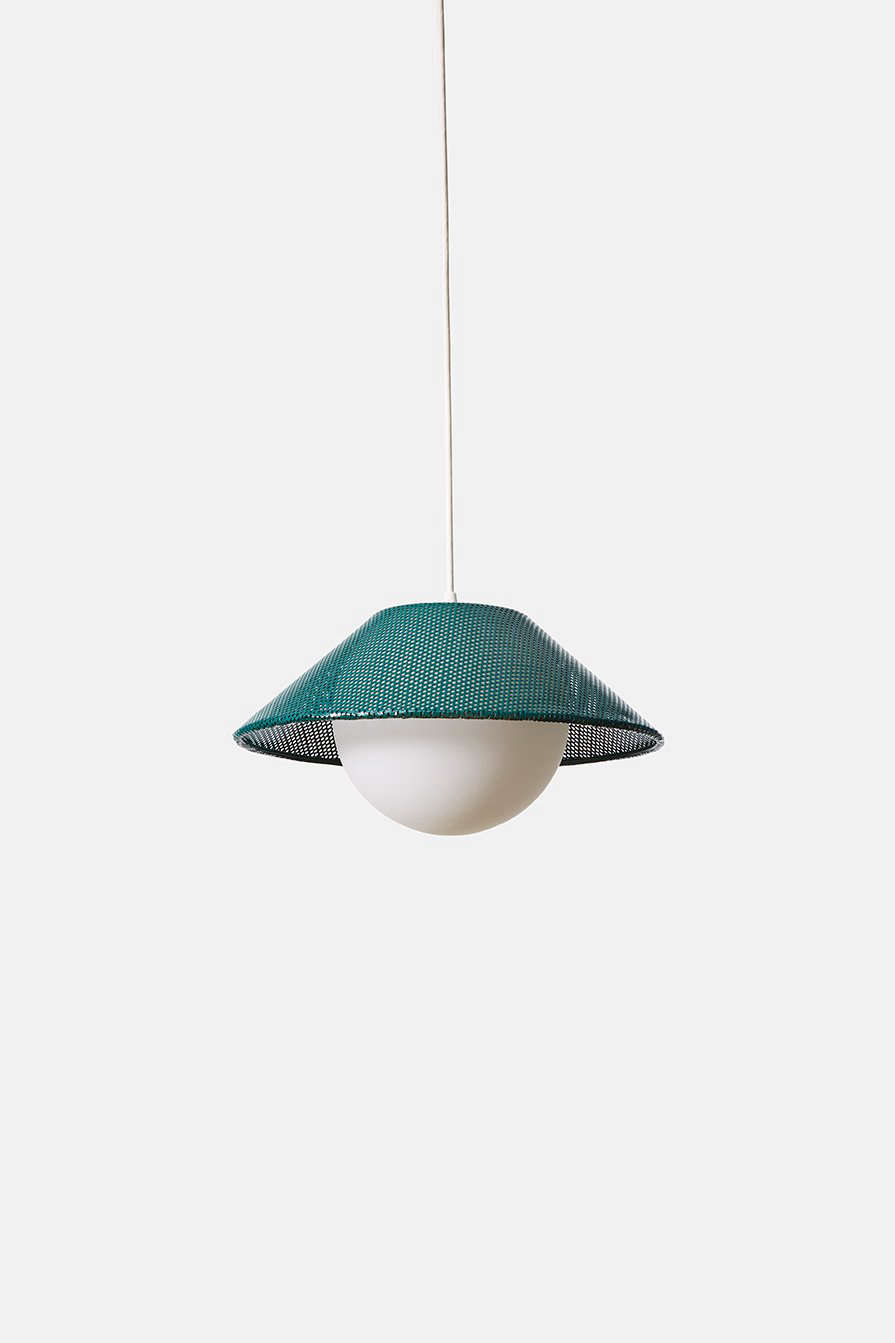
The Akoya 14 Pendant Light – Emerald is the kind of fixture that walks into a room and politely steals the conversation. It does not shout. It does not try to look like a spaceship, a birdcage, or an upside-down salad bowl. Instead, it brings together a hand-blown opal glass diffuser, a perforated shade, and a rich green-blue finish that feels both calm and confident. In the world of modern pendant lighting, that is a fairly elegant trick.
Designed by Rich Brilliant Willing, commonly known as RBW, the Akoya pendant has long been admired for its “pearl inside a shell” idea. The glowing opal orb sits within a delicate outer shade, creating a layered look that is decorative without becoming fussy. The Emerald color adds a jewel-toned accent that works especially well in kitchens, dining rooms, reading corners, boutique-style bedrooms, and hospitality-inspired interiors.
This article takes a deeper look at the Akoya 14 Pendant Light in Emerald: its design language, lighting performance, best uses, styling ideas, installation considerations, and real-life experience. If you have ever stared at pendant lights online until every fixture looked like a floating mushroom, consider this your friendly reset button.
What Is the Akoya 14 Pendant Light – Emerald?
The Akoya 14 Pendant Light – Emerald is a modern decorative pendant associated with RBW’s Akoya collection. Earlier product listings describe the Akoya 14 as measuring approximately 14 inches wide by 9 inches high, with a hand-blown opal glass diffuser and a perforated metal shade. The Emerald finish is often described as a rich green-blue tone, which gives the fixture a distinctive personality without making it hard to live with.
The core design idea is simple but memorable: a glowing glass “pearl” revealed through a protective shade. The name Akoya is fitting because Akoya pearls are known for their luminous, rounded beauty. In lighting form, that inspiration becomes a soft orb of light wrapped in an architectural shell. The result feels refined, modern, and slightly playful.
Design Review: Why the Emerald Finish Works
Emerald can be a risky color in home decor. Used poorly, it can make a room feel like a themed restaurant where the theme is “mysterious forest with expensive cocktails.” Used well, it adds depth, freshness, and contrast. The Akoya pendant lands on the good side of that equation because the color is applied to a clean, controlled shape.
A Jewel Tone That Still Feels Practical
The Emerald shade gives the pendant a strong visual identity. It pairs beautifully with warm woods, white oak, walnut, matte black hardware, brass accents, cream walls, terrazzo counters, and handmade tile. In a mostly neutral kitchen, one Emerald Akoya pendant can become a focal point. In a more colorful room, it can join the party without arriving in a glitter jacket.
The Perforated Shade Adds Texture
The perforated metal shade is one of the most important details. Instead of looking like a solid cap, it has a lightness that softens the fixture. The small perforations add visual texture and help the pendant feel airy. This matters because pendant lights hang at eye level more often than people realize. A heavy-looking pendant can visually drag a room down, while the Akoya’s shade keeps things open.
The Opal Glass Diffuser Softens the Glow
Opal glass is loved in modern lighting because it diffuses brightness. Rather than exposing a harsh bulb, the Akoya uses the glass globe as part of the design. The light appears smoother, more even, and more flattering. That makes it especially useful above a dining table, kitchen island, breakfast nook, or small seating area where comfort matters as much as brightness.
Lighting Performance: More Than Just a Pretty Face
A pendant light should look good, yes, but it also has to perform. The Akoya’s LED-based design makes it more efficient than traditional incandescent decorative fixtures. Product references for the Akoya family commonly highlight low power consumption, warm color temperature options, dimming capability, and long LED lifespan.
For everyday interiors, color temperature is especially important. Warm white light around 2700K feels cozy and residential, while 3000K can look slightly cleaner and more modern. In dining rooms and kitchens, many homeowners prefer warm to warm-neutral lighting because it flatters skin tones, wood surfaces, food, and textiles. Nobody wants dinner to look like it is being inspected in a laboratory.
Color Rendering Index, or CRI, is another key detail. A higher CRI helps colors appear more natural under artificial light. This matters near stone countertops, painted cabinets, artwork, wood grain, and food presentation. When a pendant has strong color quality, the room feels more expensive even before anyone checks the price tag.
Best Places to Use the Akoya 14 Pendant Light – Emerald
1. Above a Kitchen Island
The kitchen island is one of the best locations for the Akoya 14 Pendant Light – Emerald. The fixture provides a clear design accent without overwhelming the room. A single pendant can work over a small island or prep table, while two or three pendants can create rhythm over a longer island.
In a white kitchen, the Emerald shade adds color and depth. In a wood kitchen, it brings contrast and sophistication. In a darker kitchen with black or charcoal cabinets, it can create a moody, boutique feel. Add warm under-cabinet lighting, and suddenly your kitchen starts behaving like it knows what “ambience” means.
2. Over a Dining Table
The Akoya pendant also works well over a dining table because its opal diffuser creates a comfortable glow. The design is sculptural enough to anchor the table but not so large that it blocks conversation. For a round table, one pendant can feel balanced. For a rectangular table, a pair of pendants can create a more intentional look.
3. In a Breakfast Nook
A breakfast nook is a perfect place to use a pendant with personality. The Emerald finish can make a simple corner feel designed rather than forgotten. Pair it with a small round table, built-in bench, striped cushion, and a few plants. Congratulations: you now have a café, and the barista is you.
4. In a Bedroom Corner
For bedrooms, the Akoya can be used as a hanging bedside pendant or a corner accent light. This approach saves surface space on a nightstand and adds a custom look. The Emerald color can work beautifully with cream bedding, dark green accents, warm wood furniture, or soft gray walls.
5. In Hospitality and Boutique Spaces
Because the Akoya has a refined but memorable shape, it fits well in boutique hotels, small restaurants, reception areas, coffee shops, and design-forward retail spaces. It creates a visual signature without feeling gimmicky. In commercial-style interiors, repeated pendants can guide the eye and help define zones.
How to Style the Emerald Akoya Pendant
Pair It With Natural Materials
Emerald looks especially good beside natural textures. White oak, walnut, rattan, linen, clay tile, marble, soapstone, and plaster all help the color feel grounded. The pendant becomes a jewel-like accent rather than a random splash of green.
Use It Against Warm Neutrals
Warm white, ivory, mushroom, taupe, sand, and oatmeal tones make the Emerald finish feel sophisticated. These colors keep the palette calm while allowing the pendant to stand out. If your room already has neutral walls and wood flooring, the Akoya in Emerald can be the single color note that makes everything feel intentional.
Add Black or Brass Details
Matte black hardware can make the pendant feel sharper and more architectural. Brass, on the other hand, brings warmth and a slightly vintage edge. Both options work; the better choice depends on your room. Black feels crisp. Brass feels warm. Chrome may work in cooler modern spaces, but it can make Emerald feel a little more formal.
Installation and Placement Tips
Pendant placement can make or break the final look. A beautiful fixture hung too high may feel disconnected; hung too low, it becomes a forehead-level obstacle with excellent branding. As a general rule, pendants above dining tables or kitchen islands are often placed roughly 30 to 36 inches above the surface, depending on ceiling height, fixture size, sightlines, and personal comfort.
Over a kitchen island, consider both function and visibility. The fixture should illuminate the work surface without blocking conversation across the island. If you are using multiple pendants, leave enough space between them so each one has breathing room. The Akoya’s rounded form looks best when it is not visually crowded.
Always check the exact specification sheet for the version you are purchasing. Product dimensions, cord length, canopy style, dimming system, voltage, and finish options may vary by retailer or production generation. A licensed electrician can also confirm compatibility with your dimmer, ceiling box, and local electrical requirements.
Who Should Choose the Akoya 14 Pendant Light – Emerald?
This pendant is a strong choice for homeowners, designers, and renovators who want modern lighting with character. It is especially appealing if you like clean shapes but do not want a boring fixture. The Emerald finish adds personality, while the opal glass diffuser keeps the light soft and usable.
It may not be the right choice if you want an invisible ceiling fixture, a farmhouse lantern, or a massive chandelier that announces itself from three counties away. The Akoya is more refined than rustic, more sculptural than traditional, and more design-forward than basic builder-grade lighting.
Pros and Cons
Pros
- Distinctive Emerald finish that works as a stylish focal point.
- Hand-blown opal glass diffuser helps soften the light.
- Perforated shade adds texture and visual lightness.
- Modern LED performance supports efficiency and long-term use.
- Suitable for kitchens, dining rooms, nooks, bedrooms, and boutique spaces.
- Works well in both residential and hospitality-style interiors.
Cons
- The bold color may not suit every minimalist space.
- Designer lighting can cost more than mass-market pendants.
- Exact specs may vary between older Akoya 14 references and current Akoya models.
- Professional installation is recommended for the best and safest result.
Akoya 14 Pendant Light – Emerald vs. Basic Pendant Lights
A basic pendant light usually solves one problem: it hangs from the ceiling and produces light. The Akoya solves that problem while also adding material interest, color, softness, and design identity. That is the difference between “we installed a pendant” and “someone clearly thought about this room.”
Compared with generic metal dome pendants, the Akoya feels more refined because of its layered shade and glowing glass center. Compared with clear glass pendants, it reduces exposed-bulb glare. Compared with oversized chandeliers, it is easier to use in small and medium rooms. The Emerald version adds even more personality, making it ideal for spaces that need one memorable design feature.
Care and Maintenance
Like most decorative pendants, the Akoya should be cleaned gently. Dust the shade regularly with a soft microfiber cloth. For the glass diffuser, use a non-abrasive cloth and avoid harsh cleaners unless the manufacturer specifically allows them. Turn off power before cleaning, and let the fixture cool if it has been on.
The perforated shade may collect dust in the tiny openings over time. A soft brush or low-suction vacuum attachment can help. Avoid bending the shade or pressing too hard on the perforations. Designer lighting is like nice eyewear: it looks effortless, but it does not appreciate rough handling.
Real-Life Experience: Living With the Akoya 14 Pendant Light – Emerald
Living with a pendant like the Akoya 14 Pendant Light – Emerald is different from simply admiring it in a product photo. In pictures, the first thing you notice is the color. In real life, the bigger impression is the way the fixture changes throughout the day. In morning light, the Emerald shade can look fresh and crisp. In the evening, when the LED glow becomes more noticeable, the opal glass globe turns warmer and softer.
In a kitchen, the pendant can become the visual “pause point” of the room. Imagine a space with white cabinets, a lightly veined stone countertop, and natural wood stools. Without a strong light fixture, the room may look clean but slightly unfinished. Add the Emerald Akoya, and suddenly the island has a center of gravity. It gives the eye something to enjoy without making the kitchen feel busy.
Over a dining table, the experience is more intimate. The soft globe helps create a pool of light that makes dinner feel calmer. This is where the Akoya’s design really earns its keep. Some pendants look dramatic when switched off but become harsh when turned on. The Akoya’s diffuser helps avoid that problem. The light feels more like a glow than a glare, which is exactly what you want when people are eating, talking, or pretending they did not just check their phone under the table.
The Emerald finish also has a surprisingly flexible personality. In a modern room, it reads as artistic and architectural. In a vintage-inspired space, it can feel jewel-like and slightly nostalgic. In a minimalist home, it becomes the one colorful object that keeps the room from feeling too serious. The best part is that it does not require a fully green color scheme. A few small supporting accents, such as green ceramics, botanical artwork, or a patterned cushion, are enough to make the pendant feel connected.
Another practical experience is scale. The Akoya 14 is compact enough to work in smaller areas, but it still has presence because of its rounded shape and strong color. This makes it useful for apartments, breakfast corners, compact dining rooms, and secondary spaces where a large chandelier would feel dramatic in the wrong way. It can also work in multiples, especially over a long island, as long as spacing is planned carefully.
The main lesson from using a design-forward pendant like this is that lighting should be chosen early, not as an afterthought. A fixture affects paint colors, hardware choices, furniture placement, and even the mood of the room. The Akoya 14 Pendant Light – Emerald is not just a ceiling accessory; it is part of the room’s personality. Choose it when you want softness, color, craft, and a little quiet drama. Not soap-opera drama. More like “perfectly lit dinner party where the salad somehow looks expensive” drama.
Conclusion
The Akoya 14 Pendant Light – Emerald is a beautiful example of modern pendant lighting that balances sculptural form with everyday function. Its hand-blown opal glass diffuser, perforated shade, and rich green-blue finish make it a standout choice for kitchens, dining areas, breakfast nooks, bedrooms, and boutique interiors. It is colorful without being chaotic, refined without being cold, and practical without looking plain.
For anyone searching for an Emerald pendant light that feels elegant, modern, and memorable, the Akoya deserves serious attention. It is the kind of fixture that can make a room feel finished, designed, and just a little more special every time the lights come on.