

There are two kinds of political TV fans: the ones who want their White House drama served with a side of idealism,
and the ones who prefer it with a dash of panic, a splash of sabotage, and a full-body flop-sweat sprint through
international crisis management. If you’re the second kind, you’ve probably already fallen for Netflix’s
The Diplomata show that treats diplomacy like a contact sport and delivers chaos with the confidence of a
seasoned press secretary walking into a hostile briefing room.
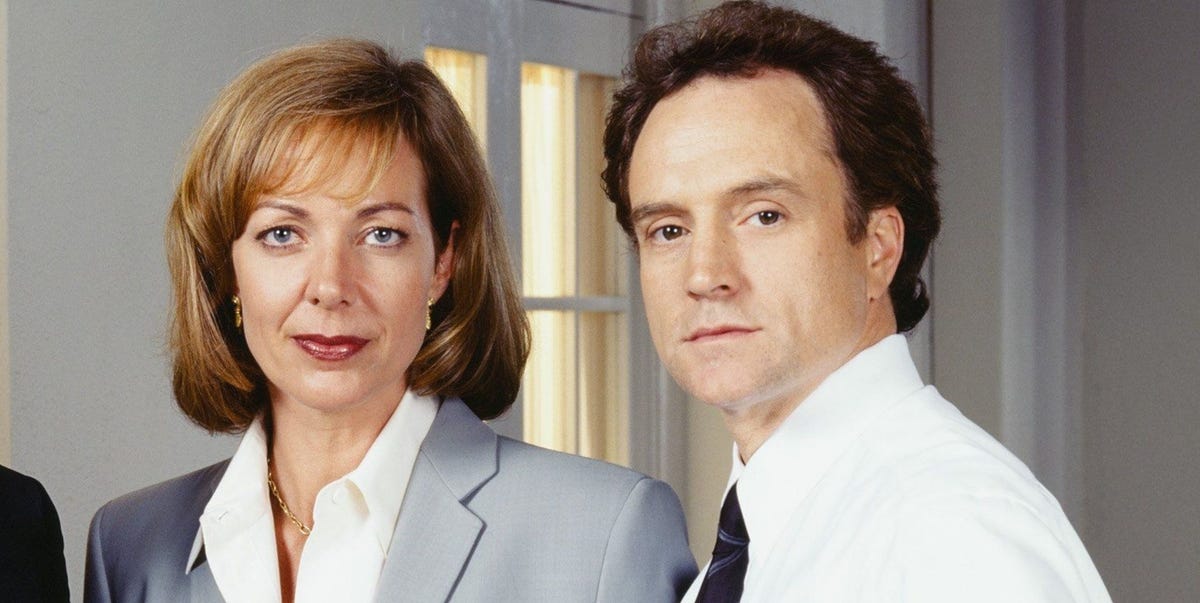
Now add Allison Janney to that pressure cooker. Then add Bradley Whitford. Suddenly, the internet is yelling
“WALK-AND-TALK!” at its screen again, and Janney is out here basically daring The West Wing fans to hope
(responsibly, of course) for an even bigger on-screen reunion.
So what’s actually happening with this Allison Janney West Wing reunion on The Diplomat momentand why
does it feel like TV is handing us a warm nostalgia blanket while simultaneously lighting the room on fire?
Let’s get into it.
Why This Reunion Hits Different
Reunions are easy to announce and hard to earn. You can slap two familiar faces in one frame and call it a day,
but the real magic happens when the roles make sense and the story benefitsnot just the group chat.
That’s what makes Janney’s presence on The Diplomat feel less like stunt casting and more like a strategic
plot upgrade. She’s not showing up to wink at fans. She’s showing up to move the chess pieces, knock over the board,
and then ask why everyone is being so emotional about it.
And when Whitford arrives, the vibe shifts again: the show doesn’t suddenly become The West Wing 2.0, but it does
inherit that signature rhythmfast intelligence, sharper banter, and the sense that everyone in power is operating
on two hours of sleep and three competing agendas.
The Diplomat in One Breath (Try Not to Hyperventilate)
If you’re new here: The Diplomat follows Kate Wyler (Keri Russell), a career diplomat dropped into the most visible,
politically booby-trapped job imaginableU.S. ambassador to the U.K.while international crises and domestic ambition
snap at her heels like caffeinated chihuahuas.
Her husband Hal (Rufus Sewell) is brilliant, persuasive, andhow do we say this kindly?a walking, talking
“I’m helping” disaster. Their marriage is part romance, part rivalry, part hostage negotiation. Meanwhile,
the show’s conflicts bounce between London and Washington with the speed of a scandal trying to outrun a headline.
In this world, “diplomatic” doesn’t mean calm. It means smiling while you quietly calculate the blast radius.
Allison Janney’s Grace Penn: Not Your Nostalgia Cameo
From Vice President to “Oh No, She’s in Charge” Energy
Janney enters The Diplomat as Grace Penn, a vice president who doesn’t radiate harmless second-in-command vibes.
This is not a ceremonial role. This is the kind of political operator who can compliment you, threaten you,
and reshape your career arc in the same sentencewithout breaking eye contact.
What makes Grace Penn so compelling is that she’s not written as a villain with villain lighting. She’s written as
a real person with real leverage. Sometimes she’s adversarial. Sometimes she’s strategic. Sometimes she’s oddly funny
in the way only powerful people can be when they know the room has to laugh.
The Ending That Made Janney Throw Things (Relatable)
Janney has talked openly about the shock of reading the big turning point that launches the next chapter of the show.
And honestly, the most trustworthy thing any actor can say about a script twist is: “I threw it across the room.”
That’s not PR polish. That’s a nervous system responding to plot.
The point isn’t the theatricsit’s the signal: this show is designed to escalate. When Grace Penn’s power level rises,
it doesn’t just change the personnel. It changes the entire climate of the series.
Enter Bradley Whitford: The West Wing Reunion Becomes Official
Todd Penn, First Gentleman (and Apparently “the First Lady,” Sometimes)
When Bradley Whitford joins as Todd PennGrace’s husbandthe show adds a new layer: we finally get to see the private-facing
version of Grace, not just the public-facing powerhouse. And that’s where a good political drama gets delicious.
Power isn’t only exercised in podium speeches. It’s negotiated at home, in small conversations, in strategic silences,
and in the tiny micro-reactions people try (and fail) to hide.
Whitford and Janney have both joked about how weird it is to play a romantic pairing after years of being close friends.
In other words: it’s a reunion, but it’s not a scrapbook. It’s two actors using shared history to create new tension,
new humor, and new stakes.
Why Their Chemistry Still Works
The best part of this reunion isn’t the nostalgiait’s the efficiency. Janney and Whitford are masters of the “smart
people arguing” genre. They can play warmth without softness and conflict without cartoonish hostility.
In a show like The Diplomat, that matters because the dialogue carries plot the way a good engine carries speed.
If two characters can’t volley, the whole machine slows down. With Janney and Whitford, the machine purrsand occasionally
sets something on fire, which feels on-brand for this series.
So… Is Allison Janney Teasing a Bigger West Wing Reunion?
The short version: she’s not promising anything with a calendar invite and a seating chart. She’s doing something more dangerous:
keeping the door open.
In press moments around the new season, Janney and Whitford have leaned into the fact that fans want more shared history on screen
and they’ve talked about the idea of additional West Wing friends popping into The Diplomat universe.
It’s not a formal announcement, but it is a very actor-ish way of saying, “We’d have fun with that,” which, to fandom ears,
sounds a lot like, “Please start theorizing immediately.”
Why It’s Plausible (and Why It Can’t Be a Gimmick)
There’s a built-in pipeline here. The Diplomat is created by Debora Cahn, who has deep roots in political TV storytelling.
That matters because the show already speaks the same language as The West Wing: process, power, consequence, and the human mess
behind every official decision.
But a bigger reunion only works if it serves The Diplomat first. Even the showrunner has acknowledged the pressure of making
Janney’s role feel distinct rather than a winking reference to what came before. That’s the right instinct. Nostalgia is a spice,
not a meal plan.
How a West Wing Cameo Could Actually Fit This Story
If more alumni ever show up, The Diplomat has endless organic entry points: senators, chiefs of staff, policy experts,
ambassadors, campaign strategists, security leaders, “old friends” with complicated loyaltiesthe kind of people who arrive smiling
and leave holding your future in their hand.
In other words: the show doesn’t need to bend its world to accommodate familiar faces. The world already has job openings.
What This Means for The Diplomat’s Story (Not Just the Fan Service)
Power Shifts Create New Monsters (and New Alliances)
When a character like Grace Penn rises, everyone else has to adapt. Kate Wyler’s ambitions, Hal’s schemes, and the U.S.–U.K. partnership
all become harder to manage because the person at the top isn’t simply “a new boss.” She’s a force of nature with a résumé.
That’s why Janney’s casting is such a smart narrative choice: her characters rarely feel like they’re “on the sidelines.”
Even when Grace is quiet, it reads like a decision. Even when she’s warm, it reads like a tactic. And that makes every scene
feel like it could change the direction of the series.
The Marriage Factor: Why Todd Penn Matters
Todd isn’t just a spouse. In political dramas, spouses are pressure points. They’re where secrets slip, where vulnerabilities show,
where image management becomes intimate. Adding Todd means the show can explore Grace as a leader and Grace as a person
and those two versions rarely agree on what they want.
Plus, Whitford’s presence expands the emotional palette: there can be tenderness, resentment, partnership, rivalry, or that particular
flavor of long-term marriage where you can end a sentence with a sigh and still be understood perfectly.
West Wing vs. The Diplomat: Same Language, Different Weather
The West Wing often felt like a political idealist’s adrenaline dream: smart people trying to do good, speaking in rapid-fire,
morally urgent paragraphs.
The Diplomat feels like the reality hangover: smart people trying to prevent catastrophe, speaking in rapid-fire,
“if we do this, someone dies” paragraphs. The humor is still there, but it’s darker. The romance is still there, but it’s messier.
The optimism exists, but it’s constantly being audited.
That’s why a West Wing reunion on The Diplomat is so satisfying: it’s like watching beloved musicians play a new genre.
The talent is familiar. The tone is not. And the contrast makes everything sharper.
What Fans Can Watch for Right Now
- Dialogue rhythm: Janney and Whitford are both masters of “thought + emotion in one line.” Expect arguments that sound like jokes until they suddenly don’t.
- Power triangulation: Grace, Kate, and Hal form a triangle where every side is tense for a different reason.
- Private Grace vs. public Grace: Todd’s presence makes it harder for Grace to remain a pure political symbol.
- Potential cameo space: The show’s universe is packed with plausible “high-level arrivals.” If more alumni show up, it’ll likely be through story necessity.
Conclusion: A Reunion That Feels Earned (and a Tease Worth Enjoying)
Allison Janney and Bradley Whitford reuniting on The Diplomat is not just a “remember when” moment.
It’s a smart expansion of a show that already thrives on sharp minds, sharper instincts, and characters who can turn a conversation
into a coup.
And yesJanney teasing the possibility of more West Wing flavor on this series is exactly the kind of chaos the internet loves:
hopeful enough to spark theories, vague enough to stay safe, and entertaining enough to keep you watching either way.
If more familiar faces arrive, great. If they don’t, this reunion still works because it isn’t trying to recreate the past.
It’s using the past as jet fuel for a very modern kind of political dramaone where diplomacy is messy, ambition is personal,
and everyone is one bad meeting away from a headline.
Reader Experiences (500+ Words): Living Through the Reunion as a Fan
If you’ve ever watched The West Wing and felt your brain grow two sizes from the dialogue alone, the experience of seeing Allison Janney
pop up in The Diplomat is basically a nervous giggle followed by a whispered, “Oh no, she’s going to be incredible in this.”
It’s the kind of casting that makes you sit up straighter on the couch as if someone is about to call on you in class.
A lot of fans describe the reunion feeling as a two-track emotion. Track one is nostalgia: you remember C.J. Cregg owning the briefing room,
the speed of those hallways, the way the show could make policy feel dramatic without resorting to explosions. Track two is discovery:
Grace Penn isn’t C.J., and The Diplomat isn’t trying to be comforting. So the thrill becomes watching a familiar performer do unfamiliar damage.
There’s also a specific kind of joy that only happens when you watch with other fansespecially the ones who can’t resist pausing to say,
“That line delivery is SO West Wing-coded,” even though the scene itself is pure Diplomat: suspicious, tense, and full of people politely
threatening each other while wearing excellent coats.
Watch parties for this kind of reunion are their own little ritual. Someone inevitably starts the night by quoting a classic line from the old show.
Someone else insists, for the thousandth time, that Janney’s comedic timing should be classified as a controlled substance. Then you hit the scenes
where Janney and Whitford share space, and the room changes. People lean forward. The chatter stops. It’s like the audience collectively recognizes
that you’re watching two actors who have years of trust built into their timingand that trust makes the new characters feel instantly lived-in.
The funniest part is how quickly fans recalibrate. At first, you’re scanning for echoeswalk-and-talk energy, familiar rhythms, the comfort of
“I know these people.” Then The Diplomat does what it does best: it reminds you that this world is colder. The jokes have sharper teeth.
The power plays are less idealistic and more survivalist. So the experience becomes less like revisiting an old favorite and more like watching the
grown-up version of political TV: still smart, still fast, but far more willing to admit that institutions are messy because people are messy.
And that’s where the “tease” factor becomes such a fun part of the fandom. When Janney hints that more West Wing friends could join the party,
the speculation is half the entertainment. Fans start fantasy-casting roles that would fit naturally: a seasoned senator who knows where the bodies are,
a hard-nosed strategist who smiles while delivering bad news, a diplomat with a personal history that complicates the crisis of the week. Even if none of
it happens, the act of imagining it keeps the community engagedand it highlights what people truly miss: not just the faces, but the feeling of watching
intelligent characters take language seriously.
Ultimately, the best “fan experience” of this reunion is realizing you don’t have to choose between eras. You can love the hopeful sprint of
The West Wing and still crave the razor-edged intrigue of The Diplomat. Seeing Janney and Whitford together again doesn’t erase the past.
It updates itproving that great actors can carry history into a new story, and make it feel like a gift rather than a gimmick.