

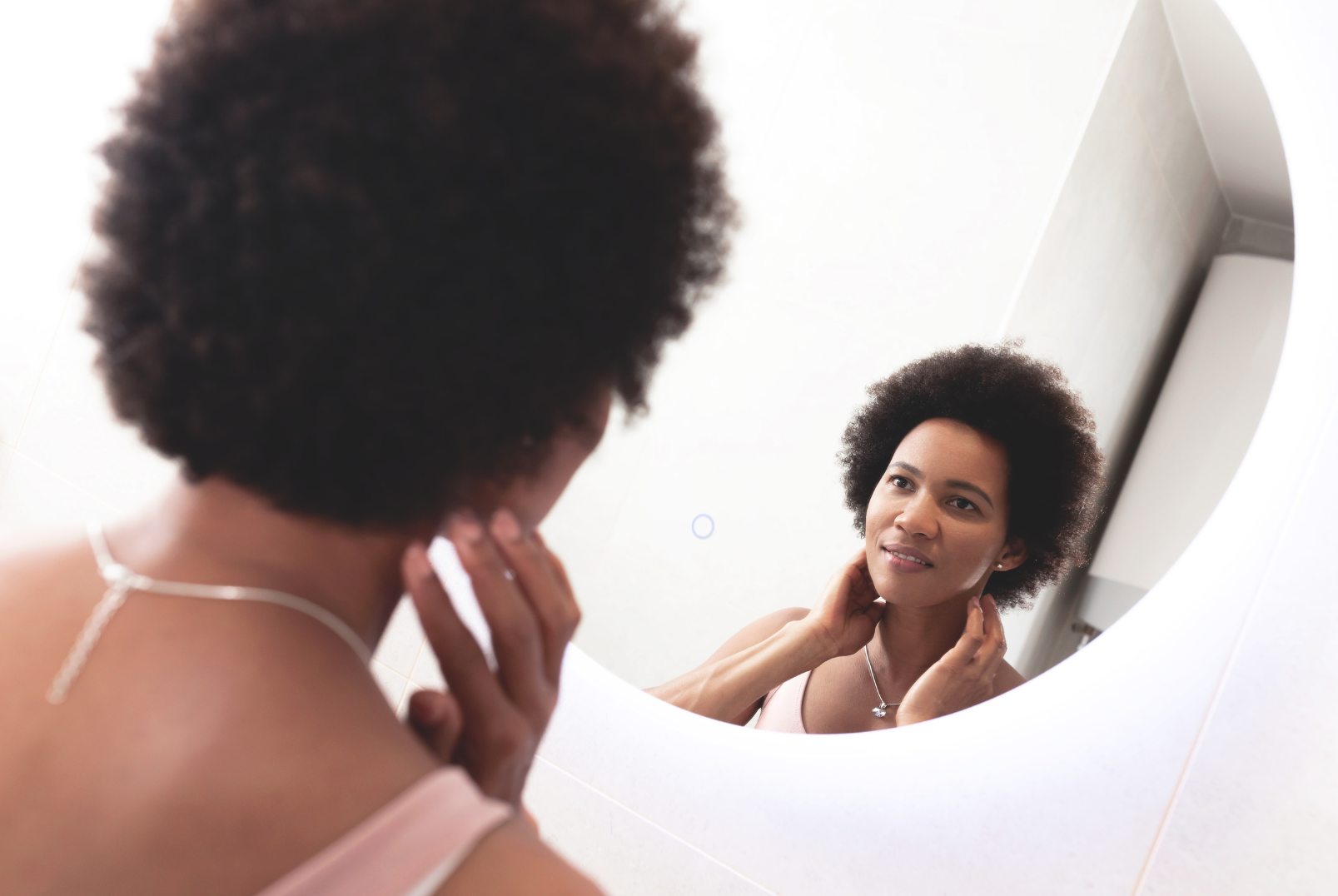
Let’s be honest: almost everyone has asked, “Am I pretty?” at least once. Maybe it happened after taking 17 selfies and liking none of them. Maybe it happened after seeing someone online who appeared to have been born with perfect lighting, professional makeup, and a personal wind machine. Or maybe it was just one of those mirror moments when your brain decided to become a suspicious little critic with a clipboard.
This Am I Pretty Quiz is not here to rank your face like a tomato at a farmer’s market. Beauty is not a math problem, and you are not a school assignment being graded in red pen. Instead, this quiz helps you look at beauty in a healthier, more useful way: confidence, self-care, expression, personality, presence, and how kindly you see yourself.
Modern beauty standards can be confusing. One day “clean girl” beauty is trending. The next day everyone is contouring like they’re carving a Renaissance statue. Social media filters smooth skin, reshape features, brighten eyes, and make ordinary humans look like they were rendered by a luxury video game. No wonder people search for an “am I pretty quiz” when they want a quick answer. But the better answer is this: prettiness is not one fixed look. It is a mix of how you carry yourself, how you treat yourself, how you connect with others, and yes, how comfortable you feel in your own skin.
What Is an Am I Pretty Quiz?
An Am I Pretty Quiz is usually a personality-style beauty quiz that asks questions about your appearance, confidence, grooming, style, social habits, and self-image. Some quizzes focus only on physical features, but that approach is about as helpful as judging a whole movie from one blurry screenshot.
A better beauty quiz looks at the bigger picture. Do you smile naturally? Do you express your personal style? Do you take care of your skin, hair, body, and mind in ways that make you feel good? Do you compare yourself to edited photos online? Do you accept compliments, or do you dodge them like flying mosquitoes?
The goal is not to decide whether you are “pretty enough.” The goal is to understand what shapes your self-perception and what you can do to feel more confident, attractive, and comfortable. A good quiz should leave you feeling clearer, not crushed.
Why Do People Ask, “Am I Pretty?”
People ask this question for many reasons, and not all of them are shallow. Appearance is tied to identity, belonging, attraction, confidence, and social feedback. From childhood onward, people receive messages about what is considered beautiful. Some messages come from family, friends, school, dating culture, entertainment, and now, endless online feeds.
The question often becomes louder during major life moments: starting high school, entering college, dating, changing jobs, going through a breakup, gaining or losing weight, dealing with acne, aging, or simply feeling invisible. In those moments, a quiz can feel like a safe little mirror. But here is the catch: a quiz can reflect your mood more than your actual attractiveness.
If you take a beauty quiz on a day when you feel tired, stressed, or rejected, your answers may lean negative. If you take it after someone compliments you, suddenly you may feel ready for a perfume commercial. That does not mean your face changed in 24 hours. It means self-image is flexible, emotional, and influenced by context.
Take the Am I Pretty Quiz
Choose the answer that feels most true for you. Don’t overthink it. This is not the SAT of cheekbones.
1. How do you usually feel when you look in the mirror?
A. I notice things I like and things I want to improve.
B. I mostly focus on flaws.
C. I feel confident most days.
D. It depends completely on my mood.
2. How often do you compare yourself to people online?
A. Sometimes, but I try to keep perspective.
B. Constantly, and it makes me feel worse.
C. Rarely. I know social media is curated.
D. Mostly when I’m already feeling insecure.
3. What best describes your personal style?
A. I’m still figuring it out.
B. I dress to hide myself.
C. I wear what makes me feel good.
D. I follow trends but add my own twist.
4. How do you respond to compliments?
A. I say thank you, though I may feel shy.
B. I immediately disagree.
C. I accept them with confidence.
D. I laugh awkwardly and change the subject.
5. Which trait do people often notice about you first?
A. My smile or energy.
B. I’m not sure people notice me.
C. My confidence or personality.
D. My style, humor, or kindness.
6. How much effort do you put into self-care?
A. Some effort, but I’m inconsistent.
B. Not much; I often feel unmotivated.
C. I have routines that help me feel my best.
D. I do small things when I can.
7. What do you think makes someone attractive?
A. A mix of looks, personality, and confidence.
B. Perfect features.
C. Confidence, warmth, and authenticity.
D. Style, attitude, and how they treat people.
Am I Pretty Quiz Results
Mostly A: Naturally Pretty and Growing Into Your Confidence
You likely have a balanced view of yourself, even if it wobbles sometimes. You can recognize your good qualities, but you may still question them when comparison sneaks in. Your beauty is natural, approachable, and still evolving. The best thing you can do is build habits that support confidence: wear clothes that fit your personality, take care of your skin and body without obsessing, and practice accepting compliments without arguing like you’re in a courtroom drama.
Mostly B: Pretty, But Your Inner Critic Is Too Loud
Your answers suggest that you may be much harder on yourself than other people are. You might focus on acne, facial features, body shape, or tiny details that others barely notice. This does not mean you are not pretty. It means your self-image may be filtered through insecurity. Try reducing appearance comparison, unfollowing accounts that make you feel inadequate, and talking to yourself the way you would talk to a friend. Spoiler: you would probably not tell your friend, “Your nose ruined the economy.”
Mostly C: Confident Pretty With Strong Personal Presence
You seem to understand that attractiveness is not only about features. You likely carry yourself with confidence, and that makes a real difference. People are often drawn to those who seem comfortable, warm, expressive, and genuine. Keep nurturing that confidence, but remember that confidence does not mean feeling flawless every day. It means knowing your worth even when your hair has chosen rebellion.
Mostly D: Uniquely Pretty With a Memorable Vibe
You may not fit one narrow beauty category, and that is exactly your charm. Your attractiveness likely comes from your energy, humor, style, creativity, kindness, or individuality. You are the type of pretty that may not always show up in a basic checklist, but people remember it. Lean into what makes you distinctive. The goal is not to look like everyone else. The goal is to look and feel more like yourself.
What Actually Makes Someone Pretty?
Physical appearance plays a role in first impressions, but it is only one piece of attractiveness. Research and everyday experience both point to a wider truth: people often become more attractive when they seem confident, kind, healthy, expressive, and comfortable. A face may catch attention, but personality keeps it.
Think about people you find attractive in real life. They may not all have the same features. Some have bright smiles. Some have calm energy. Some have bold style. Some are funny. Some make people feel safe and seen. Beauty becomes more powerful when it has movement, voice, warmth, and character.
Confidence
Confidence changes how people perceive you. It affects posture, eye contact, facial expression, voice, and the way you enter a room. You do not need to act like a celebrity stepping onto a red carpet. Quiet confidence works too. Standing comfortably, speaking with self-respect, and not apologizing for existing can make you more magnetic.
Self-Care
Self-care does not mean expensive products or a 14-step routine that requires a spreadsheet. It can mean sleeping enough, drinking water, washing your face, moving your body, wearing clean clothes, caring for your hair, and choosing food that helps you feel steady. When you take care of yourself, you often look more refreshed and feel more grounded.
Style
Style is visual personality. It tells the world something about you before you say a word. You do not need designer clothes to have style. Fit, color, comfort, grooming, and authenticity matter more. A simple outfit worn with confidence usually beats an expensive outfit worn with misery.
Kindness and Social Energy
Kindness is underrated beauty technology. People remember how you make them feel. A warm smile, sincere listening, and a good sense of humor can make someone appear more attractive because connection changes perception. Nobody has ever said, “They were gorgeous, but I really loved how they made me feel like a trash can.”
Social Media and the “Am I Pretty?” Spiral
Social media can be fun, creative, and inspiring, but it can also turn self-image into a competitive sport nobody signed up for. Highly visual platforms often reward edited, polished, and idealized images. Filters can smooth skin, enlarge eyes, reshape faces, and create beauty standards that real human pores cannot obey.
The danger is not simply seeing beautiful people. The danger is forgetting that many images are curated, posed, edited, lit, selected, and sometimes professionally styled. You compare your ordinary Tuesday face to someone else’s best photo from a 43-shot selfie session. That is not a fair match. That is emotional fraud with good lighting.
If beauty content makes you feel inspired, creative, or playful, great. If it makes you feel smaller, uglier, or obsessed with fixing yourself, it may be time to change your feed. Follow people who show real skin, diverse bodies, different ages, different features, and realistic style. Your brain needs evidence that beauty is broader than one algorithmic template.
How to Feel Prettier Without Changing Your Whole Face
1. Stop Treating Bad Photos Like Legal Evidence
A bad photo is not proof that you are unattractive. It is proof that cameras are rude sometimes. Lighting, angle, lens distortion, timing, posture, and expression can completely change how someone appears. One awkward picture does not define your face any more than one burnt pancake defines your cooking destiny.
2. Build a Simple Grooming Routine
Clean hair, healthy skin habits, trimmed nails, fresh breath, and clothes that fit can improve how you feel quickly. Grooming is not about chasing perfection. It is about showing yourself basic care. When you feel put together, you often act more confidently.
3. Wear Colors and Fits That Make You Feel Alive
Some clothes technically fit but emotionally feel like tax paperwork. Experiment with colors, textures, and silhouettes that make you feel more like yourself. You do not need a full makeover. Sometimes one good jacket, one flattering pair of jeans, or one lipstick shade can change your entire mood.
4. Practice Compliment Acceptance
The next time someone compliments you, resist the urge to reject it. Say, “Thank you.” That is it. No debate. No presentation titled “Five Reasons You Are Wrong.” Accepting compliments helps train your brain to allow positive feedback in.
5. Use Self-Talk That Does Not Bully You
Your inner voice matters. If it constantly insults your appearance, you will struggle to feel pretty no matter how you look. Replace “I look awful” with “I’m having a self-critical moment.” Replace “Everyone is prettier than me” with “I’m comparing myself unfairly.” This is not fake positivity. It is mental hygiene.
When an Am I Pretty Quiz Is Not Enough
A beauty quiz should be light, reflective, and encouraging. But if worries about your appearance take over your day, make you avoid school, work, photos, relationships, or social events, it may be time to talk to a mental health professional. Constant distress about perceived flaws can be connected to deeper body image concerns, anxiety, depression, eating disorders, or body dysmorphic disorder.
Getting help does not mean you are vain. It means your mind is stuck in a painful loop, and you deserve support. Nobody should have to live as if every mirror is a performance review.
Mini Beauty Confidence Checklist
Use this checklist when you feel unsure about your appearance:
- Did I sleep enough, or am I judging my face while exhausted?
- Have I eaten and hydrated today?
- Am I comparing myself to edited or filtered images?
- Would I speak this harshly to a friend?
- What is one feature, trait, or quality I genuinely like about myself?
- What can I do today that makes me feel cared for?
Sometimes the answer to “Am I pretty?” is less about changing your look and more about changing the conditions under which you are judging yourself.
Experiences Related to the Am I Pretty Quiz
Many people discover an Am I Pretty Quiz during a vulnerable moment. They are not always looking for entertainment. Sometimes they want reassurance. They want a stranger, a quiz, a score, or a screen to say, “Yes, you are enough.” That is very human. We all want confirmation that we are seen in a positive way.
One common experience is the “before going out” quiz moment. Someone is getting ready for a party, date, school event, interview, or photo day. They try on three outfits, then five, then suddenly their room looks like a clothing tornado. They search for a beauty quiz because they want to know whether they look good enough to be noticed. In reality, the outfit may matter less than how comfortable they feel wearing it. When someone chooses clothes that match their personality, they often move differently. They smile more. They stop tugging at every sleeve. Confidence enters the chat.
Another experience is the “social media comparison crash.” A person scrolls through flawless selfies, fitness videos, makeup transformations, or influencer posts and begins to feel ordinary in the worst possible way. They take a quiz hoping it will cancel out the insecurity. The healthier move is to pause and ask, “What did I just feed my brain?” If the content makes you feel inspired, keep it. If it makes you feel defective, it may not deserve access to your attention.
Some people use beauty quizzes after a breakup. Rejection can make even the most confident person question everything from their personality to their eyebrows. After a breakup, “Am I pretty?” may actually mean, “Was I lovable?” or “Will anyone want me again?” That is a much deeper question than any quiz can answer. The end of one relationship is not a final judgment on your attractiveness. It is one chapter, not the whole book.
There is also the acne, weight change, or aging experience. A person may feel pretty one year and unfamiliar to themselves the next. Skin changes, body changes, stress, hormones, and life transitions can affect self-image. During those times, beauty quizzes can feel comforting, but real confidence usually comes from patience and care. Your body is not a frozen profile picture. It changes because it is alive.
The best experience with an Am I Pretty Quiz is not getting a perfect result. It is realizing that beauty is wider than you thought. Maybe you are soft pretty, bold pretty, elegant pretty, funny pretty, mysterious pretty, sunny pretty, creative pretty, or quietly magnetic pretty. Maybe your prettiness is not the loudest thing about you, but it is still there. The quiz should not become your judge. Let it be a mirror with better manners.
Conclusion: So, Am I Pretty?
Yes, you can be pretty without looking like every trend. You can be pretty with acne, glasses, scars, curves, angles, freckles, textured skin, a round face, a sharp face, a tired face, or a face that looks different in every camera app known to humankind. Pretty is not one setting. It is not controlled by a filter, a crush, a comment section, or a quiz score.
The real value of an Am I Pretty Quiz is not that it gives you permission to feel attractive. It helps you notice how you see yourself. If your results show confidence, celebrate it. If they show insecurity, be gentle with yourself. You do not need to become someone else to be beautiful. You may simply need better self-talk, healthier media habits, and more room to appreciate the version of you that already exists.
Note: This quiz is for self-reflection and entertainment. It is not a medical, psychological, or professional assessment. If appearance-related thoughts cause serious distress or interfere with daily life, consider speaking with a qualified mental health professional.