

If your ideal evening involves a gripping British crime drama, a cup of tea that goes cold because you forgot to drink it, and Olivia Colman quietly breaking your heart without asking permission, Run belongs on your ITVX watchlist tonight. This four-part drama is short enough to binge in one sitting, but emotionally heavy enough to make you stare at the credits like they personally owe you an explanation.
Originally aired on Channel 4 in 2013 and now available to stream on ITVX, Run is not a standard detective procedural. There is no brilliant investigator with a tragic coat, no corkboard covered in red string, and no cozy village murder interrupted by scones. Instead, the series explores crime from the inside out, following ordinary people whose lives are shaped by poverty, pressure, bad luck, bad choices, and the brutal math of survival.
Led by Olivia Colman, Lennie James, Katie Leung, and Katharina Schüttler, Run is a haunting anthology drama about consequences. Each episode focuses on a different character, but the stories overlap in subtle, sometimes devastating ways. It is crime drama without glamour, thriller tension without cheap tricks, and social realism without a lecture hall podium. In other words, it is exactly the kind of series that makes you say, “Just one more episode,” right before midnight laughs at you.
What Is Run About?
Run follows four separate but connected stories set in modern London. Each episode introduces a character who is pushed into a life-changing decision. The structure is simple, but the emotional effect is powerful: one person’s desperate choice becomes someone else’s problem, and every small action sends ripples through the lives around it.
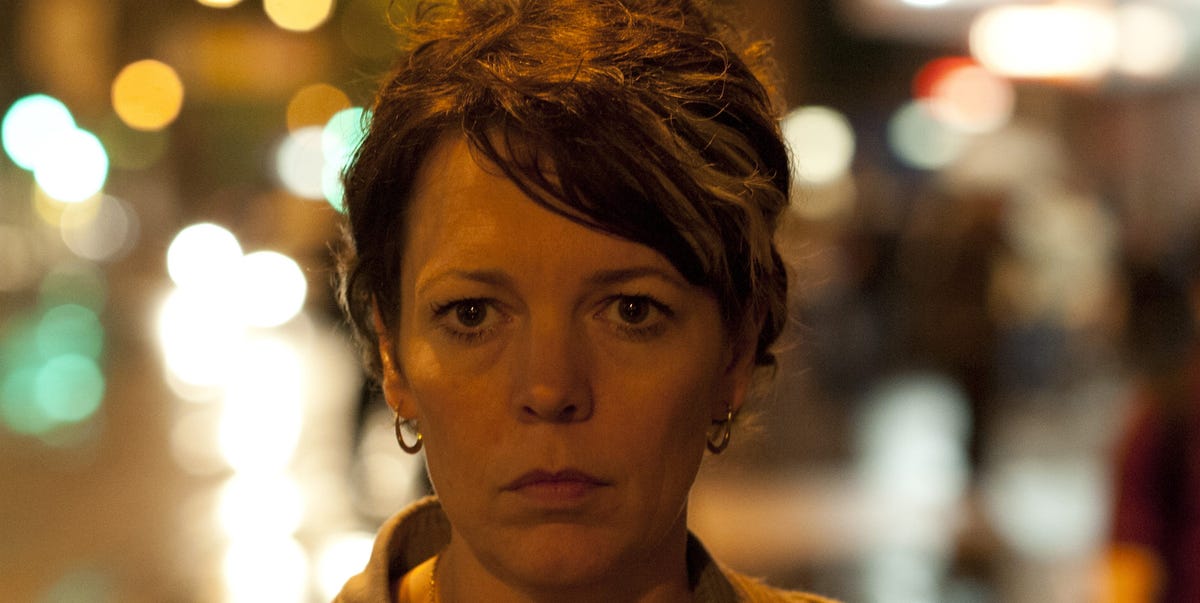
The first episode centers on Carol, played by Olivia Colman. Carol is a tough single mother trying to hold her family together while raising two teenage sons who are slipping beyond her reach. When her sons are involved in a random act of violence that leads to a stranger’s death, Carol is forced into an impossible moral corner: protect her children or do the right thing. It is the kind of dilemma that crime drama loves, but Run strips away the melodrama and leaves only the horrible human weight of the decision.
The second episode turns to Ying, played by Katie Leung, a Chinese immigrant who owes money to the gang that brought her to Britain. Her story is tense, lonely, and quietly heartbreaking, showing how exploitation can trap people long before the law ever enters the frame. The third episode follows Richard, played by Lennie James, a recovering addict trying to rebuild a relationship with his daughter while staying clean. The fourth focuses on Kasia, played by Katharina Schüttler, a Polish woman struggling with debt, survival, and the fallout from a boyfriend’s gambling addiction.
Together, these stories form a portrait of people living at the edge of stability. The crimes in Run matter, but the series is more interested in what happens before and after them: the pressure, the shame, the fear, the tiny compromises, and the painful question of whether doing the right thing is always possible when life has already backed you into a wall.
Why Olivia Colman Makes Run Unmissable
Olivia Colman has built a career on making characters feel startlingly human, whether she is playing royal loneliness in The Crown, chaotic comedy in Peep Show, or grief-soaked resilience in Broadchurch. In Run, she brings that same rare gift to Carol: a woman who is flawed, defensive, funny in flashes, exhausted almost all the time, and still fiercely alive.
Carol is not written as a saintly mother or a tidy symbol of social hardship. She is messy. She makes mistakes. She swears, snaps, steals small things, and tries to survive with the stubbornness of someone who has never been given much room to fall apart. Colman plays her without vanity. She lets Carol be difficult, bruised, loving, selfish, frightened, and morally conflicted all at once.
That complexity is what makes the first episode so gripping. A less confident drama might ask viewers to judge Carol quickly. Run asks us to sit with her. We see the strain of parenting children who scare her, the humiliation of low-paid work, the loneliness of responsibility, and the panic of realizing that love can pull a person toward the wrong decision. Colman does not ask for sympathy; she earns attention through honesty.
This is why Run remains such a strong recommendation for anyone searching “Olivia Colman crime drama” or “best British dramas on ITVX.” Even though she is only one part of the anthology, her episode sets the emotional temperature for the whole series. Once Carol’s story ends, the world of Run feels charged. Every stranger might be connected. Every choice might matter. Every background character might be carrying a private disaster.
A Crime Drama Without the Usual Crime Drama Comforts
Most crime dramas offer a certain kind of comfort. Something terrible happens, investigators arrive, clues are collected, and by the finale, at least some version of order is restored. Run is not that kind of show. It is less interested in solving crime than in showing how crime grows out of desperation, neglect, addiction, debt, migration, family loyalty, and fear.
That does not mean it lacks suspense. The tension in Run is intense because it feels personal. Will Carol confess what she knows? Will Ying escape the people exploiting her? Will Richard stay on the path he wants for himself? Will Kasia find a way out before someone else’s debts bury her future? These questions are not puzzle pieces; they are emotional pressure points.
The series also avoids easy villains. There are harmful people in Run, and the show does not excuse violence or exploitation. But it is careful to show that many characters are trapped inside systems bigger than their own bad decisions. Poverty does not make people noble. Trauma does not magically excuse harm. Survival does not always produce virtue. Run understands all of that, which is why it feels more mature than many dramas twice its size.
How the Anthology Format Keeps the Series Moving
At only four episodes, Run is refreshingly lean. Each installment is around 40 minutes, making the series ideal for a one-night binge. But the short length is not just convenient; it sharpens the storytelling. There is no filler episode where someone stares moodily at a river for 20 minutes while the plot has a nap. Every scene pushes character, atmosphere, or consequence.
The anthology structure gives the drama a clever rhythm. A supporting figure in one episode may become central in the next, shifting the viewer’s perspective. Someone who looks like a passing stranger in one story becomes the heart of another. This approach makes the world feel interconnected without relying on gimmicks. It also reminds viewers that everyone is the main character of their own crisis.
For SEO-minded readers comparing Run to other British crime dramas, the closest relatives are not glossy whodunits but grounded character pieces. It has the emotional rawness of Broadchurch, the urban pressure of Top Boy, and the moral unease of social realist dramas that care more about consequences than spectacle. Yet Run has its own identity: intimate, compact, and painfully direct.
The Cast Beyond Olivia Colman
Although Olivia Colman’s name may be the immediate hook, Run is not a one-performance showcase. Katie Leung, best known to many viewers from the Harry Potter films, gives Ying a fragile strength that never turns sentimental. Ying’s story could easily have become a checklist of hardship, but Leung makes her feel specific: watchful, proud, scared, and resourceful.
Lennie James brings deep emotional gravity to Richard. His episode focuses on recovery, regret, and the painful work of trying to become trustworthy again after losing the confidence of people who mattered. James has always been excellent at playing men with storms behind their eyes, and here he gives Richard a quiet ache that feels lived-in rather than performed.
Katharina Schüttler’s Kasia closes the series with a story about money, manipulation, and the terrifying speed at which one person’s bad choices can become another person’s emergency. Her episode expands the world of Run beyond Carol’s family and Richard’s recovery, showing how financial pressure and emotional dependence can trap someone in a cycle that looks impossible from the inside.
The ensemble matters because Run is designed as a chain reaction. Remove one link, and the whole structure weakens. The cast understands that this is not a show about big speeches. It is about glances, silences, unfinished sentences, and the kind of panic people try to hide because rent is due and dinner still needs to be cooked.
Why Run Still Feels Relevant Today
More than a decade after its original broadcast, Run still feels painfully current. Its themes have not aged out of relevance: working-class pressure, immigration vulnerability, addiction recovery, family breakdown, debt, and the moral cost of survival. If anything, modern viewers may find the series even sharper now, in an era when economic anxiety and social inequality remain central to public conversation.
The show’s setting also gives it texture. London is not treated as a postcard city of landmarks and sparkling skyline shots. It is a lived-in urban landscape of flats, shops, side streets, workplaces, and temporary shelters. The city feels close, crowded, and indifferent. People brush past each other while carrying entire private worlds of fear.
This is where Run earns the word “heartbreaking.” It is not heartbreaking because it begs for tears. It is heartbreaking because it shows how quickly options can disappear. Carol, Ying, Richard, and Kasia are not solving abstract moral puzzles. They are making decisions under pressure, often with incomplete information and no perfect outcome available. The tragedy comes from recognizing how human that is.
Should You Binge Run on ITVX Tonight?
Yes, if you enjoy serious British drama with strong performances, tight writing, and emotional consequences that linger. Run is a strong choice for fans of Olivia Colman, Lennie James, character-driven crime stories, and short miniseries that do not waste time. It is also ideal for viewers who want something more grounded than a twist-heavy thriller but more intense than a slow domestic drama.
However, this is not background television. Do not put it on while folding laundry unless you enjoy standing in the middle of the room holding one sock and questioning society. Run asks for attention. Its power comes from details: a tense conversation, a look of recognition, a decision made too quickly, a moment when someone realizes there may be no clean way out.
Viewers should also know that the series contains mature themes, including violence and drug use. It is best approached as a serious drama rather than a cozy evening escape. If your mood calls for gentle comfort, maybe save it for another night. If your mood calls for a compact, devastating, brilliantly acted crime drama, press play.
Experience Section: What It Feels Like to Watch Run Tonight
Watching Run in one sitting is a very particular experience. At first, it feels like you are settling into an Olivia Colman showcase, which is always a sensible life choice. She appears as Carol, and within minutes the room changes temperature. The performance is so unvarnished that it feels less like acting and more like accidentally overhearing someone’s worst day through a thin apartment wall.
The first episode pulls you into Carol’s world with uncomfortable speed. You understand her frustration before you approve of her choices. You see how tired she is before you learn exactly what she is facing. That is the trick of the show: it does not ask you to excuse people, but it does ask you to understand the pressure around them. By the time the central moral dilemma lands, the viewer is not watching from a safe distance anymore. You are right there, wondering what you would do, and probably not liking your own answer.
Then the second episode shifts perspective, and the experience becomes even more interesting. The show quietly reminds you that Carol’s story is not the whole story. Ying has her own fear, her own debts, her own private map of danger. A lesser drama might have treated her as background color. Run hands her the frame and says, “Look again.” That shift makes the binge feel active. You start watching every side character carefully, wondering whose life will open next.
By Richard’s episode, the series has settled into a rhythm of empathy without softness. Lennie James makes Richard’s struggle feel painfully ordinary, which is exactly why it works. There are no heroic speeches, no magical redemption button, no dramatic soundtrack announcing that a man has finally fixed himself. There is just the daily work of not falling apart. For many viewers, that may be the most affecting part of the series. It understands that change is not cinematic most of the time. It is repetitive, fragile, and exhausting.
Kasia’s episode rounds out the experience by widening the show’s focus again. The viewer begins to see Run not as four separate stories, but as a city full of overlapping emergencies. Everyone is moving quickly. Everyone is hiding something. Everyone is trying to survive a situation that might look obvious from the outside but feels impossible from within.
The best way to watch Run is with your phone out of reach and your expectations adjusted. This is not a snackable mystery where the main pleasure is guessing the culprit. It is a drama about consequence, and consequence is not always fun company. Still, the series is so well acted and tightly built that it becomes hard to stop. The episodes are short, the emotional stakes are high, and the performances have that rare quality that makes fictional people feel like they might continue living after the screen goes dark.
By the end, you may not feel cheered up, exactly. This is not the sort of show that sends you skipping into the kitchen for celebratory cookies. But you may feel satisfied in the way only a strong drama can satisfy: unsettled, thoughtful, and impressed that four compact episodes managed to say so much about family, survival, guilt, and the frightening distance between a bad day and a life-changing mistake.
Final Verdict
Run is an extremely watchable, emotionally bruising British crime drama that deserves renewed attention on ITVX. Olivia Colman is the immediate draw, and her performance as Carol is every bit as raw and compelling as fans would expect. But the full series offers more than one standout turn. With strong writing, a smart anthology structure, and a cast that treats every character with depth, Run delivers a compact binge that feels urgent, humane, and quietly devastating.
For anyone searching for the best Olivia Colman dramas, underrated British crime series, or a short ITVX binge to watch tonight, Run is a strong recommendation. It is not light viewing, but it is rewarding viewing. And sometimes, that is exactly what a great night of television should be: not easy, not tidy, but impossible to look away from.
Note: Streaming availability can vary by region and may change over time. This article is written for readers looking for Run on ITVX and related streaming platforms.