

In Los Angeles, a kitchen is rarely just a kitchen. It is a smoothie station, taco lab, homework counter, late-night tea bar, tiny social club, and sometimes the only room in the house where everyone mysteriously appears the second something starts sizzling. So when an LA kitchen goes green, the goal is not to turn it into a joyless showroom where a single bamboo spoon sits under museum lighting. The goal is smarter: create a beautiful, practical, eco-friendly kitchen that saves energy, reduces waste, improves indoor air, and still has room for messy Sunday pancakes.
A green kitchen remodel in Los Angeles makes special sense because the city lives at the intersection of sunshine, drought awareness, high utility costs, creative design culture, and serious environmental ambition. Homeowners here are not only asking, “Does this backsplash look good?” They are also asking, “Can this dishwasher use less water?” “Should I switch to induction?” “Can I compost without making my kitchen smell like a science project?” These are good questions. Better yet, they have real answers.
This guide explores how an LA kitchen can go green without losing warmth, style, or convenience. From energy-efficient appliances and water-saving fixtures to recycled materials, natural light, composting, and healthier ventilation, the modern sustainable kitchen is less about sacrifice and more about making better decisions in the places where daily life actually happens.
What Does It Mean for an LA Kitchen to Go Green?
A green kitchen is designed to use fewer resources, create less waste, and support a healthier home. That includes energy efficiency, water conservation, lower-emission materials, smart layout planning, durable finishes, and everyday habits that keep food scraps and packaging out of the landfill whenever possible.
In Los Angeles, “green” also has a local flavor. The climate rewards natural light and cross-ventilation. Water conservation matters because Southern California knows droughts a little too well. Electricity choices are increasingly important as California moves toward cleaner buildings. And because many LA homes are older, from Spanish bungalows to mid-century ranches to compact apartments, sustainability often begins with working creatively within existing walls rather than tearing everything down and starting over.
Start With the Most Sustainable Idea: Keep What Still Works
The greenest cabinet may be the one already hanging on your wall. Before ordering a full demolition, look closely at what can be repaired, refinished, repainted, refaced, or reused. Solid wood cabinet boxes can often be saved with new doors, fresh hardware, low-VOC paint, or a better interior organization system. A tired layout may need editing, not total erasure.
This matters because construction and demolition waste is a major environmental issue. A remodel that sends every cabinet, countertop, tile, and fixture to the landfill may look clean in the reveal photos, but the dumpster tells another story. Source reduction, reuse, salvage, and recycling are core principles of sustainable remodeling. Translation: if something has good bones, give it a second act.
Smart Ways to Reuse During a Kitchen Remodel
Reuse can be surprisingly stylish. Existing cabinets can be painted sage green, warm white, navy, or clay beige. Original wood floors can be refinished instead of covered. Vintage light fixtures can be rewired. Old open shelves can be sanded and sealed. Even leftover stone slabs can become a small coffee counter, windowsill shelf, or backsplash accent.
For LA homeowners, reuse can also preserve architectural character. A 1920s bungalow kitchen does not need to pretend it is a glassy tech-office break room. A mid-century kitchen does not need to lose every period detail to become efficient. Sustainability and personality can share the same stool at the breakfast bar.
Choose Energy-Efficient Appliances That Work Harder and Waste Less
Appliances are the engine room of the kitchen. Refrigerators run all day. Dishwashers handle water and heat. Ovens and cooktops pull real energy during meal prep. Choosing energy-efficient models is one of the most practical ways to make an LA kitchen greener.
ENERGY STAR-certified appliances are built to reduce energy use while maintaining performance. In a kitchen suite, that can include refrigerators, dishwashers, electric cooking products, and ventilation. The point is not to buy shiny gadgets for the thrill of owning more buttons. The point is to lower long-term energy use in the appliances you already rely on.
Refrigerators: The Quiet Energy User
The refrigerator is easy to ignore because it does not make drama. It just hums in the corner like a responsible roommate. But because it operates constantly, efficiency matters. A right-sized, ENERGY STAR-rated refrigerator can reduce electricity use compared with older or oversized models. In a compact LA apartment or bungalow, bigger is not always better. A refrigerator that matches your household’s real needs saves space, energy, and the emotional burden of discovering forgotten kale fossils in the back corner.
Dishwashers: Greener Than Hand-Washing in Many Homes
Modern efficient dishwashers can use water and heat more carefully than hand-washing full loads, especially when users skip the pre-rinse and let the machine do its job. Look for soil sensors, efficient cycles, air-dry settings, and a layout that fits your actual dishes. A dishwasher that runs half-empty because the racks are awkward is not living its best sustainable life.
Induction Cooking: The LA Kitchen Upgrade With Momentum
Induction cooking has become one of the most talked-about green kitchen upgrades, and for good reason. Induction cooktops use electromagnetic energy to heat compatible cookware directly, which can make them fast, precise, and efficient. They also avoid combustion inside the kitchen, which is why many homeowners are considering them as part of a healthier, lower-emission home.
For cooks who love control, induction is not a downgrade. Water boils quickly, simmering can be impressively steady, and cleanup is easier because the surface itself does not stay as hot as a traditional radiant electric cooktop. Spilled sauce still happens, because physics has not yet solved Monday night pasta, but it is usually easier to wipe.
What to Consider Before Switching to Induction
Before installing induction, check electrical capacity, panel space, cookware compatibility, and installation costs. Some homes may need electrical upgrades, especially older LA properties. Renters can explore portable induction burners, which are affordable, flexible, and surprisingly powerful. They are also a low-commitment way to test the cooking style before making a full remodel decision.
If a home keeps a gas stove, strong ventilation becomes especially important. A range hood that vents outdoors is preferable to one that only recirculates air through a filter. Green design is not only about carbon footprints. It is also about the air people breathe while making dinner.
Ventilation: The Unsung Hero of a Healthy Kitchen
Ventilation is the kitchen feature nobody brags about at parties until something burns. Then suddenly everyone becomes a ventilation expert. A green LA kitchen should include a properly sized, quiet, effective range hood that removes moisture, odors, smoke, and cooking pollutants.
Good ventilation protects indoor air quality and helps control humidity, which matters in tightly sealed or newly upgraded homes. It also makes cooking more pleasant. Nobody wants last night’s fried onions haunting the living room like a ghost with excellent seasoning.
Ventilation Tips for Greener Cooking
Use the hood while cooking and let it run briefly afterward. Choose a hood with an efficient fan, appropriate capture area, and noise level you can tolerate. If the fan sounds like a helicopter landing in the sink, people will not use it. Also consider makeup air needs for high-powered systems, especially in tighter homes.
Water-Saving Fixtures for a Drought-Smart LA Kitchen
Water conservation is not optional in Southern California culture; it is practically a neighborhood handshake. A green kitchen should include efficient faucets, aerators, leak prevention, and dishwashing habits that reduce unnecessary water use.
WaterSense-labeled fixtures are designed to use less water while still performing well. In the kitchen, a high-quality faucet with an efficient aerator can reduce flow without turning rinsing vegetables into a tragic slow-motion event. Pair that with a dishwasher that uses efficient cycles, and the kitchen becomes part of a larger water-saving strategy.
Small Water Habits That Add Up
Fix leaks promptly. Run full dishwasher loads. Keep a pitcher of drinking water in the refrigerator instead of running the tap until it gets cold. Wash produce in a bowl and use leftover water for plants when practical. These habits are not glamorous, but neither is paying for water that disappeared down the drain for no reason.
Materials: Cabinets, Countertops, Floors, and Finishes With a Conscience
Eco-friendly kitchen materials should be durable, repairable, low-emission, and responsibly sourced. The most sustainable material is often the one that lasts. A trendy surface that chips in two years is not green; it is just future debris with good marketing.
Cabinets and Wood Products
Look for cabinets made with responsibly sourced wood, reclaimed wood, formaldehyde-conscious composite products, or durable existing cabinet boxes that can be refaced. Low-VOC finishes and adhesives are important because kitchens are enclosed spaces where people spend real time. Healthy materials matter most in rooms where food, heat, and family life come together.
Countertops
Sustainable countertop options may include recycled glass, reclaimed stone, composite surfaces with recycled content, butcher block from responsible sources, or long-lasting natural stone selected carefully. Each material has trade-offs. Stone can be durable but heavy and resource-intensive. Wood can be warm and renewable but needs maintenance. Recycled surfaces can be beautiful but vary in performance. The green choice is the one that fits your use, budget, maintenance style, and long-term plan.
Flooring
For floors, consider refinished existing hardwood, cork, linoleum, reclaimed wood, recycled-content tile, or durable porcelain. In LA, where indoor-outdoor living is common, flooring must handle dust, pets, beach sand, and the occasional guest who believes shoes are a personality trait. Durability is sustainability in disguise.
Lighting: Let the Sunshine Work, Then Add LEDs
Los Angeles has abundant natural light, and a green kitchen should use it well. Enlarging a window, adding a skylight or solar tube, using reflective surfaces, and choosing lighter wall colors can reduce the need for daytime lighting while making the kitchen feel larger and more cheerful.
After daylight, LEDs are the obvious next step. LED lighting uses much less electricity than incandescent lighting and lasts longer. A layered kitchen lighting plan typically includes ambient lighting, task lighting, and accent lighting. Under-cabinet LEDs are especially useful because they light the countertop directly, making chopping safer and making your midnight snack look like it has professional production values.
Design Tip: Warm LEDs Feel Better at Home
Choose LED color temperature carefully. Very cool lighting can make a kitchen feel like a dental office with cabinets. Warm or neutral LEDs often work better in homes, especially when paired with wood, stone, tile, or green-painted cabinetry.
Composting and Food Waste: The Everyday Green Kitchen Habit
A kitchen cannot truly go green if food waste is ignored. Los Angeles residents can place food scraps and food-soiled paper in the green bin as part of the city’s organics recycling program. That means fruit peels, vegetable stems, coffee grounds, eggshells, crusts, and certain food-soiled paper can be diverted from landfills and turned into useful compost.
The easiest setup is a small countertop pail or under-sink bin with a tight lid. Line it according to local rules, empty it regularly, and keep it near the prep zone. Composting fails when the bin is inconvenient. Put it where the carrot peels actually happen, not in a distant cabinet that requires a treasure map.
Make Composting Look Good
Today’s compost containers are not all gloomy plastic buckets. Stainless steel pails, ceramic crocks, and slim under-sink bins can blend into attractive kitchens. If smell is a concern, empty the container often, use a washable liner, keep wet scraps balanced with paper where allowed, and freeze scraps temporarily during hot weeks.
Storage and Layout: Reduce Waste by Making Food Visible
Green design is not only about products. It is also about behavior. A smart kitchen layout helps people waste less food by making ingredients easier to see and use. Deep, chaotic cabinets are where lentils go to start a new life. Clear pantry zones, pull-out drawers, lazy Susans, labeled containers, and good refrigerator organization can reduce duplicate purchases and forgotten food.
Design zones around real habits: coffee, school lunches, baking, meal prep, leftovers, recycling, and composting. A recycling center beside the trash and compost bin makes sorting easier. A visible produce drawer or shelf encourages healthier eating and less waste. A “use first” bin in the refrigerator can save leftovers from becoming a suspicious archaeology project.
Green Style: Why the Color Green Works So Well in LA Kitchens
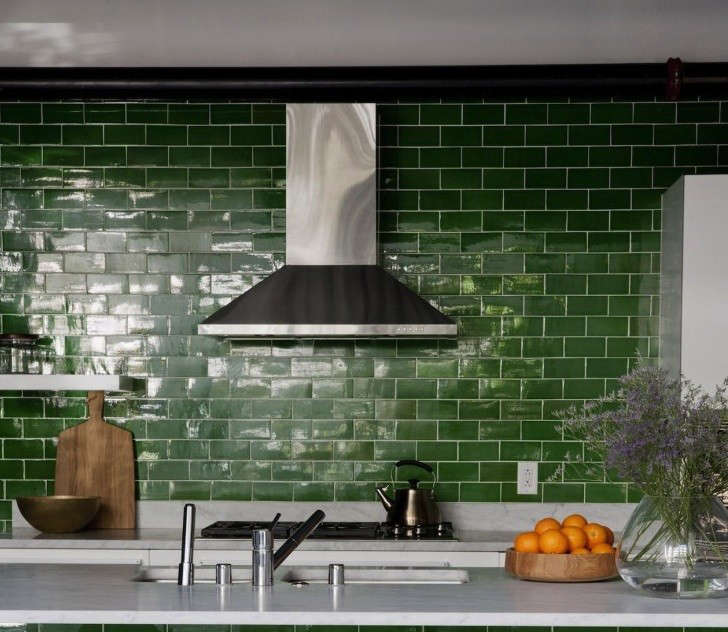
Of course, “An LA Kitchen Goes Green” can also mean the room literally embraces green as a design color. Green cabinetry, zellige tile, sage walls, olive islands, pistachio accents, or deep forest lower cabinets can make a kitchen feel calm, organic, and connected to the outdoors.
Green works beautifully in Los Angeles because it plays well with natural materials: white oak, walnut, terracotta, limestone, concrete, brass, matte black, and handmade tile. A sage-green cabinet with a warm wood shelf feels relaxed and modern. A dark green island with marble-look quartz feels classic without being stiff. A pale green backsplash can soften bright sunlight and add personality without shouting.
Best Green Kitchen Color Pairings
Sage green pairs well with creamy white walls, oak floors, and brushed brass hardware. Olive green looks rich with walnut, black accents, and stone counters. Mint green can feel cheerful in small kitchens when balanced with warm neutrals. Deep emerald or forest green works best when there is enough light, otherwise the kitchen may start auditioning for a moody mystery film.
Budget-Friendly Ways to Make an LA Kitchen Greener
Not every green kitchen requires a full renovation. In fact, some of the smartest upgrades are small. Replace incandescent bulbs with LEDs. Add a compost pail. Install faucet aerators. Seal gaps around windows. Use washable cloths instead of paper towels for everyday cleaning. Organize the pantry. Switch to durable containers. Add a portable induction burner. Use power strips for small appliances that draw standby power. Choose non-toxic cleaners. Repair instead of replacing when practical.
For larger upgrades, homeowners should check available local rebates and incentive programs for energy efficiency and water conservation. Rebate availability can change, so it is worth reviewing current LADWP and regional programs before buying appliances, fixtures, or major systems. A green remodel is even more satisfying when the budget gets a little help.
Common Mistakes to Avoid in a Green Kitchen Remodel
The first mistake is buying everything new in the name of sustainability. A room full of brand-new “eco” products may still have a large environmental footprint if durable existing materials were discarded unnecessarily. The second mistake is choosing fragile finishes. If it cannot survive real cooking, it is not sustainable for a busy home.
The third mistake is ignoring ventilation. Beautiful cabinets cannot compensate for poor indoor air quality. The fourth mistake is forgetting workflow. If the compost bin, recycling center, and dishwasher are badly placed, people will avoid using them correctly. The fifth mistake is chasing trends too hard. A timeless kitchen that lasts 20 years is greener than a trendy kitchen that feels outdated before the next awards season.
A Practical Green Kitchen Plan for Los Angeles Homes
Start with an audit. What works? What wastes energy? What leaks? What feels inconvenient? Next, set priorities: indoor air, water savings, appliance efficiency, waste reduction, healthier materials, or visual style. Then make a phased plan. A renter might begin with LEDs, composting, a portable induction burner, and better storage. A homeowner might add efficient appliances, WaterSense fixtures, improved ventilation, cabinet refacing, and recycled or durable surfaces.
The best green kitchen is not the most expensive one. It is the one that fits the people who use it. A household that cooks daily needs different choices than someone who mostly assembles salads and reheats takeout. A family with kids needs durable, easy-clean surfaces. A small apartment needs flexible storage. A serious cook needs performance. Sustainable design should support real life, not lecture it.
Experiences From a Kitchen Going Green in LA
The first surprise of making an LA kitchen greener is that the small changes feel bigger than expected. Swapping old bulbs for warm LEDs instantly changes the room. The counters look better. The tile looks cleaner. The cook looks less like they are preparing soup in a storage closet. It is a simple upgrade, but it makes the kitchen feel more intentional.
The second surprise is composting. Many people expect it to be gross, complicated, or a hobby reserved for people who name their houseplants. In reality, once a countertop pail is placed beside the prep area, tossing in onion skins, coffee grounds, and strawberry tops becomes automatic. The key is convenience. When the compost container sits under three mixing bowls behind the emergency waffle maker, nobody uses it. When it sits near the cutting board, it becomes part of the rhythm of cooking.
Induction cooking can also feel like a small lifestyle plot twist. At first, there may be suspicion. Will the pan heat correctly? Will the favorite skillet work? Will dinner become a technology demonstration? Then water boils quickly, the simmer behaves, and cleanup takes less time. For many households, the portable induction burner becomes the “gateway upgrade.” It proves that electric cooking is not the sad coil burner from an old rental apartment. It can be fast, responsive, and surprisingly satisfying.
Another experience is learning that green design improves organization. Once homeowners create separate zones for trash, recycling, compost, and reusables, the kitchen becomes calmer. A drawer for cloth napkins reduces paper towel use. A shelf for glass containers makes leftovers easier to store. A “use first” bin in the fridge turns forgotten ingredients into dinner instead of guilt. Sustainability becomes less about grand gestures and more about removing friction from good habits.
Materials bring their own lessons. Low-VOC paint may not sound exciting, but using it in a busy kitchen feels smart. Refacing cabinets instead of replacing them can save money and preserve character. Choosing a durable countertop may not deliver the same instant thrill as choosing the trendiest surface online, but five years later, durability looks very attractive. Nothing says “eco-friendly” like not having to redo the same project twice.
There is also an emotional benefit. A greener kitchen makes daily routines feel more aligned with the city outside the window. In LA, where sunlight hits the counter in the morning and dinner might include farmers market citrus, backyard herbs, or takeout eaten from real plates because someone finally organized the dishwasher, the kitchen becomes a place of small environmental wins. You are not saving the planet by yourself while stirring pasta, but you are wasting less, breathing cleaner air, using resources more carefully, and building habits that last.
The best part is that a green LA kitchen does not have to look like an environmental checklist. It can be colorful, warm, funny, imperfect, and deeply personal. It can have sage cabinets, a compost pail, efficient appliances, a rescued vintage table, LED task lights, and a drawer that still contains too many rubber bands. That is real life. Sustainability works best when it fits real life beautifully.
Conclusion: A Greener LA Kitchen Is a Better Everyday Kitchen
An LA kitchen goes green not through one magical purchase, but through a series of thoughtful choices. Keep what works. Upgrade what wastes energy or water. Improve ventilation. Choose durable, healthier materials. Make composting easy. Use natural light. Add efficient LEDs. Organize food so less of it gets wasted. And yes, consider painting something green if your heart says sage, olive, or emerald.
The result is a kitchen that looks better, works better, and lives better. It is not about perfection. It is about progress with style. In a city known for reinvention, the green kitchen may be one of the smartest home transformations of all: practical, beautiful, healthier, and ready for whatever is next on the menu.