

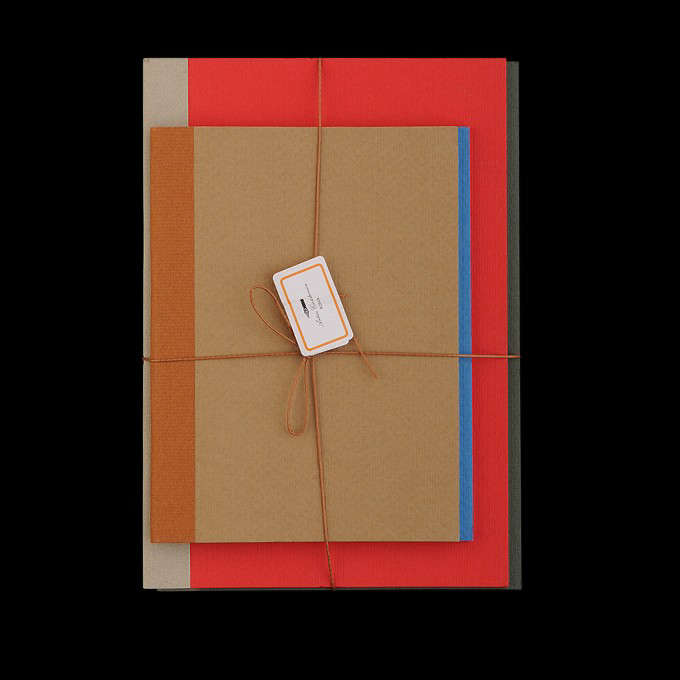
Some notebooks are born to be tossed in a backpack. Others are born to be carried like a secretpulled out at cafés,
opened with a little ceremony, and used to write something you actually mean. Antica Cartotecnica notebooks fall firmly
into the second category. They’re the kind of paper goods that whisper, “Yes, you are definitely the main character,”
even if you’re just making a grocery list that says: eggs, coffee, existential dread.
In the U.S., you’ll usually find Antica Cartotecnica notebooks through curated design and stationery shops (plus a few
big marketplaces). They’re best known for vintage-inspired sets, warm-toned ivory paper, and charming details
(like waxed string ties, contrast spines, and old-school formats) that make modern “productivity” notebooks feel a little… too sterile.
What Are Antica Cartotecnica Notebooks, Exactly?
Antica Cartotecnica is widely presented by U.S. retailers as a family-run stationery shop in Rome with deep rootsoften
described as founded in the early 20th century (commonly cited as 1930) and associated with traditional writing goods and paper craft.
That origin story matters because these notebooks don’t feel like generic stationery “inspired by Europe.” They feel like the real thing:
simple materials, thoughtful construction, and an aesthetic that’s quietly confident instead of loudly trendy.
In practical terms, “Antica Cartotecnica notebooks” is an umbrella for a few recurring styles sold in the U.S.:
sets of multiple small notebooks tied together, staple-bound booklets in varied sizes, and standalone notebooks with
details like grommets and string closures. The vibe is consistent: classic proportions, tactile covers, and paper
that’s made for writing (not just posing in flat-lays).
The short version
- Old-world look, modern usefulness: vintage styling without being precious.
- Writing-forward paper: typically described as ivory/neutral-toned, with an artisanal feel.
- Small formats that get used: sets and sizes that encourage quick notes, lists, and travel journaling.
Design Details That Make People Fall a Little in Love
Antica Cartotecnica notebooks tend to win hearts through details that are almost annoyingly effective. You don’t realize
how much you want a notebook tied with waxed string until you’ve used one. Then suddenly every elastic band feels like it’s trying too hard.
1) The “set of notebooks” format
Several U.S. listings describe sets of three staple-bound notebooks in different sizes, bundled together as a single purchase.
One commonly listed set includes three sizes around: small (about 4″ x 5.8″), medium (about 5.1″ x 6.9″), and large (about 6.1″ x 8.9″).
Another U.S. shop describes a different three-notebook set with smaller dimensions (around 3″ x 4″, 4″ x 5 1/4″, and 5″ x 6 1/4″).
Translation: the “set” concept is consistent, but exact sizing varies by edition and retailerso it’s worth checking the specs before you buy.
2) The tactile cover situation
Covers are often described as soft or heavy cardstock, sometimes with a pebbled feel, sometimes stamped, and frequently paired with
a contrast spine or vintage color palette. This is the part where people who “don’t care about stationery” suddenly start stroking the cover
like it’s a cat. (It’s fine. You’re safe here.)
3) Closures that feel like a ritual
Many Antica Cartotecnica notebooks are sold with a tying lace or waxed string closure, sometimes threaded through a grommet.
It’s a small thing, but it changes the rhythm: open, write, close, tie. That extra two seconds can be the difference between
“I’ll jot it later” and “I’ll actually capture the thought before it vanishes.”
4) Little surprises inside
Some U.S. product descriptions highlight charming internal extraslike a calendar in the front and a multiplication table in the back
plus playful details such as a small motif at the bottom of each page. These are the kinds of touches that make the notebook feel like an object
with a history, not a disposable consumable.
Paper Matters (Yes, Even If You’re “Not a Paper Person”)
If you’ve ever written in a notebook that made your pen feel scratchy, your ink feather like a frightened bird, or your page bleed through
like a cheap T-shirt in a rainstormwelcome. You’ve already met the truth: paper is not just paper.
Fountain-pen and stationery specialists explain that paper performance is influenced by absorbency, coatings/finishes, and thickness
and that switching paper can drastically change how the same pen and ink look on the page. They also point out that thicker paper can reduce
“ghosting,” while coating and ink resistance can impact sheen and shading (and how crisp your lines stay).
What to look for when buying Antica Cartotecnica notebooks in the U.S.
-
Paper color: Many listings describe ivory or neutral-toned pages. That warmth is great for long writing sessions and makes
black ink look classic, blue ink look romantic, and highlighters look like they’ve mellowed out and started journaling. -
Ruling style: Sets may include ruled pages, and some editions mix blank and ruled across different sizes.
If you’re a fountain-pen user, lined paper can help you avoid “ink tests that drift diagonally into chaos.” -
Construction: Staple-bound booklets open quickly and stay light. That’s ideal for carrying, travel notes, or short daily entries.
If you want a “forever archive,” you might prefer a more heavily bound journalbut for real-world use, staple-bound can be the sweet spot.
Pen pairing tips (with real-life examples)
Want specific, practical matches? Try these:
- Ballpoint or pencil: Perfect for fast notes, lists, and travel logs. Low maintenance, high reliability.
- Gel pen: Great if you want bold lines and quick pop. Test a small corner first if you’re sensitive to ghosting.
- Fountain pen: If the paper is less absorbent, you’ll see cleaner edges and nicer ink character. If it’s more absorbent, you’ll get a softer looksometimes charming, sometimes messy, depending on your nib and ink.
Who These Notebooks Are For
The “I need my notebook to be portable” person
The multi-size sets shine here. You can keep the smallest notebook for quick captures (names, addresses, sudden genius),
the medium for daily lists, and the largest for longer notes. It’s a mini ecosystemlike having three brains, but quieter.
The traveler who wants something that feels like a souvenir (without screaming TOURIST)
Antica Cartotecnica notebooks have that “bought from a hidden shop” energy. Even when purchased in the U.S., they still read as objects with a
place attached to them. That makes them excellent for travel journaling, museum notes, café writing sessions, and “I promise I’ll remember this later”
moments.
The gift-giver who wants to look thoughtful without giving scented candles again
A bundled notebook set is a gift that feels personal without being risky. You don’t need to guess someone’s size, taste in fragrance, or coffee order.
It’s paper. But it’s paper with swagger.
Buying Antica Cartotecnica Notebooks in the U.S.: What to Expect
In the U.S., Antica Cartotecnica notebooks typically appear in curated design/stationery shops and on larger marketplaces. The most common patterns are:
- Sets of 3 notebooks (often staple-bound, different sizes, frequently tied together).
- Ruled vs. plain sets (some listings separate them, some mix formats within a set).
- Standalone notebooks featuring string closures, grommets, or heavier cardstock covers.
A quick authenticity and quality checklist
- Read the materials description: Look for details like “made in Italy,” ivory paper, and the closure/construction style.
- Check dimensions: “Small/medium/large” isn’t universal across editions. Confirm the actual measurements.
- Know your use case: If you want daily heavy writing, pick the largest format. If you want pocket utility, the smallest wins.
How to Use Them Without Turning Into a Stationery Dragon
Let’s address the most common problem with beautiful notebooks: you don’t want to “ruin” them. This is how notebooks become museum artifacts,
preserved forever in a drawer, untouched, like a perfectly clean stove.
Here’s the antidote: decide the notebook’s job before you write the first word. When the notebook has a role, you stop treating it like a shrine.
You start treating it like a tool with style.
Role ideas that actually work
- The “tiny truth” notebook: One sentence per day. That’s it. No pressure, high consistency.
- The travel receipt + note hybrid: Tape a ticket stub, write what you ate, write what you noticed. Instant memory upgrade.
- The pocket project log: Keep quick decisions, measurements, and next steps in one place (especially great for creative work).
- The conversation catcher: A notebook dedicated to quotes, ideas, and “things I want to ask later.”
Care tips (boring but useful)
- Avoid humidity: Store flat and dry to keep covers crisp and pages happy.
- Use a pencil board if you’re picky: A thin backing helps prevent impressions from writing pressure.
- Don’t fear the first page: Write something intentionally imperfect on page one. It breaks the spell.
Frequently Asked Questions
Are these notebooks good for fountain pens?
They can be, depending on the specific paper finish and your pen/ink combination. Paper specialists emphasize that absorbency, coating,
and thickness (plus your nib and ink) all affect feathering, bleed-through, and line crispness. If you’re picky, test a small corner or start in the back.
Why do sizes vary between listings?
“Antica Cartotecnica notebook sets” appear in multiple editions and retail assortments, and U.S. shops sometimes carry different bundles.
Always check the measurements listed by the seller instead of assuming “small/medium/large” means one exact thing.
What’s the best way to pick a set?
Choose based on how you write. If you write long entries, prioritize the largest notebook size. If you mainly capture quick notes,
prioritize pocketability. If you do both, the multi-size set is the whole pointuse each notebook for a different writing job.
Final Thoughts
Antica Cartotecnica notebooks are a reminder that “everyday objects” don’t have to feel disposable. They’re practical, yesbut they’re also
a little theatrical in the best way. They make writing feel like an act, not a chore.
If you want a notebook that nudges you to slow down, notice more, and actually keep your notes (instead of scattering them across apps, napkins,
and the inside of your brain), this is a strong contender. And if nothing else: the waxed string tie is strangely satisfying.
You’ll understand the first time you close it.
Experiences With Antica Cartotecnica Notebooks (Real-World Moments, 500+ Words)
The easiest way to understand these notebooks is to picture how people actually use themnot in a perfect desk setup with a latte foam heart,
but in the messy, real world where your “workspace” is sometimes a park bench and your to-do list is occasionally written while standing in line.
Below are experience-style scenarios that reflect the kinds of use cases U.S. retailers and stationery communities often describe: portable sets,
vintage-inspired details, and the quiet joy of paper that makes writing feel intentional.
1) The “pocket notebook that saves the day” moment
You’re on a phone call. Someone says a name, a number, and an addressfast. You could open your phone, unlock it, find the notes app, fight autocorrect,
and accidentally call your dentist. Or you could pull out the smallest notebook, write it cleanly, and move on with your life like a calm adult.
The small format isn’t just cute; it’s a friction-reducer. The notebook becomes a safety net for memory.
2) The travel journal that doesn’t feel like homework
Many people love the idea of travel journaling until they’re exhausted at the end of the day. That’s where short-form notebooks shine.
Instead of writing a full essay, you jot: what you ate, one funny thing you overheard, one detail you noticed (a doorway, a smell, a song),
and one “I want to remember this” thought. The notebook becomes a highlight reel, not an assignment. Weeks later, those tiny entries do something magical:
they bring back the whole scene.
3) The “separate notebooks for separate brains” system
A multi-notebook set naturally encourages a simple organization style that actually sticks. One notebook becomes your daily list-maker.
Another becomes your creative scratchpadideas, headlines, sketches, “what if” concepts. The third becomes your personal log:
a place for short reflections or gratitude notes. Because each notebook has a role, you stop flipping through one giant book looking for that
one note you wrote “somewhere.” It’s not complicated productivity theaterit’s just dividing your thoughts into three easy buckets.
4) The notebook that makes meetings more bearable
In meetings, a good notebook does two things: it makes you look prepared, and it helps you retain what matters. The tactile act of writing
(especially on paper that feels good under your pen) makes it easier to stay present. Many people find that when their notebook feels special,
they treat their notes as more valuablemeaning they review them, act on them, and remember them. It’s a small psychological trick, but it works.
5) The gift that becomes a habit
A notebook set is one of those gifts that can accidentally change someone’s routine. The recipient opens it, likes the feel, and decides to use the smallest
one “just for a week.” That turns into a daily carry. Then it becomes the place where they plan trips, track workouts, write down movie recommendations,
or keep a running list of “things I want to cook.” The notebook doesn’t demand a new identity (“I’m a journal person now!”). It just slips into life.
6) The “I finally started writing again” spark
This is the big one. People who used to writeletters, poems, stories, personal reflectionsoften stop because life gets loud.
A notebook that feels like an object from another era can act like a bridge back to that quieter part of yourself. You open it and,
for a moment, you’re not optimizing anything. You’re just writing. No notifications, no metrics, no tabs. Just paper, ink, and a thought becoming real.
If a notebook can do that, it’s not just stationery. It’s a door.