

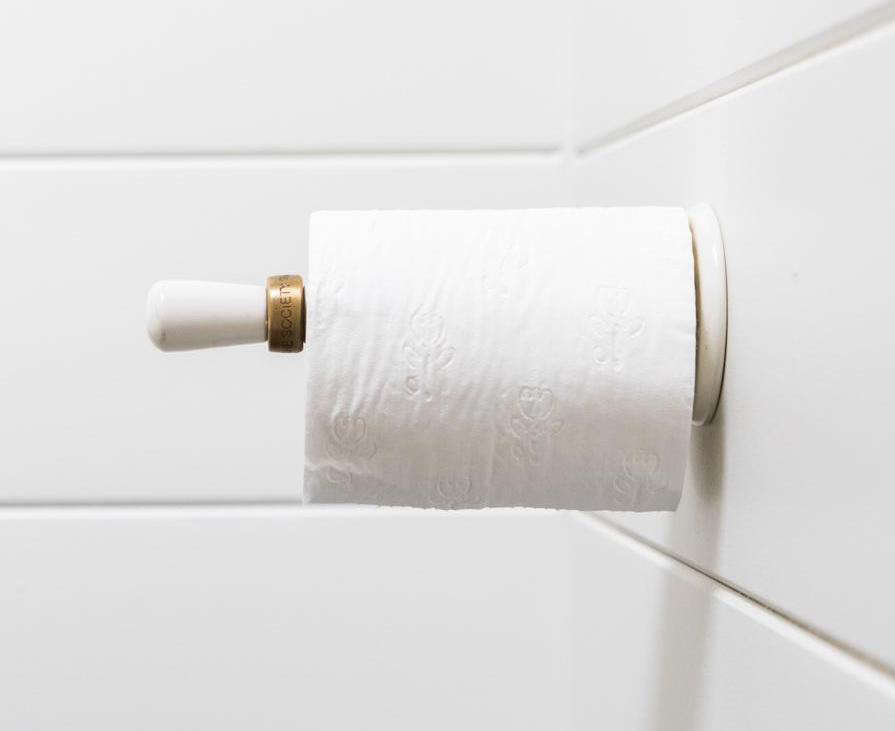
Some home upgrades arrive with trumpets and confetti. Others sneak in quietly, stand next to the toilet, and somehow make the whole bathroom look more expensive. The banded toilet roll holder belongs in the second category. It is small, practical, and easy to underestimate right up until you replace a clunky old holder with one that actually suits the room. Suddenly the bathroom looks intentional instead of “we bought whatever was hanging near aisle seven.”
In design terms, a banded toilet roll holder usually refers to a compact, decorative toilet paper holder with visible contrast in material, shape, or detailing. One well-known version is a handmade piece inspired by the blue banded bee, combining powder-coated cast iron and brass for a sculptural look. That product gave the phrase some design credibility, but the appeal is broader than one item. Today, the term works well as shorthand for a bathroom tissue holder that feels stylish, slightly artisanal, and far more refined than the spring-loaded plastic survivors many of us grew up with.
The good news is that choosing a holder like this is not rocket science. The even better news is that it also is not plumbing. A smart banded toilet roll holder should balance looks, reach, durability, and ease of loading. When those four things line up, you get a bathroom accessory that does its job without behaving like a needy diva.
What Makes a Banded Toilet Roll Holder Different?
A standard toilet paper holder is built for utility first. A banded toilet roll holder still handles the practical part, but it adds a stronger point of view. That usually shows up in one or more ways: a mixed-material build, a visible brass or metal rod, a weighted base, decorative banding, or a shape that feels more like hardware chosen by a designer than hardware chosen by a tired person at the end of a Saturday errand run.
In other words, this is the toilet paper holder version of wearing clean white sneakers with a tailored outfit. It is simple, but not accidental.
Why the design works
First, it creates contrast. Bathrooms are full of hard surfaces and repetitive forms: tile, porcelain, glass, chrome, rectangles, more rectangles. A holder with banded detail or warm metal can soften that repetition. Second, it helps anchor the room’s finish story. If your faucet, mirror, sconces, or cabinet pulls lean brass, brushed nickel, matte black, or chrome, the holder can reinforce that choice instead of looking like it wandered in from a completely different renovation.
Why homeowners notice it fast
Because it sits in a high-use zone. This accessory is touched constantly, seen constantly, and judged silently by every guest who has ever entered a powder room. No pressure.
Popular Styles That Fall Under the Banded Look
Before buying, it helps to know the main categories. Toilet paper holders generally come in wall-mounted, freestanding, recessed, and tank-mounted versions. The banded look can show up in almost any of these styles, though wall-mounted and decorative freestanding models are the most natural fit.
Wall-mounted holders
These are the most common and usually the best choice for a polished look. They stay put, save floor space, and can be matched to other bath accessories. If your goal is a clean, hotel-meets-designer finish, wall-mounted is usually the winner.
Freestanding holders
These are ideal when you do not want to drill into tile or drywall. They work especially well in rentals, guest baths, or tight remodel budgets. Some freestanding designs also store extra rolls, which makes them practical for households where toilet paper disappears with suspicious speed.
Recessed holders
A recessed holder sits partly inside the wall, so it projects less into the room. That makes it especially useful in small bathrooms, narrow powder rooms, and accessible layouts where every inch matters. If space is tight, recessed options can feel like a tiny miracle with mounting screws.
Pivoting and open-ended holders
These have become popular because they make changing rolls easier than wrestling with a spring-loaded rod that always seems one mood swing away from launching into the sink. If you value convenience, especially in family bathrooms, a pivoting design is hard to argue with.
How to Choose the Right Banded Toilet Roll Holder
1. Start with the bathroom’s finish palette
Chrome remains a favorite because it is durable and easy to clean. Brushed nickel and bronze are great at hiding fingerprints and water spots. Matte black brings crisp contrast, while polished brass offers warmth and a more classic or boutique feel. A banded toilet roll holder looks best when it supports the room’s larger finish story instead of improvising its own.
2. Think about material quality
Premium metal construction matters in a humid bathroom. Better-made holders stand up to daily use, resist corrosion more effectively, and feel sturdier when you grab the roll in a hurry. If the holder feels flimsy in your hand, it will not magically become dignified after installation.
3. Check roll compatibility
This sounds obvious until it is not. Many homeowners now buy mega or jumbo rolls, and not every decorative holder has the clearance to handle them gracefully. A beautiful holder that turns every new roll into a wedged paper donut is not a design success story.
4. Match the holder to the room size
In a compact bathroom, a recessed or slim-profile wall-mounted holder often works best. In a larger primary bath, a decorative holder with a more pronounced shape can add personality without crowding the space. Tiny room, tiny projection. Big room, bigger style move. The bathroom gods appreciate proportion.
Placement Matters More Than People Expect
A toilet paper holder can be gorgeous and still be annoying if it is mounted in the wrong place. For most homes, a comfortable rule of thumb is to install the holder about 26 inches above the floor and roughly 8 to 12 inches in front of the toilet bowl’s front edge. That range generally keeps it within easy reach while seated.
In kid-friendly bathrooms, slightly closer placement may make more sense. In bathrooms used by taller adults, you may prefer the farther end of that range. The smartest approach is wonderfully low-tech: sit down, mimic the reach, then mark the wall. Fancy design begins with pretending to reach for toilet paper in silence.
Accessibility considerations
If you are planning for accessibility, follow ADA guidance and local code rather than general residential rules of thumb. Accessible toilet paper dispensers must be within reach, not hidden behind grab bars, and positioned so users can reach them without awkward twisting. Recessed dispensers are often recommended because they keep the area around the toilet clearer and easier to access.
Installation Tips for a Better Outcome
Most wall-mounted holders need only a tape measure, pencil, level, screwdriver, drill, and the included mounting hardware. Single-post holders are usually easier to install because they require just one bracket. Double-post or pivot designs need more precise alignment but often look more substantial once mounted.
The biggest installation mistake is rushing placement. The second biggest is skipping the level. The third is assuming every wall is eager to cooperate. Drywall, tile, and masonry all behave differently, and anchors matter. If you are drilling into tile, patience is not optional.
Freestanding models remove the drilling step entirely, which is why they remain popular in rentals and quick refresh projects. They also make sense when you are testing a new bathroom layout before committing to permanent hardware.
Maintenance: Keep the Holder Pretty Without Making It a Part-Time Job
Bathrooms are moisture-heavy rooms, and moisture is unfriendly to both finishes and cleanliness. The simplest strategy is boring but effective: control humidity, wipe surfaces regularly, and clean high-touch areas before grime starts building a loyal fan base.
Run the exhaust fan during and after showers or crack a window when possible. Excess moisture can encourage mold and make surfaces age faster. For routine care, clean the holder with a surface-appropriate cleaner or mild soap and water, then dry it well. When someone in the home is sick, step up from general cleaning to more intentional sanitizing or disinfecting when appropriate.
Also, do not ignore the holder just because it is small. Bathroom accessories, light switches, and door handles are easy to overlook, but they are touched often. A sparkling sink paired with a dusty toilet paper holder is the bathroom equivalent of wearing a tuxedo with ketchup on the cuff.
Design Ideas for Using a Banded Toilet Roll Holder
In a modern bathroom
Choose a holder with a clean silhouette in matte black, stainless, or brushed nickel. Pair it with minimal hardware and simple tile so the banded detail adds interest without clutter.
In a classic or vintage-inspired bath
Brass or polished nickel works beautifully. A banded toilet roll holder can echo traditional plumbing finishes and make the room feel layered rather than theme-park vintage.
In a small powder room
Use a slim-profile or recessed model. Since powder rooms are often where guests notice every detail, this is a prime place for a holder with a little more personality. It is a tiny room; let the tiny hardware earn its keep.
In a family bathroom
Prioritize durability and easy loading. A pivoting or open-ended holder can save time, and a finish that hides fingerprints will preserve your sanity.
Common Mistakes to Avoid
- Choosing style over roll clearance, then discovering mega rolls do not fit.
- Mounting the holder too far back, too high, or too low for comfortable reach.
- Ignoring accessibility needs in a shared or future-proofed bathroom.
- Mixing finishes carelessly so the holder looks unrelated to the faucet and lighting.
- Buying lightweight hardware in a humid bathroom and expecting a luxury result.
- Forgetting that high-touch bathroom accessories need regular cleaning, too.
Why This Small Upgrade Has Such a Big Effect
The best home details solve a practical problem while quietly improving the mood of the room. That is exactly what a banded toilet roll holder does. It keeps a daily essential within reach, supports the bathroom’s design language, and makes even a basic refresh feel more considered. It is not flashy. It is not expensive compared with larger bath upgrades. But it is one of those details that nudges the room from functional to finished.
And that is the whole trick of good design. It makes ordinary things look like they belonged there all along.
Experiences With a Banded Toilet Roll Holder
After enough bathroom updates, rentals, guest-room refreshes, and “why does this holder wobble like a shopping cart wheel?” moments, a pattern becomes obvious: people rarely think much about a toilet roll holder until they finally have a good one. Then they wonder why they waited so long. A banded toilet roll holder tends to create that reaction because it solves both a visual problem and a practical one at the same time.
In small powder rooms, the experience is often immediate. The room stops feeling random. A decorative holder in brass or brushed metal can pull together a mirror, faucet, and wall sconce in a way that makes the entire space feel planned. The difference is subtle from far away, but up close it gives the room that pulled-together look guests notice without always being able to name. It is the bathroom version of good tailoring: nobody may compliment the hemline directly, but everyone can tell the outfit works.
In busy family bathrooms, the experience is more practical. Homeowners often find that a better holder reduces daily annoyance. A pivoting or open-ended style is easier to reload. A sturdier wall mount does not rattle every time someone tears off a sheet like they are starting a lawn mower. A finish that hides fingerprints or water spots keeps the room looking cleaner between deep cleans. These are not dramatic improvements, but they are the kind that make daily life smoother, which is really what most people want from home upgrades.
There is also the durability factor. People who switch from lightweight or cheap hardware to a better-made holder often mention the same thing: it feels solid. Not glamorous-solid. Just reassuringly solid. The kind of solid that suggests the holder will still be there, doing its job, long after other trendier purchases have retired in shame.
Another common experience is realizing that placement matters as much as product choice. Even a beautiful holder feels wrong if it is too far back, too high, or jammed against a vanity. Once the position is corrected, the bathroom becomes more comfortable instantly. That is why smart homeowners often test the reach before drilling. It looks ridiculous for about ten seconds and saves regret for years.
The most satisfying experience, though, is how a small upgrade can change the energy of the whole room. A banded toilet roll holder will not renovate a bathroom by itself. It will not fix ugly tile, bad lighting, or suspicious grout choices. But it can add one of those finishing touches that makes a space feel cared for. And in a room people use every single day, that kind of quiet improvement goes a long way.
Conclusion
A banded toilet roll holder may sound like a tiny detail, but it sits at the intersection of design, comfort, durability, and daily use. The right one complements your finishes, fits your roll size, holds up in humidity, and lands exactly where your hand expects it to be. That is a lot of responsibility for one modest piece of hardware, but the good ones handle it beautifully.
So yes, it is still a toilet paper holder. But it can also be a smart design choice, a practical upgrade, and a small act of domestic dignity. Not bad for something that spends its life beside the toilet.