

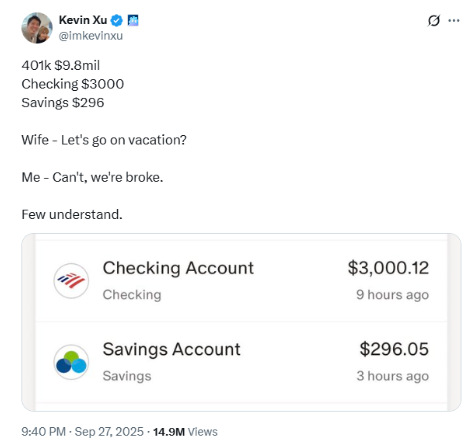
Most personal finance advice sounds like it was written by a spreadsheet wearing sensible shoes. Save more. Spend less. Invest early. Avoid debt. Make coffee at home until your soul quietly leaves the building. All of that advice can be useful, of course, but it often misses the part where money is supposed to help you live a better life, not simply win a contest for the biggest untouched brokerage account.
That is the refreshing idea behind Ben’s Spending Rules. Inspired by Ben Carlson’s practical, human approach to money, these rules are less about punishing yourself and more about spending with purpose. The point is not to buy every shiny thing that winks at you from an online shopping cart. The point is to build a financial life where saving, investing, generosity, comfort, fun, and common sense can sit at the same dinner table without throwing bread rolls at each other.
In a world full of budgeting apps, rising living costs, retirement anxiety, and experts telling you to optimize every nickel, Ben’s Spending Rules offer a more balanced message: be responsible, but do not become a joyless accountant of your own life. Spend on what matters. Cut what does not. Protect your future, but do not forget that the future is built from the days you are living right now.
What Are Ben’s Spending Rules?
Ben’s Spending Rules are not a rigid budget formula carved into stone tablets. They are a philosophy for spending money wisely without becoming weird about it. At the center is a simple belief: personal finance should help people live well, not just accumulate more.
Traditional money advice usually focuses on saving, debt payoff, retirement contributions, and compound interest. Those are important. A healthy emergency fund can prevent a surprise car repair from becoming a financial horror movie. Retirement savings can give you options later in life. Paying off high-interest debt can feel like removing a piano from your shoulders. But after the basics are handled, the real question becomes harder: How should you actually spend?
That is where many finance gurus get strangely quietor worse, overly strict. Some advice makes it sound as if every restaurant meal is a moral failure and every vacation is a direct attack on your Roth IRA. Ben’s Spending Rules push back against that mindset. Money is a tool. A hammer is useful, but nobody wants to spend Saturday night admiring a hammer. You use it to build something.
Rule 1: Do Not Let Personal Finance People Shame Your Spending
One of the most important ideas behind Ben’s Spending Rules is that financial experts are often better at teaching people how to save than how to spend. Saving has clear math. Spending has emotion, relationships, values, timing, health, taste, and occasionally the strange belief that a $9 airport coffee is necessary for survival.
This does not mean you should ignore financial advice. It means you should filter it. A 25-year-old saving aggressively for a first home has different needs than a 42-year-old parent trying to buy back time, or a 67-year-old retiree deciding whether to take the big family trip while everyone can still go. Good spending depends on your stage of life, your income, your obligations, and what genuinely makes your life better.
The best spending plan is not the one that impresses strangers online. It is the one that helps you sleep at night, enjoy your life, and still make progress toward future goals.
Rule 2: Automate the Boring Stuff First
Responsible spending becomes easier when the important financial jobs are handled before temptation enters the room. This is why “pay yourself first” remains one of the most useful money habits. Instead of waiting to see what is left at the end of the month, direct money toward savings, retirement, debt payoff, and emergency reserves as soon as income arrives.
For many households, a practical starting point is a simple framework such as the 50/30/20 budget: roughly 50% of after-tax income for needs, 30% for wants, and 20% for savings and debt repayment. Fidelity’s 50/15/5 guideline offers another useful approach: keep essential expenses around 50% of take-home pay, aim to save 15% of pretax income for retirement, and set aside 5% of take-home pay for short-term savings.
The numbers do not have to be perfect. Life is lumpy. Rent rises. Kids need braces. Dogs eat things that require emergency vet visits. The goal is to build a system where your future is being funded automatically. Once the responsible part is handled, spending becomes less stressful because you are not choosing between tacos and retirement every Friday night.
Rule 3: Buy Time When You Can
One of the smartest ways to spend money is to buy back time. This can mean hiring help for tasks you dislike, choosing a shorter commute, paying for grocery delivery during a chaotic week, or booking the direct flight instead of saving $80 to spend seven hours staring at carpet in an airport terminal.
Time-saving spending is powerful because it attacks one of modern life’s biggest problems: everyone feels busy, tired, and slightly behind. A purchase that gives you two hours back may be worth more than another object that needs charging, dusting, storing, or explaining to your spouse.
Of course, buying time should still fit your budget. Outsourcing every inconvenience can turn into lifestyle inflation wearing a fake mustache. But when used intentionally, spending on time can reduce stress and make life feel more manageable.
Rule 4: Spend Generously, Especially With People You Love
There is a special kind of joy in picking up the tab when you can afford it. Not as a performance. Not as a power move. Just as a quiet, generous gesture that says, “I value this moment with you.”
Ben Carlson has written about the elegance of taking care of a meal for a group, and the lesson is bigger than restaurants. Generous spending can mean sending flowers, covering coffee for a friend, buying better seats for your parents, helping a sibling with a small emergency, or bringing a thoughtful gift when you visit someone’s home.
Money spent on connection often has a longer emotional shelf life than money spent on stuff. A gadget becomes outdated. A great night with friends becomes a story. Nobody gathers around years later to say, “Remember that month I increased my savings rate by 0.7%?” Useful? Yes. Heartwarming? Not exactly a campfire classic.
Rule 5: Save Hard for Things That Actually Matter
Ben’s Spending Rules are not an excuse to spend carelessly. In fact, they work best when paired with strong saving habits. The freedom to spend well usually comes from knowing the basics are covered: bills paid, emergency fund growing, high-interest debt under control, retirement contributions on track, and insurance needs reviewed.
A good emergency fund is especially important. The Federal Reserve has repeatedly found that a meaningful share of adults would struggle to cover a modest emergency expense without borrowing or selling something. That is not just a statistic; it is a reminder that cash savings create breathing room. An emergency fund turns panic into inconvenience. That may not sound glamorous, but glamour is overrated when your transmission fails.
Once you have financial guardrails, you can spend more confidently. Saving is not the opposite of spending. Saving is what makes better spending possible.
Rule 6: Avoid Lifestyle Inflation That Does Not Improve Your Life
Lifestyle inflation is sneaky. You get a raise, and suddenly your old apartment is “unlivable,” your car is “embarrassing,” and your lunch now requires a tiny cup of aioli. Some upgrades are worth it. Others simply raise your monthly baseline without raising your happiness.
The key question is: Will this upgrade still feel worth it in three months? A better mattress, safer neighborhood, healthier food, reliable childcare, or a memorable vacation may pass that test. A more expensive version of something you barely notice may not.
This is where spending rules become personal. One person’s waste is another person’s joy. If you love live music, concert tickets may be a great use of money. If you hate driving, a nicer car may do nothing for you. If cooking relaxes you, premium kitchen tools might be worth it. If your oven is basically a sweater storage unit, maybe not.
Rule 7: Spend on Experiences, But Do Not Worship Them
Personal finance writers often say experiences are better than things. That is mostly true, but it can become its own form of pressure. Not every experience needs to be a life-changing sunset in Santorini. Sometimes the best experience is a quiet Sunday breakfast where nobody checks email.
Experiential spending works because it often creates anticipation, memory, and connection. Travel, classes, hobbies, concerts, sports, family traditions, and shared meals can all deliver value beyond the price tag. But the best experiences are the ones aligned with your real life, not the ones designed to impress people who are scrolling too fast to care.
Spend on experiences that feel meaningful before, during, and after. Skip the ones you only want because someone else posted them with better lighting.
Rule 8: Use the Anti-Regret Test
Before making a meaningful purchase, ask two questions: Will I regret buying this? and Will I regret not buying this?
This simple test helps separate impulse spending from intentional spending. You might regret buying a luxury item that creates credit card debt. You might regret not visiting an aging relative, taking the family trip, or replacing a terrible office chair that has been quietly bullying your spine for three years.
The anti-regret test is especially helpful because money decisions are not only about numbers. They are also about timing. Some opportunities expire. Kids grow up. Friends move away. Health changes. Work gets busy. A good spending decision recognizes that life does not always wait for the perfect spreadsheet.
Rule 9: Make Room for Fun Money
A budget without fun money is like a salad without dressing: technically responsible, emotionally suspicious. Giving yourself a defined amount of guilt-free spending can make your overall plan stronger because it reduces the urge to rebel against your own budget.
Fun money can be used for hobbies, clothes, books, games, coffee, takeout, home decor, or whatever makes you happy without harming your financial stability. The key is setting boundaries. When the amount is planned, you do not need to negotiate with yourself every time you buy something small.
This is also useful for couples. Separate fun-money categories can prevent many tiny arguments. One person can buy fishing gear. The other can buy skincare that appears to require a chemistry degree. Peace is restored. The household budget survives.
Rule 10: Do Not Confuse Cheap With Smart
Being cheap and being financially smart are not the same thing. Cheap spending focuses only on the lowest price. Smart spending focuses on value. A cheap pair of shoes that hurts your feet is not a bargain. A cheap appliance that breaks twice is not a win. A cheap hotel far from everything may cost more in transportation and annoyance.
Value-based spending looks at durability, usefulness, time saved, comfort, safety, and enjoyment. Sometimes the best purchase is the more expensive one because it lasts longer or works better. Sometimes the cheapest option is perfectly fine. The trick is knowing the difference.
A good rule: spend more on things you use often, things that separate you from the ground, and things that protect your health or safety. Mattresses, shoes, tires, tools, office chairs, and medical care deserve more thought than impulse purchases tossed into an online cart at midnight.
Rule 11: Plan for Big Spending Before It Arrives
Many “unexpected” expenses are not truly unexpected. Holidays happen every year. Car insurance renews. Kids need school supplies. Homes require repairs. Weddings appear on calendars with the confidence of invading armies.
A sinking fund solves this problem. Instead of being surprised by predictable expenses, set aside money monthly for categories such as travel, car maintenance, gifts, insurance, home repairs, and annual subscriptions. This turns large expenses into manageable monthly ones.
Ben’s Spending Rules work best when spending is not treated as failure. Spending is part of life. The goal is to make it deliberate enough that your future self does not open a credit card statement and whisper, “Who raised you?”
Rule 12: Spend More in the Seasons When It Matters
One underrated truth about money is that spending needs change by season of life. Young adults may need to spend on education, career moves, networking, and building independence. Parents may spend heavily on childcare, housing, activities, and convenience. Midlife may bring peak earning years but also peak obligations. Retirement may involve travel early on, then more health care and support needs later.
This is why rigid spending rules often fail. Life is not a flat line. It is a messy chart with birthdays, layoffs, promotions, medical bills, road trips, broken dishwashers, and the occasional decision to buy concert tickets because your favorite band is somehow still touring.
The goal is not to keep spending identical every year. The goal is to understand your priorities and adjust responsibly. Some years are for saving aggressively. Some years are for investing in family, health, or experiences. The best plan allows flexibility without turning chaos into a lifestyle.
Rule 13: Protect Yourself From Bad Debt
Spending freely only works when it does not trap you. High-interest credit card debt can turn past purchases into future stress. Buy-now-pay-later plans can make small purchases feel painless until several payments collide in the same month like bumper cars.
Debt is not always bad. A reasonable mortgage, student loan, or business loan can support long-term goals. But consumer debt used to fund lifestyle upgrades often becomes a drag on freedom. If you are still paying for a dinner long after you forgot what you ordered, the system is broken.
A simple rule is to avoid financing wants unless there is a clear plan to pay the balance quickly and comfortably. If a purchase only makes sense when the payment is stretched into the future, it may not fit your present.
Rule 14: Spend in a Way That Matches Your Values
The most satisfying spending usually reflects values. If health matters, spend on good food, fitness, sleep, and preventive care. If family matters, spend on visits, shared meals, and support. If learning matters, spend on books, courses, and tools. If freedom matters, spend less on fixed obligations and more on savings that create options.
This is the difference between looking rich and living rich. Looking rich often means visible consumption: cars, clothes, watches, vacations, upgrades, and photos taken at suspiciously flattering angles. Living rich means your money supports the life you actually want.
Ben’s Spending Rules encourage a quieter kind of wealth: the ability to enjoy today without sabotaging tomorrow.
Real-World Examples of Ben’s Spending Rules
Example 1: The Family Dinner
Imagine a person who has saved consistently, has no credit card debt, and is on track with retirement contributions. At a family dinner, they quietly pay the check before everyone starts performing the awkward wallet ballet. Was it the mathematically optimal use of money? Maybe not. Was it a beautiful use of money? Absolutely.
Example 2: The Direct Flight
A traveler chooses a direct flight that costs $120 more than a connecting flight. The cheaper option saves money but adds five hours, a high chance of delays, and the emotional experience of eating a sad sandwich under fluorescent lights. If the traveler can afford it, the direct flight may be the smarter purchase because it buys time, energy, and sanity.
Example 3: The Emergency Fund First
A young professional wants a new phone but has only $200 in savings. Ben’s Spending Rules would not say, “Never buy nice things.” They would say, “Build the cushion first.” After saving $1,000 or more for emergencies, the phone decision becomes less risky. The rule is not deprivation. It is sequencing.
Experiences Related to Ben’s Spending Rules
The best way to understand Ben’s Spending Rules is to look at how they show up in ordinary life. Not dramatic lottery-winner life. Not billionaire-on-a-yacht life. Regular Tuesday life, where the dishwasher is making a noise, your calendar is full, and your grocery bill looks like it has been lifting weights.
One common experience is the relief of spending money to remove friction. A busy parent may feel guilty paying for house cleaning twice a month. At first, it feels indulgent. Then Saturday arrives, and instead of spending four hours scrubbing bathrooms, the family goes to the park, visits grandparents, or simply rests. The purchase is not really “cleaning.” It is time, peace, and fewer arguments about whose turn it is to deal with the shower. That is Ben’s Spending Rules in action: spending on something that improves daily life in a real, noticeable way.
Another experience is learning that the cheapest option often has hidden costs. Many people have bought the bargain suitcase, the discount shoes, or the suspiciously affordable office chair, only to replace it months later. The lesson is not to buy luxury everything. The lesson is to stop pretending price is the only measurement. A durable item used every day can be a smarter purchase than a cheap one that creates annoyance, discomfort, or repeat spending.
There is also the experience of spending on people. Buying dinner for friends, sending a thoughtful birthday gift, or helping a family member with a practical need rarely feels wasteful when done within reason. These moments create connection. They also remind us that money is not only a private scorecard. It can be a social tool, a kindness tool, and occasionally a “please let me get this one because you helped me move apartments in July” tool.
Many people also discover Ben’s Spending Rules after going too far in the opposite direction. They save aggressively for years, track every purchase, and feel proud of their discipline. Then they realize they have become anxious about spending even when they can afford it. A vacation feels irresponsible. A nice meal feels suspicious. Replacing worn-out furniture feels like betrayal. In that moment, the challenge is not saving more. The challenge is learning to spend without guilt.
Finally, there is the experience of timing. A couple may delay a dream trip for years, waiting for the perfect financial moment. But prices rise, health changes, children’s schedules get complicated, and life moves. Ben’s Spending Rules do not say to ignore the future. They say to recognize that the present has value too. If the emergency fund is healthy, retirement savings are on track, and the trip will not create debt, then spending on that memory may be the right call.
These experiences all point to the same idea: good spending is not careless. It is conscious. It asks what money is doing for your life. Is it buying freedom? Reducing stress? Strengthening relationships? Creating memories? Supporting health? If yes, the purchase may deserve a place in the budget. If not, it may just be clutter with a receipt.
Conclusion: Spend Like a Human, Not a Spreadsheet
Ben’s Spending Rules are valuable because they bring humanity back into personal finance. They do not reject saving, investing, budgeting, or discipline. They simply remind us that money is supposed to serve life, not replace it.
The healthiest financial plan is not built on constant denial. It is built on priorities. Save for emergencies. Invest for the future. Avoid destructive debt. Keep fixed costs manageable. Then spend confidently on the people, experiences, tools, comforts, and opportunities that make life better.
In the end, the goal is not to die with the most optimized checking account. The goal is to use money wisely across all stages of life. Sometimes that means saving. Sometimes it means saying no. Sometimes it means picking up the tab, booking the direct flight, replacing the terrible mattress, or taking the trip while the people you love can still take it with you.
That is the heart of Ben’s Spending Rules: be smart enough to protect tomorrow, and brave enough to enjoy today.