

Research basis: This retrospective guide synthesizes reporting, testing guidance, product specifications, and theft-prevention recommendations from Popular Mechanics, Bicycling, Consumer Reports, REI Co-op, Project 529, the League of American Bicyclists, GearJunkie, OutdoorGearLab, Kryptonite, ABUS, and OnGuard.
Buying a bicycle is exciting. Buying a bike lock feels more like purchasing dental insurance: not thrilling, but suddenly fascinating when something goes wrong. In 2022, riders had more lock styles than ever, including compact U-locks, armored chains, folding locks, wearable designs, and enormous security devices that appeared capable of anchoring a small ship.
The best bike locks of 2022 were not necessarily the largest or most expensive models. The right choice depended on the value of the bicycle, local theft risk, parking duration, carrying preferences, and whether the lock could fit around the racks and posts a rider actually encountered. A gigantic lock left at home offers exactly zero security, apart from guarding the closet.
This retrospective guide examines the strongest and most practical locks available in 2022. It also explains how to compare U-locks, chain locks, folding locks, and cables without becoming an amateur metallurgist.
Quick Look at the Best Bike Locks of 2022
- Best overall: Kryptonite New-U New York Standard
- Best compact commuter lock: Kryptonite Evolution Mini-7
- Best premium all-around lock: ABUS Granit XPlus 540
- Best wide U-lock: OnGuard Brute LS
- Best heavy-duty chain: OnGuard Mastiff
- Best folding lock: ABUS Bordo Granit XPlus 6500
- Best wearable chain: Hiplok Gold
- Best stationary maximum-security option: Altor SAF
What Made a Bike Lock Good in 2022?
No portable lock could make a bicycle impossible to steal. A determined thief with enough time, power tools, spare cutting discs, and a complete lack of curiosity from nearby pedestrians could eventually defeat most conventional locks. The goal was to make an attack difficult, noisy, slow, and unattractive compared with stealing another bicycle.
Hardened-Steel Construction
High-quality U-locks generally used hardened-steel shackles designed to resist bolt cutters, saws, twisting, and leverage attacks. A thicker shackle usually improved resistance, although the quality of the steel and the design of the locking mechanism were just as important as diameter.
Many of the best U-locks used double-locking shackles. Both ends were secured inside the crossbar, potentially requiring two cuts before the lock could be removed. This design also helped resist twisting attacks that could defeat some older, single-bolted models.
A Tight but Usable Fit
A compact lock leaves less empty space in which a thief can insert a long pry bar. However, an extremely small lock can become frustrating when the only available rack is shaped like modern art designed by someone who has never seen a bicycle.
The ideal lock was small enough to reduce leverage opportunities but large enough to capture the bike frame, a wheel, and a secure object. Riders who regularly used thick posts or crowded racks generally benefited from a longer or wider shackle.
A Practical Carrying System
Weight matters because even the strongest lock is useless when it remains in the garage. Frame brackets were convenient when they held the lock securely and did not rattle. Chains could be carried in a bag or wrapped around the waist when specifically designed for wearable transport. Some heavy locks were better left at a regular workplace or home parking location.
Best Overall: Kryptonite New-U New York Standard
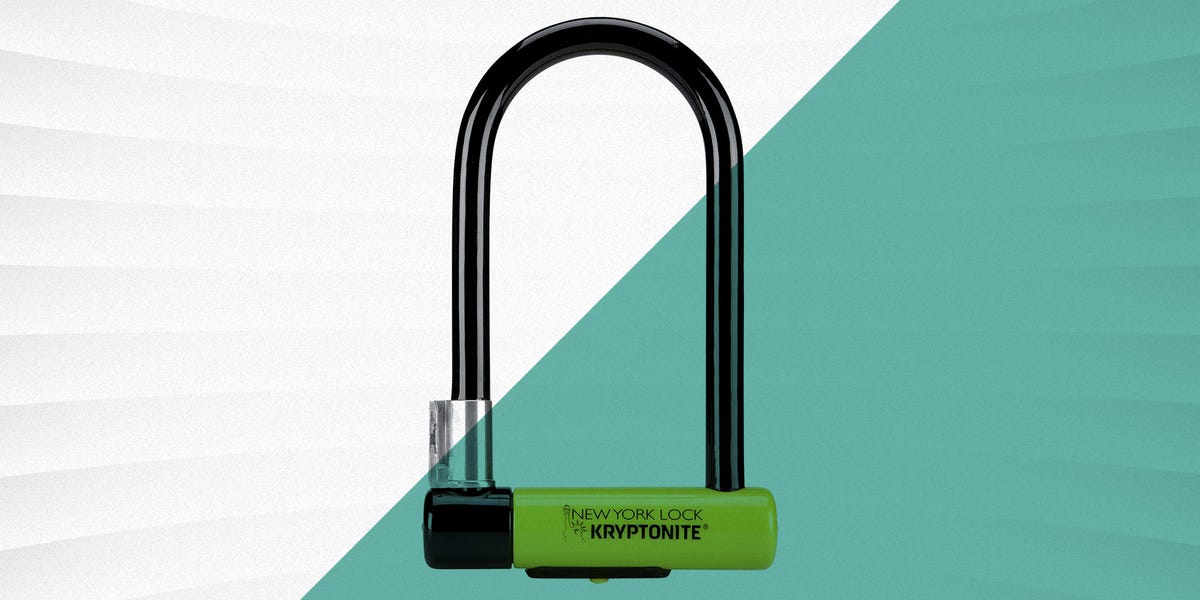
The Kryptonite New-U New York Standard was one of the defining high-security U-locks of 2022. Popular Mechanics and Bicycling both placed it among their leading recommendations, and its combination of a thick hardened-steel shackle, compact dimensions, and double-deadbolt construction made it suitable for high-risk urban parking.
Its pass-through crossbar and double-bolting mechanism were designed to resist twisting and single-cut removal. The lock was not lightweight, but its mass was still manageable for commuters who prioritized protection over saving a few pounds.
Why It Stood Out
- Thick hardened-steel shackle
- Double-deadbolt locking system
- Strong balance of security and everyday usability
- Compact enough to limit space for leverage attacks
- Suitable for valuable commuter bikes and many e-bikes
The New York Standard was best for riders parking in city centers, around transit stations, or on college campuses. Its main drawbacks were weight and a relatively tight internal area. Cyclists using oversized frames, unusually thick posts, or packed racks sometimes needed more reach.
Best Compact Commuter Lock: Kryptonite Evolution Mini-7
The Kryptonite Evolution Mini-7 became popular because it offered a more portable alternative to the heaviest New York-series locks. Its 13-millimeter hardened-steel shackle used a double-deadbolt design, while the included four-foot cable could loop through a front wheel or saddle rails.
The lock measured approximately 3.25 by 7 inches and weighed about 3.55 pounds. It also included a frame bracket, protective coating, dust cover, and disc-style cylinder.
Best Use
The Evolution Mini-7 was a strong match for daily commuters who wanted meaningful security without carrying the heaviest lock in the catalog. Its small opening rewarded careful locking technique. Riders needed to place the bicycle close to a rack and choose the frame section strategically.
The included cable was convenient for securing a front wheel, but it should not have been treated as the main lock. Cables can discourage casual tampering, yet they are generally more vulnerable to cutting tools than quality U-locks.
Best Premium All-Around Lock: ABUS Granit XPlus 540
The ABUS Granit XPlus 540 combined serious security with polished construction. Its hardened square-section parabolic shackle measured 13 millimeters, and its internal components were made from specially hardened steel. ABUS also equipped the lock with its XPlus cylinder and a keyhole cover designed to keep out dirt and moisture.
The squared profile was intended to improve resistance to certain cutting and twisting attacks. The lock was available with several mounting systems, which mattered because a premium security product becomes less premium when it repeatedly falls off the frame and attacks the rider’s ankle.
Who Should Buy It?
The Granit XPlus 540 suited riders who wanted high security but preferred a somewhat more refined design than the industrial-looking alternatives. It was appropriate for expensive road bikes, commuter bicycles, cargo bikes, and e-bikes, provided the chosen shackle size worked with local parking infrastructure.
Best Wide U-Lock: OnGuard Brute LS
Compact U-locks improve security by reducing open space, but they are not ideal for every rider. The OnGuard Brute LS provided a larger locking area for thick posts, railings, oversized tubing, and awkward racks. Its Brute-series design used a thick hardened-steel shackle and a four-sided locking mechanism intended to resist cutting, prying, and jacking.
The extra reach made daily locking easier, especially for cargo bikes and adult tricycles. The trade-off was more empty space, which made careful positioning important. Riders could reduce leverage opportunities by filling that space with the frame, rear wheel, rack, or a second bicycle component.
Best Heavy-Duty Chain: OnGuard Mastiff
A quality chain offered flexibility that rigid U-locks could not match. The OnGuard Mastiff could wrap around thick posts, oddly shaped structures, multiple frame tubes, or more than one bicycle. Bicycling highlighted it as a high-value chain option, while Popular Mechanics selected it as a leading secure chain lock in its 2022 guide.
That flexibility arrived with a predictable cost: weight. Heavy chains are not dainty. Carrying one in a backpack can make a short commute feel like preparation for a medieval tournament.
The Mastiff was most practical for riders who parked at a regular location and could leave the chain there. It also suited cargo-bike and e-bike owners who valued locking range more than portability.
Best Folding Lock: ABUS Bordo Granit XPlus 6500
Folding locks occupied the middle ground between U-locks and chains. Their linked steel bars could fold into a compact frame-mounted case, making them easier to transport than many chains while providing more reach than a small U-lock.
The ABUS Bordo Granit XPlus 6500 used hardened-steel bars, protected joints, an XPlus cylinder, and a carrier designed for bike-frame transport. Its long reach was useful for unusual racks and larger frames.
Folding locks had more joints than U-locks, creating additional areas that had to resist attack. The Bordo Granit model addressed that concern with reinforced links, but it was still best chosen for its combination of portability, range, and strong everyday protection rather than for being the lightest possible option.
Best Wearable Chain: Hiplok Gold
The Hiplok Gold was designed to be worn around the waist without locking it to the rider. That detail was important: nobody wants to arrive at a destination and discover that the key is in a different zip code.
Its adjustable wearable design distributed weight around the hips instead of concentrating it in a backpack. REI described it as a convenient option for securing bicycles in higher-risk areas.
This was a strong choice for riders who preferred the flexibility of a chain but disliked frame brackets and overloaded bags. It remained heavy compared with compact commuter locks, although the carrying system made that weight less annoying on the road.
Best Stationary Maximum-Security Option: Altor SAF
The Altor SAF was the lock for riders who looked at an ordinary four-pound U-lock and said, “That seems suspiciously portable.” Its oversized construction used a steel shackle surrounded by a massive aluminum body intended to frustrate power-tool attacks.
Independent testing found the SAF exceptionally resistant to grinders and reciprocating saws, but its weight made it impractical as an everyday carry lock. It worked best as a stationary security device left at an apartment building, workplace, or permanent parking location.
For a high-value e-bike parked in the same place every day, that inconvenience could be worthwhile. For a rider climbing three flights of stairs, less so.
U-Lock, Chain, Folding Lock, or Cable?
Choose a U-Lock for Everyday Urban Security
A hardened-steel U-lock was the best default for most riders in 2022. It offered strong resistance to common hand tools without the bulk of a large chain. Consumer Reports has also found U-locks generally difficult to defeat across a wide range of attack methods.
Choose a Chain for Flexibility
Chains worked well with large posts, crowded racks, cargo bikes, and several bicycles. They were also difficult to stabilize during a cutting attack when kept off the ground. Their chief disadvantage was weight.
Choose a Folding Lock for Reach and Compact Storage
A folding lock was appealing when a U-lock felt too restrictive and a heavy chain felt too bulky. It could fit neatly into a frame-mounted case while opening wide enough for awkward structures.
Use Cable Locks Only as Secondary Protection
A cable could help secure a front wheel, saddle, helmet, or accessory. It should not be trusted as the primary defense for a valuable bicycle in a public location. Project 529 and REI both recommend using a highly rated U-lock for the frame and treating cables as accessory protection.
How to Lock a Bike Correctly
- Choose a fixed object. Use a proper rack or solid structure that cannot be lifted, unscrewed, cut easily, or pulled from the ground.
- Secure the frame. Never lock only a wheel. A thief can remove it and leave you with one extremely secure wheel and no bicycle.
- Capture the rear wheel when possible. Place the primary U-lock through the frame, rear wheel, and rack.
- Reduce open space. Fill the lock with bicycle components and the rack so there is less room for pry bars or jacks.
- Keep the lock off the ground. A lock resting on pavement can provide a stable surface for hammering or cutting.
- Protect the front wheel. Use a second lock, locking skewer, or accessory cable.
- Remove valuables. Lights, bags, computers, pumps, and quick-release saddles can disappear even when the bicycle remains.
How Much Should You Spend?
A useful rule was to match lock security to the bicycle’s value and the parking environment. A low-cost lock might be acceptable for a short stop with an inexpensive bike in a low-risk area. A costly e-bike parked downtown for an entire workday deserved a much stronger setup, often involving two different lock types.
Using two locks creates more work for a thief, particularly when the locks require different tools or attack angles. Pairing a compact U-lock with a chain or second U-lock also allows riders to secure both wheels and the frame.
Experience-Based Lessons From Using Bike Locks
The following observations summarize common real-world commuter experiences, long-term ownership reports, and practical patterns seen in bike-lock testing. They are not laboratory scores. They are the details riders tend to discover after the receipt has disappeared and the lock has bounced against the frame for several hundred miles.
The Strongest Lock Is Not Always the Best Daily Lock
A very heavy lock feels reassuring on the first day. By the third week, the rider may begin leaving it at home because carrying it is unpleasant. A slightly lighter U-lock that accompanies every trip provides more practical security than a giant chain gathering dust beside the spare tubes.
Regular commuters often find that a three- to four-pound U-lock is a workable compromise. It is heavy enough to feel substantial but light enough to mount on the frame or place in a pannier. Riders who use the same destination every day can avoid the compromise by leaving a second heavy chain at work.
Small U-Locks Require Better Parking Habits
A compact lock such as the Evolution Mini-7 can be quick and secure when the rack is well designed. It becomes a metal puzzle when the rack is crowded, the post is thick, or another cyclist has parked diagonally across three spaces.
The best technique is to roll the bicycle close to the rack, identify the smallest workable frame opening, and position the rear wheel before inserting the lock. After a week of practice, this process becomes automatic. Without practice, it can resemble an unsuccessful audition for a street-magician job.
Frame Brackets Are Surprisingly Personal
Some riders love frame mounts. Others remove them within an hour. Performance depends on frame shape, bottle-cage placement, cable routing, leg clearance, and the quality of the bracket itself.
A bracket that works perfectly on a traditional diamond frame may rattle on a step-through bike or interfere with an e-bike battery. Panniers often provide the quietest carrying experience. Backpacks work too, although a dense lock can become uncomfortable and potentially hazardous in a crash.
Weather Reveals Build Quality
After months of rain, road grit, and winter salt, key cylinders and moving joints can become stiff. Dust covers help, but they are not magic force fields. Occasional cleaning and manufacturer-approved lubricant can keep the mechanism operating smoothly.
Graphite, dry lubricants, and lock-specific products are often preferable to thick oils that attract dirt. Riders should follow the manufacturer’s maintenance instructions because the wrong substance can turn a cylinder into a tiny, expensive sandbox.
Two Locks Change the Risk Equation
Using a U-lock and a chain feels excessive until the bicycle beside yours is protected by a thin cable. Thieves generally prefer the fastest target. Two solid locks increase attack time, require more positioning, and may demand different tools.
The first lock should secure the frame and rear wheel to the rack. The second should capture the front wheel and frame or reinforce the primary locking point. A cable can supplement this arrangement, but it should not be counted as equivalent to a hardened lock.
Good Parking Choices Matter as Much as Hardware
A strong lock attached to a weak rack is a beautifully engineered mistake. Riders should check whether a signpost can be lifted, a railing can be unscrewed, or a damaged rack can be separated from the pavement.
Visible, busy areas usually provide a better deterrent than isolated corners, but crowds are not a guarantee. The best location combines a secure rack, good lighting, regular foot traffic, and limited space for a thief to work comfortably.
Registration Is Worth Five Minutes
Before regular commuting, riders should record the bicycle’s serial number, photograph the complete bike, save the purchase receipt, and register it with a recognized bicycle registry. Project 529 offers registration and theft alerts intended to improve identification and recovery.
These steps do not prevent the initial theft, but they can make police reports, insurance claims, and ownership verification much easier. Photographing distinctive scratches, upgraded components, and accessories can also help identify a bicycle whose decals have been removed.
Final Verdict
For most riders shopping in 2022, the Kryptonite New-U New York Standard offered the strongest overall combination of security, reputation, and practical size. The Kryptonite Evolution Mini-7 was easier to carry, while the ABUS Granit XPlus 540 delivered premium construction and excellent all-around protection.
The OnGuard Brute LS suited riders needing extra reach, and the OnGuard Mastiff worked well when chain flexibility mattered more than weight. The ABUS Bordo Granit XPlus 6500 was the convenient folding option, while the Hiplok Gold made carrying a chain more comfortable. For stationary, maximum-security use, the enormous Altor SAF was in a class of its own.
Whatever model you choose, remember that the lock is only part of the system. Secure the frame and wheel to a fixed rack, minimize empty space, avoid relying on a cable alone, and consider two locks for expensive bicycles. Your bike does not need to be impossible to steal. It needs to be dramatically less appealing than the poorly secured bike nearby.
Note: This article is a retrospective guide to models and recommendations associated with 2022. Product specifications, availability, security ratings, warranties, and model names may have changed since their original release.