

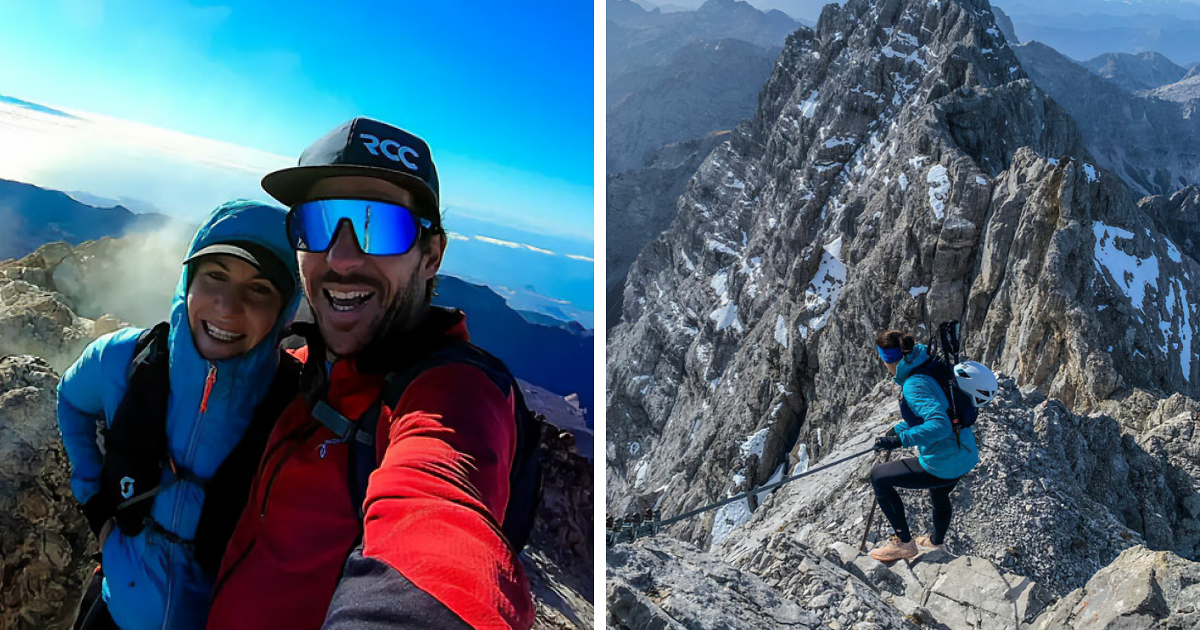
A winter climb can look almost romantic from a distance: snow, moonlight, headlamps glittering on a ridge like tiny stars. Up close, though, the mountain is not writing poetry. It is checking your gear, your timing, your judgment, and your honesty. That is why the death of 33-year-old Kerstin Gurtner on Austria’s Grossglockner became more than another tragic alpine accident. It became a disturbing public debate about love, leadership, responsibility, and what it means to leave someone behind when the weather turns deadly.
Her boyfriend, identified in multiple reports as Austrian climber Thomas Plamberger, was accused of abandoning her near the summit of Grossglockner, Austria’s highest mountain, after the pair became trapped in brutal winter conditions. After her body was recovered, he reportedly posted emotional messages online, including words about missing her and feeling unbearable pain. To some readers, those posts sounded like grief. To others, given the allegations, they felt chilling. The reaction was immediate: how could someone write a public tribute after leaving his partner on a frozen mountain?
The answer, like most mountain disasters, is not tidy. Court records and news reports describe a chain of choices: a late and difficult winter ascent, a less experienced partner, worsening weather, missed or delayed rescue opportunities, unused emergency equipment, and a final decision to descend alone. In February 2026, an Austrian court convicted the climber of manslaughter by gross negligence, giving him a suspended sentence and a fine. The court emphasized that he was not being treated as a murderer, but as someone who failed in a leadership responsibility at the worst possible moment.
The Climb That Turned Into A Fatal Emergency
Grossglockner rises 3,798 meters, or about 12,461 feet, above Austria. It is famous, beautiful, and dangerous enough to deserve respect from anyone with a pulse and a pair of boots. The couple attempted a winter ascent in January 2025, reportedly using the Stüdlgrat route, a technical ridge that can be manageable for experienced climbers in good conditions but becomes far more serious in winter, darkness, wind, and ice.
According to reporting on the investigation, the pair fell badly behind schedule. Their progress slowed near the upper ridge, not far from the summit. At that altitude, being “almost there” is not the same thing as being safe. In fact, “almost there” is one of the most dangerous phrases in mountaineering, right up there with “the weather should hold” and “I packed this myself, probably.”
By late evening, their headlamps were visible from below. Rescue services reportedly became aware of the pair’s situation, and a helicopter was sent to monitor or potentially assist them. Reports state that the climber did not signal distress at that time and that the pair continued upward. Later, the woman’s condition deteriorated. She was described as exhausted, hypothermic, and unable to continue.
What Prosecutors Said Went Wrong
Prosecutors argued that the tragedy was not caused by one single mistake, but by a series of avoidable failures. Among the reported issues were poor planning, inadequate equipment, delayed emergency communication, and the decision to keep climbing after conditions had become clearly hazardous.
1. The Route And Timing Were Too Ambitious
A winter climb on a high alpine ridge is not a casual date idea. It demands early starts, strict turnaround times, weather awareness, and a shared level of technical ability. Reports say the couple began early in the morning, but their progress was slow, and they were still high on the mountain after dark. Once night fell, the margin for error shrank dramatically.
2. Equipment Became A Major Question
Investigators and prosecutors reportedly focused on the woman’s gear, including claims that she was not properly equipped for the terrain. In mountain environments, footwear is not a fashion statement; it is survival equipment. Soft boots, heavy boards, missing shelter strategy, and failure to deploy emergency blankets or a bivouac sack can turn a hard night into a fatal one.
3. Rescue Communication Was Delayed Or Confused
Another major issue was communication. Reports describe calls and messages from rescue personnel that allegedly went unanswered. The climber’s side has disputed the idea that he intentionally ignored rescuers, with explanations including that he did not notice incoming calls. But in the courtroom, those details mattered because emergency response in the mountains depends on timing. A call made thirty minutes earlier can be the difference between a rescue and a recovery.
4. He Left Her In Lethal Conditions
The most emotionally difficult part of the case is the decision to leave Gurtner behind while he descended to seek help. His defense presented this as a desperate attempt to save both of them, and he reportedly said she told him to go. Prosecutors and the court, however, focused on whether he had taken reasonable protective measures before leaving: sheltering her from wind, using emergency gear, reducing exposure, and calling rescue services early enough.
The Message After Her Body Was Found
After Gurtner’s body was recovered, Plamberger reportedly posted emotional messages online about missing her, feeling immense pain, and keeping her forever in his heart. He also reportedly co-signed an obituary written by her parents. On the surface, those are words of grief. But the public response was fierce because of the context: the man expressing heartbreak was also the man accused of leaving her exposed near the summit.
This is where the story became viral. People were not simply reacting to a sad post. They were reacting to the moral dissonance. A tribute can feel tender when written by someone who did everything possible. It can feel horrifying when readers believe the writer failed the person being mourned. That is why headlines described the post as a horrible messagenot necessarily because the words themselves were cruel, but because the circumstances made them almost impossible to read calmly.
Still, it is important to avoid turning a courtroom tragedy into a social-media bonfire. Public anger is understandable, but courts must weigh evidence, testimony, weather conditions, rescue timing, expert reports, and the mental state of those involved. The Austrian judge reportedly said he did not see the climber as a murderer or a cold-hearted man. At the same time, the court found that his judgment failed where leadership was required.
Why The Court Focused On “Leadership Responsibility”
The case raised a fascinating and uncomfortable question: when two adults choose a dangerous activity together, when does one person become legally responsible for the other?
In everyday life, couples make bad plans all the time. They book flights with absurd layovers, assemble furniture without reading instructions, and pretend a “quick hike” will take only forty minutes. Usually, the result is annoyance, not a manslaughter trial. But in alpine climbing, experience changes the equation. If one partner is far more skilled, chooses the route, understands the risks, and leads the weaker partner into technical terrain, a court may view that person as the de facto leader.
That was central to the Grossglockner ruling. The judge reportedly concluded that the climber’s mountaineering ability was significantly greater than Gurtner’s and that he should have recognized earlier that she could not safely complete the route. In other words, love did not erase responsibility. Nor did the fact that both people may have wanted the summit.
The Safety Lessons Hidden In The Tragedy
The Grossglockner case is not just a true-crime story with crampons. It is a warning about how outdoor disasters happen. They rarely begin with one dramatic mistake. More often, they begin with small compromises: start a little late, push a little farther, ignore the wind, assume your partner is fine, tell yourself the summit is close, and hope help will be available later.
Cold exposure is especially unforgiving. Hypothermia can cause confusion, clumsiness, exhaustion, slurred speech, and poor decision-making. The cruel twist is that people suffering from hypothermia may not fully understand how much danger they are in. A partner who is slowing down, stumbling, becoming quiet, or acting strangely does not need motivation. They need action.
The basic safety rules are boring because they are true. Check the forecast. Start early. Set a turnaround time before ambition starts negotiating. Carry emergency shelter, extra layers, navigation tools, food, water, a headlamp, a first-aid kit, and a reliable way to contact rescue services. Know how to use every item you carry. An emergency blanket buried at the bottom of a pack is not a plan; it is shiny luggage.
How Social Media Changed The Case
Before social media, a case like this might have been discussed mainly by local newspapers, climbers, lawyers, and grieving relatives. Online, it became a global morality play. Screenshots of posts, photos of the couple, footage of headlamps on the mountain, and fragments of testimony created a story that felt immediate and personal.
That speed can help keep attention on important issues, but it can also flatten complexity. A grieving post becomes “proof” of manipulation. A courtroom quote becomes a meme. A fatal decision becomes entertainment. The danger is that the woman at the center of the story becomes less a person and more a symbol: of betrayal, negligence, male arrogance, alpine risk, or public outrage.
A better way to read the case is to hold two truths at once. First, Gurtner’s death was a preventable tragedy according to the court’s findings. Second, the internet’s hunger for villains should not replace careful analysis. The judge’s message was essentially this: the climber was not convicted for being evil; he was convicted for failing to act responsibly when his greater experience mattered most.
Why This Story Hit Such A Nerve
The case resonates because it touches a primal fear: being abandoned by someone you trusted. Most people will never climb Grossglockner in winter, but nearly everyone understands the terror of depending on another person and discovering too late that they may not protect you.
It also taps into conversations about relationships and adventure culture. In many outdoor communities, experienced partners introduce less experienced partners to risk. That can be beautiful when done with patience, humility, and safety. It can become dangerous when confidence turns into pressure, or when the more experienced person treats the other’s limits as an inconvenience.
There is a lesson here for every shared-risk activity, from mountaineering to backcountry skiing to long remote hikes. The strongest person does not set the pace; the most vulnerable person does. The objective is not the summit. The objective is returning together.
Experiences And Reflections Related To This Topic
Many people who spend time outdoors can recognize the pattern behind this tragedy, even if they have never faced anything so extreme. A group begins with optimism. Everyone feels strong at the trailhead. The weather looks manageable. The route seems familiar enough. Someone says, “We’ll be fine.” And for a while, they are. Then one person gets tired. Clouds move in. The temperature drops. A small delay becomes an hour. The easy exit disappears. Suddenly, the adventure has turned into a problem with teeth.
One of the most valuable experiences hikers and climbers talk about is the first time they decide to turn around. It feels awful in the moment. You may be close to the summit. You may have trained for weeks. You may have spent money, time, and pride getting there. But turning around is not failure. It is advanced judgment wearing an unglamorous jacket. Mountains do not give bonus points for stubbornness. They do not care that your friends are waiting for photos. They do not care that the summit is only “a little farther.”
Another common lesson is that partners must speak honestly before the trip, not only during the crisis. Who is leading? Who has the least experience? What happens if one person becomes exhausted? What equipment is shared, and what does each person carry individually? When do we turn back? If one person says stop, does the group stop? These questions may sound overly serious when everyone is sipping coffee and packing snacks, but they become priceless when wind is screaming across a ridge.
There is also an emotional lesson. In relationships, especially romantic ones, people often trust their partners more than they trust their own discomfort. A less experienced climber may think, “He knows what he is doing,” or “I do not want to ruin the trip,” or “Maybe I am just being weak.” That silence can be dangerous. A good partner does not need you to suffer quietly to prove love. A good leader watches for the signs you are too proud or too scared to name.
The Grossglockner case should not scare people away from mountains. It should scare people away from careless confidence. Outdoor adventure can build trust, courage, and unforgettable memories. But the best memories are made by people who respect limits, communicate early, and treat safety gear as something to use, not something to admire in a backpack. In the end, the deepest lesson is painfully simple: never let ambition become louder than responsibility. The summit is optional. Coming home together is not.
Conclusion
The story of the boyfriend who abandoned a woman on an Austrian mountain and later posted a painful tribute after her body was found is disturbing because it sits at the intersection of grief and accountability. Kerstin Gurtner’s death on Grossglockner was not treated by the court as intentional killing, but it was treated as more than bad luck. The ruling focused on poor judgment, leadership failure, and missed chances to prevent a fatal outcome.
For readers, the case is a reminder that love is not only what someone writes after tragedy. Love is also preparation, caution, humility, and the willingness to turn back before the mountain makes the decision for you.