

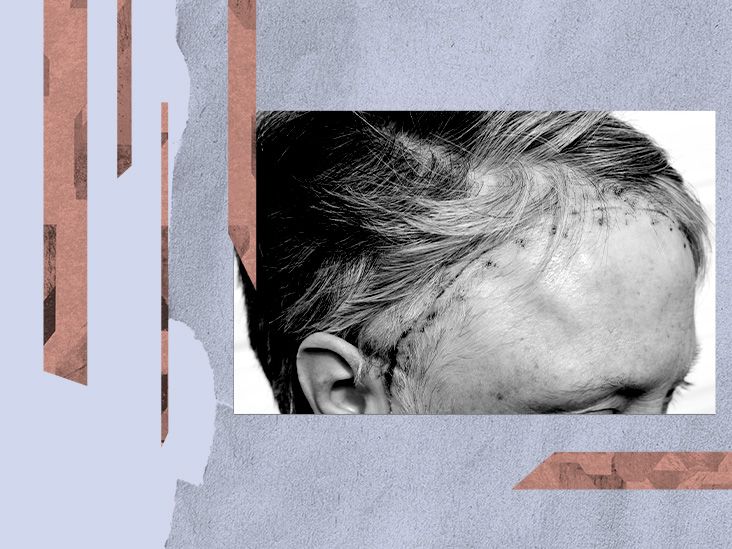
Type “brain aneurysm surgery scars” into a search bar and you will quickly discover two truths: first, people are understandably curious about what the scar may look like; second, the answer is not one-size-fits-all. A brain aneurysm can be treated in more than one way, and that means the mark left behind can range from a barely noticeable line hidden in the hairline to no visible head scar at all.
That is the first big thing to know. Some aneurysm procedures involve an open operation, often called clipping, which requires a scalp incision and a small opening in the skull. Other treatments, such as endovascular coiling or flow diversion, are done through a catheter inserted in the wrist or groin, so the “scar story” is very different. In other words, the internet may be serving up dramatic images while your actual procedure may leave only a tiny puncture mark and a big stack of follow-up paperwork.
This guide explains what brain aneurysm surgery scars can look like, what photos of these scars usually show, how healing often unfolds, and what many people experience emotionally and practically during recovery. The goal is simple: less guesswork, less panic-scrolling, and more realistic expectations.
Why brain aneurysm surgery can leave a scar
A brain aneurysm is a weak, bulging area in a blood vessel in the brain. When doctors decide it needs treatment, they choose the approach based on the aneurysm’s size, shape, location, rupture status, and the patient’s overall condition. That treatment choice matters because it directly affects whether there will be a visible scar on the head.
Open surgery: clipping
In open aneurysm surgery, a neurosurgeon makes an incision in the scalp, creates a small bone opening, reaches the aneurysm, and places a metal clip across its base to stop blood from flowing into it. Because this is a true scalp incision, it usually leaves a scar. The exact location depends on where the aneurysm sits. Some incisions are tucked behind the hairline. Some are hidden in the eyebrow area. Others may curve above and in front of the ear or sit farther back depending on the route the surgeon needs to take.
That is why scar photos vary so much. One patient may have a short eyebrow scar that becomes hard to spot unless you are inches away. Another may have a longer curved line on the side of the scalp. Same diagnosis category, very different roadmap.
Endovascular treatment: coiling and flow diversion
Coiling and flow diversion are less invasive treatments performed from inside the blood vessel. Instead of opening the skull, the surgeon or interventional specialist threads a catheter through an artery, often from the wrist or groin, to reach the aneurysm. In these cases, many people have no head scar at all. The visible mark is usually a small puncture site where the catheter entered the body.
So if you are looking for “brain aneurysm surgery scar pictures,” it helps to ask a more specific question: Was the aneurysm treated with clipping, coiling, or flow diversion? That one detail changes the visual outcome in a major way.
What pictures of brain aneurysm surgery scars usually show
Photos of brain aneurysm surgery scars often fall into a few broad categories. The first is the hairline scar. In many open procedures, surgeons place the incision behind the hairline so the scar can be partly concealed as hair grows back. In some minimally invasive clipping procedures, the incision may be small and located in the eyebrow or upper hairline. In others, particularly frontotemporal approaches, the scar may arc along the side of the scalp.
Early post-op pictures usually show more redness, swelling, and texture than later photos. That can be alarming if you are seeing recovery images for the first time. Fresh scars may look raised, pink, firm, or slightly bumpy. There may be staples or sutures at first. A narrow strip of hair may be shaved, though some centers use techniques that avoid full shaving. In the early days, the scar can look like the main event. Months later, it often becomes a supporting actor.
Later pictures tend to show a flatter, paler line. In many people, hair regrowth makes the scar much less obvious. In eyebrow approaches, the scar may blend into the natural brow line surprisingly well. The biggest lesson from photos is not that every scar looks scary. It is that timing matters. A week-old scar and a one-year-old scar can look like they belong to two different people.
What the scar may look and feel like over time
Scar healing is not just visual. It is sensory too. In the first days or weeks after open surgery, the incision may feel tender, tight, numb, itchy, or oddly hard. Some people also notice brief sharp “zings” or stinging sensations as nerves recover. That can feel unsettling, but it is commonly reported during healing. The surrounding scalp may feel swollen or strangely unfamiliar, as if your head borrowed someone else’s settings and forgot to return them.
As the weeks pass, the scar usually begins to flatten and soften. Redness often fades. Some numbness improves, though not always completely. A scar may continue changing for many months, and scar maturation can continue for a year or longer. That long timeline matters because many people judge their scar way too early. If you look at it at six weeks and decide, “Well, this is my villain origin story,” you may be grading it before healing is anywhere near finished.
Where the scar may be located
The scar location depends largely on the surgical approach. Aneurysms treated through a bifrontal approach may involve an incision behind the front hairline. A supraorbital or “eyebrow” approach may use a short incision hidden in the eyebrow region. A pterional or frontotemporal approach often places the incision on the side of the head, above and in front of the ear. Some keyhole approaches behind the ear are also used in select cases.
This is why comparing your scar to a random online image can be misleading. Your surgeon is not choosing the prettiest line on a diagram. The surgeon is choosing the safest route to the aneurysm. Cosmetic planning matters, but safe access always wins the argument.
What affects how visible the scar will be
Several factors influence how noticeable a brain aneurysm surgery scar becomes. The biggest is the type of procedure. Open clipping is more likely to leave a visible scalp scar than catheter-based treatment. The second is the aneurysm’s location, because that determines the surgical pathway. The third is whether a keyhole or smaller-access technique is appropriate. In some cases, surgeons can use a small eyebrow or hairline incision; in others, the anatomy demands a different approach.
Healing also matters. A clean incision that heals without complications usually fades better than one affected by infection or wound problems. Hair regrowth, skin tone, scar biology, and how early the scar is photographed all influence appearance too. Two people can have similar operations and wind up with very different-looking scars six months later.
Hair, shaving, and the “Will people notice?” question
For many patients, this is the part they care about most, even if they feel guilty admitting it. But it is a fair question. The head is hard to hide in everyday life. It is not like a knee scar that can disappear under jeans and mind its own business.
Some aneurysm clipping approaches require only limited shaving along the incision line, and some centers report that full hair shaving may not be necessary in select cases. Hair often grows back over the scar, which helps camouflage it. During the early healing phase, some people prefer a loose scarf or hat once their surgical team says it is okay. Wigs, hair dye, and tight headwear are usually postponed until the incision is well healed, because the priority is protecting the wound rather than winning a hair-styling contest in week two.
If treatment was endovascular, concerns about head hair and scalp appearance may not apply at all. Instead, the visible sign may be a small wrist or groin entry site, bruising, or tenderness near the catheter access point.
How to care for the incision while it heals
Specific instructions vary by surgeon and hospital, so the discharge paperwork always outranks the internet. That said, common advice from major centers includes keeping the incision clean, avoiding unnecessary touching, and using only the products your care team approves. Many hospitals allow hair washing with a mild shampoo after a short period, but the timing differs. Some instructions say 48 hours, others advise waiting about 5 days. That variation is normal, which is exactly why your own surgeon’s guidance matters more than your cousin’s group chat confidence.
Many centers also advise avoiding soaking the incision under water, such as in baths or swimming pools, until it is well healed. Hair dye, perms, wigs, and certain hats may also be restricted for a while. If staples or sutures are used, they are often removed around the two-week mark, though again, that depends on the case.
The big-picture rule is simple: protect the incision, keep it clean, and do not improvise with random creams, oils, or “miracle scar hacks” unless your own clinician approves them. A scalp incision is not the place to test internet folklore.
When the scar should prompt a call to the care team
A healing scar can be red, sore, and a little dramatic without being dangerous. But there are signs that deserve medical attention. Contact your care team if the incision becomes increasingly red, hot, swollen, foul-smelling, or starts draining pus or other concerning fluid. Fever may also be a warning sign. A wound that is opening instead of closing is not something to watch with “let’s see what tomorrow brings” energy.
Also remember that skin healing and brain recovery are not the same thing. Even if the scar looks better, fatigue, headaches, slower thinking, or other recovery issues may still be very real. The outside can improve faster than the inside, which is one reason recovery can feel confusing.
Recovery beyond the scar
The scar is often the most visible part of healing, but it is rarely the biggest part. Open clipping generally involves a longer recovery than endovascular treatment. For unruptured aneurysms, recovery after clipping may take a few weeks, while ruptured aneurysms can require weeks to months and sometimes much longer depending on complications. Endovascular recovery may be faster in many cases, with some patients going home quickly and resuming light activity sooner.
People recovering from open surgery may also notice incision pain or numbness, jaw discomfort, or muffled hearing on the same side as the incision for a period of time. Follow-up imaging is often part of the plan after treatment. After clipping, an angiogram may be done during the hospital stay. After coiling, follow-up imaging is commonly performed months later to confirm the aneurysm remains sealed off.
So yes, the scar matters. But it lives inside a much larger recovery story that includes sleep, stamina, anxiety, follow-up scans, activity restrictions, and the slow rebuild of confidence.
Will the scar ever go away completely?
Usually, no. Most surgical scars do not vanish completely. What they typically do is fade, flatten, soften, and become less obvious over time. On the scalp, that process is often helped by hair coverage. In eyebrow approaches, the natural texture of the brow can help the scar blend in. In endovascular treatment, there may be no head scar to worry about in the first place.
That said, “not completely gone” does not mean “always highly visible.” Those are very different outcomes. Many healed brain surgery scars are subtle enough that casual observers never notice them unless the patient points them out.
Experiences related to brain aneurysm surgery scars and recovery
When people talk about brain aneurysm surgery scars, they are usually talking about more than skin. They are talking about identity, control, memory, fear, gratitude, and the odd experience of feeling both lucky and shaken at the same time. The scar becomes a symbol, and like most symbols, it is complicated.
Many survivors describe the first look in the mirror as a loaded moment. Some feel relieved just to be alive and barely care what the incision looks like. Others are surprised by how emotional the sight of the scar makes them. A person can be deeply grateful for a life-saving surgery and still mourn the fact that their reflection changed. Those feelings do not cancel each other out. They coexist. Recovery is rude like that.
In the early phase, practical annoyances often dominate. The incision may feel numb when touched but still ache at random. Washing hair can feel intimidating the first time. Sleep may be awkward, especially on the incision side. Some people say the scar itself does not bother them as much as the strange sensations around it: tightness, tingling, itching, sharp little nerve pains, or the sense that part of the scalp still does not fully belong to them. Others focus on jaw soreness, muffled hearing, fatigue, or the stop-and-start pace of getting back to ordinary life.
Then there is the hair question. People often wonder when it will grow back, whether the shaved area will show, whether coworkers will stare, and whether they need to come up with a strategic haircut worthy of a tactical mission. Some choose hats or scarves once their medical team allows it. Others decide fairly quickly that covering the scar takes more emotional energy than simply owning it. There is no universally brave option here. Camouflaging a scar is not vanity, and showing it is not a moral achievement. It is just personal preference.
For people who had endovascular treatment, the experience can be different but not necessarily easier emotionally. They may have little or no visible head scar, yet still feel the emotional weight of having had a brain aneurysm. Sometimes the lack of a dramatic scar makes others assume recovery was simple. That can be frustrating. A small puncture mark in the wrist or groin does not automatically mean a small emotional impact. Some survivors say they look “fine” long before they feel steady, confident, or mentally caught up.
Another common experience is the changing meaning of the scar over time. Early on, it may feel like evidence of crisis. Months later, it may feel more like proof of endurance. Some survivors remain self-conscious about it. Others stop noticing it except during haircuts, photos, or medical appointments. A few even grow protective of it, seeing it as a reminder that they made it through something serious. Not glamorous, not cute, not exactly ideal for a shampoo commercial, but meaningful.
Support matters here more than people expect. Encouragement from family, friends, rehab teams, support groups, or other survivors can change how a person relates to the scar and the whole recovery process. Hearing that numbness can be normal, that progress is not always linear, or that someone else also panicked before their first hair wash can make recovery feel less isolating. The most comforting stories are rarely dramatic. They are often simple: someone who says they were scared, healing took time, and little by little life became recognizable again.
That may be the most honest summary of lived experience. Brain aneurysm surgery scars are not just about appearance. They sit inside a recovery that can be physical, emotional, and deeply personal. Some people heal quickly. Some take much longer. Some love how invisible the scar becomes. Some never stop noticing it. But many eventually reach a point where the scar stops feeling like the headline and starts feeling like a footnote to survival.
Final thoughts
Brain aneurysm surgery scars can look very different depending on whether treatment involved open clipping or a catheter-based procedure such as coiling or flow diversion. Open surgery may leave a scar in the hairline, eyebrow, or side of the scalp. Endovascular treatment may leave no visible head scar at all. Early photos often look more intense than the final result, and scars usually continue changing for many months.
If you are preparing for treatment or recovering now, the best next step is to ask your surgical team exactly what approach they are using and where the incision will be. That answer will tell you far more than ten random image searches ever could. Online pictures can offer context, but your surgeon’s plan is the map. And in this situation, the map beats the mystery every time.