

Breast cancer is one of those health topics people think they understanduntil a doctor says the word “biopsy,” a mammogram report mentions “dense breast tissue,” or someone notices a change that was not there last month. Suddenly, the internet becomes a jungle of medical terms, scary statistics, pink ribbons, and enough acronyms to make a person want to close the laptop and eat cereal for dinner.
This guide explains breast cancer in plain American English: what it is, what symptoms to watch for, how stages work, which types doctors commonly diagnose, what tests may be used, and how treatment decisions are usually made. The goal is not to frighten you. The goal is to replace fog with flashlights.
Breast cancer can affect women and men, although it is far more common in women. In the United States, hundreds of thousands of new invasive breast cancer cases are expected each year, and survival is strongly influenced by early detection, tumor biology, access to care, and treatment response. That is why knowing the warning signsand not ignoring “small” changesmatters.
What Is Breast Cancer?
Breast cancer begins when cells in the breast grow abnormally and multiply in a way the body cannot properly control. These cells may form a tumor, which can sometimes be felt as a lump or seen on imaging such as a mammogram, ultrasound, or MRI. Some breast cancers grow slowly; others are more aggressive. Some depend on hormones like estrogen or progesterone; others are driven by proteins such as HER2; and some do not have those receptors at all.
The breast contains ducts, lobules, fatty tissue, connective tissue, blood vessels, and lymph vessels. Many breast cancers begin in the ducts, which carry milk toward the nipple, or in the lobules, which produce milk. Cancer cells may remain in place, spread into nearby breast tissue, move to lymph nodes, or travel to distant organs. That movement is one reason staging is so important.
Common Breast Cancer Symptoms
The most famous symptom of breast cancer is a lump, but breast cancer does not always arrive wearing a name tag. Some cancers cause subtle changes, and early breast cancer may cause no symptoms at all. This is why screening mammograms are so important, especially for people at the recommended screening age or those with higher risk.
Warning Signs to Take Seriously
Possible breast cancer symptoms include:
- A new lump in the breast or underarm area
- Thickening or swelling in part of the breast
- Changes in breast size, shape, or appearance
- Dimpling, puckering, or irritation of breast skin
- Red, flaky, scaly, or thickened skin on the breast or nipple
- A nipple that turns inward or looks newly flattened
- Nipple discharge that is not breast milk, especially if bloody
- Pain in any area of the breast that does not go away
- Swelling near the collarbone or underarm
Many breast changes are not cancer. Cysts, hormonal shifts, infections, injuries, and benign growths can all cause breast symptoms. Still, “probably nothing” should not become “I ignored it for six months.” If a change is new, persistent, one-sided, or unusual for your body, it deserves medical attention.
Breast Cancer Stages Explained
Breast cancer staging describes how much cancer is in the body and whether it has spread. Doctors use staging to estimate prognosis and choose treatment. Modern breast cancer staging may consider tumor size, lymph node involvement, spread to distant organs, tumor grade, hormone receptor status, HER2 status, and other biological features.
Stage 0: Noninvasive Breast Cancer
Stage 0 usually refers to ductal carcinoma in situ, or DCIS. “In situ” means the abnormal cells are still inside the milk duct and have not invaded nearby breast tissue. DCIS is not life-threatening in the same way invasive cancer can be, but it can become invasive in some cases, so treatment is often recommended.
Stage I: Early Invasive Breast Cancer
Stage I breast cancer is generally small and may have no lymph node involvement or only a tiny amount of spread to a sentinel lymph node. Many stage I cancers are highly treatable, especially when detected early. Treatment often includes surgery and may include radiation, hormone therapy, targeted therapy, chemotherapy, or a combination depending on the tumor’s biology.
Stage II: Larger or Limited Node-Positive Cancer
Stage II breast cancer may mean the tumor is larger, or cancer cells have reached a small number of nearby lymph nodes. This stage is still commonly treated with curative intent. Doctors may recommend surgery first, or they may use medicine before surgery to shrink the tumor. That pre-surgery treatment is called neoadjuvant therapy, which sounds like a robot’s middle name but simply means “treatment before the main treatment.”
Stage III: Locally Advanced Breast Cancer
Stage III breast cancer has usually spread more extensively to nearby lymph nodes or tissues but has not spread to distant organs. Treatment often involves several approaches, such as chemotherapy, surgery, radiation, hormone therapy, targeted therapy, or immunotherapy when appropriate. The plan is customized because two people with the same stage may have very different tumor biology.
Stage IV: Metastatic Breast Cancer
Stage IV means breast cancer has spread beyond the breast and nearby lymph nodes to distant areas such as the bones, liver, lungs, or brain. Metastatic breast cancer is usually treated as a chronic, serious condition. The main goals are to control cancer growth, reduce symptoms, preserve quality of life, and extend survival. Treatments may change over time as the cancer responds or becomes resistant.
Major Types of Breast Cancer
“Breast cancer” is not one single disease. It is more like a family reunion where everyone shares a last name but has a very different personality. Knowing the type helps doctors choose the most effective treatment.
Ductal Carcinoma In Situ
DCIS is a noninvasive breast condition in which abnormal cells are found inside the milk ducts. Because the cells have not spread into nearby tissue, DCIS is considered stage 0. Treatment may include lumpectomy, radiation, mastectomy in selected cases, and sometimes hormone therapy if the cells are hormone receptor-positive.
Invasive Ductal Carcinoma
Invasive ductal carcinoma, often shortened to IDC, is the most common type of breast cancer. It begins in a milk duct and then grows into surrounding breast tissue. From there, it may spread to lymph nodes or other parts of the body if not treated.
Invasive Lobular Carcinoma
Invasive lobular carcinoma, or ILC, begins in the milk-producing lobules. It can be harder to detect on imaging or physical exam because it may grow in a more spread-out pattern rather than forming a distinct lump. People with ILC may notice thickening, fullness, or subtle shape changes instead of a clearly defined mass.
Triple-Negative Breast Cancer
Triple-negative breast cancer does not have estrogen receptors, progesterone receptors, or high levels of HER2. Because it lacks these common treatment targets, hormone therapy and HER2-targeted drugs usually do not work against it. Treatment may include chemotherapy, immunotherapy, surgery, and radiation depending on stage and individual factors. Triple-negative breast cancer can grow and spread faster than some other types, so timely care is important.
HER2-Positive Breast Cancer
HER2-positive breast cancer has too much HER2 protein or extra copies of the HER2 gene, which can make cancer cells grow faster. The good news is that targeted medicines designed for HER2-positive disease have changed the outlook for many patients. These treatments can be used before surgery, after surgery, or for metastatic disease.
Hormone Receptor-Positive Breast Cancer
Hormone receptor-positive breast cancer grows in response to estrogen, progesterone, or both. This type is often treated with hormone-blocking therapy, such as tamoxifen or aromatase inhibitors, depending on menopause status and other factors. These medicines may be taken for years to reduce the risk of recurrence.
Inflammatory Breast Cancer
Inflammatory breast cancer is rare but aggressive. It may cause redness, swelling, warmth, heaviness, or skin that looks like an orange peel. It may not cause a typical lump. Because it can resemble an infection, it is especially important to seek care quickly if breast redness or swelling does not improve as expected.
Paget Disease of the Breast
Paget disease of the breast affects the nipple and areola. It may cause itching, flaking, crusting, burning, discharge, or a rash-like appearance. People sometimes mistake it for eczema, but persistent nipple changes should be evaluated.
Risk Factors for Breast Cancer
A risk factor increases the chance of developing breast cancer, but it does not guarantee it. Many people with breast cancer have no obvious risk factors beyond being born with breast tissue and getting older. At the same time, understanding risk can help guide screening and prevention choices.
Common Risk Factors
- Increasing age
- Being female
- Family history of breast or ovarian cancer
- Inherited gene mutations such as BRCA1 or BRCA2
- Previous breast cancer or certain high-risk breast lesions
- Dense breast tissue
- Chest radiation at a young age
- Early first period or late menopause
- Postmenopausal hormone therapy using estrogen and progestin
- Alcohol use
- Physical inactivity and excess body weight after menopause
Some risk factors cannot be changed, such as age or genetics. Others are lifestyle-related. Being physically active, limiting alcohol, maintaining a healthy weight, and discussing hormone therapy risks with a clinician may help lower risk for some people.
Screening and Early Detection
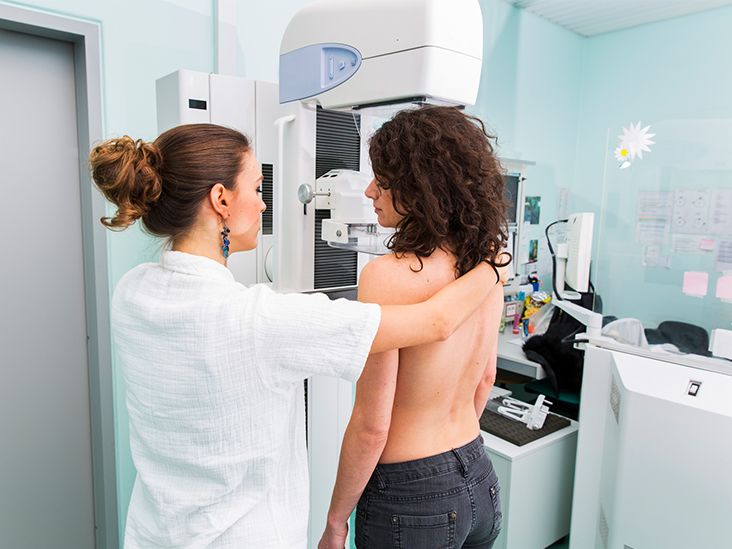
Screening means looking for cancer before symptoms appear. Mammography is the main screening tool for breast cancer. Current U.S. guidance differs slightly among organizations, but many experts recommend that average-risk women begin regular mammograms at age 40. The U.S. Preventive Services Task Force recommends screening every other year from ages 40 to 74 for women at average risk, while several radiology and breast surgery organizations support annual screening beginning at age 40.
People at higher risk may need earlier or more intensive screening, sometimes including breast MRI. Higher risk may involve known genetic mutations, strong family history, prior chest radiation, or certain high-risk biopsy findings. Dense breasts may make mammograms harder to read and may also increase risk, so people with dense breast tissue should discuss personalized screening options with their healthcare team.
How Breast Cancer Is Diagnosed
Diagnosis usually begins with a symptom, screening result, or imaging finding. A clinician may perform a breast exam and order tests such as diagnostic mammography, ultrasound, or MRI. If imaging shows a suspicious area, a biopsy is usually needed. A biopsy removes a small sample of tissue so a pathologist can examine it under a microscope.
If cancer is found, additional tests help define the tumor. Doctors often test for estrogen receptors, progesterone receptors, and HER2. They may also look at tumor grade, lymph node status, and sometimes genomic test results. These details help determine whether chemotherapy, hormone therapy, HER2-targeted therapy, immunotherapy, radiation, or surgery is most appropriate.
Treatment Options for Breast Cancer
Breast cancer treatment is personalized. The best plan depends on cancer type, stage, tumor biology, overall health, menopause status, personal preferences, and treatment goals.
Surgery
Surgery may involve lumpectomy, which removes the tumor and a margin of nearby tissue, or mastectomy, which removes most or all breast tissue. Some people also have lymph nodes removed or sampled to check whether cancer has spread. Breast reconstruction may be done at the same time as mastectomy or later.
Radiation Therapy
Radiation uses high-energy beams to destroy cancer cells. It is commonly used after lumpectomy and sometimes after mastectomy, especially when the cancer is larger or lymph nodes are involved.
Chemotherapy
Chemotherapy uses medicines that travel through the bloodstream to kill fast-growing cells. It may be given before surgery to shrink a tumor or after surgery to reduce recurrence risk. It is not needed for every breast cancer, and genomic testing may help determine whether it is likely to help in some early-stage cases.
Hormone Therapy
Hormone therapy is used for hormone receptor-positive breast cancer. It lowers hormone levels or blocks hormones from feeding cancer cells. Treatment may continue for five years or longer, depending on recurrence risk and side effects.
Targeted Therapy
Targeted therapies attack specific features of cancer cells, such as HER2. These medicines can be highly effective when the tumor has the target they are designed to treat.
Immunotherapy
Immunotherapy helps the immune system recognize and attack cancer. It may be used for certain triple-negative breast cancers and other selected cases.
Living With and After Breast Cancer
Breast cancer care does not end when the last infusion finishes or the incision heals. Follow-up visits are important to monitor for recurrence, manage side effects, support emotional health, and address long-term issues such as fatigue, lymphedema, bone health, menopause symptoms, fertility concerns, sexual health, and body image.
Survivorship is not simply “going back to normal.” Many people discover a new normal. Some feel grateful and strong. Others feel anxious every time a scan appears on the calendar. Both reactions are human. Healing is not a straight line; it is more like a grocery store receiptlonger than expected and full of items you forgot you bought.
When to Call a Doctor
Contact a healthcare professional if you notice a new lump, nipple discharge, skin dimpling, nipple inversion, breast swelling, persistent pain, or any change that feels unusual for your body. Do not wait for symptoms to become dramatic. Breast cancer does not need a thunderclap entrance to be important.
If you are due for screening, schedule it. If you are unsure when to begin mammograms, ask your clinician about your personal risk. If you have a strong family history of breast, ovarian, pancreatic, or prostate cancer, ask whether genetic counseling makes sense.
Experience-Based Guidance: What Patients Often Learn Along the Way
Many people who go through breast cancer say the hardest part is not always the treatment itselfit is the waiting. Waiting for the mammogram appointment. Waiting for the biopsy result. Waiting for the receptor test. Waiting for the treatment plan. A few days can feel like a month wearing heavy boots. One practical lesson is to ask the care team, “When should I expect results, and who will call me?” That simple question can reduce some of the mental ping-pong.
Another common experience is information overload. At diagnosis, patients may hear words like invasive, grade, HER2, sentinel node, margins, recurrence score, and metastatic in one sitting. Nobody should be expected to absorb all of that like a sponge with a medical degree. Bringing a notebook, recording questions, or asking a trusted person to attend appointments can help. A useful question is, “Can you explain what this means for my treatment decision?” That keeps the conversation focused on action, not just vocabulary.
People also learn that support looks different for everyone. One person may want friends to visit with soup, jokes, and gossip. Another may want quiet, privacy, and no surprise doorbells. It is okay to say, “I need help with rides,” or “Please do not send scary stories,” or “I love you, but I cannot discuss survival statistics today.” Clear boundaries are not rude. They are emotional seatbelts.
During treatment, side effects can become daily life managers. Fatigue may arrive suddenly. Taste may change. Skin may become sensitive during radiation. Hormone therapy may cause hot flashes, joint stiffness, mood changes, or sleep problems. Chemotherapy may affect hair, appetite, digestion, or infection risk. Many patients discover that reporting side effects early is better than trying to be “tough.” The care team may offer medications, physical therapy, nutrition guidance, cooling strategies, dose adjustments, or referrals that make treatment more manageable.
Body image is another deeply personal part of the breast cancer experience. Surgery scars, breast changes, hair loss, weight changes, and early menopause symptoms can affect confidence and intimacy. Some people feel empowered by reconstruction. Some choose not to reconstruct. Some wear prostheses. Some go flat and fabulous. There is no single correct way to look after breast cancer. The right choice is the one that supports the patient’s health, comfort, values, and sense of self.
After treatment, many survivors say everyone else expects celebration, while they feel strangely nervous. Follow-up appointments can trigger anxiety. Ordinary aches may raise frightening questions. This is common. Survivorship care plans, counseling, exercise programs, support groups, and honest conversations with clinicians can help people rebuild trust in their bodies. Recovery is not about pretending nothing happened. It is about learning how to live fully while carrying the experience with wisdom instead of fear.
The biggest lesson many patients share is this: do not face breast cancer alone if you can avoid it. Medical care treats the disease, but practical and emotional support helps carry the person. Ask questions. Get clarification. Seek a second opinion if needed. Accept help when it is useful. And remember that breast cancer is not a character test. No one earns it, fails it, or defeats it by attitude alone. Good care, good information, and good support matter.
Conclusion
Breast cancer is complex, but understanding the basics can make it less overwhelming. Symptoms may include a lump, nipple changes, skin changes, swelling, pain, or discharge, but early breast cancer may cause no symptoms. Stages range from 0 to IV and help guide treatment. Types such as invasive ductal carcinoma, invasive lobular carcinoma, HER2-positive disease, hormone receptor-positive disease, triple-negative breast cancer, inflammatory breast cancer, and Paget disease each require thoughtful evaluation.
The most important takeaway is simple: pay attention to changes, keep up with screening, know your risk, and talk with a healthcare professional when something feels off. Breast cancer care has improved dramatically, and early detection can make a major difference. Your body does not need you to panic. It needs you to listen.