

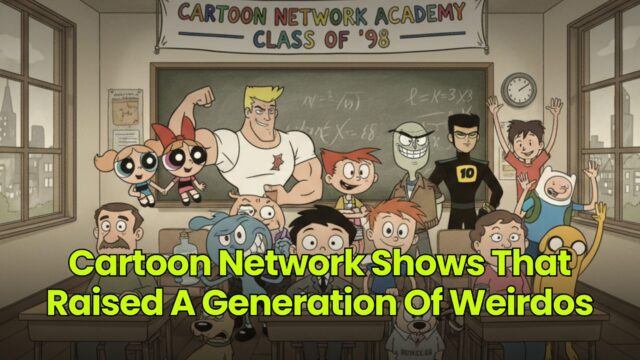
Some TV networks entertained kids. Cartoon Network quietly rearranged their brains.
If you grew up on Cartoon Network shows, there is a decent chance your sense of humor now includes surreal one-liners, unnecessary confidence, oddly specific references to candy, and the belief that a talking dog can deliver emotional truth better than half of prestige television. That is not an insult. That is a diagnosis, and honestly, it is a pretty fun one.
Cartoon Network did not build its identity on safe, generic children’s programming. It built a kingdom out of eccentric characters, visual experiments, horror-lite nightmares, deadpan absurdity, and stories that treated kids like they could handle something stranger than a singing alphabet. The result was a lineup of Cartoon Network cartoons that felt faster, weirder, smarter, and more unpredictable than almost anything else on TV.
This was the channel that made room for mad scientists, kindergarten superheroes, cowardly dogs fighting cosmic horror, and park employees who somehow turned every shift into an interdimensional disaster. It taught an entire generation that being a little odd was not a problem to fix. It was the whole vibe.
Why Cartoon Network felt different from everything else
Plenty of kids’ TV in the 1990s and 2000s was colorful and energetic, but Cartoon Network had a very specific flavor. The channel embraced creator-driven animation, bold design, and a willingness to let a premise get delightfully ridiculous. It was not afraid of silence, awkwardness, grotesque close-ups, or jokes that landed differently depending on whether you were seven, seventeen, or thirty-seven and avoiding emails.
The network’s early identity was shaped by original programming that felt handmade rather than focus-grouped. Even when the animation was simple, the imagination was not. A kid watching Cartoon Network could jump from superhero parody to suburban slapstick to samurai cinema to existential weirdness in a single afternoon. That kind of tonal whiplash should not have worked. Somehow, it absolutely did.
What made the best Cartoon Network classics stand out was not just that they were funny. It was that they were funny in deeply specific ways. One show might lean into horror and discomfort. Another might build comedy from repetition, awkward pauses, or complete social incompetence. Another might smuggle melancholy into a world full of candy people. Cartoon Network basically trained kids to appreciate style, mood, and absurdism before they had the vocabulary to explain any of it.
The Cartoon Network shows that raised a generation of weirdos
Dexter’s Laboratory turned nerdiness into chaos
Dexter’s Laboratory looked like the dream of every smart kid who had ever wanted to be left alone with a chemistry set and zero adult supervision. Dexter was a tiny genius with a hidden lab, a dramatic accent, and the eternal curse of having a sister whose primary hobby was ruining everything by being cheerful. The show mixed science-fiction parody, sibling warfare, and visual exaggeration in a way that made intelligence look cool, but never tidy.
It also helped set the tone for Cartoon Network’s creative identity. The humor was fast, the design was memorable, and the world felt like it had been built by someone with a very specific brain and no interest in making it normal. Kids loved the gadgets. Adults looking back now can appreciate how much comic timing and style it packed into every episode.
The Powerpuff Girls made cute and violent live in harmony
The Powerpuff Girls was pure Cartoon Network energy: sugar, spice, everything nice, and one accidental splash of mayhem. Blossom, Bubbles, and Buttercup were adorable, but their world was not soft. It was a superhero city full of giant monsters, absurd villains, and daily destruction, all filtered through kindergarten emotions and razor-sharp comedy.
That contrast was the magic trick. The show could be sweet, satirical, action-heavy, and hilariously petty all at once. It mocked superhero tropes while still delivering real superhero thrills. It was pastel-colored chaos with immaculate timing. A whole generation learned from this series that femininity and force were not opposites, and that saving the world before bedtime sounded stressful but possible.
Johnny Bravo proved confidence and competence are not the same thing
Johnny Bravo was a walking pair of sunglasses and bad decisions. He was the rare cartoon character who could enter every scene like a legend and leave it like a cautionary tale. The joke, of course, was that Johnny thought he was irresistible, while the universe kept handing him increasingly humiliating evidence to the contrary.
For kids, it was funny because he was loud and ridiculous. For older viewers, it was a surprisingly sharp parody of vanity, ego, and performative masculinity. Johnny Bravo was one of those best Cartoon Network shows that got away with being smarter than it looked. Beneath the hair and the hip-swiveling was a very efficient machine for making arrogance look deeply silly.
Courage the Cowardly Dog made fear weirdly lovable
Courage the Cowardly Dog may be the single strongest argument that children are much more comfortable with strangeness than adults think. On paper, it sounds unhinged: a pink dog lives in the middle of nowhere and repeatedly saves his owners from monsters, curses, demons, aliens, and whatever else decided to crawl out of the nightmare attic that week.
And yet it worked brilliantly because the emotional core was simple. Courage was terrified all the time, but he still showed up. That gave the show real heart beneath the grotesque visuals and unsettling villains. It was creepy, funny, and often weirdly tender. For many viewers, it was the first time a cartoon showed that fear was not weakness. It was just part of the job.
Ed, Edd n Eddy made suburban boredom feel epic
Ed, Edd n Eddy took a cul-de-sac, a handful of kids, and an endless parade of doomed money-making schemes and turned them into a masterpiece of noise, scams, and jawbreaker-fueled ambition. The animation stretched faces and physics until both looked optional. The storytelling made boredom feel like the beginning of a major criminal enterprise.
What made the show special was how specific its world felt. Adults were barely around. Summer seemed endless. Every social disaster felt enormous. The Eds were always trying to reinvent themselves, get rich, impress somebody, or escape the consequences of being extremely themselves. That is basically childhood, just with more screaming and plank-based engineering.
Samurai Jack proved cartoons could be artful and patient
Samurai Jack was a revelation because it trusted atmosphere. While many cartoons chased noise and speed, this one often slowed down, breathed, and let composition do the heavy lifting. Jack’s journey through a dystopian future ruled by Aku felt cinematic, mythic, and occasionally heartbreakingly lonely.
The action sequences were gorgeous, but the quieter moments mattered just as much. The show suggested that animation could be elegant, meditative, and emotionally restrained without losing kids in the process. That mattered. It broadened what people expected from a Cartoon Network series and helped prove that visual storytelling alone could hit as hard as any punchline.
Codename: Kids Next Door made childhood feel like a secret rebellion
Codename: Kids Next Door understood a universal truth: when you are a child, adults often seem like a strange and oppressive governing class with terrible policies on bedtime and vegetables. Instead of treating that feeling as a passing complaint, the show turned it into a full-blown espionage universe with treehouse headquarters, overengineered gadgets, and military-grade commitment to playground politics.
It was ridiculous in the best way, but it also captured the seriousness with which kids approach their own worlds. Every mission felt urgent because, at that age, everything does. Cartoon Network excelled at honoring that emotional scale. The network never told kids their concerns were too small. It simply gave those concerns laser-powered infrastructure.
The Grim Adventures of Billy & Mandy made dark humor kid-friendly somehow
The Grim Adventures of Billy & Mandy should not have been as charming as it was. A dim but enthusiastic boy and his deeply unimpressed friend trap the Grim Reaper in a friendship arrangement, and from there the show just keeps escalating into supernatural nonsense. It was morbid, sarcastic, and gloriously deadpan.
Mandy, in particular, felt revolutionary. She was not sweet, bubbly, or eager to learn a lesson. She was annoyed, powerful, and almost cosmically over it. Kids loved her because she was funny. Older viewers loved her because she was the human embodiment of refusing to clap during mandatory team-building exercises.
Foster’s Home for Imaginary Friends celebrated imagination with a little attitude
Foster’s Home for Imaginary Friends took an instantly lovable premise and made it weird enough to earn its place in the Cartoon Network hall of fame. A home for abandoned imaginary friends sounds sweet, and it was, but the show never got too precious. It balanced emotion with chaos, warmth with sarcasm, and fantasy with just enough everyday frustration to keep things grounded.
Bloo alone was a perfect Cartoon Network character: funny, selfish, occasionally lovable, and fully capable of causing nine separate problems before lunch. The series understood that imagination is not always tidy or wholesome. Sometimes it is messy, loud, needy, and convinced it deserves the bigger room.
Chowder and Flapjack took weirdness fully off the leash
By the time Chowder and The Marvelous Misadventures of Flapjack showed up, Cartoon Network was no longer flirting with weirdness. It had moved in, unpacked, and painted the walls a suspiciously textured color. These shows embraced mixed media visuals, strange sound design, culinary nonsense, nautical grime, and humor that often felt one inch away from a fever dream.
They were not trying to be universally cute or polished. They were trying to be memorable. And they were. Chowder turned cooking into delirious comedy. Flapjack made adventure feel sticky, salty, and slightly unsafe. Together, they pushed the channel’s visual experimentation further and paved the way for even bolder storytelling.
Adventure Time made weirdness emotional
Adventure Time arrived looking silly and ended up becoming one of the most influential animated series of its era. At first glance, it was a candy-colored fantasy about a boy and his magical dog. Spend more time with it, though, and it revealed layers of melancholy, mythology, heartbreak, and personal growth hiding under the jokes.
This is where Cartoon Network’s weirdness really matured. The series could give you a bizarre side character, a ridiculous song, and a devastating meditation on memory in the same stretch of episodes. It trusted viewers to grow with it. That made it more than a cult favorite. It became proof that so-called weird cartoons could carry emotional weight without losing their strangeness.
Regular Show made everyday boredom gloriously surreal
Regular Show was built on one of the funniest lies in television history: that anything about it was regular. Yes, the premise involved two underachieving friends working park jobs and trying to avoid responsibility. But every small problem somehow evolved into a cosmic showdown, supernatural curse, or reality-warping disaster before the end credits.
What made it sing was the tone. The humor felt older, drier, and slightly more existential than typical kids’ animation, but it remained wildly accessible. It captured the strange rhythm of drifting through early adulthood while pretending you have a plan. For viewers who grew up with Cartoon Network, it was the perfect bridge from kid chaos to young-adult chaos. Different age, same nonsense.
Why these Cartoon Network shows still matter
The legacy of these Cartoon Network shows is bigger than nostalgia. They changed expectations for television animation. They proved kids’ programming could be stylish, creator-led, emotionally layered, and unapologetically odd. They inspired later shows to take bigger aesthetic swings and trust younger audiences with stranger material.
They also helped shape internet humor before internet humor fully took over the world. Randomness, deadpan reactions, anti-jokes, visual exaggeration, emotional whiplash, character-driven absurdity, and sincere feelings hidden inside nonsense all became central parts of online culture. Cartoon Network was doing that long before everybody started communicating through memes and reaction images.
Most importantly, these series gave weird kids something incredibly useful: recognition. They suggested there was nothing wrong with loving the offbeat joke, the creepy episode, the surreal visual, or the character who never quite fit the mold. Cartoon Network did not just entertain misfits. It recruited them.
The experience of growing up with Cartoon Network weirdness
Watching Cartoon Network during its peak years was not just about seeing a good show. It was about entering a mood. You came home from school, dropped your bag somewhere irresponsible, turned on the TV, and stepped into a place where normal rules suddenly felt optional. One minute there was a genius child yelling at a machine. The next minute there was a cowardly dog trying to save his family from an unspeakable horror with the energy of someone who had already had the worst week of his life. Somehow, this all felt correct.
What made the experience memorable was the unpredictability. These shows did not always move like traditional children’s programming. Some episodes were loud and frantic. Others were quiet and eerie. Some made you laugh because a character got flattened by a door. Others made you laugh because somebody paused for two full seconds before saying something so stupid it became poetry. Cartoon Network taught viewers a flexible kind of comedy appreciation. It said, “Here is slapstick. Here is satire. Here is dread. Here is a joke that only gets funnier after you think about it on the bus tomorrow.”
There was also something weirdly communal about it. Entire friend groups ended up speaking in fragments of Cartoon Network logic. Somebody would do a dramatic voice. Somebody else would quote a character’s meltdown. Another person would make a reference that made no sense to the teacher but instantly landed with everybody who had spent enough afternoons in front of that channel. The shows became a shared language for kids who were clever, hyper, awkward, artistic, or just delightfully unserious.
For a lot of viewers, these cartoons also shaped taste long before taste becomes a thing you can name. You may not have known what “visual storytelling” meant when watching Samurai Jack, but you felt it. You may not have had the words for tonal contrast when watching The Powerpuff Girls, but you understood the thrill of something being adorable and explosive at the same time. You may not have realized Adventure Time was teaching you that silliness and sadness can coexist, but some part of your brain definitely filed that away for later.
And then there is the emotional side, which people often pretend not to have when discussing cartoons, as if admitting affection for a blue jay or a candy kingdom is somehow embarrassing. It is not. These series stuck because they offered comfort without being bland. They did not talk down to the audience. They made room for loneliness, fear, insecurity, boredom, friendship, and identity crises, then wrapped those feelings in bizarre worlds where the moon might talk back or Death might have scheduling issues.
That is why the best Cartoon Network experience still lingers. It was funny, yes, but it was also formative. It made strangeness feel creative instead of isolating. It turned imagination into a place you could live in, not just visit. And for a generation that grew up online, overstimulated, ironic, and secretly sentimental, that combination hit with suspicious accuracy. Cartoon Network did not merely raise weirdos. It gave them a cultural home base, a visual vocabulary, and a strong suspicion that the odd kids were going to be more interesting adults anyway.
Conclusion
Cartoon Network’s greatest achievement was not simply producing hit series. It was building an identity around inventive weirdness and trusting audiences to follow. From Dexter’s Laboratory to Adventure Time, from Courage the Cowardly Dog to Regular Show, the channel delivered cartoons that were funny, stylized, emotionally resonant, and gloriously off-center.
That is why these shows still matter. They were not background noise. They were taste-makers. They were personality-shapers. They were little animated permission slips telling kids that the world was far more interesting when it got strange. And honestly, they were right.