

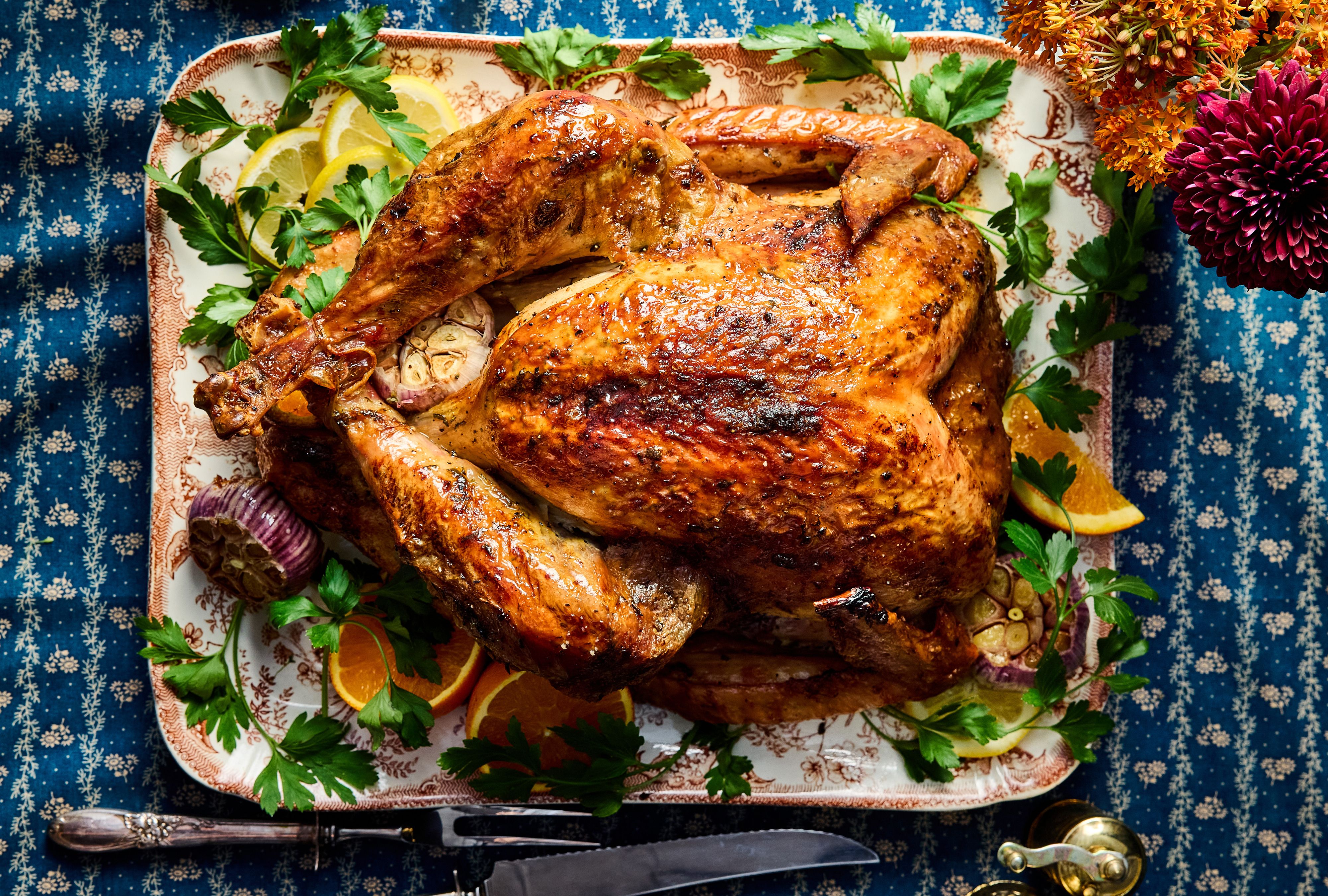
If roast turkey has ever let you down, welcome. You are among friends. Plenty of holiday birds look gorgeous on the platter and then eat like polite punishment: dry breast meat, rubbery skin, and that one relative insisting it is “tradition,” as if tradition should taste like cardboard in a sweater vest.
This Classic Roast Turkey with Herb Mayo Recipe fixes that drama with one smart twist: herb mayonnaise. It sounds slightly rebellious, maybe even suspicious, until you taste it. Mayo brings fat, seasoning power, and serious browning potential. Mixed with fresh herbs, garlic, citrus zest, and a few pantry basics, it becomes a flavorful coating that helps the turkey turn out juicy, golden, and deeply savory.
The result is everything a holiday centerpiece should be: crisp skin, tender meat, fragrant drippings, and the kind of “Wait, what did you put on this?” reaction cooks secretly live for. Below, you will find the full recipe, why the mayo method works, how to roast your turkey without panic, and the practical lessons that make the whole process feel much more manageable.
Why Herb Mayo Works So Well on Roast Turkey
Butter gets all the old-school glory, but mayo deserves a standing ovation. Because mayonnaise is an emulsion of oil, egg, and acid, it clings to the bird beautifully and carries herbs and aromatics into every nook and cranny. Instead of sliding off like melted butter sometimes does, it sticks around and helps build a deeply browned, flavorful surface.
That matters for two reasons. First, fat encourages better browning, which means a more appetizing skin. Second, the coating helps protect the outside of the bird while the inside cooks through. In plain English: your turkey gets a better shot at being moist instead of tasting like it spent the afternoon in a wind tunnel.
Fresh herbs also do a lot of heavy lifting here. A classic blend of parsley, sage, thyme, and rosemary gives the turkey that unmistakable holiday aroma, while garlic and lemon zest keep things lively. The flavor lands somewhere between traditional and quietly brilliant, which is exactly where a great roast turkey should live.
Classic Roast Turkey with Herb Mayo Ingredients
For the turkey
- 1 whole turkey, 12 to 14 pounds, fully thawed if frozen
- 2 tablespoons kosher salt, plus more to taste
- 1 teaspoon freshly ground black pepper
- 1 medium onion, quartered
- 1 lemon, quartered
- 1 head garlic, halved crosswise
- Several sprigs fresh thyme, rosemary, and sage for the cavity
For the herb mayo
- 1 1/4 cups mayonnaise
- 2 tablespoons chopped fresh parsley
- 1 tablespoon chopped fresh sage
- 1 tablespoon chopped fresh thyme
- 1 tablespoon chopped fresh rosemary
- 4 garlic cloves, finely minced or grated
- 1 teaspoon lemon zest
- 1 tablespoon lemon juice
- 1 teaspoon Dijon mustard
- 1/2 teaspoon paprika
- 1/4 teaspoon black pepper
Optional for the pan
- 2 carrots, roughly chopped
- 2 celery stalks, roughly chopped
- 1 extra onion, roughly chopped
- 1 to 2 cups low-sodium turkey or chicken stock
How to Make Classic Roast Turkey with Herb Mayo
1. Dry and season the turkey
Remove the neck and giblets. Pat the turkey very dry with paper towels, inside and out. This step is not glamorous, but it is one of the keys to crisp skin. Season the cavity and the outside of the turkey with kosher salt and black pepper. If you have time, place the seasoned turkey uncovered in the refrigerator for 12 to 24 hours. That little dry-brine window helps the skin dry out and the seasoning work its way deeper into the meat.
2. Make the herb mayo
In a bowl, stir together the mayonnaise, parsley, sage, thyme, rosemary, garlic, lemon zest, lemon juice, Dijon, paprika, and black pepper. It should smell fresh, savory, and just interesting enough to make you consider spreading it on a sandwich before the turkey ever gets near the oven. Resist. Mostly.
3. Get some flavor under the skin
Carefully loosen the skin over the turkey breast and thighs with your fingers. Spread about two-thirds of the herb mayo under the skin, rubbing it directly onto the meat. Rub the remaining herb mayo all over the outside of the turkey.
4. Fill the cavity and prep the pan
Stuff the cavity loosely with the quartered onion, lemon, halved garlic head, and fresh herb sprigs. If using carrots, celery, and onion in the roasting pan, scatter them underneath the rack. They add aroma and create more flavorful drippings for gravy.
5. Roast the turkey
Preheat the oven to 325°F. Place the turkey breast-side up on a rack in a roasting pan. Tuck the wing tips under the bird and loosely tie the legs together with kitchen twine if desired. Roast until the skin is deep golden and a thermometer inserted into the thickest part of the breast, the innermost part of the thigh, and the innermost part of the wing reads 165°F.
For a 12- to 14-pound turkey, this usually takes about 3 to 3 3/4 hours, but your thermometer matters more than the clock. If the skin is browning too quickly, tent the turkey loosely with foil during the last stretch.
6. Rest before carving
Transfer the turkey to a carving board and let it rest for 30 to 45 minutes before slicing. This is the moment where patience pays off. Cut too early and the juices flood out. Wait a little, and they stay where they belong: in your dinner instead of on the cutting board.
Simple Recipe Card
Prep time: 30 minutes, plus optional chilling time
Cook time: 3 to 3 3/4 hours
Rest time: 30 to 45 minutes
Serves: 10 to 12
Method: Roast low and steady at 325°F, rely on a thermometer, and let the herb mayo do the glamorous work.
Tips for the Best Roast Turkey Every Time
Use a fully thawed bird
A frozen turkey is not a fun surprise on roast day. Plan ahead and thaw in the refrigerator, allowing roughly one day for every 4 pounds. For a 12- to 14-pound bird, that means several days of fridge time. Put the turkey on a tray while it thaws so your refrigerator does not become a crime scene.
Dry skin equals better skin
If you only remember one turkey rule besides “do not forget it in the oven,” make it this one. Dry skin browns better. Pat the bird dry, and if possible, leave it uncovered in the refrigerator overnight before roasting.
Do not overstuff the cavity
Loose aromatics? Great. Packed stuffing? Risky and annoying. A tightly stuffed bird cooks less evenly and takes longer. Aromatics give you the fragrance without the stress.
Trust the thermometer, not turkey folklore
Pop-up timers are not the final boss of turkey doneness. A reliable thermometer is. Check the breast, thigh, and wing area. Once all three hit 165°F, you are in the safe zone and ready to rest the bird.
Skip obsessive basting
It feels productive, but opening the oven every 20 minutes can slow cooking and soften the skin. With a mayo-roasted turkey, you already have a fat-based coating doing the heavy lifting. Let the oven work in peace.
What to Serve with Herb Mayo Roast Turkey
This turkey loves the classics. Think creamy mashed potatoes, sage stuffing, roasted green beans, cranberry sauce, glazed carrots, buttery rolls, and gravy made from the pan drippings. The herb mayo adds richness, so a brighter side like citrusy Brussels sprouts or a sharp cranberry relish helps balance the plate.
For wine, go with something that plays nicely with herbs and roasted flavors, such as Pinot Noir, Chardonnay, or a dry sparkling wine. For nonalcoholic options, apple cider, sparkling water with lemon, or a tart cranberry spritzer all work beautifully.
How to Make Gravy from the Pan Drippings
While the turkey rests, skim excess fat from the roasting pan. Set the pan over two burners on medium heat, or pour the drippings into a saucepan. Add a little stock if needed, scrape up the browned bits, and bring everything to a simmer. Whisk together 2 tablespoons butter and 2 tablespoons flour in a separate pan to make a quick roux, then slowly whisk in the drippings. Simmer until thickened, taste, and adjust with salt and pepper.
If your turkey drippings are especially herby and garlicky, congratulations: your gravy just got promoted.
How to Store and Reheat Leftovers
Refrigerate leftovers within 2 hours. Slice the turkey and store it in shallow containers with a little stock or gravy to keep it from drying out. It will stay good in the refrigerator for 3 to 4 days.
To reheat, place slices in a baking dish, spoon over a little broth or gravy, cover with foil, and warm in a 300°F oven until heated through. Microwaving works, too, but the oven is kinder to texture. Leftover turkey also shines in sandwiches, pot pie, soups, casseroles, and next-day breakfast hashes that feel suspiciously luxurious.
Common Mistakes to Avoid
- Using too little seasoning: A large bird needs assertive flavor.
- Skipping the drying step: Moisture on the surface is the enemy of crispy skin.
- Roasting only by time: The clock can guide you, but the thermometer gets the final vote.
- Carving too soon: Resting is not optional if juicy slices are the goal.
- Letting leftovers linger: Holiday meals are warm and cozy; food safety should still be strict.
Why This Recipe Feels Classic Even with a Clever Twist
At its heart, this is still the roast turkey people want on a holiday table. It has the familiar herbs, the grand golden-brown look, the pan drippings for gravy, and the kitchen aroma that makes the whole house smell like celebration. The herb mayo does not turn the bird into a gimmick. It simply makes a classic recipe more reliable.
And honestly, that may be the best kind of cooking trick: not flashy, not fussy, just smart enough to save dinner.
Experience: What It Is Really Like to Make a Classic Roast Turkey with Herb Mayo
The first time I made a roast turkey with herb mayo, I had two reactions. The first was confidence. The second was suspicion. Confidence, because the mayo mixture smelled fantastic and spread like a dream. Suspicion, because “cover your holiday turkey in mayonnaise” sounds like something invented by either a genius or an uncle who also thinks jelly beans belong in chili.
Then the turkey went into the oven, and the house began to smell outrageously good. Not just “something is cooking” good, but “why does this suddenly feel like a movie Thanksgiving?” good. The garlic and herbs mellowed, the lemon brightened everything, and the bird started taking on that gorgeous bronze color much earlier than I expected. At that point, the suspicion left the building.
What stood out most was how practical the method felt. Herb mayo is easier to apply than melted butter, especially under the skin. It does not drip everywhere, it does not seize up when the turkey is cold, and it carries the herbs exactly where you want them. I was not chasing runaway rosemary leaves around a slippery countertop. I was simply coating the turkey with something that behaved itself. That alone deserves applause.
There is also a strange emotional comfort in making a turkey that looks impressive without requiring constant drama. No frantic basting every 20 minutes. No opening the oven door just to “check the vibes.” No desperate internet search for whether a turkey can somehow be both undercooked and overcooked at the same time. Once the bird was in the oven, the process felt calm. Check the temperature, tent if needed, let the skin get beautifully browned, and wait.
And then came the carving moment, which is where many turkeys break hearts. This one did not. The breast meat sliced cleanly and stayed juicy. The thighs had plenty of flavor. The skin had real texture instead of that soft, sad stretch that peels off in one floppy sheet. Every bite tasted seasoned, not just the outer half-inch. It was the kind of turkey that makes people go back for more even when the plate is already crowded with stuffing, potatoes, and pie-related ambition.
Another thing I noticed was how well the leftovers held up. Sometimes leftover turkey becomes a chew test. This one stayed tender enough for sandwiches and reheated beautifully with a splash of stock. The herb flavor even seemed better the next day, especially tucked into rolls with cranberry sauce and crisp lettuce. It was the rare turkey that felt just as welcome on Friday lunch as it did at Thursday dinner.
So yes, this recipe may raise eyebrows at first. Mayo on turkey still sounds like a culinary prank until you try it. But after one good roast, it stops sounding strange and starts sounding sensible. That is the sweet spot for a memorable holiday recipe: easy enough to repeat, good enough to crave, and clever enough to make people ask for your secret. You can tell them, of course. Or you can just smile mysteriously and pass the gravy.
Conclusion
If you want a turkey recipe that delivers classic holiday flavor with less risk and better texture, Classic Roast Turkey with Herb Mayo is an excellent choice. It takes the familiar comforts of roast turkey and gives them an upgrade that actually matters: better browning, juicier meat, and a more flavorful finish. It is still the bird everyone recognizes, just with a little more confidence and a lot less dryness.
In other words, it is classic turkey energy with a modern survival plan.