

“`
Some campuses have coffee shops where ideas are born. Caltech has a place where ideas are drilled, milled, printed, laser-cut, bolted together, tested, broken, repaired, and occasionally resurrected with a strip of duct tape and a look of academic determination. That is the spirit behind “Detoured: Caltech’s Hackerspace,” a look at the kind of hands-on engineering culture that turns equations into objects and late-night sketches into very real, very noisy machines.
Strictly speaking, Caltech’s “hackerspace” is better described as a rapid prototyping lab and machine-shop ecosystem. But in the practical language of makers, hackers, engineers, and anyone who has ever said, “I think this will work,” right before something starts smoking, it functions like a high-powered makerspace. It gives students and researchers access to tools, training, materials, and the kind of environment where building is not a bonus activity. It is part of the learning process.
This is not a decorative innovation room with beanbags and a 3D printer that has been jammed since 2019. Caltech’s fabrication culture is tied directly to research, undergraduate design courses, robotics competitions, and the broader mission of turning technical imagination into working systems. It is where theoretical confidence meets aluminum stock, where CAD files meet tolerances, and where students discover that “simple mechanism” is one of the most suspicious phrases in engineering.
What Is Caltech’s Hackerspace, Really?
The phrase “Caltech’s hackerspace” became widely recognizable through Hackaday’s 2018 “Detoured” feature, which described a visit by the SupplyFrame Design Lab to Caltech’s rapid prototyping environment. The article made one thing clear: this space was not merely a casual hobby room. It supported graduate research, undergraduate learning, and student-built machines that needed to do more than look impressive in a slide deck.
At its core, the space exists because research needs things. Not just ideas. Not just simulations. Physical things. Researchers may need custom fixtures for biomechanics, parts for seismology experiments, components for radio telescope work, or mechanical assemblies that do not exist in any catalog because the catalog, tragically, was not designed around their very strange and very specific experiment.
That is where a rapid prototyping lab becomes essential. It gives researchers a way to move from “we need a part” to “we made a part,” without waiting for a faraway supplier to interpret a design that may change twice before breakfast. For undergraduates, the same environment becomes a training ground where they learn how design choices behave in the real world. Spoiler: the real world has friction, flex, gravity, thermal expansion, and a personal vendetta against loose fasteners.
Why a Hackerspace Matters at a Place Like Caltech
Caltech is famous for deep science, intense academics, and a student body that treats problem sets like extreme sports. But a place devoted to science and engineering cannot live on theory alone. The real magic happens when students can test whether their beautiful calculations survive contact with metal, plastic, wiring, motors, bearings, sensors, and the occasional catastrophic design review.
A hackerspace or makerspace matters because it changes the rhythm of learning. Instead of stopping at “I understand the concept,” students can push toward “I built the prototype.” That shift is enormous. It forces decisions about materials, tolerances, cost, assembly, safety, and repairability. It also teaches humility, a underrated engineering material available in unlimited supply.
Educational makerspaces are often described as shared places where people gather to use tools, exchange knowledge, build projects, and learn from one another. In a university setting, that model becomes even more powerful. It can connect coursework, research, entrepreneurship, and peer-to-peer learning in a single physical environment. For Caltech, the value is especially clear: students are surrounded by world-class theory, but they also need places where theory gets its hands dirty.
The Tools: Where Old-School Metal Meets Modern Prototyping
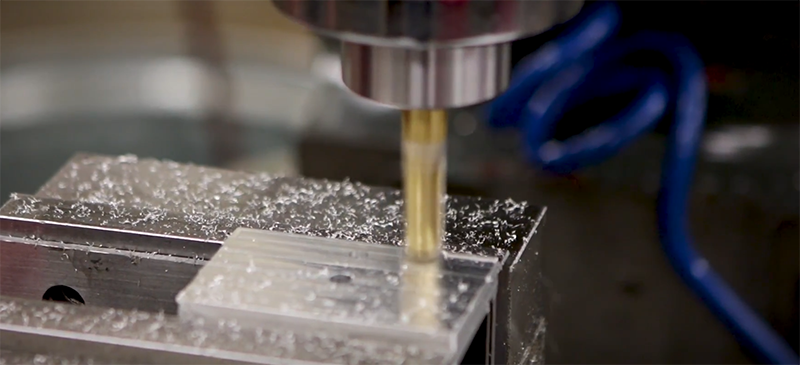
One of the most charming details in descriptions of Caltech’s prototyping environment is the mix of older and newer machines. That combination tells a story. A shop with only brand-new tools can feel like a showroom. A shop with only ancient tools can feel like a museum where the machines might be haunted by retired machinists. Caltech’s fabrication environment has the more useful blend: manual lathes, knee mills, drill presses, CNC equipment, Tormach mills, laser cutters, 3D printers, and other tools that cover both classic machining and modern digital fabrication.
This variety matters because different problems require different methods. A 3D printer is wonderful for fast iteration, custom shapes, lightweight prototypes, and parts that need to exist before lunch. A laser cutter is excellent for flat patterns, acrylic, plywood, cardboard mockups, and quick mechanical layouts. A waterjet cutter can handle tougher materials and more serious profiles. A manual mill or lathe teaches students how material actually behaves under a cutting tool, which is a lesson no simulation should be allowed to skip.
In Caltech’s Mechanical Prototyping course, students are introduced to manual machining as well as computer-controlled prototyping technologies such as 3D printing, laser cutting, and water jet cutting. They also receive safety training and hands-on demonstrations before constructing prototypes using the Mechanical Engineering Machine Shop. That combination of access and instruction is critical. A good makerspace is not simply a room full of expensive objects. It is a learning system with supervision, rules, culture, and a shared respect for the fact that machines do not care how smart anyone is.
From Coursework to Competition: ME 72 and the Culture of Build-Test-Repeat
If Caltech’s hackerspace spirit needs a mascot, it might be a slightly battered student robot rolling bravely into a competition field. Caltech’s ME 72 Engineering Design Competition is one of the clearest examples of hands-on learning in action. Teams of mechanical and civil engineering students design, fabricate, test, and iterate robotic systems for a public tournament. The format changes, but the core lesson remains: engineering is a full-contact conversation between ambition and reality.
Recent ME 72 competitions show just how lively that conversation can be. In 2025, students built remote-controlled robots for a Bot Hockey challenge on a ferromagnetic rink. The event demanded speed, traction, strategy, durability, and enough repair skills to survive the inevitable shower of screws, acrylic bits, and emotional damage. In 2026, the 41st annual competition challenged robots to climb a steel-skinned pyramid, collect pellets, deposit payloads, and compete for points in a fast-moving arena.
These projects are not just entertaining campus spectacles, although they are absolutely that too. They are condensed engineering experiences. Students must define a concept, defend it in design reviews, build it, test it, watch it fail, revise it, and send it back into battle with the optimism of people who have slept very little but learned a great deal.
Research Needs a Place to Make Weird Parts
One reason Caltech’s rapid prototyping environment is so interesting is that it serves both education and research. University research often moves faster than commercial supply chains and asks for devices that no standard manufacturer has thought to sell. A graduate student may need a bracket with unusual geometry, a precisely aligned sensor mount, a test fixture for a delicate sample, or a structural part for an instrument headed into an extreme environment.
That is where in-house fabrication becomes more than convenient. It becomes intellectually productive. When researchers can make and revise parts quickly, experiments evolve faster. A failed prototype is not a dead end; it is feedback. A redesigned part can be machined, printed, cut, or assembled, then tested again. This shortens the distance between hypothesis and evidence.
It also encourages better communication between designers and builders. In the best shop cultures, students learn to explain not only what they want but why they want it. Machinists, instructors, teaching assistants, and experienced peers can often spot problems before a part is made. They may ask whether a wall is too thin, whether a hole is reachable, whether a tolerance is realistic, or whether the assembly can actually be assembled by human hands rather than by a team of microscopic wizards.
The Resnick Maker Space and the Expanding Definition of Making
Caltech’s maker culture is not frozen in one room or one era. The Resnick Sustainability Institute’s Maker Space shows how fabrication resources continue to expand around modern research and innovation needs. Its listed equipment includes tools such as desktop CNC machines, a Tormach PCNC 440, a Wazer Pro waterjet cutter, Bambu Lab 3D printers, a reflow oven, a programmable vacuum oven, hand tools, and other manual and automated equipment.
This matters because the modern makerspace is increasingly interdisciplinary. Mechanical parts still matter, but so do electronics, materials, sustainability prototypes, sensors, lab fixtures, and hybrid systems that combine software with hardware. A student working on clean energy may need a housing for a sensor array. A research team may need a custom test jig. An entrepreneurial project may need a minimum viable prototype that looks less like a pile of wires and more like something an investor can touch without flinching.
In that sense, Caltech’s hackerspace story is not just about a single lab. It is about a campus-wide attitude toward making. Build the thing. Test the thing. Improve the thing. Try not to name the thing until it survives at least one full demonstration.
Caltech Robotics: Where Whiteboards Become Moving Targets
The Caltech Robotics Team adds another layer to this hands-on ecosystem. The team describes its mission as giving students the chance to design, prototype, and compete with robots of many shapes and sizes. That language captures the heart of a good engineering makerspace: the transition from whiteboard to workshop.
Robotics is especially suited to hackerspace learning because it refuses to stay in one lane. A robot is mechanical engineering, electrical engineering, computer science, controls, design, manufacturing, systems integration, and project management all rolled into one stubborn little machine. It asks students to understand torque, code sensors, manage batteries, mount components, design chassis, route wires, and debug failures that somehow happen only when other people are watching.
That complexity makes robotics an ideal training ground. In a classroom, students can isolate topics. In a shop, topics gang up. A software bug may reveal a mechanical flaw. A drivetrain decision may create a power problem. A beautiful CAD model may be impossible to service. The result is a richer kind of learning, one that rewards both technical depth and practical judgment.
Why “Detoured” Is the Perfect Word
The title “Detoured” works because a hackerspace is, in the best possible way, a detour from the straight road of formal instruction. Students may arrive with an assignment, a research need, or a competition deadline. But along the way, they pick up lessons that are difficult to schedule in a syllabus.
They learn that material selection changes everything. They learn that the first version of a design is often just a polite introduction to the second version. They learn that tolerances are not decorative numbers. They learn that safety training is not bureaucracy; it is the reason everyone gets to keep enjoying fingers. They learn that collaboration is not a soft skill but a survival strategy.
A makerspace detour also changes how students see failure. In purely theoretical settings, failure can feel like a red mark. In a shop, failure is data with a smell. Burnt electronics, cracked acrylic, stripped threads, and wobbly wheels all provide information. The best students do not simply avoid failure; they learn to fail early, diagnose clearly, and iterate intelligently.
What Other Universities Can Learn from Caltech’s Shop Culture
Caltech’s example offers several lessons for universities that want makerspaces to be more than trendy campus amenities. First, tools need context. A laser cutter sitting alone in a locked room does not create a maker culture. Students need training, project pathways, safety systems, knowledgeable staff, and reasons to build.
Second, makerspaces work best when connected to real academic and research goals. Caltech’s fabrication resources are tied to courses, capstone competitions, robotics work, and research needs. That gives the space purpose. Students are not just experimenting randomly; they are learning skills that support serious engineering outcomes.
Third, the human layer matters. A good shop depends on instructors, machinists, technicians, teaching assistants, mentors, and peers who keep knowledge moving. The machines may get the glamour shots, but the culture is built by people who know how to help a student turn a vague idea into a manufacturable part.
Finally, universities should respect the value of hands-on confidence. Students who have built real prototypes carry themselves differently. They know what a drawing needs before it goes to fabrication. They know why assembly order matters. They know how long “just one quick modification” can actually take. That practical wisdom makes them better engineers, researchers, founders, and collaborators.
Experiences Related to “Detoured: Caltech’s Hackerspace”
The experience of entering a serious university hackerspace for the first time is usually a mix of inspiration and mild intimidation. You see the tools before you understand the culture. The CNC machines look precise and expensive. The lathes look like they were built during an era when equipment expected respect and possibly a firm handshake. The laser cutter seems friendly until someone explains ventilation, focus height, material restrictions, and why certain plastics are not allowed unless you want the room to smell like regret.
But after the first shock, the space starts to feel less like a machine zoo and more like a classroom with sharper edges. A student might begin with something small: a bracket, a wheel hub, a laser-cut test plate, a 3D-printed enclosure. At first, every step feels ceremonial. Measure twice. Ask three questions. Re-check the drawing. Discover the units were wrong. Pretend this is part of the scientific method. Then try again.
That cycle is the real education. The first prototype may be ugly, but it is honest. It tells the student what the sketch did not. Maybe the part flexes. Maybe the holes do not line up. Maybe the motor mount works perfectly until torque enters the chat. Each problem creates a new question, and each question sends the student deeper into design thinking.
In a place like Caltech, that experience becomes even more intense because the surrounding expectations are high. Students are not building toys in the dismissive sense. They may be building robots for competition, fixtures for experiments, test rigs for research, or devices that connect to larger scientific goals. The shop becomes a bridge between intellectual ambition and physical evidence.
One of the most valuable experiences in a hackerspace is learning how to ask for help. Beginners often believe expertise means never needing assistance. The shop teaches the opposite. Good engineers ask better questions. They consult machinists about process, ask peers about design choices, and listen when someone says, “That will be hard to clamp,” which is shop language for “Please rethink your life choices before we all suffer.”
Another memorable experience is discovering that iteration has a rhythm. The first design is excitement. The first failure is disappointment. The second design is strategy. The third failure is education. Somewhere around the fourth version, students stop treating revision as a personal insult and start treating it as the normal path to a working machine. That mindset is priceless.
The best hackerspace experiences also create stories. Someone’s robot climbs when it was expected to slide. Someone’s “temporary” duct-tape fix survives the final round. Someone spends hours chasing a software bug only to find a loose connector. Someone learns that a beautiful part can still be useless if it cannot be assembled. These moments are funny later, stressful in real time, and deeply formative.
That is why “Detoured: Caltech’s Hackerspace” is more than a tour of machines. It captures a broader truth about engineering education. The detour into the shop is not a distraction from learning. It is where learning becomes durable. Students leave with more than finished parts. They leave with judgment, resilience, practical confidence, and a healthy suspicion of any design that has not yet met reality.
Conclusion
Caltech’s hackerspace story is really the story of modern engineering education at its best. It blends research support, undergraduate training, robotics culture, rapid prototyping, and the maker mindset into a practical ecosystem where ideas are expected to become objects. Whether the work involves a research fixture, a student robot, a sustainability prototype, or a part that exists only because no catalog could possibly predict it, the lesson is the same: building changes thinking.
The beauty of a place like Caltech’s rapid prototyping lab is not just the machinery. It is the culture of trying, testing, fixing, and trying again. In a world full of polished renderings and pitch decks, that kind of hands-on discipline is refreshing. It reminds us that innovation is not a buzzword floating gently through the air. Sometimes it is a student in safety glasses, holding a newly machined part, wondering whether this version will finally work.
Note: This article is an original, publication-ready synthesis based on publicly available information about Caltech’s rapid prototyping, makerspace, machine-shop, robotics, and engineering design culture.
“`