

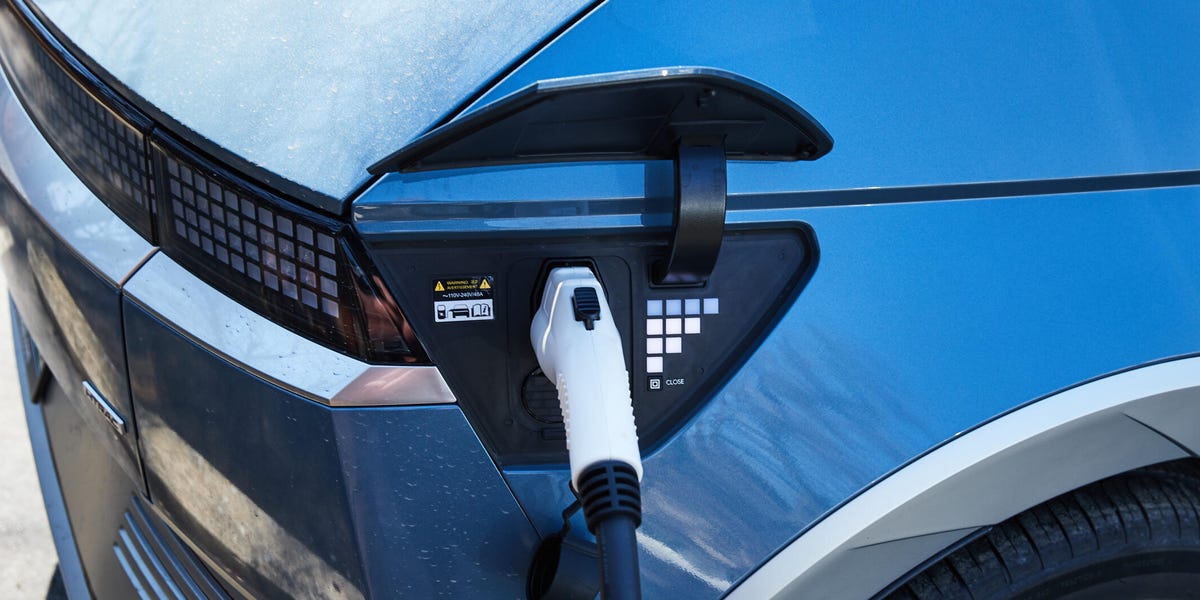
Refueling used to be simple: you pulled up, pumped dinosaur juice for a few minutes, bought a questionable hot dog, and drove off pretending the check-engine light was “just a vibe.” Then EVs showed up and said, “What if refueling happened while you sleep?” and gas pumps collectively whispered, “Rude.”
If you’re trying to compare EV charging vs. gas pumps, you’re really comparing two systems that solve the same problem in totally different ways: one is a quick pit stop, the other is a time-shifted habit. Let’s break it down with real-world numbers, practical examples, and the kind of honesty that doesn’t fit on a dealership window sticker.
At a Glance: The “I Just Want the Answer” Comparison
| Category | EV Charging | Gas Pumps |
|---|---|---|
| Typical “refuel” time | Home: hours (hands-off). Fast charge: ~20–60 minutes for a meaningful top-up. | Usually ~5 minutes to fill up (plus whatever line + snack detours happen). |
| Where it happens | Mostly at home/work; public charging for road trips and backups. | Almost always at a station. |
| Daily convenience | High if you can plug in at home. Mixed if you rely on public chargers. | Consistent and familiar, but you must make trips to the station. |
| Cost per mile | Often lower at home; public fast charging can narrow the gap. | Depends heavily on gas prices and mpg. |
| Reliability pain points | Broken stalls, app/payment hiccups, shared chargers, charge-speed variability. | Occasional pump issues, but the experience is standardized. |
| Emissions | No tailpipe emissions; overall depends on how electricity is generated. | Tailpipe emissions are direct and unavoidable. |
Speed: Minutes vs. Minutes-Plus-Life
Gas pumps are fastby design
The gas pump experience is basically a speedrun: pull in, insert card, fill tank, leave. In the U.S., pump flow rates are commonly around 8–10 gallons per minute, with a regulatory limit of 10 gallons per minute at many stations. That’s why a 12-gallon fill can be done in just a few minutesassuming you don’t decide your car “deserves” the premium fuel it absolutely does not.
EV charging speed depends on the charger (and the battery’s mood)
EV charging is not one speedit’s a menu:
- Level 1 (120V): slow. Think “emergency trickle” or “I drive 10 miles a day and I am extremely patient.”
- Level 2 (240V): the sweet spot for home and many workplaces. Often adds roughly 20–30 miles of range per hour, depending on the vehicle and setup.
- DC fast charging: the road-trip tool. It can add a lot of range quickly, but it’s also the most variable: your car’s max charge rate, the charger’s power, battery temperature, and how full the battery already is all matter.
Here’s the part that confuses people at first: EVs usually charge fastest in the middle of the battery, not at the top. That’s why you’ll hear drivers talk about charging from 10% to 80% instead of “fill it up all the way.” The last 20% can take disproportionately longerlike a group project where the final slide somehow takes half the night.
In practical terms, many EV road-trip stops are built around a 20–40 minute window to get back on the highway with enough buffer. Some cars are charging champs; others are… let’s say “more into scenic breaks.” (You can still road-trip in them. You’ll just know every good restroom along I-95 on a first-name basis.)
Convenience: The Real Battle Is “Where” Not “How Fast”
Home charging is the EV superpower
The biggest advantage EVs have over gas cars is that you can refuel at home. You don’t “go get electricity” the way you go get gasyou plug in, go inside, and continue your life.
If you have a driveway or garage and access to Level 2 charging, your daily routine can look like this: drive all day, plug in at night, wake up with a “full tank.” That’s not just convenient; it changes how you think about fueling. Instead of a weekly errand, it becomes a background tasklike charging your phone, except the phone is two tons and has heated seats.
If you can’t charge at home, the equation changes
Apartment living, street parking, or limited workplace charging can turn EV fueling into a planned activity again. You may rely on public stations, which introduces:
- Availability: Is a stall open when you arrive?
- Reliability: Will it actually work and deliver the expected speed?
- Time: Can you pair charging with errands, meals, or work time?
- Pricing: Is it billed per kWh, per minute, or with idle fees?
The “best” EV experience usually means you have a predictable place to plug in most days. If you don’t, a hybridor choosing an EV only after you’ve solved charging accesscan be the less stressful move. (Stress is expensive. It’s not on the invoice, but it’s definitely in your shoulders.)
Cost: What You Pay (and When You Pay It)
People love to compare “a full charge” to “a full tank,” but that’s not always apples-to-apples because EV batteries and gas tanks come in wildly different sizes. A better comparison is cost per mile.
A simple, realistic example
Let’s pretend you’re comparing two typical daily drivers:
- Gas car: 30 mpg
- EV: 0.30 kWh per mile (about 30 kWh per 100 miles)
Now plug in some common U.S. pricing:
- Gas at $3.20/gallon → $3.20 / 30 mpg ≈ $0.107 per mile
- Home electricity at $0.17/kWh → 0.30 × $0.17 ≈ $0.051 per mile
That’s why many drivers feel EVs are cheaper “to fuel” when charging at home. But here’s the twist: public fast charging can cost more than home chargingsometimes enough to make the EV feel closer to gas costs, especially if the station prices are high or if you charge during peak times.
Time-of-use rates: the “EV coupon” most people forget
Many utilities offer cheaper electricity overnight. EVs love this because most cars are parked at night anyway. If you can charge off-peak, your per-mile cost can drop further. That’s a quiet advantage gas pumps can’t replicate, because gas stations don’t typically say, “Come back at 2 a.m. and we’ll knock 30% off, king.”
Reliability and Friction: When Refueling Isn’t Just Refueling
Gas stations are standardized; EV charging is getting there
Gas pumps have had a century to become boring in the best way. EV charging is newer, and it shows: you might use an app, tap-to-pay, or a membership card; you might hit a charger that’s throttled, occupied, or out of service.
The good news is reliability and customer experience have been improving in recent yearsespecially for fast charging. The not-as-fun news is that payment friction and “why is this station doing that?” moments still happen, and they’re extra annoying because you’re not just losing timeyou’re losing confidence.
Charging etiquette: the unspoken rules
With gas pumps, the rule is simple: fill up and move. With EV chargers, there are more social norms:
- Don’t charge to 100% at a busy fast charger unless you really need it.
- Move when you’re done (idle fees exist for a reason).
- Plan a buffer so you’re not arriving at 1% battery and sweating through your shirt.
In other words: EV charging works best when you treat it like a shared resource, not like your personal wall outlet at home.
Road Trips: The Moment Everyone Brings Up
If your driving is mostly commuting, errands, and normal life, EVs can be incredibly convenient. But road trips are where the comparison gets spicy.
Gas road trips: fewer variables
Gas stations are everywhere, refueling is fast, and you don’t care much about “pump speed.” Your planning is basically: “I’ll stop when I’m hungry or when the needle gets low.”
EV road trips: more planning, different rhythm
EV road trips can be greatquiet cabin, instant torque, fewer mechanical worriesbut your stops are usually longer and more intentional. A typical rhythm looks like:
- Start with a high state of charge (especially if you charged at home overnight).
- Drive 2–3 hours.
- Stop for 20–40 minutes (bathroom + food + charge), then repeat.
For many families, that stop rhythm isn’t a downside; it’s what they should be doing anyway. For people who drive 6 hours fueled only by spite and caffeinated beverages, EV charging can feel like a personal attack.
Emissions and Energy: It’s Not Just “Clean” vs “Dirty”
Gasoline produces tailpipe emissions every time you drive. A commonly cited EPA figure is roughly 8,887 grams of CO₂ per gallon of gasoline. EVs have no tailpipe emissions, but the electricity that charges them comes from a mix of sources that varies by region.
The practical takeaway isn’t “EVs are perfect.” It’s this: EVs shift emissions upstream to the power grid, which can get cleaner over time as more low-carbon sources are added. A gas car can’t “get cleaner” as the years go by; it’s married to gasoline forever. (Some relationships are just toxic.)
Infrastructure: Why Chargers Don’t Look Like Gas Stations (Yet)
Gas stations are optimized for fast turnover. EV charging sites are often optimized for “you’ll be here a while,” which means: more parking-style layouts, places to walk, and ideally nearby bathrooms, food, and lighting.
The future is likely a mix:
- Home and workplace charging handling most daily needs.
- DC fast charging corridors supporting travel and drivers without home access.
- Better standardization in connectors and payments to reduce friction.
On connectors: the U.S. has been moving toward more consistency with modern standards, including the SAE J3400 connector (often associated with the North American Charging Standard ecosystem). The goal is simple: fewer “will this plug fit?” moments, more “tap, charge, leave.”
So… Which One Wins?
It depends on your life, not your vibe.
EV charging tends to “win” if you:
- Can charge at home (or reliably at work)
- Drive a predictable daily routine
- Want lower routine fueling costs and fewer maintenance items
- Don’t mind planning road-trip stops a bit more
Gas pumps tend to “win” if you:
- Can’t charge at home and don’t have reliable charging nearby
- Take frequent long road trips on tight schedules
- Need fast refueling with minimal planning
- Live in areas where public charging is sparse or inconsistent
And if you’re stuck in the middle? Hybrids and plug-in hybrids exist for exactly that reason: they’re a compromise, but sometimes compromises are just “reality with fewer headaches.”
Conclusion
Key takeaways
Gas pumps dominate speed and standardization. You can refuel in minutes almost anywhere, and the process is beautifully boring. EV charging flips the script: it’s slower per stop, but it can be dramatically more convenient because much of it happens while you’re doing something elseespecially at home. Cost often favors EVs when charging at home, while public fast charging can reduce or even erase that advantage depending on local pricing and habits.
The best choice isn’t about winning an argument online. It’s about matching your car to your life: where you park, how you drive, and whether you want fueling to be a weekly errand or a background process.
Real-world experiences (extra ~)
Picture two neighbors: Alex drives a gas sedan, Jordan drives an EV. Alex’s weekly routine is familiaron the way home, they swing into a station, spend five minutes fueling, and leave with a receipt that looks like it was printed on a calculator from 1997. It’s fast, predictable, and totally detached from their home life. If Alex forgets to refuel, it’s still not a crisis because gas stations are everywhere and refueling is quick. The “experience” is basically a tiny chore with a consistent outcome.
Jordan’s EV routine feels different. Most nights, Jordan plugs in at home and walks awayno extra trip, no detour, no “I’ll do it tomorrow” bargaining with the fuel gauge. The first time this happens, it’s weirdly satisfying, like discovering your laundry folded itself. Over time, it becomes normal: you stop thinking about fueling entirely, the way you don’t think about your phone being charged until the one day it isn’t.
Now fast-forward to a road trip. Alex hits the highway and stops whenever hunger or a low tank suggests it. Alex’s refuel break is short enough that it barely changes arrival time. Jordan’s EV road trip has a different rhythm: stops are longer, but they’re often more useful. Instead of “fuel and go,” it’s “bathroom, coffee, stretch, charge.” When everything goes smoothly, it feels intentionalalmost healthier. When it doesn’t, it’s memorable in the way you don’t want: arriving at a busy station, realizing one stall is out of service, another is occupied by someone charging to 100% while they shop for furniture, and suddenly your “quick stop” becomes an episode.
There are also small moments that define each system. On cold mornings, some EV drivers notice charging can be slower until the battery warms up, so a “short top-up” might turn into a “longer top-up.” On the gas side, the “moment” is price volatilitywatching the pump climb and mentally subtracting dollars from your weekend plans. EV charging has its own version: you might see a public fast-charging price that makes you think, “Wow, electrons are feeling expensive today.”
The most telling experiences come from daily life. If you can charge at home, EV charging feels like a cheat code: your car starts each day ready, and your “fuel station” is literally where you keep your socks. If you can’t charge at home, public charging becomes your fueling reality, and the experience can resemble gas ownership againexcept the stops are longer and the ecosystem can be more inconsistent. That’s why two people can drive the same model EV and have wildly different opinions: one is living the effortless plug-in dream, and the other is managing a weekly “charging appointment” like it’s a haircut they didn’t ask for.
In the end, EV charging versus gas pumps isn’t just technologyit’s lifestyle. The “best” experience is the one that fits your parking situation, your schedule, and your patience level. Because whether you’re pumping gas or plugging in, nobody wants fueling to be the main character of their day.