

If you’ve ever tried to explain Marvel’s TV strategy to a friend, you’ve probably watched their eyes glaze over somewhere
between “corporate restructuring” and “wait, is that show canon now?” That reaction is fair. For a company that turned
the concept of a shared universe into an industrial-strength money printer, Marvel’s relationship with television has
beenhow do we put this delicatelyan extended learning experience with a few faceplants, a couple of glow-ups, and at
least one era where everything felt like required reading.
This is the story of how Marvel wandered from network tie-ins to prestige streaming, from “six-hour movies” to something
that finally resembles… television. It’s not just a tale of superheroes. It’s a tale of formats, incentives, and what
happens when you try to apply a blockbuster assembly line to a medium built on patience, character, and the occasional
bottle episode where nobody punches anyone and the world still feels larger afterward.
Marvel’s TV Problem Was Never Just About Superheroes
On paper, Marvel should dominate TV. The comics are basically an endless supply of episodic storytelling: cliffhangers,
subplots, rotating casts, and dramatic reveals that land like a midseason finale. But TV isn’t just “movies, chopped into
chapters.” It’s an ecosystemwriters’ rooms, showrunners, network notes, seasonal arcs, and the slow magic of letting an
audience live with characters week after week.
For years, Marvel’s challenge wasn’t a lack of material. It was deciding what kind of television it wanted to
makeand who was actually in charge of making it.
Phase One: The Network EraWhen TV Was the MCU’s Younger Sibling
TV as “Synergy,” Not the Main Event
In the early days of the MCU, television often felt like a companion product: a place to expand the world, keep fans busy
between movies, and maybejust maybereference something big happening on the film side. The most famous example is
Agents of S.H.I.E.L.D., a series that launched with a simple promise: what happens in the movies matters
here, too.
The reality was messier. Network schedules demand lots of episodes. Big MCU events happen on film timelines. And secrecy
is the MCU’s love language. The result: TV writers frequently had to build stories in the dark, then pivot when movies
dropped a new status quo. When it worked, it felt like shared-universe magic. When it didn’t, it felt like your friend
telling you “I’ll text you later” and then moving to a new phone plan.
Why It Still Mattered
Even with constraints, the network era proved something crucial: audiences would show up for Marvel in long-form. Not
everyone needs a $200 million budget and a sky beam. Sometimes people want character arcs, emotional consequences, and
the slow burn of a team learning to trust each otherpreferably while arguing in a hallway.
Phase Two: The Streaming DetourMarvel Learns the Power of Tone
The Netflix Years: Grittier Streets, Sharper Identity
Then came the streaming boom, and with it, Marvel’s darker, street-level run. The Netflix era brought a different flavor:
less cosmic fireworks, more bruised knuckles. Shows like The Punisher leaned into intensity and
consequence in a way network TV rarely could.
Creatively, this was a key turning point: Marvel television could be more than a side dish. It could have its own tone,
its own pacing, its own audience. The downside was strategic whiplash. As Marvel’s corporate priorities shifted toward
building a flagship streaming platform elsewhere, this whole pocket of storytelling started to feel… temporary.
The Hidden Issue: Different Labels, Different Goals
Behind the scenes, Marvel’s TV identity was split across teams and corporate reporting lines. That matters more than fans
want to hear, but it shapes everything: budgets, creative control, crossovers, and whether the left hand is even allowed
to know what the right hand is doing. Marvel had TV success, but not one unified TV mission.
The Corporate Reset: When Marvel Tried to Put TV Under One Roof
Eventually, Marvel’s TV operations were consolidated under the same umbrella as the film side. This was supposed to fix
the “two universes, one brand” problem. And in a way, it didbecause suddenly the people steering the movies were also
steering the shows.
But it also introduced a new challenge: the MCU’s film approach is designed for big, finite arcs. Television thrives on
iteration. Movies aim for “must-see event.” TV aims for “come back next week.” Treating TV like a long movie can work
for a while. But it can also produce a strange, floaty feeling where episodes have the structure of a chapter but not
the satisfaction of a meal.
Phase Three: The Disney+ Era“Six-Hour Movies” and the Homework Problem
WandaVision: A Brilliant First Swing
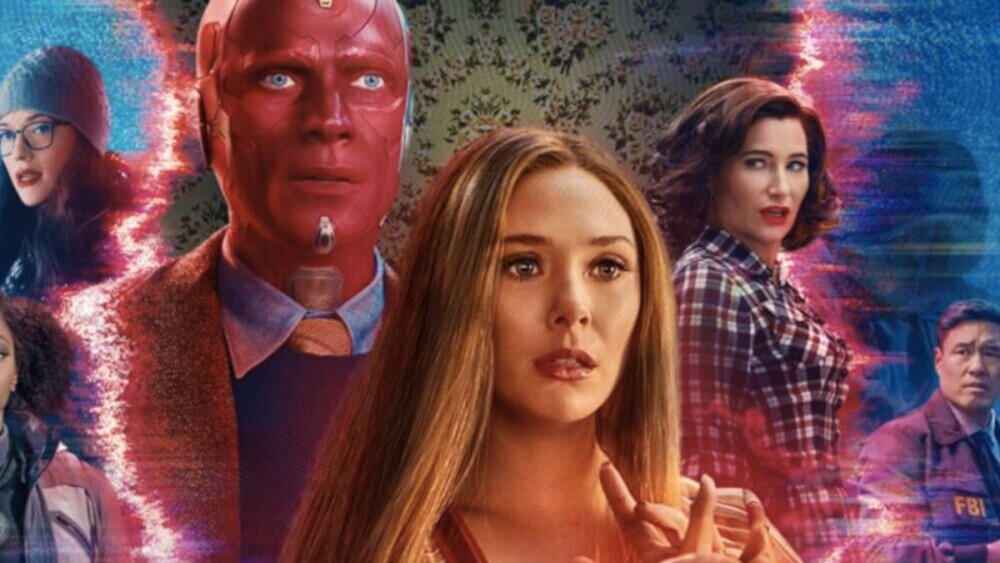
Marvel’s first big statement in the streaming era was WandaVision, and it was a flex. It used television
as television: eras, formats, episode-to-episode experimentation, and the slow reveal of what was actually going
on. It wasn’t just “a movie divided into parts.” It was a show that understood why TV is its own art form.
That early success raised expectationsand quietly set a trap. If every Marvel series needed to feel like a must-watch
puzzle box that connects to the next movie, the number of “required” hours would explode. And explode it did.
Quantity vs. Clarity
The more the slate grew, the more casual audiences felt like they needed a study guide. When people say “Marvel fatigue,”
they often mean “I’m not tired of superheroes; I’m tired of feeling behind.” Too many interconnected releases can turn
fun into obligation. Even diehards can start sounding like exhausted graduate students: “I loved it, but I need to rewatch
three episodes and read two explainer threads before next week.”
That pressure hit production, too. In a high-output machine, everything becomes a deadline, and every delay becomes a
domino. Television schedules are already brutal. Add blockbuster expectations and a constant stream of releases, and you
get a system that’s fighting itself.
The Big Turning Point: Marvel Starts Acting Like a TV Studio
The “Daredevil: Born Again” Wake-Up Call
At some point, Marvel looked at its own process and realized something that every TV veteran already knows: you can’t
brute-force television. That realization became very public with Daredevil: Born Again, a project that
reportedly underwent a major creative overhaulnew creative leadership, a new direction, and a pivot toward a more
traditional TV structure.
This wasn’t just about one show. It was a sign that Marvel was adjusting its development philosophy: fewer “film-style”
limited series built all at once, more series built with showrunners, clearer season architecture, and the willingness to
treat episode-to-episode storytelling as the main enginenot an afterthought.
Showrunners, Pilots, and the Radical Idea of Planning
Traditional television relies on a simple, powerful concept: someone owns the voice of the show. That person (or team)
builds the season arc, manages tone, and keeps the whole thing coherent even when the inevitable chaos hits. In many
earlier MCU shows, the “voice” could feel distributedlike a relay race where the baton was also a glowing Infinity
Stone and nobody agreed on the map.
Moving toward pilots, show bibles, and showrunner-led structure isn’t glamorous. It’s not a Comic-Con trailer moment.
It’s the behind-the-scenes discipline that makes a season feel like a story instead of a slideshow of cool scenes.
Decoupling Without Disappearing: Making TV That’s Welcoming Again
Agatha All Along and the “You Don’t Need a Ph.D.” Strategy
The next evolution wasn’t just production. It was positioning. The MCU made its name on everything connecting,
but too much connectivity can shrink the audience to only the most committed fans. A smarter approach is to let shows be
friendly entry points: rewarding for longtime viewers, understandable for newcomers.
That’s where projects like Agatha All Along become instructive. Instead of insisting every series is a
mandatory steppingstone to the next movie, Marvel began leaning into character-driven stories that can stand on their
ownwithout severing ties to the larger universe. Think of it like living in a city: you don’t need to tour every
apartment to enjoy the neighborhood.
So… Has Marvel Finally Figured Out Television?
“Figured out” is a dangerous phrase in entertainment. The moment you say it, a streaming algorithm hears you and
immediately cancels three shows out of spite. But Marvel’s direction has become clearer:
- Make fewer shows so each one feels like an event, not an assignment.
- Embrace showrunners and TV-native development so seasons have a coherent voice.
- Build flexible connectivity: fun crossovers, not mandatory prerequisites.
- Let genres breathesitcom pastiche, legal comedy, spy thriller, street crimewithout forcing them into one tone.
In other words, Marvel is slowly moving from “television as an extension of the movie plan” to “television as its own
craft.” That might sound obvious, but it’s the difference between a series you binge because you’re delighted and a
series you binge because you’re afraid of spoilers.
Conclusion: The MCU’s TV Future Looks Less ConfusingOn Purpose
Marvel’s long path to television clarity was never just about budgets or characters. It was about learning the medium.
Early network efforts proved there was demand. Streaming experiments proved tone matters. The Disney+ era proved that
scale without structure creates homework. And the recent shift toward showrunners and more traditional development is a
sign Marvel is finally respecting what TV does best: build relationships with an audience over time.
The funniest part is that Marvel had the answer all alongon the shelves of every comic shop. Long-form storytelling is
the brand’s native language. It just took a decade of experiments, restructures, and “wait, are we doing this again?”
moments to translate it properly to the screen.
Reader Experiences: What It Feels Like Living Through Marvel’s TV Learning Curve
If you’ve followed Marvel on TV in real time, your experience probably resembles a very specific kind of modern sports:
the Streaming Platform Decathlon. One month you’re watching a grounded story about street-level crime; the next you’re in
a multiverse labyrinth; then suddenly you’re trying to remember whether the post-credits scene matters or was just a
cosmic prank. The emotional journey isn’t just “Do I like this show?” It’s “Do I understand where this show lives?”
The most common viewer experience is the promise of accessibility colliding with the fear of
missing out. Marvel TV often markets itself like, “Jump in here!” while quietly whispering, “But also, you might
want to review Phase Whatever and keep your eyes open for that cameo.” That tension creates two types of nights on the
couch. Night One is joyful: you’re immersed, laughing, or shocked, genuinely having a good time. Night Two is the
spreadsheet night: you’re checking episode guides, reading recaps, and asking the group chat a question that begins with,
“Okay, remind medid this happen before or after the Blip?”
Another common experience is the rhythm shock. Movies train you to expect a clean arc: beginning, middle,
end, explosion, shawarma. TV trains you to enjoy the detoursepisodes where character dynamics shift, where the story
breathes, where not everything is solved immediately. When Marvel leans too hard into “six-hour movie” structure, you can
feel it: the early episodes might be all setup, the middle might feel like treading water, and the finale suddenly tries
to do three episodes’ worth of resolution while also teasing the next project. It can be thrilling, but it can also feel
like sprinting through a museum.
Then there’s the crossover whiplash. Crossovers are supposed to be dessertsurprising, delightful, not
strictly necessary. But when the MCU’s TV era was at its most interconnected, crossovers could feel like pop quizzes.
You’re watching a scene, someone shows up, and your brain does the “Is this important?” panic scan. A good cameo makes
you grin. A stressful cameo makes you open three tabs and start doing detective work like you’re investigating your own
entertainment.
On the flip side, when Marvel hits the sweet spot, the experience is incredible: a series that stands on its own while
still feeling like part of a larger world. You don’t need every reference to land to care about the character in front of
you. That’s what many viewers want going forward: shows that are emotionally complete even when the
universe is still expanding.
The newest “figuring it out” era also changes the experience of anticipation. Instead of bracing for a flood of releases,
you can actually look forward to a show as its own event. You can watch week to week without feeling like you’re falling
behind. You can recommend it to a friend without giving them a 14-step syllabus. And perhaps most importantly, you can
remember that the point of all this isn’t to finish the timelineit’s to enjoy the story.