

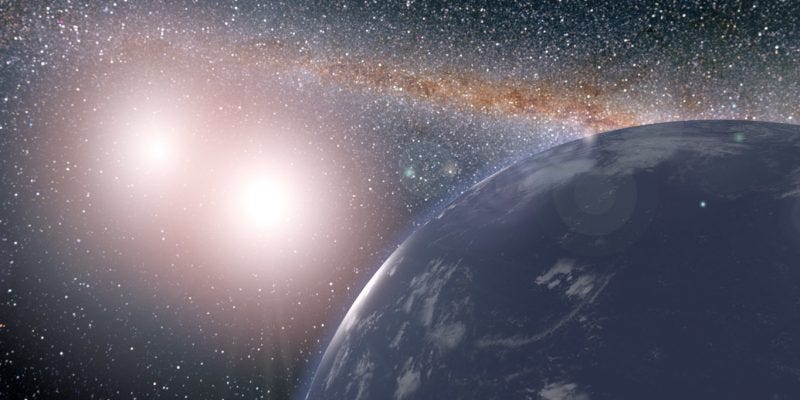
Exoplanet news has officially entered its “too many fascinating worlds to fit in one headline” era. Not long ago, planets outside our solar system were mostly theoretical suspects hiding in the cosmic shadows. Today, astronomers have confirmed more than 6,000 exoplanets, with thousands of candidates still waiting for scientific background checks. Somewhere in that growing catalog are lava worlds, mini-Neptunes, gas giants that hug their stars like clingy housecats, and rocky planets that make researchers wonder whether Earth is special, common, or simply the one planet noisy enough to invent newsletters.
The latest exoplanet discoveries are not just about counting planets like cosmic trading cards. The real story is changing from “Does this planet exist?” to “What is it like?” Thanks to NASA’s James Webb Space Telescope, TESS, ground-based observatories, and the NASA Exoplanet Archive, scientists are now studying atmospheres, temperatures, orbital patterns, star systems, and possible chemical clues connected to habitability. In plain English: we are moving from spotting dots to reading alien weather reports. The umbrella, however, remains theoretical.
Why Exoplanet News Is Suddenly Everywhere
The exoplanet boom is the result of better tools, patient observation, and a scientific community that has become very good at noticing tiny changes in starlight. Many exoplanets are found through the transit method, where a planet passes in front of its star and causes a slight dip in brightness. Others are discovered through radial velocity, which detects the tiny wobble a planet’s gravity causes in its host star. Direct imaging is still difficult because planets are faint and stars are rude show-offs, but it is improving.
What makes current exoplanet news so exciting is the combination of scale and detail. NASA’s TESS mission has scanned huge portions of the sky and identified thousands of confirmed or candidate worlds. In May 2026, NASA highlighted TESS’s most complete view of the starry sky to date, showing nearly 6,000 colored dots marking confirmed or candidate exoplanets identified by the mission through September 2025. That is not just a pretty space poster; it is a map of where the next decade of planetary science may go.
The 6,000-World Milestone: A Cosmic Census Gets Serious
One of the biggest recent exoplanet news stories is the official milestone of more than 6,000 confirmed planets beyond our solar system. The number matters because it changes the conversation. A few dozen planets could be weird exceptions. A few thousand begin to reveal patterns. Scientists can compare hot Jupiters, super-Earths, sub-Neptunes, rocky planets, and gas giants across different types of stars. The universe, it turns out, did not consult our solar system before designing its planetary menu.
The NASA Exoplanet Archive, hosted by Caltech’s IPAC, continues to update the official catalog as researchers confirm new worlds. In April 2026, the archive noted a major addition of 114 new planets from a team using TESS data, described as the largest mass confirmation of TESS planets to date. This is the scientific equivalent of opening a closet and having planets fall out. Each confirmed world gives astronomers another data point for understanding how planets form, migrate, survive, and sometimes end up in orbits that would make a solar system designer spill coffee.
JWST Is Turning Exoplanets Into Places
The James Webb Space Telescope has become the star instrument in modern exoplanet news because it can analyze infrared light with extraordinary sensitivity. When a planet passes in front of its star, some starlight filters through the planet’s atmosphere. Molecules absorb specific wavelengths, leaving chemical fingerprints. Webb can also observe secondary eclipses, when a planet moves behind its star, helping scientists measure heat from the planet’s dayside.
This matters because the most interesting exoplanet question is no longer only “Is there another Earth?” It is also “Can we identify atmospheres on small rocky planets?” That is brutally hard. Rocky planets are tiny compared with stars, and red dwarf stars can be stormy, active, and generally dramatic. Webb has shown that some promising worlds may have little or no atmosphere, while others remain open mysteries. In science, “not Earth 2.0” is not a failure. It is progress with fewer balloons.
TRAPPIST-1: The Celebrity Planet System With a Complicated Plot
The TRAPPIST-1 system remains one of the biggest names in exoplanet news. Located about 40 light-years away, it contains seven Earth-sized rocky planets orbiting a cool red dwarf star. Several are near or within the system’s habitable zone, where temperatures could allow liquid water if the right atmosphere exists. That “if” is doing a lot of work.
Recent Webb observations have made the system more scientifically interesting and less suitable for lazy “second Earth found!” headlines. NASA reported in 2025 that Webb narrowed the atmospheric possibilities for TRAPPIST-1 d, finding no clear evidence for common molecules such as water vapor, methane, or carbon dioxide in the planet’s atmosphere. Researchers said the planet is unlikely to be an Earth twin or close cousin. That may sound disappointing, but it helps scientists understand how red dwarf stars affect small planets.
TRAPPIST-1 e, however, remains a more open case. Webb observations of this habitable-zone planet have ruled out a thick original hydrogen-rich atmosphere, but scientists continue to explore whether it could have a secondary atmosphere. The challenge is separating planetary signals from the behavior of the host star. In other words, astronomers are trying to hear a whisper from a planet while the star keeps clearing its throat.
Rocky Worlds: The Hardest Planets to Read
Rocky exoplanets are the objects most people care about because they sound like places one could imagine standing on, preferably with snacks and breathable air. But they are also the hardest to study. A hot gas giant close to its star creates large, detectable signals. An Earth-sized planet around a small star creates a much fainter signal. If that planet has no thick atmosphere, the signal becomes even harder to interpret.
The Space Telescope Science Institute has highlighted Webb’s “Rocky Worlds” efforts, which use mid-infrared observations to look for evidence of atmospheres around rocky planets orbiting M-dwarf stars. These studies are important because M-dwarfs are common in the galaxy, and their small size makes orbiting planets easier to detect. The catch is that many M-dwarfs are energetic, especially when young, and can blast nearby planets with radiation that strips atmospheres away. The universe likes to hand out opportunities with fine print.
TOI-561 b: A Lava World With an Atmosphere?
One of the more dramatic recent exoplanet stories involves TOI-561 b, an ultra-hot super-Earth that orbits its star in less than 11 hours. That is not a year; that is a long workday. NASA reported that Webb observations suggest TOI-561 b may have a thick atmosphere above a vast magma ocean. This planet is not a vacation destination unless your travel preferences include “broiling lava world” and “instant regret.”
TOI-561 b is scientifically valuable because it challenges simple assumptions. Ultra-short-period rocky planets orbit extremely close to their stars and are expected to suffer intense heating and atmospheric loss. If a world like TOI-561 b can maintain or regenerate an atmosphere, perhaps through a magma ocean releasing gases, scientists must rethink how rocky planets evolve under extreme conditions. It is not habitable in any familiar sense, but it is a laboratory for planetary physics.
Alpha Centauri: A Possible Planet Around a Nearby Solar Twin
Few phrases excite astronomers like “possible planet around Alpha Centauri.” The Alpha Centauri system is our nearest stellar neighbor, and Alpha Centauri A is a Sun-like star. NASA announced in 2025 that Webb found new evidence for a possible planet candidate around Alpha Centauri A. Based on mid-infrared observations and orbital simulations, researchers suggested it could be a cool gas giant roughly Saturn’s mass.
This candidate is not confirmed yet, and responsible exoplanet news must treat it carefully. Still, the possibility is thrilling. A planet around a nearby Sun-like star would be a major target for future observations, especially as direct imaging and coronagraph technology improve. Even if it is not a rocky world, it could teach scientists how planets form and survive in binary star systems. Also, “planet near Alpha Centauri” has a built-in science fiction soundtrack.
Barnard’s Star: Tiny Planets Around a Famous Neighbor
Barnard’s Star, one of the closest stars to Earth, has a long history in planet-hunting lore. In 2025, NASA highlighted the discovery of four small planets orbiting it, based on high-precision observations using radial velocity techniques. These are sub-Earth or terrestrial-type planets, not lush garden worlds. Their orbits are very close to a cool red dwarf, which makes them important for studying how small planets form around common low-mass stars.
Discoveries like these are quietly powerful. They do not always produce viral headlines, but they build the statistical foundation of exoplanet science. If nearby red dwarfs commonly host small planets, the galaxy may be packed with rocky worlds. Whether those worlds can keep atmospheres, support water, or avoid stellar tantrums is the next layer of the puzzle.
K2-18 b and the Biosignature Debate
No recent exoplanet news topic has sparked more public curiosity than K2-18 b. This sub-Neptune orbits in the habitable zone of a cool dwarf star and has been studied by Webb. NASA previously reported methane and carbon dioxide in its atmosphere, along with a possible hint of dimethyl sulfide, a molecule associated with life on Earth. Later claims and reanalyses fueled debate about whether the data support possible biosignature gases or whether the evidence remains too uncertain.
The most responsible takeaway is simple: K2-18 b is fascinating, but it is not proof of alien life. NASA has emphasized that finding life beyond Earth is a process and that a single potential biosignature does not equal a confirmed discovery. Scientific American, NPR, and other outlets have covered the debate, showing how researchers test claims, challenge methods, and demand stronger evidence. That may feel slow, but it is exactly how science avoids turning “maybe” into “aliens ordered brunch.”
Exomoons, Planetary Disks, and the Next Frontier
Exoplanet news is also expanding beyond planets themselves. Webb observations of CT Cha b, a massive planet located about 625 light-years away, revealed a carbon-rich disk that may be a construction zone for moons. No exomoons were directly detected, but studying such disks helps scientists understand how moons form around giant planets. In our own solar system, moons are some of the most intriguing places for habitability, including Europa and Enceladus. So yes, moon news matters.
Astronomers are also looking for signs of rings, moon-forming disks, and atmospheric escape. These details turn exoplanets into systems, not just isolated objects. A planet’s moons, rings, star, orbit, atmosphere, and magnetic environment may all affect whether it is stable, strange, or potentially habitable. The next generation of exoplanet science will likely feel less like stamp collecting and more like planetary biography.
What Comes Next in Exoplanet Discovery?
The next wave of exoplanet news will come from several directions. TESS will keep supplying candidates. Webb will continue atmospheric studies, especially for rocky planets and unusual worlds. The Nancy Grace Roman Space Telescope is expected to strengthen direct imaging and microlensing studies after launch, while future mission concepts such as the Habitable Worlds Observatory aim to search for Earth-like planets around Sun-like stars.
The big shift will be from discovery to characterization. Scientists want to know which planets have atmospheres, what those atmospheres contain, how stars shape planetary evolution, and whether any worlds show convincing signs of habitability. The first confirmed biosignature, if it ever arrives, will not come from one dramatic data point. It will come from multiple observations, independent teams, careful models, and a lot of people saying, “Hold on, let’s check that again.”
Experiences Related to Exoplanet News: What It Feels Like to Follow the Search for Other Worlds
Following exoplanet news feels a little like watching humanity slowly open a dark room with a very tiny flashlight. At first, the beam catches only dust and mystery. Then a shape appears. Then another. Suddenly, the room is full of furniture, some of it normal, some of it upside down, and one chair appears to be made of lava. That is the emotional rhythm of exoplanet science: wonder, confusion, correction, and more wonder.
The most rewarding experience is learning to enjoy uncertainty. Popular headlines often want instant answers: “Earth twin found,” “alien life detected,” “new planet could host humans.” Real exoplanet news is more careful, and honestly, more interesting. A planet may be in the habitable zone but have no atmosphere. A world may show an intriguing chemical signal, but the data may also fit a non-biological explanation. A planet candidate near Alpha Centauri may look promising, then disappear in follow-up observations because its orbit placed it too close to its star from our viewpoint. Science is not a vending machine. You do not insert telescope time and receive certainty with exact change.
Another memorable part of following exoplanet discoveries is realizing how weird the galaxy is. Our solar system used to feel like the template: small rocky planets inside, gas giants outside, nice orderly spacing, everyone behaving at the dinner table. Then astronomers found hot Jupiters orbiting closer to their stars than Mercury orbits the Sun. They found super-Earths, which are common elsewhere but absent here. They found mini-Neptunes, lava worlds, possible ocean worlds, and planets in multi-star systems. The universe apparently looked at our neat arrangement and said, “Cute. Now watch this.”
For readers, exoplanet news is also a lesson in patience. The search for life beyond Earth is not likely to be solved by one viral announcement. It will be built from repeated measurements, better instruments, cautious interpretation, and maybe a few scientific arguments spicy enough to require extra coffee. That is not a weakness; it is the strength of the field. Every skeptical reanalysis, every failed atmosphere detection, and every corrected claim makes the final picture sharper.
The best way to experience exoplanet news is to treat each discovery as a chapter, not the ending. A planet with no atmosphere tells us something. A candidate awaiting confirmation tells us something. A strange lava world with possible atmospheric clues tells us something. Even a disappointing result helps narrow the search. The galaxy is not handing over its secrets quickly, but it is handing them over. One transit, one spectrum, one wobbling star at a time, the map is filling in.
Conclusion
Exoplanet news has become one of the most exciting areas in modern astronomy because it blends big numbers with intimate details. More than 6,000 confirmed worlds show that planets are common, but Webb, TESS, and future observatories are showing that “common” does not mean “simple.” From TRAPPIST-1’s rocky planets to TOI-561 b’s lava-world atmosphere, from possible planets around Alpha Centauri to the lively debate over K2-18 b, each discovery adds a new clue to the story of planets beyond our solar system.
The search is no longer just about finding worlds. It is about understanding them. Which planets keep atmospheres? Which stars are friendly to habitability? Which chemical signals are meaningful? Which strange worlds rewrite the textbook? The answers will take time, but the news is already clear: the galaxy is crowded, creative, and far more interesting than anyone dared to imagine.