

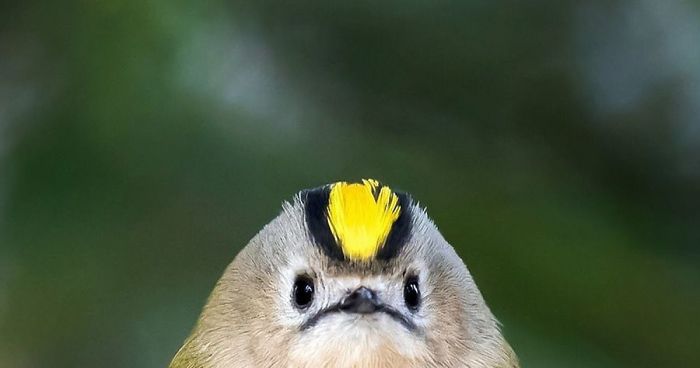
Some birds look elegant. Some look poetic. And then there are the birds photographed by Finnish wildlife photographer Ossi Saarinen: tiny, fluffy, suspicious-looking featherballs that appear ready to file a formal complaint with the forest management office. His “real life Angry Birds” images became internet favorites because they combine two irresistible things: serious wildlife photography and birds that look like they just read the comments section.
But the charm of Saarinen’s work goes far beyond a funny resemblance to a famous game franchise. His photos reveal the personality hidden in Finnish natureespecially in small birds whose round bodies, intense eyes, puffed feathers, and dramatic posture make them look hilariously furious. They are not cartoon characters, of course. They are wild animals living ordinary bird lives. Yet through careful timing, respectful distance, and a sharp eye for expression, Saarinen captures moments that feel almost animated.
This is why people cannot stop looking. One photo may show a bird standing in snow like a tiny winter general. Another may frame a fluffy chick mid-stride, looking offended by the entire concept of gravity. In every image, nature does what nature often does best: it becomes funnier, stranger, and more beautiful the closer we pay attention.
Who Is Ossi Saarinen?
Ossi Saarinen is a professional nature and wildlife photographer and filmmaker from Espoo, Finland. He has built a career around observing wild animals, especially those found near his home and throughout Finland’s forests, lakes, and quiet natural spaces. His portfolio includes foxes, squirrels, owls, lynxes, deer, and many birds, but his grumpy-looking bird portraits have become some of his most recognizable work online.
Part of the appeal is his ability to make wild animals feel close without turning them into props. The birds are not staged like models wearing tiny scarvesalthough the internet would absolutely click that. Instead, Saarinen’s photos come from patience, timing, and field experience. He studies where animals move, waits for natural behavior, and photographs moments that last only seconds.
That patience matters. Wildlife photography is not simply “point camera at cute thing.” It is more like a silent negotiation with weather, light, distance, animal behavior, and luck. A photographer may wait for hours in cold conditions only to capture one clean frame. Saarinen’s work makes that effort look effortless, which is usually the clearest sign that a lot of effort was involved.
Why These Birds Look Like Real-Life Angry Birds
The phrase “real-life Angry Birds” works because the birds in Saarinen’s images often appear round, intense, and comically determined. Their bodies are puffed up against the cold. Their eyes are sharp. Their beaks can look like tiny frowns. Snow, branches, and low camera angles add drama. Suddenly, a small bird becomes a feathered action hero with a personal vendetta against a pinecone.
Of course, the birds are not necessarily angry. Humans are excellent at reading expressions into animal faces, even when the animal’s actual emotion may be different or impossible to know from a still image. A bird may fluff its feathers to stay warm. It may crouch before moving. It may look stern simply because its markings create the illusion of eyebrows. Nature, apparently, invented resting bird face long before social media discovered it.
Feathers also play a major role. Birds use feathers for flight, insulation, waterproofing, display, and camouflage. When a small bird fluffs up, its shape changes dramatically. A delicate creature can suddenly look like a fuzzy orb with wings attached as optional accessories. In cold Finnish conditions, that puffed-up look is practical, but on camera it becomes comedy gold.
The Finnish Nature Behind the Photos
Finland gives wildlife photographers a remarkable stage. The country is famous for its forests, lakes, islands, Arctic landscapes, and national parks. Its natural areas support animals such as bears, wolves, lynxes, eagles, cranes, swans, and many smaller species that reward quiet observation. For a photographer like Saarinen, that environment is not just a backdropit is the story’s setting, lighting department, and supporting cast.
Winter is especially powerful in bird photography. Snow simplifies the scene, softens the background, and makes colors stand out. A small bird on a snowy branch instantly becomes more visible, while the whiteness around it adds a clean, almost studio-like effect. The result can look magical, even though the photographer may be standing in freezing air while trying to keep fingers functional. Beauty, in this case, arrives wearing thermal layers.
Finland’s long seasonal shifts also create variety. Winter brings frost, silence, and soft light. Spring brings movement and nesting behavior. Summer stretches daylight into long evenings, especially farther north. Autumn adds earthy tones and atmosphere. Saarinen’s style benefits from this natural rhythm because his images feel connected to place. They do not simply show birds; they show birds belonging to a living northern landscape.
What Makes Saarinen’s Bird Photography So Addictive?
1. The Expressions Feel Human Without Becoming Fake
The best wildlife photos often balance reality and imagination. Saarinen’s “angry” birds look expressive enough to invite a caption, but they still feel authentic. Viewers can laugh without feeling that the animal has been turned into a gimmick. The humor comes from observation, not manipulation.
2. The Composition Is Clean and Emotional
Many of the most memorable bird portraits use simple framing. A bird sits against snow, moss, branches, or a soft forest background. That simplicity lets the viewer focus on posture, eye contact, texture, and mood. In online culture, where people scroll faster than a squirrel hearing a snack bag, visual clarity is essential.
3. The Birds Look Small but Powerful
There is something delightful about a bird that weighs almost nothing but looks ready to challenge the universe. Saarinen’s photos often give tiny creatures a big presence. Low angles, close framing, and crisp focus can make a small subject feel heroic. A chick crossing the ground becomes an expedition leader. A round bird on a branch becomes a judge. An owl becomes the manager you did not ask to speak with.
4. The Images Invite Storytelling
Great animal photos make viewers ask, “What is happening here?” Saarinen’s bird images are perfect for that. Is the bird annoyed? Brave? Confused? Late for a very important meeting? The real answer may be ordinary bird behavior, but the photo opens the door for imagination. That is why these images spread so easily: they are instantly understandable and endlessly captionable.
Real Wildlife, Not Cartoon Copies
The Angry Birds comparison is fun, especially because the game itself has Finnish roots through Rovio. But Saarinen’s photographs succeed because they are not merely visual jokes. They remind viewers that real birds are more interesting than any simplified cartoon version. Their feathers, feet, eyes, and behavior are complex. Their survival depends on reading weather, finding food, avoiding predators, and making endless tiny decisions that humans rarely notice.
That is the hidden value of viral wildlife photography. A funny image can become an invitation to care. Someone may click because the bird looks hilariously grumpy, then stay because the details are beautiful: the softness of down, the precision of claws on a branch, the way snow collects around a tiny body built for winter. Humor becomes the doorway; appreciation is what waits inside.
The Ethics Behind a Great Bird Photo
Responsible bird photography requires restraint. Ethical birding and photography guidelines emphasize that the welfare of birds and their habitats should come before the desire to capture a perfect image. That means keeping enough distance, avoiding unnecessary stress, respecting nesting areas, and letting birds behave naturally.
This matters because a cute photo is never worth harming the subject. Birds use energy carefully, especially in harsh weather. Disturbing them repeatedly can affect feeding, resting, and nesting. A responsible photographer uses patience, long lenses, knowledge of behavior, and sometimes hides or blinds to reduce disturbance. The best image is not the one taken closest; it is the one taken with respect.
Saarinen’s appeal fits this wider philosophy. His work celebrates animals as wild beings, not accessories. That difference is important. The photos feel intimate, but they are still grounded in nature. Viewers get the joy of closeness without the message that wildlife exists for human entertainment alone.
Why the Internet Loves Grumpy Animals
The internet has always loved animals with strong “personalities.” Grumpy cats, judgmental owls, smiling dogs, dramatic goatsif an animal looks like it has an opinion, people will share it before their coffee cools. Saarinen’s birds fit this tradition perfectly, but with a more artistic edge. They are meme-friendly without being disposable.
Part of the fascination comes from contrast. Birds are often associated with lightness, song, freedom, and grace. Seeing one look like a tiny, round, feathered boss with unresolved issues creates instant comedy. The smaller the bird, the funnier the attitude appears. A massive eagle looking fierce is expected. A little fluffball looking fierce is theater.
There is also comfort in these images. The birds look dramatic, but the scenes are peaceful. Snow, moss, branches, and soft backgrounds create calm. The humor is gentle. Nobody is being mocked; viewers are simply noticing how expressive nature can seem. In a noisy digital world, that combination of calm beauty and harmless comedy is surprisingly powerful.
Photography Lessons from the Real-Life Angry Birds
Patience Beats Chasing
Wild animals rarely perform on command. A photographer who chases birds usually gets stress, blurry frames, and possibly a bird-shaped absence. Waiting quietly allows natural behavior to unfold. Saarinen’s images show the value of letting the scene come to the camera rather than forcing it.
Light Creates Personality
Soft light can turn a simple bird portrait into something memorable. Morning, evening, snowy days, and shaded forest conditions often reduce harsh contrast and help feathers show detail. Good light also makes eyes sparkle, which is crucial when the entire joke depends on a bird looking like it is personally disappointed in you.
Backgrounds Matter
A clean background makes the subject stronger. Snow, distant trees, water, or blurred forest colors can separate the bird from visual clutter. When the frame is simple, every tiny gesture becomes more noticeable.
Know the Animal Before Pressing the Shutter
Understanding behavior helps a photographer anticipate movement. Birds often telegraph action through posture: a shift in weight, a glance, a feather adjustment, a crouch before takeoff. Learning these signals can make the difference between a forgettable photo and a frame that looks alive.
Why These Photos Feel Bigger Than a Viral Trend
It would be easy to treat the “real-life Angry Birds” idea as a one-note joke. But the deeper story is about attention. Saarinen’s work asks viewers to look closely at ordinary wild creatures and discover how much personality, humor, and beauty is already there. The photos do not need elaborate sets or fantasy editing. They simply need a patient photographer and a bird with excellent natural timing.
His broader career reinforces that point. Saarinen has photographed many forms of Finnish wildlife, and in 2025 his photograph “Paws,” a close-up study of a lynx’s thick-furred feet, won major recognition in Finland’s Nature Photo of the Year competition. That award-winning image was very different from the funny bird portraits, but it shared the same strength: seeing something familiar in an unexpected way.
That is the mark of strong nature photography. It does not only show us what an animal looks like. It changes how we look at the animal. After seeing Saarinen’s bird photos, a small bird on a branch no longer feels ordinary. It might be a singer, a survivor, a snowball with a beak, or the unpaid security guard of the entire forest.
Experience Notes: What These “Angry Birds” Teach Anyone Who Watches Nature
Spending time with photos like Saarinen’s changes the way you experience birds in real life. At first, you may look for the obvious: bright colors, unusual species, dramatic wings, or a perfect perch. But the longer you observe birds, the more you notice that the smallest gestures are often the most memorable. A head tilt can feel like curiosity. A puff of feathers can look like annoyance. A quick hop through snow can become a tiny adventure. Suddenly, the ordinary sparrow-like shape in the distance becomes a character.
One of the best experiences related to this topic is simply slowing down outdoors. You do not need to travel deep into a remote Finnish forest to understand the appeal, although that certainly helps if you enjoy dramatic landscapes and your nose turning into an ice cube. Even in a backyard, park, or quiet walking trail, birds reveal more when you stop treating them as background decoration. Watch how they land. Notice how they choose branches. Pay attention to how they react to other birds, wind, sound, or sudden movement. Their world is busy, precise, and full of tiny decisions.
Trying bird photography also teaches humility very quickly. You may imagine yourself capturing a masterpiece. The bird imagines leaving immediately. You raise the camera; it turns around. You focus; it hops behind a twig. You finally get a clear view; it becomes a blur with wings. This is not failure. This is the unofficial welcome ceremony of wildlife photography. The process teaches patience, awareness, and respect. It also teaches you that birds are not waiting for your creative direction.
The “angry bird” look is especially fun to search for because it usually appears by accident. Cold weather may make a bird fluff up into a round shape. Low light may add intensity. A branch may create a dramatic frame. The bird may stare directly toward the camera for one second, and in that second it appears to question your entire life plan. The trick is to be ready without being intrusive. Keep distance, move slowly, and let the bird remain in control of its space.
There is also a personal benefit to this kind of observation. Looking for humor in nature makes the outdoors feel more alive. Instead of seeing wildlife as something rare that only belongs in documentaries, you begin to notice small daily performances. A bird shaking snow from its feathers can be funnier than a sitcom. A chick running with oversized feet can improve an entire morning. A round little bird glaring from a branch can remind you that beauty does not always arrive as elegance. Sometimes beauty arrives as a tiny feathered potato with attitude.
That is the lasting magic of Saarinen’s real-life Angry Birds. They make people laugh first, then look again. And on the second look, the joke becomes something richer: a reminder that nature has personality everywhere, even in the smallest creatures, even on the coldest branches, even when the bird appears to be silently judging your snack choices.
Conclusion
Ossi Saarinen’s “real life Angry Birds” are funny, adorable, and surprisingly meaningful. They capture the internet’s love for expressive animals while also showing the patience and skill behind serious wildlife photography. The birds may look furious, but the feeling they create is pure delight. They invite viewers to laugh, slow down, and appreciate the wild personality hidden in everyday nature.
What makes these images unforgettable is not just the resemblance to a famous game or the charm of a grumpy little face. It is the combination of timing, respect, environment, and storytelling. Saarinen shows that a small bird in the Finnish snow can be as compelling as any grand wildlife scene. Sometimes the most powerful photo is not the biggest animal, the rarest sighting, or the most dramatic chase. Sometimes it is a tiny bird on a branch, looking like it has a meeting with destiny and destiny is already late.
Note: This HTML body is written for web publishing in standard American English, with factual context integrated naturally and without source-link elements inside the article content.