

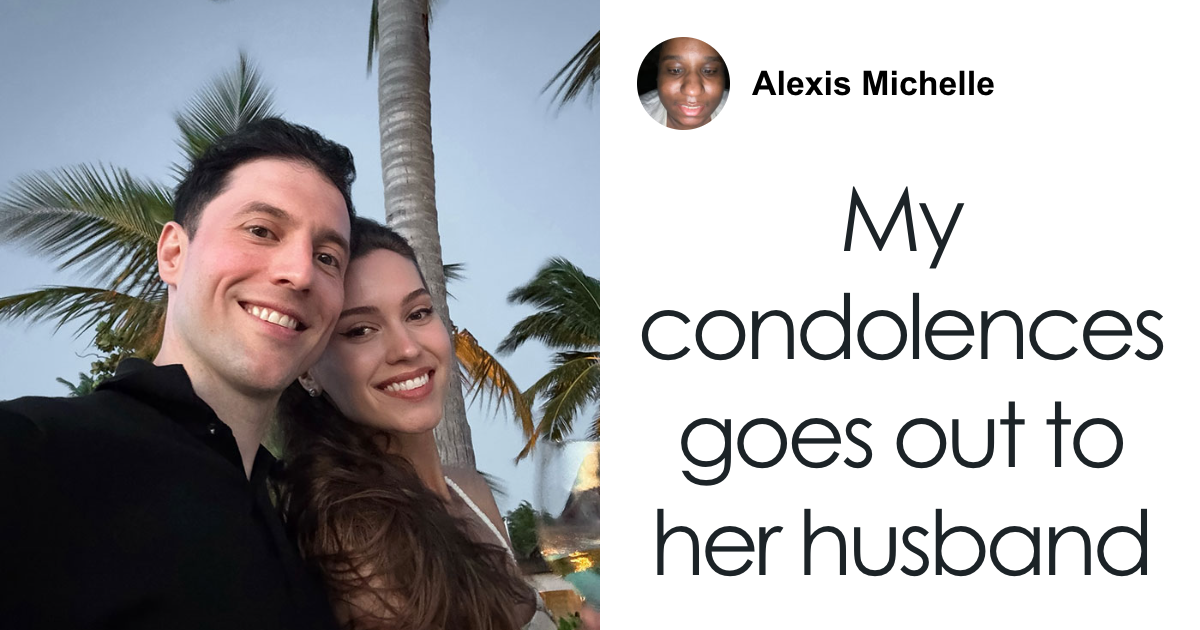
A former Miss Universe contestant’s sudden death has left the pageant world, modeling community, and her fans in shock after what has been described as a freak road accident involving an elk. Kseniya Alexandrova, a Russian model, psychologist, and Miss Universe Russia 2017 representative, died at the age of 30 after sustaining severe injuries in a wildlife collision while traveling with her husband in Russia’s Tver Oblast region.
The accident, which reportedly happened on July 5, 2025, took place on the M9 highway as Alexandrova and her husband, Ilya, were returning from Rzhev. According to public reports, an elk suddenly entered the roadway and collided with their vehicle, breaking through the windshield. Alexandrova, who was seated in the passenger seat, was critically injured and later hospitalized in Moscow. She remained under medical care for more than a month before dying on August 12, 2025.
The story has traveled far beyond the beauty-pageant world because of its heartbreaking randomness. One day, a young newlywed is riding home after a trip; the next, her name is appearing in headlines around the world. It is the kind of tragedy that makes people stare at their car keys a little differently. Roads, unfortunately, do not care how glamorous, talented, or beloved someone is.
Who Was Kseniya Alexandrova?
Kseniya Alexandrova was best known internationally for representing Russia at the Miss Universe 2017 pageant in Las Vegas. That year, she had placed as the first runner-up in Miss Russia 2017, a result that opened the door for her to appear on one of the biggest pageant stages in the world.
But reducing Alexandrova to a sash and stage lights would be unfair. She was also a working model, a television personality, and a trained psychologist. Reports about her life note that she studied finance before later pursuing psychology, eventually working as a psychodrama therapist. In other words, she was not simply posing for cameras; she was building a serious life beyond them.
Her public image blended beauty, discipline, and warmth. Friends, colleagues, and pageant fans remembered her as elegant and kind, but also thoughtful and intellectually curious. In an industry often judged by surface-level sparkle, Alexandrova appeared to be someone who wanted depth too. She had the runway walk, yes, but also the academic receipts. That combination is not exactly something you pick up at the mall between a smoothie and a sale rack.
The Accident That Shocked Fans
The fatal collision reportedly occurred while Alexandrova was traveling with her husband through Tver Oblast, a region northwest of Moscow. Public accounts say the elk appeared suddenly in front of the car, leaving almost no time to react. Her husband survived the accident, while Alexandrova suffered critical injuries.
Although early headlines used graphic wording to describe the crash, the essential facts are devastating enough without turning the story into a horror script. A large wild animal entered the road, the vehicle struck it, and the impact caused injuries that proved fatal weeks later. The tragedy is not only in the collision itself, but in the ordinary setting: a couple driving home, a familiar stretch of highway, and a split second that changed everything.
Alexandrova had reportedly married only four months before the accident. That detail has made the story even more painful for readers. Newlywed life is supposed to be full of grocery debates, furniture arguments, travel plans, and discovering that your partner somehow uses every mug in the house before noon. Instead, her family and husband were forced into a public grief that no one could possibly prepare for.
Why Elk Collisions Can Be So Dangerous
Animal-vehicle collisions are often discussed casually, especially in areas where deer, elk, moose, and other large animals cross roads regularly. Many drivers imagine these crashes as expensive bumper damage or a stressful call to an insurance company. But collisions with large animals can be far more serious.
Elk and moose are especially dangerous because of their size, height, and body structure. Unlike smaller animals, they may strike the windshield or roofline area rather than only the front bumper. That puts occupants at greater risk, particularly in passenger cars where the windshield and cabin space are close to the impact zone.
In the United States, wildlife-vehicle collisions are a persistent safety issue. Federal and insurance data have repeatedly shown that large-animal crashes number in the hundreds of thousands to millions each year, depending on how reports and insurance claims are counted. Deer are responsible for many of these incidents, but elk and moose are often associated with more severe outcomes because they are larger and heavier.
The risk is not evenly spread across every road, every season, or every hour of the day. Wildlife collisions often increase in rural areas, near forests, around water sources, and during dawn or dusk when animals are more active and visibility is weaker. Autumn can also be a particularly risky season in many regions because of mating and migration patterns. In simple terms: when nature has errands, it does not always check traffic first.
Tributes From The Pageant And Modeling World
After news of Alexandrova’s death spread, tributes poured in from the beauty-pageant community, modeling circles, and fans who remembered her from Miss Universe 2017. The Miss Universe Organization publicly honored her memory, recognizing the impression she had left on the international pageant family.
Her modeling agency also mourned her passing, describing her as someone whose presence was bright, inspiring, and deeply valued. These tributes highlighted not just her appearance or professional achievements, but her character. That matters. When someone dies young, especially in a public way, the internet can flatten them into a headline. The people who knew Alexandrova seemed determined to remind everyone that she was a full person: a daughter, wife, friend, colleague, and professional with plans still unfolding.
Many fans revisited images and videos of her time at Miss Universe 2017, where she appeared onstage in evening gowns, national representation events, and official pageant moments. The photos now carry a different weight. What once looked like a glamorous career milestone has become part of a memorial archive.
Why This Story Resonated So Widely
Celebrity and pageant news often goes viral because of glamour, scandal, or red-carpet drama. This story spread for a different reason: it was random, frightening, and painfully human. It reminded readers that tragedy does not always arrive with warning signs. Sometimes it arrives as an animal on a dark stretch of road.
The phrase “freak accident” is often overused, but in this case, it fits the public understanding of the event. It was not a scandal. It was not a reckless stunt. It was not the result of a dramatic public conflict. It was a sudden collision involving wildlife, the kind of event that drivers in many parts of the world know is possible but rarely expect to become fatal.
Another reason the story gained attention is Alexandrova’s age. At 30, she was in a stage of life where many people are still building careers, marriages, homes, and identities. Her death came shortly after marriage and after she had already transitioned from pageantry into other meaningful professional paths. That sense of unfinished life gives the story an emotional sharpness.
Road Safety Lessons From A Heartbreaking Incident
No article can turn a tragedy into a neat checklist, and no safety tip can guarantee perfect protection from wildlife. Large animals can move unpredictably, and even careful drivers can face impossible situations. Still, public safety organizations often recommend practical steps that may reduce risk.
Slow Down In Wildlife Areas
Speed matters because reaction time matters. When driving through wooded areas, rural highways, mountain roads, or regions marked by animal-crossing signs, slowing down gives the driver more time to notice movement and brake safely. Those yellow animal signs are not roadside decoration. They are not the highway department’s attempt at minimalist wildlife art.
Use High Beams When Appropriate
When there is no oncoming traffic, high-beam headlights can help illuminate the road shoulders and reveal animal movement earlier. Drivers should watch not only the lane ahead, but also the edges of the road, where animals may stand before suddenly entering traffic.
Do Not Assume One Animal Is Alone
Many animals travel in groups. If one deer, elk, or similar animal crosses the road, another may follow. The first animal is often the warning sign, not the whole event. Treat it like the opening act, not the finale.
Brake Firmly, But Avoid Panic Swerving
Safety experts often warn that swerving can create a second danger: leaving the roadway, hitting another vehicle, or losing control. In many cases, braking firmly while staying in the lane is safer than making a sudden steering move. That said, every situation is different, and drivers must react to the road, traffic, speed, vehicle type, and animal size in front of them.
Wear Seat Belts Every Time
Seat belts cannot prevent every injury, but they remain one of the most important protections in a crash. Even short trips deserve the same seriousness as long drives. “We are only going a few miles” has never been a safety strategy; it is just optimism wearing flip-flops.
The Larger Issue: Roads And Wildlife Share The Same Space
Alexandrova’s death also points to a broader transportation problem: humans build roads through animal habitat, and then everyone acts surprised when animals use the land they were already living on. Highways often cut across migration paths, forests, wetlands, and feeding areas. For wildlife, a road is not a “road.” It is simply a dangerous strip across a familiar route.
In the United States and other countries, wildlife crossings, fencing, warning systems, and better roadside planning have become increasingly important tools. Some regions have built overpasses and underpasses that guide animals safely across highways. When properly designed with fencing, these crossings can reduce collisions and protect both humans and wildlife.
These projects may sound expensive, but crashes are expensive too. They cost money in vehicle damage, emergency response, medical care, insurance claims, and lives. A wildlife crossing may not look glamorous, but neither does a tow truck at 2 a.m. on a rural highway. Infrastructure that prevents tragedy is rarely flashy, but it is often worth every penny.
A Public Death, A Private Loss
When a public figure dies, strangers often process the news through headlines, photos, and comment sections. But behind every viral story is a private circle of grief. Alexandrova’s family and husband lost someone they loved. Her colleagues lost a friend and professional partner. Her clients and followers lost a person whose work and presence mattered to them.
That is why stories like this should be handled with care. The details are newsworthy, but the person is not a prop. It is possible to report the reality of the accident without turning the pain into spectacle. The internet is already dramatic enough; it does not need a fog machine.
Alexandrova’s legacy will likely remain tied to her pageant career because that is where many international fans first saw her. But those who look deeper will find a more complete story: a young woman who studied, modeled, represented her country, married, worked in psychology, and appeared to be building a thoughtful adult life after the spotlight.
Experiences And Reflections Related To This Tragic Elk Collision
Anyone who has driven through rural roads at night knows the strange tension of it. The road seems quiet, the headlights carve out a little tunnel of visibility, and the rest of the world becomes a dark blur of trees, fields, and occasional roadside signs. Then, suddenly, something moves near the shoulder. Your hands tighten on the wheel before your brain has finished naming what you saw.
That is why Alexandrova’s accident feels so unsettling to many readers. It is not hard to imagine. Most people have had at least one close call with an animal on the road: a deer freezing in headlights, a dog darting across a neighborhood street, a raccoon choosing the worst possible moment to become adventurous, or a bird that apparently believes traffic laws are optional. Usually, the moment ends with a gasp, a nervous laugh, and someone saying, “That was close.” Sometimes, tragically, it does not.
One experience many drivers describe is the feeling that time changes during a near collision. A second feels longer, but not long enough to make a perfect decision. The mind calculates too slowly: brake, steer, check the mirror, avoid the ditch, protect the passenger. By the time the thought is complete, the moment has already happened. That is why prevention matters more than heroic reaction. Slower speed, better scanning, and full attention are not boring safety slogans; they are the boring little habits that may save a life.
Passengers also learn something from stories like this. Riding in a car can make people feel passive, but passengers can help by staying alert, avoiding distractions, and speaking up if the driver seems tired or too fast for conditions. A calm “watch the shoulder” or “slow down here” can be more useful than pretending everything is fine. The goal is not to become a backseat dictator with a tiny imaginary badge. The goal is to treat travel as a shared responsibility.
Families who travel through wildlife-heavy areas often develop small rituals: leaving earlier to avoid dusk, checking weather and road conditions, keeping phones charged, storing emergency contacts, and reminding everyone to buckle up before the car moves. These routines may sound overly cautious until the day they are needed. Preparedness is rarely dramatic. It usually looks like a charged phone, a slower speed, and someone saying, “Let’s not rush.”
There is also an emotional lesson here. Stories like Alexandrova’s remind people to take ordinary goodbyes seriously. Not fearfully, not obsessively, but gratefully. A normal drive home is something we assume will end normally. Most of the time, it does. That is why life works. But when a freak accident interrupts that assumption, it leaves behind a painful reminder: the ordinary is precious because it is not guaranteed.
For readers, the most respectful response is not morbid curiosity. It is awareness. Slow down near wildlife signs. Pay attention at dawn and dusk. Wear the seat belt. Let the impatient driver behind you be impatient; they can write their own dramatic autobiography. The road is not a place to prove a point. It is a place to get everyone home.
Conclusion
Kseniya Alexandrova’s death is a heartbreaking reminder that even a life filled with promise, beauty, intelligence, and love can be altered by a single unpredictable moment. The former Miss Universe Russia contestant was only 30, newly married, and still shaping a future that included modeling, psychology, and public influence. Her fatal elk collision was not simply a celebrity tragedy; it was also a sobering example of how dangerous wildlife crashes can be.
Her story should be remembered with compassion, not sensationalism. It should also encourage drivers everywhere to treat rural roads, animal-crossing areas, and low-visibility travel with more caution. A few extra seconds, a slower speed, and sharper attention may not feel exciting, but safe arrivals are underrated miracles.
Note: This article is based on verified public reporting and roadway safety context. Graphic injury details have been intentionally avoided out of respect for readers and the family.