

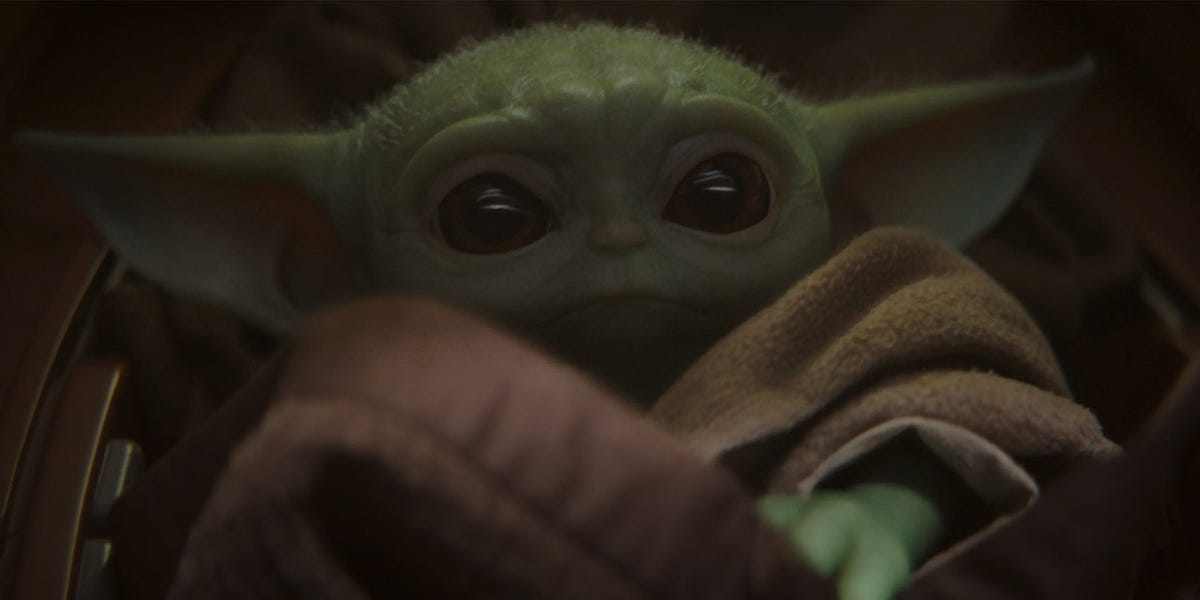
Some photos are polished. Some are iconic. And some look like they were snapped in two and a half seconds on a phone while history accidentally wandered into frame. The now-famous George Lucas Baby Yoda photo belongs in that last category, and that is exactly why people loved it so much. When Jon Favreau posted a blurry, caption-free image of George Lucas gently holding the Child from The Mandalorianyes, the little green chaos goblin the internet still insists on calling Baby Yodathe reaction online was immediate, loud, emotional, and gloriously unserious.
This was not just another behind-the-scenes picture. It felt like a family portrait from a galaxy far, far away. Here was Lucas, the creator of Star Wars, cradling the franchise’s newest obsession as if he had just met his oddly adorable grandchild. Favreau did not need a paragraph of explanation, a press release, or one of those painfully earnest “so humbled to share this moment” captions. He just dropped the image and let the internet do what it does best: lose its collective mind in real time.
And lose its mind it did. Fans made dad jokes, grandpa jokes, holy-image jokes, and “this belongs in a museum” jokes. Some treated the photo like proof that the universe still had a pulse. Others immediately spun up wild theories that Lucas might direct an episode of The Mandalorian. A few people seemed one post away from building a shrine. In a world packed with cynical marketing, the image felt strangely puremessy, sweet, unexpected, and undeniably human.
That is why the George Lucas Baby Yoda photo still matters. It was not just cute. It was a rare pop culture moment that united nostalgia, fandom, meme culture, and genuine affection in one fuzzy little frame. Let’s look at why Jon Favreau’s post hit so hard, what the best social media reactions revealed, and why this tiny image became one of the warmest Star Wars moments of the streaming era.
Why Jon Favreau’s Post Went Instantly Viral
The timing was perfect. The Mandalorian had already turned the Child into a full-blown phenomenon. The show gave fans a dusty, bounty-hunter Western vibe, but Baby Yoda was the emotional cheat code. He was mysterious, memeable, toyetic, and outrageously expressive for a character who mostly blinked, cooed, and looked like he might steal your snacks. In other words, he was internet catnip in puppet form.
So when Favreau posted George Lucas holding the Child, the image worked on several levels at once. First, it looked intimate instead of corporate. Second, it connected the original architect of Star Wars with one of the franchise’s most successful modern creations. Third, it seemed to say a lot without actually saying anything. That silence mattered. The lack of caption let fans project every possible emotion onto the moment: pride, approval, relief, curiosity, or simply, “Aww.”
There was also something funny about how unvarnished the picture looked. It was not framed like a glossy studio still. It was fuzzy. Casual. Slightly chaotic. Lucas looked thoughtful and gentle. Baby Yoda looked sleepy and vaguely enlightened, like a tiny monk who had just discovered soup. The combination made the whole thing feel less like a publicity asset and more like evidence of a backstage miracle.
In a franchise often discussed in terms of canon, timelines, legacy, and fan discourse with all the joy of an intergalactic tax audit, this picture cut through the noise. It reminded people that Star Wars can still be playful. It can still be weird. It can still produce one image that makes millions of people grin at the exact same time.
Best Social Media Reactions to the George Lucas Baby Yoda Photo
1. The Fatherhood Jokes Arrived at Lightspeed
The most obvious reaction was also the funniest: social media saw George Lucas holding Baby Yoda and immediately started making family jokes. That was inevitable. Lucas created Yoda. The Child was widely seen as a spiritual descendant of that mythology. So the internet did what the internet does and turned the photo into a cosmic reunion between father and son, grandfather and grandbaby, or creator and tiny green heir.
The classic Star Wars line got remixed in every possible direction. Some fans joked that this was the only acceptable “I am your father” content on the timeline. Others leaned into full grandpa energy, imagining Lucas arriving on set, taking one look at Baby Yoda, and deciding that this little puppet was now family. The humor worked because it was affectionate, not snarky. People were not mocking the image. They were celebrating it in the most internet-native way possible.
That tone matters. So much online reaction culture is powered by dunking, cynicism, or exhaustion. This was different. The jokes were playful, but the affection underneath them was real. Fans were happy to see George Lucas connected to something in modern Star Wars that felt universally beloved.
2. The Photo Was Treated Like a Sacred Object
Another great reaction trend was how quickly people began speaking about the image as though it were holy art. It was called “blessed,” “wholesome,” “sacred,” and the kind of thing you stare at for emotional support. Some fans compared the photo to a nativity scene. Others acted like the image should be displayed in a cathedral dedicated entirely to pop culture tenderness and tiny robes.
This sounds ridiculous, because it is ridiculous, but it also explains the mood of the moment perfectly. The George Lucas Baby Yoda photo felt weirdly comforting. The image had that rare internet quality where the joke and the sincerity were the same thing. People were exaggerating, sure, but they were also being honest. They really did find the picture heartwarming.
And honestly, who could blame them? George Lucas was not posing with a lightsaber or standing in front of a logo wall. He was gently holding a puppet that had already become a symbol of comfort for a lot of viewers. The whole thing radiated soft, grandfatherly energy. If social media wanted to declare it a holy relic, social media had a decent case.
3. Fans Turned One Photo Into a Hundred Theories
Naturally, the meme flood was followed by fan speculation. The moment people saw Lucas on what appeared to be a set, the theory engines started humming. Was he visiting during production? Was he just dropping by? Could he direct an episode? Was this a sign that he was more involved with The Mandalorian than anyone realized? Did Baby Yoda now technically outrank everyone on set?
Some of the theories were sincere, some were joking, and many lived happily in the middle. That is the beauty of fandom at its best: one image can inspire both emotional reactions and playful detective work. Fans are happiest when they get to feel and speculate at the same time.
Even the uncertainty helped the post. Favreau did not over-explain. He did not flatten the magic by supplying too much context. The lack of information gave the image an aura. It was just George Lucas, Baby Yoda, and a thousand question marks. Social media loves a mystery almost as much as it loves a meme.
4. People Loved the “No Caption Needed” Energy
One of the smartest things about Favreau’s post was what he did not do. He did not tell people how to feel. He did not package the image with a formal announcement. He simply posted it and trusted the audience. That gave the moment a certain confidence. It suggested that the photo was powerful enough to stand on its own.
And stand on its own it did. The post felt like a flex, but a funny one. Favreau basically said, “Here, look at this,” and walked away while the internet exploded behind him like he was leaving a very cute action movie. That restraint made the image feel more authentic. Fans had room to interpret it, remix it, and make it theirs.
Why the Photo Meant More Than a Quick Meme
The George Lucas Baby Yoda photo was funny, but it also hit a deeper nerve for Star Wars fans. Lucas is not just another celebrity in the franchise. He is the franchise’s original dreamer, the guy whose imagination kicked off this giant cultural machine. Seeing him with the Child created a symbolic bridge between generations of Star Wars. Old-school mythology met new-school streaming success in one unexpectedly tender image.
That mattered because The Mandalorian arrived during a period when Star Wars discourse could feel tense, fragmented, or downright exhausting. But Baby Yoda cut through that. The character gave almost everyone something to agree on: this little creature worked. He was funny, expressive, mysterious, and emotionally effective without ever feeling like a cynical focus-group invention.
Later, fans learned that the Child would be officially named Grogu, but the nickname Baby Yoda never really died because it captured the emotional truth of the phenomenon. Before audiences knew the character’s backstory, they knew the feeling. Baby Yoda was instantly readable. He was cute, ancient, powerful, vulnerable, and just mischievous enough to avoid becoming bland. He was a character built for reaction culture, but he also had enough mystery to survive beyond it.
That is partly why the image of Lucas holding him landed so well. It felt like a blessing without anyone needing to say the word. Not a corporate blessing. A mythological one. As if the old wizard had met the new little goblin and silently approved.
What the George Lucas Baby Yoda Photo Says About Modern Fandom
The best social media reactions were not just funny posts. They revealed something about how modern fandom works. Today, a single behind-the-scenes image can become a story, a meme cycle, a nostalgia bomb, and a fan-theory factory all at once. People do not simply consume pop culture anymore; they participate in it, annotate it, parody it, and emotionally adopt it.
This photo also showed that audiences crave moments that feel unscripted. Even when they come from major franchises, fans respond to something that looks accidental, unfiltered, and real. That fuzzy photo succeeded because it did not look like a product launch. It looked like a moment that escaped the usual machinery.
And maybe that is the secret sauce of the whole thing. For all the budget, branding, and franchise strategy surrounding Star Wars, this image was small. A person holding a puppet. That is all. Yet it carried decades of affection, legacy, and fan imagination in one glance. Not bad for a photo that looked like it was taken in the middle of someone saying, “Wait, hold still.”
The Experience of Watching the Internet Melt Down Over One Fuzzy Photo
If you were online when the George Lucas Baby Yoda photo started circulating, you probably remember the experience less as a news event and more as a communal mood swing. One minute the timeline was doing its usual thingarguing, promoting, doomscrolling, oversharing lunchand the next minute everybody was united by one blurry image of George Lucas holding a tiny green puppet like the galaxy’s gentlest babysitter. It felt like the internet had accidentally stumbled into a group hug.
What made the experience so memorable was the speed of the emotional escalation. The image was funny at first glance, then sweet on second glance, and somehow even sweeter after ten more glances. People were not just reacting to George Lucas or to Baby Yoda on their own. They were reacting to what the combination represented. It was creator meets phenomenon. Past meets present. Original trilogy mythology meets Disney+ era meme culture. That is a lot of emotional freight for one photo with approximately nine pixels.
For longtime Star Wars fans, the experience carried a particular kind of warmth. George Lucas can sometimes feel more like a monument than a person in fan discoursean architect, a symbol, a source of endless debates about prequels, edits, lore, and legacy. But here he just looked like a guy holding something adorable. That simplicity made him feel approachable in a way that big anniversary specials and prestige retrospectives often do not. It shrank the distance between creator and audience.
For newer fans, especially those who entered the franchise through The Mandalorian, the experience was slightly different but just as powerful. The image acted like a fast-track history lesson with feelings attached. Even if you did not grow up memorizing original trilogy dialogue, you could understand that this was important. You could tell that the man holding the puppet mattered. And because the internet wrapped the moment in jokes instead of gatekeeping, the experience felt welcoming rather than intimidating.
There was also the sheer pleasure of watching the reaction snowball. One person posted a dad joke, another posted a “blessed image” joke, another turned it into a fake art-history caption, and suddenly the entire timeline had developed a shared language around this one little photo. That kind of collective riffing is one of the few genuinely delightful features of social media. At its best, it turns strangers into a temporary comedy room. The George Lucas Baby Yoda moment was one of those rare times when the room was not mean. It was just happy.
And that happiness mattered. Pop culture often becomes more enjoyable when it gives people permission to be unguarded. The photo did exactly that. It let fans be earnest without embarrassment. You could laugh at it, make a meme about it, or call it the cutest thing you had seen all week, and all of those responses felt equally valid. No one had to pretend they were too cool for it. The image was too charming to resist.
That is why the experience still sticks. Not because it solved any great mystery of Star Wars, and not because it changed canon. It sticks because for one brief stretch of internet time, millions of people looked at the same picture and had the same instinctive response: delight. In an age when online culture often feels like a trench war fought with hot takes, that was no small thing. It was a reminder that fandom can still be communal, playful, and soft around the edges. Kind of like Baby Yoda himself, really.
Conclusion
The George Lucas Baby Yoda photo became more than a viral post because it delivered everything fans love in one compact package: legacy, emotion, mystery, humor, and one absurdly photogenic puppet. Jon Favreau’s genius was not in over-explaining the image, but in letting it breathe. The internet did the rest, turning a fuzzy behind-the-scenes snapshot into a mini cultural event.
The best social media reactions worked because they recognized the same truth: the photo was ridiculous in the best possible way. It was sweet without being syrupy, funny without being cruel, and symbolic without becoming stiff. Whether you saw it as a creator meeting his franchise’s newest mascot, a grandfatherly blessing, or just the most wholesome thing to happen to your feed that week, the image had real power.
That is why people still remember it. Not every great pop culture moment comes with fireworks. Sometimes it is just George Lucas, Baby Yoda, and a blurry little photo that reminds everyone why they fell in love with this galaxy in the first place.