

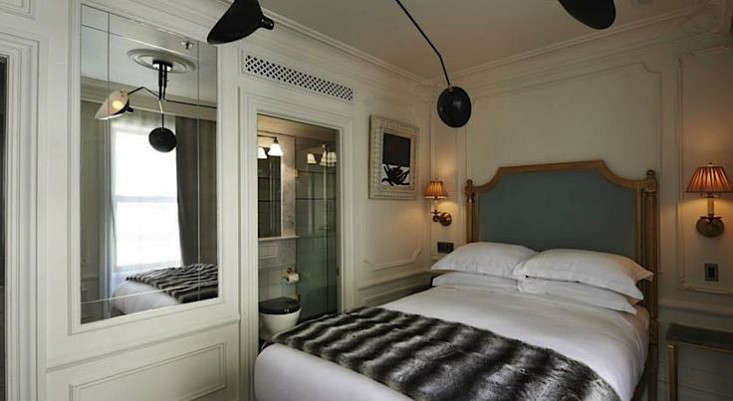
In New York City, where hotel rooms can be smaller than a decent walk-in closet and still cost enough to make your credit card breathe into a paper bag, The Marlton Hotel in Greenwich Village has pulled off a rare trick: it makes small feel glamorous. Not “small because we ran out of space” small. More like “tiny Parisian jewel box where your toothbrush suddenly feels cultured” small.
Located at 5 West 8th Street, between Fifth and Sixth Avenues, The Marlton is a boutique hotel with a literary past, a cinematic lobby, and rooms that whisper, “Yes, I am compact, but have you seen my brass fixtures?” The phrase “Honey, I Shrunk the Ritz” fits because the hotel borrows the romance of an old European grand hotel, then compresses it into Greenwich Village proportions. The result is charming, dramatic, and just practical enough for travelers who understand that in Manhattan, square footage is a luxury sport.
This is not a glass-tower hotel trying to impress you with a lobby the size of an airport terminal. The Marlton Hotel Greenwich Village experience is intimate, stylish, and steeped in downtown New York character. It is a place where design lovers notice the herringbone floors, bookish travelers think about Jack Kerouac, and everyone else simply wonders how the lobby manages to look like the set of a very fashionable novel.
A Greenwich Village Hotel With a Deliciously Messy Past
The Marlton’s story begins around 1900, when the building opened as the Hotel Marlton. Over the decades, it became part hotel, part long-term residence, part bohemian hideout, and part witness stand for the oddball genius of Greenwich Village. Writers, performers, artists, and downtown characters passed through its rooms. Its lore has been linked with Beat Generation names, actors, comedians, and the kind of people who made the Village feel less like a neighborhood and more like a permanent creative argument.
For years, the building also operated as housing connected to The New School, giving it another chapter in its life as a place for young thinkers, artists, and future over-caffeinated intellectuals. Later, hotelier Sean MacPherson helped transform the property into the polished boutique hotel it is today. The redesign did not erase the building’s age; it leaned into it. That is the clever part. The Marlton does not try to look newly manufactured. It tries to look as if it has always been this glamorous, and frankly, it is very convincing.
The Design: Parisian Mood, Village Soul
The Marlton Hotel’s design has often been described as French-inflected, and that is exactly right. But it is not a cartoon version of Paris. There are no fake Eiffel Towers, no accordion soundtrack, no waiter judging your pronunciation of “croissant.” Instead, the hotel borrows from the mood of a small European grand hotel: warm woods, crown moldings, marble bathrooms, antique-style lighting, brass accents, and a sense of romance that feels lived-in rather than staged.
The public spaces do most of the heavy lifting. The lobby is the hotel’s social heart, and it is generous in a way the rooms cannot be. There are plush seats, rich textures, a fireplace glow, books, conversation corners, and the kind of lighting that makes everyone look as if they are about to sign a book deal. It is a lobby built for lingering. Bring a laptop, a notebook, a date, or simply a strong desire to stare into the middle distance while holding coffee.
The rooms, meanwhile, are famously petite. Depending on the category, they can feel snug, especially for travelers arriving with two giant suitcases, a steamer, and the emotional baggage of shopping in SoHo. But the small footprint is part of the concept. These rooms are not trying to be suburban suites. They are polished city cabins with herringbone wood floors, marble bathrooms, brass fixtures, soft linens, robes, minibars, Wi-Fi, and the visual confidence of a room that knows it looks good from every angle.
Why Small Rooms Work Here
Small hotel rooms are not automatically charming. Sometimes they are just small, and you discover this while trying to open your suitcase and accidentally blocking the door, the bed, and possibly international trade. The Marlton gets away with it because the design is thoughtful. The rooms use mirrors, warm materials, high-impact details, and clean layouts to make the experience feel intentional.
For solo travelers and couples who plan to explore the city, the rooms are perfectly sensible. You sleep, shower, dress, and return to the lobby when you need more elbow room. The Village is your living room. Washington Square Park is practically your backyard. Cafes, restaurants, bars, bookstores, NYU buildings, comedy clubs, music history, and downtown shopping are all within easy reach.
For travelers who need to spread out like they are unpacking for a six-month artist residency, the standard rooms may feel tight. In that case, booking a larger room or suite is wise. The Marlton’s charm is real, but charm does not fold your sweaters for you.
Dining and Drinking: From Margaux Memories to Chez Nous Energy
The Marlton’s food and drink scene has long been part of its identity. Earlier coverage celebrated Margaux, the hotel’s Mediterranean-leaning restaurant that helped make the property feel like a downtown clubhouse. More recently, the hotel’s official dining presence has centered on Chez Nous at The Marlton, continuing the idea that the hotel is not just a place to sleep but a place to gather.
That matters in a neighborhood like Greenwich Village. A good hotel restaurant here cannot feel like a corporate lobby afterthought. It needs atmosphere. It needs a little flirtation. It needs to be the kind of place where breakfast turns into emails, emails turn into lunch, and lunch turns into “maybe one glass of wine, for cultural research.”
Whether you are stopping in for coffee, settling into dinner, or using the lobby as your unofficial office, The Marlton succeeds because it understands hospitality as theater. Not loud theater. More like a smart off-Broadway production with beautiful lighting and excellent upholstery.
The Location: West 8th Street, Washington Square, and Village Wandering
The Marlton’s address is one of its greatest assets. West 8th Street places guests close to Washington Square Park, one of New York City’s most famous public spaces and a central stage for Greenwich Village life. The park has long been connected with artists, students, musicians, activists, chess players, dog walkers, and people who appear to be conducting extremely serious conversations with pigeons.
From the hotel, you can walk to NYU, MacDougal Street, Washington Square Park, Fifth Avenue, the West Village, Union Square, SoHo, and the East Village. Subway access is convenient, but the real pleasure is walking. Greenwich Village rewards slow travel. Its streets refuse to behave like a grid, which is annoying if you are late and delightful if you are wandering.
The neighborhood is also a dream for eating and drinking. You can find old-school Italian, sleek cocktail bars, bakeries, coffee shops, late-night slices, destination restaurants, and tiny places that look unassuming until you realize everyone in line has a spreadsheet of recommendations. Staying at The Marlton means you are not commuting to the fun. You are already in it.
Who Should Stay at The Marlton Hotel?
Design lovers
If you care about lighting, texture, bathroom fixtures, lobby seating, and whether a hotel has a point of view, The Marlton is an easy yes. It is not generic. It has taste, and it knows it.
Couples and weekend travelers
The hotel is romantic without being syrupy. It works for anniversaries, New York mini-breaks, theater weekends, downtown dinner trips, and “we need to get out of our apartment before we start reorganizing the pantry for entertainment” staycations.
Solo travelers
The Marlton is especially good for solo travelers who want a stylish, safe-feeling, central base with a lobby that offers company without forcing conversation. You can read, work, people-watch, or pretend to be writing a screenplay. All are accepted Village activities.
NYU families and culture seekers
Because it sits near Washington Square Park and NYU, the hotel is practical for campus visits. It is also ideal for travelers interested in music history, literary history, downtown theater, galleries, independent bookstores, and neighborhoods that still have a pulse after 10 p.m.
What to Know Before Booking
First, expect compact rooms. The Marlton is a boutique hotel in a historic building, not a sprawling convention property. If you want a huge bathroom, multiple closets, and enough room to practice ballroom dancing, this is not your hotel. If you want atmosphere, location, and design, keep reading.
Second, the lobby is popular. Locals and guests use it, which gives the hotel its buzz. That energy is part of the appeal, but it also means the common spaces can feel lively. Think “stylish neighborhood living room,” not “silent monastery with room service.”
Third, book based on your travel style. A petite room can be perfect for one person or a minimalist couple. A larger queen room or suite makes sense for longer stays, luggage-heavy trips, or anyone who likes to unpack as if staging a lifestyle photo shoot.
The Marlton vs. Other Boutique Hotels in NYC
New York has no shortage of boutique hotels. Some go industrial. Some go ultra-luxury. Some go so minimalist that you wonder whether furniture has been banned. The Marlton stands apart because it feels historic and intimate without becoming dusty. It offers downtown cool without trying too hard, which is very hard to do because trying too hard is practically Manhattan’s unofficial cardio.
Compared with many boutique hotels in NYC, The Marlton is less about spectacle and more about mood. The hotel does not scream. It murmurs. It invites you into a world of polished wood, old books, velvet, marble, and low conversation. It feels like a place where the past has been edited, not embalmed.
Experience Add-On: A Stay at The Marlton, Imagined Like a Perfect Village Weekend
Picture arriving on a Friday afternoon, slightly rumpled from travel and deeply convinced that your suitcase has gained weight since you left home. The Marlton’s entrance on West 8th Street does not shout for attention. It simply stands there with old-world confidence, the architectural equivalent of someone who owns a great coat and never mentions it.
You check in, take in the lobby, and immediately understand why people talk about this hotel as much as they do. The room may be compact, but the public space expands the experience. You drop your bags upstairs, admire the bathroom details, test the robe because research is important, and then return downstairs for coffee or a drink. The hotel becomes less a room and more a rhythm.
The first walk should be to Washington Square Park. There is no better introduction to Greenwich Village. You pass students, locals, musicians, chess players, tourists, dogs with stronger personal brands than most influencers, and at least one person who seems to be giving a passionate lecture to absolutely no one. This is the Village doing what it does best: making daily life feel improvised.
Dinner can go in several directions. You could stay close and enjoy the hotel’s own dining room, where the atmosphere keeps you in the Marlton mood. Or you could wander toward MacDougal Street, the West Village, or SoHo, letting hunger and storefront lighting make the decision for you. The best Greenwich Village nights are rarely overplanned. They begin with a reservation and end with “Wait, is that jazz coming from a basement?”
Back at the hotel, the lobby has shifted into evening mode. The light is softer. The conversations are lower. Someone is reading. Someone is flirting. Someone is working on a laptop with the grave expression of a person who has either built a startup or forgotten a password. You sit for a while because the room encourages it. This is the secret of The Marlton: it gives you permission to pause in a city that usually acts like pausing is a minor crime.
The next morning, the small room makes sense. You are not in New York to admire empty floor space. You are here to walk. You get dressed, step outside, and the Village is already awake: coffee cups, bakery smells, delivery bikes, brownstones, storefronts, and that particular downtown feeling that the day could become sophisticated or ridiculous at any moment.
Spend the afternoon exploring independent shops, side streets, and nearby neighborhoods. Go north to Union Square, west into the West Village, south toward SoHo, or east toward the East Village. The Marlton’s location makes all of these choices feel easy. You are centrally placed without being swallowed by Midtown noise, close to the action without sleeping inside a billboard.
By checkout, the hotel has done something clever. It has made you remember details: the lobby chairs, the bathroom brass, the literary aura, the short walk to the park, the glow of the fireplace, the way the building feels both polished and eccentric. Many hotels give you a bed. The Marlton gives you a setting. And in Greenwich Village, setting is half the story.
Conclusion: A Tiny Grand Hotel With a Big Village Personality
The Marlton Hotel in Greenwich Village is not for everyone, which is part of its charm. Travelers who want enormous rooms, anonymous luxury, and a lobby that feels like a corporate atrium may want to look elsewhere. But for guests who love boutique hotels with history, design, atmosphere, and a sense of place, The Marlton is one of downtown Manhattan’s most memorable stays.
It is “Honey, I Shrunk the Ritz” in the best possible way: grand-hotel romance scaled down for West 8th Street, polished without being stiff, compact without being careless, and stylish without becoming exhausting. The Marlton understands that in New York, luxury is not always about having more space. Sometimes it is about being in exactly the right place, with exactly the right mood, and a lobby that makes you want to cancel your next appointment.
Note: This article synthesizes publicly available information from the hotel’s official materials, New York City tourism and preservation resources, and reputable travel, design, dining, and guest-review publications. Hotel amenities, dining names, hours, room categories, and rates may change, so readers should confirm current details directly before booking.