

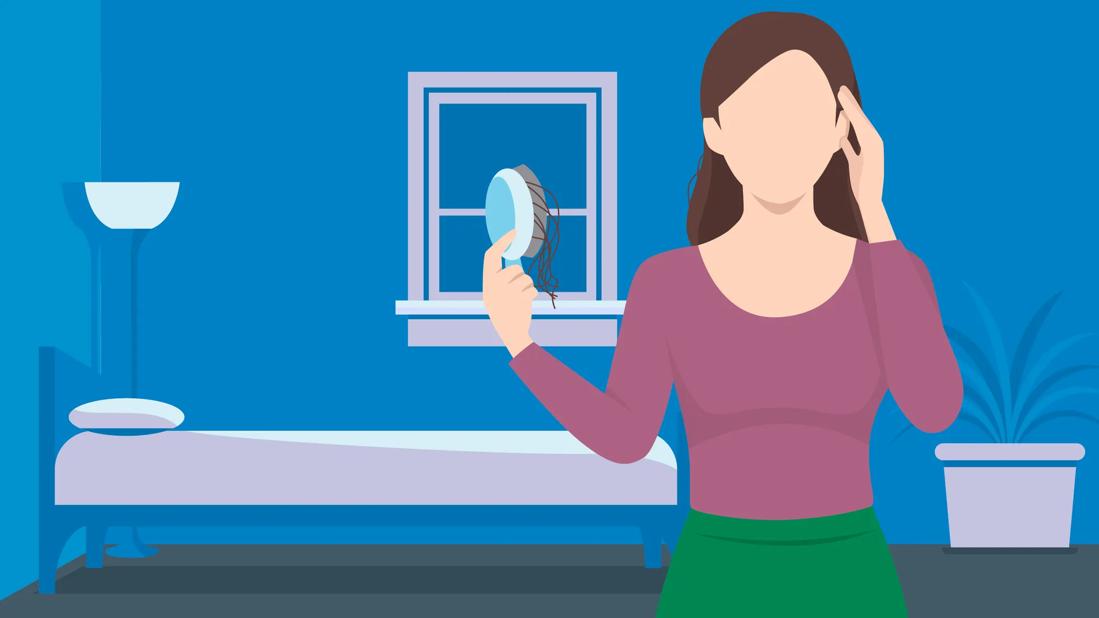
You step out of the shower, glance down, andbamthere’s a small tumbleweed of hair doing the backstroke toward the drain.
Your first thought: “Am I going bald?” Your second thought: “Should I name it?”
Take a breath. Hair shedding is part of being a mammal with a scalp. But sometimes hair loss is your body’s way of
waving a tiny red flag and whispering, “Hey, let’s talk.”
Quick note: This article is for general education and isn’t a substitute for personalized medical advice. If you’re worried, a primary care clinician or board-certified dermatologist can help you sort out what’s normal for you.
What’s “normal” hair loss, anyway?
Most people shed some hair every day as part of the natural growth cycle. In plain English: hairs “expire,” let go, and
make room for new oneslike a very slow, very dramatic game of musical chairs.
The everyday range
A commonly cited “normal” range is roughly 50 to 100 hairs per day. That number is more like a speed limit than a GPS route:
it’s helpful, but it won’t match everyone’s commute.
Why it can look worse than it is
- Wash day math: If you wash your hair every 3–5 days, you may see several days’ worth of shed hairs all at once. That can feel alarming even when it’s normal.
- Long hair is louder: A 12-inch strand looks more dramatic in your brush than a 2-inch strand. Same number of hairs, different visual chaos.
- Curly/coily hair hides shed: Shed hairs can get “caught” in textured hair and release later during detanglingso it looks like a sudden shed event.
The goal isn’t to count every hair like you’re doing a forensic audit. The goal is to notice patterns:
Has something changed? Is it getting worse? Are there other symptoms?
Hair shedding vs. hair loss vs. hair breakage (yes, they’re different)
“My hair is falling out” can mean three different thingsand each has a different playbook.
1) Shedding (temporary increase in hairs letting go)
Shedding is when more hairs than usual enter the resting/shedding stage and drop. A classic example is
telogen effluvium, which can happen after stress, illness, surgery, major weight loss, or childbirth.
2) Hair loss (reduced density because growth is affected)
Hair loss is when hair density decreases because follicles are miniaturizing (as in androgenetic alopecia, aka pattern hair loss),
being attacked by the immune system (as in alopecia areata), or getting inflamed/scarred (scarring alopecias).
3) Breakage (the hair shaft snaps)
Breakage can mimic shedding, but the issue is damage to the strandoften from heat styling, bleaching, tight styles,
aggressive brushing, or chemical treatments.
A simple clue
Look at a strand you find: shed hairs often have a tiny “club” bulb at one end; broken hairs usually don’t.
This isn’t a perfect test, but it can point you in the right direction.
The hair growth cycle: the reason your hair has a schedule (and refuses to share it)
Your scalp hair cycles through phases. The important takeaway: you can have a “trigger” today and not see shedding until weeks later.
Hair is like that friend who replies three months after your text.
The main phases
- Anagen (growth): The long phase. Most scalp hairs are here.
- Catagen (transition): A brief in-between phase.
- Telogen (rest): The resting phase before the hair sheds.
- Exogen (release): The actual shedding/release of the hair fiber (sometimes described as part of telogen).
In many people, roughly 85–90% of scalp hairs are actively growing at a given time, with a smaller portion resting.
That’s why you don’t normally shed all at once like a golden retriever in spring.
Common reasons you might shed more than usual
Increased shedding is often the body’s response to a “stress signal.” Stress doesn’t only mean emotional stressit can be illness,
inflammation, hormonal shifts, medication changes, nutritional gaps, or major life events.
Telogen effluvium: the most common “why is this happening?!” moment
Telogen effluvium is a common cause of sudden, noticeable shedding. The shed often begins
about 2–3 months after the triggerso the culprit may be something you’ve already survived and filed away as “over it.”
Postpartum shedding
Many people notice heavier shedding a few months after giving birth. During pregnancy, higher hormone levels can keep more hairs in the growth phase,
making hair look fuller; after delivery, levels shift back, and more hairs enter shedding together.
The good news: for most, this improves and returns toward baseline within the first postpartum year.
Illness, fever, COVID-19, surgery, and big physiological stress
High fever, significant illness, surgery, and major inflammatory events can reset the hair cycle. This is one reason people notice shedding after
recovering from certain infections.
Nutrition and rapid weight loss
Hair is not your body’s top priority when resources are scarce. Rapid weight loss, very low-calorie diets, low protein intake, and iron deficiency can all contribute to shedding or thinning.
(Important: “just take supplements” is not a strategyidentifying a real deficiency is.)
Medications and medical conditions
Some medications can contribute to shedding in certain people, and conditions such as thyroid disease can affect hair. If shedding starts after a new medication,
don’t stop it on your owntalk to your prescriber about options.
Hairstyles and grooming habits
Tight ponytails, braids, extensions, and styles with prolonged tension can cause traction alopeciaespecially around the hairline.
Heat and bleach can cause breakage that looks like thinning.
When to worry: red flags that deserve a real evaluation
Here’s the part you came for. If you notice any of the following, it’s smart to schedule a visit with a clinicianpreferably a dermatologist if available.
Worry signals
- Sudden bald patches (especially smooth, round patches) or rapidly expanding areas of loss
- Scalp symptoms like pain, burning, heavy itching, scaling, pustules, or bleeding
- Hair loss in eyebrows or eyelashes or other body hair changes
- Receding hairline or widening part that’s progressively worsening
- Shedding that lasts longer than ~6 months or keeps intensifying
- Noticeable thinning plus systemic symptoms (fatigue, unexpected weight change, menstrual changes, fevers)
- Shiny, scar-like scalp areas where follicles seem “gone” (possible scarring alopeciatime matters)
Also: if your hair loss is affecting your mental health, that alone is a valid reason to seek help. Hair is personal, and distress is data.
How to “measure” hair shedding without losing your mind
You don’t need to count every hair. But you can track changes in a calm, low-effort waylike a grown-up version of keeping receipts.
Easy tracking that actually helps
- Monthly photos: Same lighting, same angle, same part line. (Your phone’s camera roll is basically a medical record with filters.)
- Ponytail check: If your ponytail circumference is shrinking over time, that’s a useful clue.
- Part width: A widening part can suggest pattern hair loss, especially if it’s gradual.
- Brush reality: If the brush is suddenly collecting dramatically more hair than usual for weeks, that’s worth noting.
What not to do
Don’t panic-Google “hair loss pictures” at 1:00 a.m. The internet will diagnose you with everything from “normal human” to “rare tropical curse.”
Stick to patterns, time course, and symptoms.
What your clinician or dermatologist may do
A good evaluation is part detective work, part biology lesson, part reassurance (because hair loss is stressfuleven when it’s temporary).
Expect questions like:
- When did it start? Was it sudden or gradual?
- Any recent illness, fever, surgery, pregnancy, new stressor, or major weight change?
- New medications or dosage changes?
- Hair care practices (bleach, relaxers, heat, extensions, tight styles)?
- Family history of pattern hair loss?
Possible exam tools
- Scalp and hair exam (distribution matters: diffuse vs patchy vs patterned)
- Dermoscopy/trichoscopy (a magnified look at follicles and shafts)
- Targeted lab tests when appropriate (for example, thyroid tests, blood counts, iron studies)
- Scalp biopsy in certain cases, especially when scarring alopecia is suspected
The point is not to run every test on Earthit’s to match the workup to your pattern, timeline, and symptoms.
What you can do right now (that won’t make things worse)
Whether your shedding is normal or not, these are generally hair-friendly moves that support scalp health and minimize breakage.
Hair care “do’s”
- Be gentle: Detangle slowly, especially when wet. Use conditioner and wide-tooth combs where helpful.
- Dial down heat: If you use heat tools, reduce frequency and use heat protectant.
- Loosen tension: Rotate hairstyles; avoid tight styles that pull at the hairline.
- Scalp health counts: Treat significant dandruff or scalp inflammationongoing irritation can worsen shedding.
Nutrition basics
Hair is made of protein. Extreme restriction can show up on your scalp. Aim for a balanced diet with enough protein,
and speak with a clinician before starting high-dose supplementsespecially ironbecause more is not automatically better.
Stress (the realistic version)
Stress management won’t “instantly regrow hair,” but it may help prevent ongoing triggers. Consider sleep, movement, therapy, mindfulness,
and supportwhatever is sustainable for you.
Treatment options (by the most common causes)
Telogen effluvium (stress/illness-related shedding)
The main treatment is addressing the trigger and giving follicles time to cycle back. Many cases improve over months.
If shedding is intense or prolonged, a clinician may look for ongoing triggers (thyroid issues, iron deficiency, medication effects, chronic stressors).
Pattern hair loss (androgenetic alopecia)
Pattern hair loss is common and tends to be gradual. Treatments exist, and earlier intervention generally helps.
Topical minoxidil is a well-known, evidence-based option; some prescription options (such as finasteride for many men,
and other clinician-guided therapies for women) may be considered depending on your situation and medical history.
One crucial reality check: most treatments work only while you keep using them. Hair follicles are loyal, but not in a “forever” waymore in a “subscription” way.
Alopecia areata (autoimmune, often patchy)
This can appear as sudden round patches of hair loss. Dermatologists may treat with therapies that calm immune activity around follicles.
Because it can resemble other conditions, diagnosis matters.
Traction alopecia (tension-related)
Reducing tension is the cornerstone. Early traction alopecia can improve, but long-term, repeated pulling can cause permanent loss.
If you love protective styles, a stylist who prioritizes scalp health is worth their weight in gold.
Scarring alopecias (inflammation that damages follicles)
These require prompt evaluation. The goal is to stop inflammation early to protect follicles.
If you suspect thisespecially with pain, burning, scaling, or shiny scar-like areasdon’t “wait it out.”
FAQ: quick answers to common hair-shedding questions
Is it normal to lose more hair in the shower?
Often, yesespecially if you don’t wash daily. Showering and detangling release hairs that were already in the shedding phase.
The key is whether the amount is dramatically different from your normal for several weeks.
Does wearing hats cause hair loss?
Not typically. Hair loss is more often about genetics, hormones, inflammation, traction, or a shift in the hair cycle.
The exception: very tight headwear causing friction or tension could contribute to breakage or traction in susceptible areas.
Can stress really cause hair loss?
Yesstress (physical or emotional) can trigger shedding in some people. The tricky part is timing: shedding may show up months after the event.
When should I see a dermatologist?
If you have bald patches, scalp symptoms, progressive thinning, eyebrow/eyelash loss, or shedding that persists beyond several months,
a dermatologist can help identify the cause and discuss treatment options.
Real-life experiences: what “normal” vs “concerning” often looks like (extra stories + lessons)
Below are examples of experiences people commonly describe in clinics and day-to-day life. These aren’t diagnosesjust realistic snapshots
that can help you recognize patterns and decide whether it’s time to get checked.
Experience 1: “It started after I got sick… but I feel fine now?”
A few months after a rough flu (or a stressful surgery), you notice hair everywhere: pillow, hoodie, shower drain. It feels sudden and intense.
The timeline is the giveawayshedding that begins 8–12 weeks after a major physical stress often fits a telogen effluvium pattern.
People frequently say, “But that was months ago!” Exactly. Hair operates on delayed billing.
Lesson: If the shedding is diffuse (all over), you see no bald patches, and your scalp feels normal, it may be temporary
but if it’s still heavy past several months or you have other symptoms (fatigue, weight changes), get evaluated.
Experience 2: “My part is getting wider, but I’m not shedding handfuls.”
This is a classic way pattern hair loss sneaks in: less drama, more slow plot twist. You don’t see a shocking amount of hair in your brush,
but photos show your part widening or your ponytail feeling thinner over time. Many women notice thinning near the top/part; many men notice
temple recession or a thinning crown.
Lesson: Gradual change is still a change. This is a good time to talk to a dermatologist, because earlier treatment tends to be more helpful.
Experience 3: “Postpartum hair loss is making me feel like a stressed-out chia pet.”
Around the 3–4 month postpartum mark, shedding ramps up. It’s common to find strands wrapped around your fingers in the shower and tiny “baby hairs”
sticking up later as regrowth starts. It can be emotionally brutal because you’re already tired and your body is doing a lot.
Lesson: In many cases this improves over time. If shedding is extreme, you develop bald patches, or it doesn’t begin to calm down as months pass,
it’s worth checking for iron deficiency, thyroid issues, or overlapping pattern hair loss.
Experience 4: “My scalp hurts and the hair is disappearing where it burns.”
This is the “don’t wait” scenario. Some people describe pain, burning, tenderness, scaling, or pimples on the scalpplus thinning in specific areas.
When symptoms and hair loss travel together, inflammation may be involved, and certain conditions can cause permanent follicle damage if not treated early.
Lesson: Painful or inflamed scalp + hair loss deserves prompt medical attention.
Experience 5: “My hairline is thinning where my style pulls.”
You love sleek ponytails, braids, loc maintenance, extensions, or a tight updo. Over time, the hairline (especially temples) starts looking thinner,
and you notice short, broken hairs along the edges. This can be traction alopecia and/or breakage from tension and friction.
Lesson: Switching to lower-tension styles, giving edges breaks, and protecting fragile hair can make a big differenceespecially early.
If you’re seeing actual thinning (not just breakage), a dermatologist can help confirm what’s happening.
If any of these stories feel uncomfortably familiar, don’t panicbut do take it seriously. Hair loss is often treatable or at least manageable,
and getting clarity is usually a relief.