

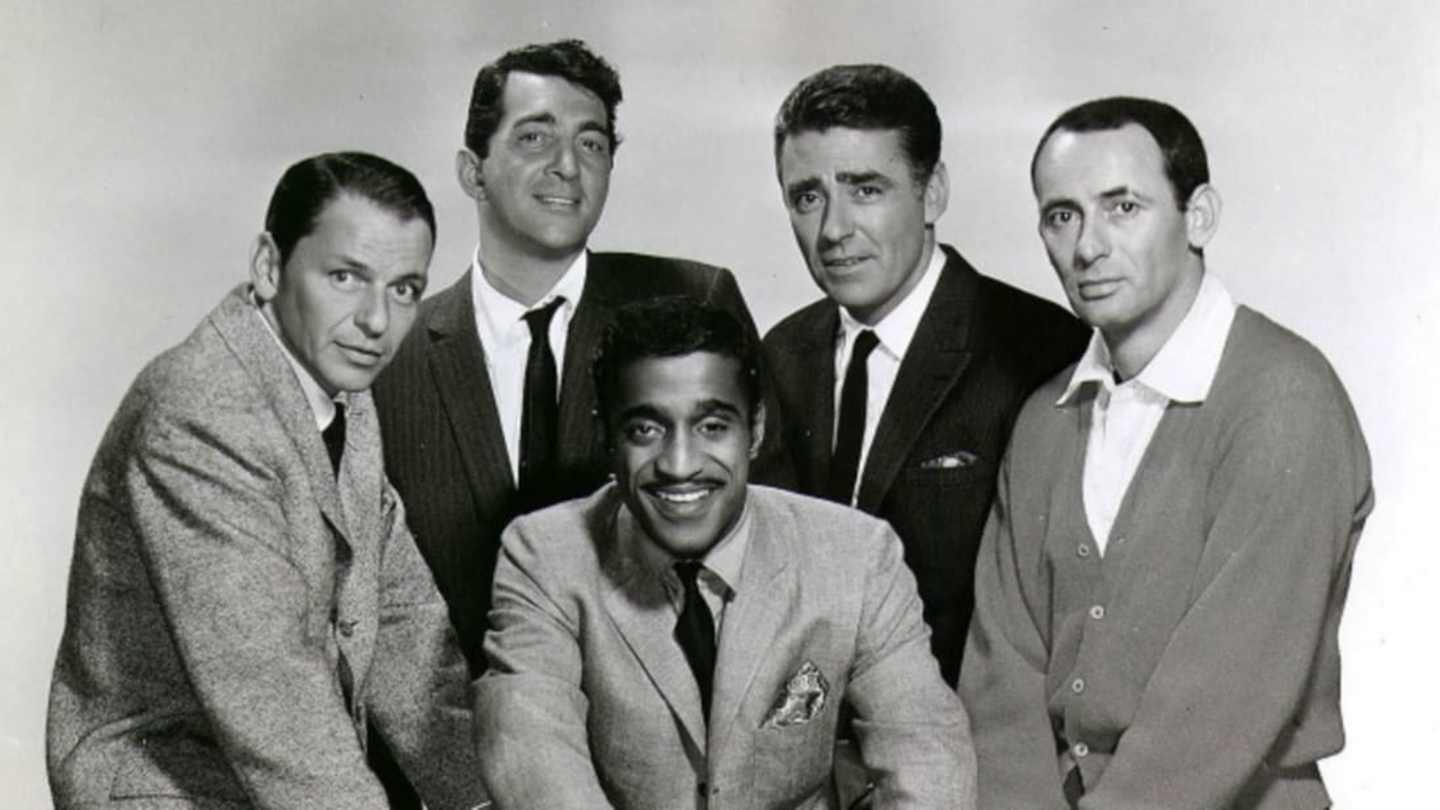
If you hear the words “Rat Pack,” your brain probably lights up with a very specific image: Frank Sinatra in a tux, Dean Martin looking like he just woke up handsome, Sammy Davis Jr. tap-dancing through show business history, and Las Vegas glowing behind them like a neon jukebox. But the funny thing about the Rat Pack name is that it did not begin as a polished stage brand. It was not cooked up by a publicist. It was not printed first on a casino poster. It started as a joke, a sharp little remark from Lauren Bacall, and somehow that joke became one of the most durable nicknames in American entertainment.
The short version is this: the Rat Pack got its name because Bacall reportedly looked at Humphrey Bogart and his exhausted, hard-partying friends after a rowdy stretch of socializing and said they looked like a pack of rats. The longer version is much more fun. It begins in Hollywood living rooms, moves through Las Vegas showrooms, and ends with a group of entertainers who accidentally turned friendship into a cultural style.
The Rat Pack Was Not Originally Sinatra’s Group
One of the biggest misconceptions about the Rat Pack is that Frank Sinatra created it from scratch in Las Vegas. Sinatra became the face of the Rat Pack, no question. But the original Rat Pack formed around Humphrey Bogart and Lauren Bacall in the late 1940s and early 1950s. Their home in Holmby Hills, Los Angeles, became a lively headquarters for actors, writers, entertainers, agents, and assorted Hollywood characters who knew how to turn dinner into an event and a nightcap into a sunrise problem.
This first circle included Bogart, Bacall, Sinatra, Judy Garland, David Niven, talent agent Swifty Lazar, restaurateur Mike Romanoff, Sid Luft, and other famous friends who drifted in and out. It was glamorous, yes, but not in the stiff, red-carpet way. It was more like a private club for people who were famous enough to avoid normal rules and witty enough to invent their own.
They were not just sitting around discussing box office receipts over tea. The original Rat Pack was a social organism: part drinking club, part comedy troupe, part emotional support system for celebrities who lived under a microscope. In an era before Instagram, paparazzi still existed, gossip columns were ferocious, and Hollywood reputations were both valuable and fragile. The group offered a place where stars could drop the pose, crack jokes, and be ridiculous in peace.
Lauren Bacall’s Famous Line
The most repeated story says the name came from Lauren Bacall herself. After several days of partying, including a trip connected to Las Vegas, Bacall saw Bogart and his friends looking worn out, rumpled, and probably not ready for a magazine cover. Her reported reaction was something close to: “You look like a goddamn rat pack.”
That was it. No branding meeting. No logo launch. Just Bacall, one of the sharpest tongues in Hollywood, observing that these magnificent screen gods looked like they had been dragged through a nightclub backwards. The phrase made everyone laugh, and because good jokes travel faster than studio memos, “Rat Pack” stuck.
The charm of the origin story is that the name was affectionate and insulting at the same time. It suggested loyalty, mischief, exhaustion, and a certain refusal to behave. A “pack” moves together. A “rat” sneaks around after dark. Put them together and you have a perfect description of a Hollywood crowd that knew where the party was, who had the key, and how to keep the newspapers guessing.
The Original Rat Pack Had Its Own Private Rules
The first Rat Pack was playful but not completely formless. By many accounts, the group gave itself mock-official titles. Bacall was often described as the “Den Mother.” Sinatra was called the “Pack Master.” Bogart had a leadership role of his own, sometimes framed as public relations man or spiritual center of the group. Judy Garland, Sid Luft, and Swifty Lazar also had roles in the club’s joking structure.
They reportedly had a motto: “Never rat on a rat.” That line is practically a whole movie in five words. It captured the code of loyalty that made the group appealing. These were people who lived in a gossip-driven town, so privacy mattered. You could laugh, drink, argue, flirt, sing, or collapse into a chair, but you were not supposed to sell out the pack.
There was even talk of insignia and mock ceremonies. The whole thing had the flavor of a college secret society, except the members were movie stars and the clubhouse was wherever Bogart and Bacall happened to be pouring drinks.
How Sinatra Inherited the Name
Humphrey Bogart died in 1957, and with his death the original Rat Pack lost its center of gravity. Sinatra, who had been part of the earlier circle, gradually became the leader of a new, more famous version. This second Rat Pack is the one most people know: Frank Sinatra, Dean Martin, Sammy Davis Jr., Peter Lawford, and Joey Bishop.
The shift from Bogart’s living room to Sinatra’s Las Vegas orbit changed the meaning of the name. The original Rat Pack was a private Hollywood social circle. The Sinatra-era Rat Pack became a public entertainment phenomenon. They sang together, joked together, appeared in movies, and turned their friendships into a stage act that felt loose even when it was carefully controlled.
Sinatra was the gravitational force. Dean Martin brought relaxed comic cool. Sammy Davis Jr. brought explosive talent and a work ethic that could make a spotlight sweat. Peter Lawford added movie-star polish and a Kennedy-family connection. Joey Bishop supplied dry humor and emcee timing. Together, they looked less like a formal group and more like a party that had accidentally sold tickets.
Why They Did Not Always Love the Name
Here is another twist: the Sinatra-era performers did not necessarily go around proudly calling themselves the Rat Pack. Some accounts say they preferred names like “the Summit” or “the Clan.” “The Summit” suited Sinatra because it sounded powerful and important, like a meeting of presidents who happened to know every verse of “Fly Me to the Moon.”
“The Clan,” however, carried an ugly echo because of its similarity to “Klan,” and that association made it uncomfortable, especially for a group that included Sammy Davis Jr., one of the most visible Black entertainers in America. The press, meanwhile, loved “Rat Pack.” It was shorter, sharper, and juicier. Journalists could not resist it. Audiences remembered it. Eventually, the nickname became bigger than the men’s objections.
That is how language often works in popular culture. A nickname starts as a joke, escapes its original setting, gets repeated by reporters, and becomes permanent before anyone can vote on it. By the time Sinatra could complain about the phrase, the public had already bought the souvenir ashtray.
Las Vegas Turned the Rat Pack Into a Legend
Las Vegas was the perfect stage for the Sinatra-era Rat Pack. In the late 1950s and early 1960s, the city was transforming from a desert gambling town into a national entertainment destination. Casinos needed stars to fill rooms. Stars needed glamorous rooms to fill. The Sands Hotel and Casino became one of the group’s most famous playgrounds, especially its Copa Room.
The Rat Pack’s performances were built around music, jokes, and the feeling that anything might happen. Sinatra might sing a serious ballad, Martin might wander through a punchline with a drink in his hand, and Davis might steal the room with a burst of song, dance, impressions, or pure show-business electricity. The appeal was not only the talent. It was the camaraderie. Audiences felt they were watching friends entertain each other, with the crowd lucky enough to be nearby.
Of course, “effortless” entertainment usually requires a lot of effort. These men were professionals. They understood timing, rhythm, audience mood, and the value of seeming spontaneous. The Rat Pack brand was built on the illusion that the show was just a continuation of the party. That illusion was powerful enough to define Las Vegas cool for generations.
Ocean’s Eleven Made the Image Permanent
The 1960 film Ocean’s Eleven helped freeze the Rat Pack in popular memory. The movie starred Sinatra, Martin, Davis, Lawford, and Bishop in a Las Vegas heist story about a group of World War II veterans planning to rob casinos. As cinema, it was not exactly a flawless jewel of tight plotting. As a time capsule of early 1960s cool, it is priceless.
The film worked because it gave audiences the Rat Pack fantasy in concentrated form: tuxedos, casinos, inside jokes, friendship, danger, and the sense that the actors might be having more fun than the characters. It blurred the line between performance and persona. Were viewers watching Danny Ocean and his crew, or were they watching Sinatra and his friends play dress-up with a studio budget? The answer was yes.
That blurring became central to the Rat Pack myth. Their movies and stage shows made audiences feel included in a private club. The name “Rat Pack” was essential to that feeling. It sounded like a password.
Why the Name Worked So Well
Many celebrity nicknames fade because they sound manufactured. “Rat Pack” survived because it had texture. It was funny, slightly rude, and memorable. It suggested nightlife without saying “nightlife.” It suggested loyalty without saying “friendship.” It suggested trouble without requiring anyone to file a police report.
The name also had contrast. These were elegant men in tuxedos, yet the name was scruffy. They sang standards, wore tailored suits, dated movie stars, and walked through casinos like royalty. But “Rat Pack” gave the glamour a wink. It said: yes, they are sophisticated, but do not leave them alone with your liquor cabinet.
That tension is why the name still works. “The Summit” sounds impressive, but a little stiff. “The Clan” sounds uncomfortable for obvious reasons. “Rat Pack” sounds alive. It has motion, humor, and attitude. It is not polite, and that is the point.
The Rat Pack and American Masculinity
The Rat Pack name also stuck because it captured a certain mid-century idea of masculine friendship. The group projected confidence, style, appetite, and loyalty. They were not presented as lonely geniuses; they were a pack. Their power came from moving together, laughing together, and backing each other up.
That image was attractive, but it was also complicated. The Rat Pack era included jokes and attitudes that modern audiences may find dated or uncomfortable. Their world was smoky, male-dominated, and sometimes careless in the way it treated women and race. Sammy Davis Jr., despite being central to the group’s magic, lived and worked in a country where racism shaped nearly every opportunity and insult. Sinatra often used his influence to support Davis and challenge segregation, but the broader culture around them was far from fair.
Understanding the Rat Pack means holding both truths at once: they were brilliant entertainers who helped define American cool, and they were products of an era with flaws that should not be airbrushed away. The name carries the glamour, but history carries the footnotes.
From Private Joke to Pop Culture Template
After the Rat Pack, American media kept trying to recreate the formula. The “Brat Pack” of 1980s young actors borrowed the structure of the name. Other groups in music, sports, comedy, and film have been described as some kind of “pack” ever since. The original phrase became a template for celebrity friendship with attitude.
But few later versions had the same accidental magic. The Rat Pack name worked because it was not planned. It came from an inside joke, then grew into a public myth. That is difficult to reproduce. You can assemble famous people in a room, but you cannot schedule chemistry for 8 p.m. and midnight with a two-drink minimum.
Experiences Related to the Rat Pack Name
One of the most interesting experiences connected to the Rat Pack is discovering that the name feels different depending on where you encounter it. Watch Ocean’s Eleven at home, and the Rat Pack seems like a stylish movie gang. Listen to a live Sinatra recording from Las Vegas, and the name becomes musical shorthand for tuxedo swagger. Read about Bogart and Bacall’s Holmby Hills circle, and suddenly the same name feels more intimate, like a private joke that escaped through the back door.
For many fans, the Rat Pack experience begins with curiosity. Someone hears “Ain’t That a Kick in the Head,” sees a black-and-white photo of Sinatra, Martin, and Davis, or watches an old clip of the group trading jokes onstage. At first, it looks simple: famous men having fun. But the deeper you go, the more layered it becomes. You find Bogart before Vegas. You find Bacall before the brand. You find Judy Garland, David Niven, and a whole social world that rarely appears on modern posters.
Another experience is realizing how much of the Rat Pack legend depends on atmosphere. The clothes matter. The rooms matter. The cigarette smoke, the orchestra, the casino lights, the clinking glasses, the late-night timingall of it shaped the mythology. The Rat Pack name does not feel like it belongs at noon in a conference room. It belongs after dark, when the band is loose, the jokes are faster, and somebody important is pretending not to be impressed.
Modern Las Vegas has changed so much that chasing the old Rat Pack feeling can be strange. The Sands is gone. The city is bigger, louder, and more corporate. Yet the Rat Pack remains part of the city’s emotional architecture. Tribute shows, vintage photos, casino lounges, and old recordings keep the mood alive. Visitors may not be able to step into the original Copa Room, but they can still understand why that era became legendary. It offered a fantasy of friendship, elegance, rebellion, and perfectly timed punchlines.
There is also a writing lesson in the Rat Pack name. Great names often do not explain everything. They suggest. “Rat Pack” does not tell you who sang what song or which hotel booked which act. It gives you an image and lets your imagination do the rest. That is why it remains strong as a keyword, a headline, and a cultural reference. It is brief, vivid, and slightly dangerous. In SEO terms, it has unbeatable brand recall. In human terms, it just sounds cool.
The best experience, though, is the moment the origin story clicks. The Rat Pack was not born as a clean entertainment label. It began with a woman looking at a group of exhausted Hollywood legends and roasting them with surgical precision. That tiny spark became a phrase that outlived nightclubs, marriages, movies, and hotels. Not bad for a joke tossed into the air after a long party.
Conclusion: A Name With Teeth, Timing, and a Tuxedo
So, how did the Rat Pack get its name? It began with Lauren Bacall’s witty description of Humphrey Bogart and their hard-partying Hollywood friends, who looked less like polished stars and more like a battered little army of nightlife survivors. The phrase stuck inside Bogart and Bacall’s circle, then later followed Frank Sinatra into a new era with Dean Martin, Sammy Davis Jr., Peter Lawford, and Joey Bishop.
The name endured because it was too good to die. It was funny, vivid, and just disrespectful enough to feel honest. It captured the group’s loyalty, mischief, glamour, and after-hours energy in two unforgettable words. The Rat Pack may have preferred other labels at times, but history voted with its ears. “Rat Pack” had swing.
In the end, the name tells us why the group still fascinates people. The Rat Pack was not merely a lineup of entertainers. It was a mood: friendship under neon, jokes in tuxedos, talent with a glass in its hand, and a private Hollywood wisecrack that became public legend.
Note: This article is written for editorial and educational publication, based on historically reported accounts of the Rat Pack’s Hollywood origin, Las Vegas fame, and lasting influence in American entertainment culture.