

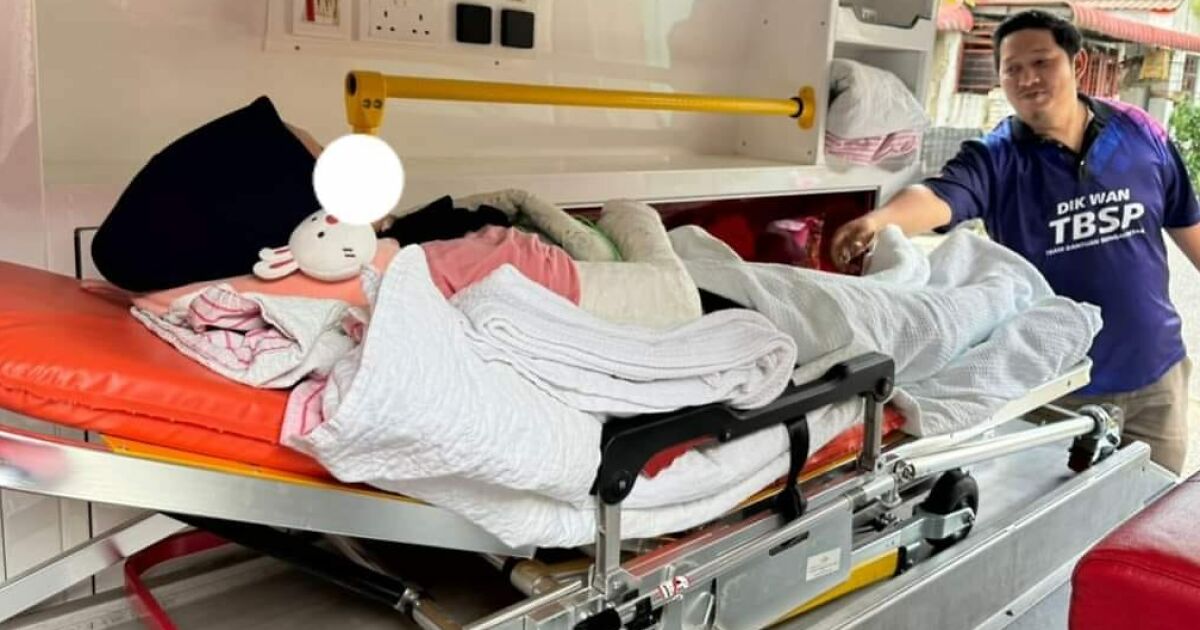
Some survival stories sound like they were written by a Hollywood screenwriter who drank three espressos and said, “Let’s raise the stakes.” But this one is painfully real. A 32-year-old Malaysian mother reportedly survived a violent attack after her husband pushed her into a ravine near Gerik, leaving her badly injured while their two young children sat in the car.
What happened next is the kind of human endurance that makes the word “miracle” feel too small. Despite severe injuries, including reported spinal damage and broken bones, the woman spent roughly nine hours climbing and crawling her way back toward the roadside. She was not fueled by comfort, strength, or luck. She was fueled by the thought of her children.
This story is not just about a fall. It is about intimate partner violence, coercive control, survival instinct, motherhood, and the uncomfortable truth that danger does not always arrive wearing a stranger’s face. Sometimes it sits in the driver’s seat.
The Morning That Turned Into a Fight for Survival
The incident reportedly began on July 27 at around 5 a.m., when the woman’s husband picked her up from her workplace in Kuala Lumpur. Their two children, ages 6 years old and 5 months old, were in the back seat. What should have been an ordinary ride home turned into a frightening confrontation.
According to accounts cited by local and regional media, the couple argued during the journey. The husband allegedly stopped the car, tried to choke his wife, pulled out a knife, and threatened to kill her. She attempted to escape, but he reportedly stopped her. That detail matters because domestic violence is rarely a single “lost temper” moment. It often includes restriction, intimidation, threats, and control long before the worst physical violence occurs.
The argument allegedly continued along the East-West Highway near Gerik. At one point, the husband reportedly pulled over again. During the struggle, he pushed her out of the car and into a ravine estimated at about 10 meters, or roughly 33 feet, deep. Her children were said to have witnessed the horrifying scene from the back seat.
Then came the silence. The kind of silence after impact. The kind that forces a person to decide, second by second, whether survival is still possible.
Nine Hours in a Ravine: Pain, Fear, and One Reason to Keep Moving
Falling 33 feet is not a dramatic movie tumble where someone pops up, dusts off their jacket, and says, “Well, that was inconvenient.” A fall from that height can cause spinal injuries, fractures, internal injuries, bleeding, shock, and loss of consciousness. Reports said the woman suffered serious injuries, including damage to parts of the spine, a fractured waist, hip injuries, a broken arm, and lung-related injuries.
Yet she moved.
She moved through pain that would have stopped many people cold. She moved while injured, likely disoriented, and alone. She moved through a ravine where every inch can feel like a staircase built by someone with a personal grudge against knees, elbows, and gravity.
Her motivation, according to reports, was her children. She reportedly imagined them growing up without their mother and decided she had to survive. That thought became her rope, her compass, and her emergency battery pack. Around 2 p.m., after approximately nine hours, she reached the roadside and was found by members of the public, who helped get her medical attention.
Why This Case Shocked So Many People
The story spread quickly because it contains several elements that hit readers hard: a mother attacked in front of her children, a remote roadside ravine, extreme injuries, and a long crawl to safety. It is terrifying because it feels both extraordinary and, in a darker way, familiar.
Domestic violence experts often explain that abuse is not just about physical assault. It can involve threats, isolation, humiliation, economic control, surveillance, intimidation, and emotional manipulation. The U.S. Department of Justice describes domestic violence as a pattern of abusive behavior used to gain or maintain power and control over an intimate partner. That definition is important because it helps people understand why “just leave” is not a magic solution. Leaving can be dangerous, complicated, and emotionally exhausting, especially when children, money, housing, immigration status, family pressure, or fear are involved.
In this case, the alleged attack happened during a private family drive. That privacy is one reason intimate partner violence can be so difficult to detect from the outside. Neighbors may see a normal couple. Friends may see social media smiles. Relatives may hear “we’re fine.” Meanwhile, behind closed doorsor inside a moving carsomeone may be living in survival mode.
The Arrest and Legal Aftermath
Reports identified the suspect as a 39-year-old unemployed man. Malaysian media reported that he was expected to face charges including attempted murder under Section 307 of the Penal Code and criminal intimidation under Section 506. The alleged incident occurred near Kilometer 31.2 of the East-West Highway, Gerik-Jeli, near Gerik.
Authorities reportedly arrested the husband days later after a separate incident involving injury to his brother. He was then re-arrested by Gerik police for further investigation. If convicted on the attempted murder charge, he could face a lengthy prison sentence.
Legal cases like this are not only about punishment. They also send a public message: violence inside a marriage is not a “family matter” to be brushed under the rug. A marriage certificate is not a permission slip for cruelty. A spouse is not property. Children are not shields, bargaining chips, or silent witnesses expected to forget what they saw.
The Children in the Back Seat
One of the most devastating details is that the couple’s two children were reportedly present. A 6-year-old may be old enough to understand fear, screaming, and sudden violence. A 5-month-old cannot understand what happened, but infants can still be affected by stress in their environment. Children who witness domestic violence may struggle later with anxiety, sleep problems, aggression, fear of abandonment, or confusion about what love is supposed to look like.
When people talk about domestic violence, they sometimes focus only on the immediate victim. That is understandable, especially when injuries are severe. But the blast radius is wider. Children absorb the emotional weather of a home. If the weather is constant thunder, they learn to flinch even when the sky is clear.
This is why intervention, protection, therapy, and community support matter. Surviving the attack is one chapter. Healing from itphysically, emotionally, legally, and as a familyis another marathon entirely.
How Survival Instinct Works Under Extreme Stress
The human body has an impressive emergency system. When danger hits, adrenaline and stress hormones can temporarily sharpen focus, increase heart rate, and push the body beyond its ordinary limits. This does not mean pain disappears. It means the brain may prioritize movement, escape, and survival over everything else.
In plain English: the body can become a very stubborn machine when it believes the alternative is death.
However, survival instinct is not the same as invincibility. Crawling with spinal injuries or fractures can be extremely risky. In many emergencies, first aid guidance recommends avoiding unnecessary movement if a spinal injury is suspected. But real-life survival situations are messy. If a person is alone, unable to call for help, and exposed to further danger, they may make the only choice available: move, crawl, shout, climb, or do anything that keeps the story from ending there.
That is what makes this woman’s reported nine-hour struggle so powerful. It was not neat. It was not cinematic. It was pain plus purpose, repeated one movement at a time.
Domestic Violence Warning Signs People Should Not Ignore
Not every abusive relationship begins with visible bruises. Many begin with charm, intensity, jealousy disguised as romance, and small rules that slowly become cages. Warning signs can include a partner who monitors your phone, controls where you go, isolates you from family, threatens self-harm if you leave, humiliates you, controls money, scares you during arguments, or becomes violent toward objects, pets, relatives, or you.
Threats should always be taken seriously. Strangulation is especially dangerous and is widely recognized by advocates as a major warning sign for potentially lethal violence. Weapon threats are another red flag that should never be minimized. If someone says, “I could kill you,” believe that the situation is unsafe, even if they later apologize, cry, or promise it was “just anger talking.”
A real apology changes behavior. A fake apology resets the cycle.
What Safety Planning Can Look Like
A safety plan is not a dramatic escape scene with a trench coat and spy music. It is a practical, private plan for reducing danger. It may include memorizing emergency numbers, keeping important documents accessible, saving emergency cash, identifying a safe room without weapons, creating a code word with trusted friends, planning where to go, documenting abuse, and knowing when not to confront an abuser directly.
For someone experiencing abuse, the safest step is often speaking with a trained advocate before making a major move. Advocates can help think through risks that friends may miss. For readers in the United States, the National Domestic Violence Hotline can be reached at 1-800-799-SAFE (7233), by texting START to 88788, or through online chat at TheHotline.org. If immediate danger is present and it is safe to do so, call emergency services.
For readers outside the United States, local emergency numbers, women’s aid organizations, hospitals, police victim-support units, religious or community organizations, and trusted relatives can be part of a safety network. The key is not to wait until the “perfect” plan exists. Perfect plans are rare. Safer next steps are possible.
Why Public Stories Like This Matter
Stories like this can be difficult to read, but they matter because they break the silence. They remind survivors that what happened to them is not private shame. The shame belongs to the person who used violence. They remind families to take warning signs seriously. They remind communities that “they seemed like a normal couple” is not an investigation.
They also challenge lazy myths. Domestic violence does not happen only in one country, one income level, one religion, one race, or one kind of household. It crosses borders and tax brackets with depressing efficiency. Abuse can appear in polished homes, ordinary apartments, rural roads, luxury cars, and crowded cities. It does not need a stereotype to operate.
At the same time, survivor stories should not be consumed like entertainment. This woman is not a plot twist. She is a person, a mother, and a survivor of an alleged act of extreme violence. The point is not to gawk at pain. The point is to learn from it, respond to it, and build systems that make survival less dependent on superhuman endurance.
Experiences and Lessons Related to Surviving a Cliffside Attack
When people hear about a woman surviving after being shoved off a cliff, many instinctively ask, “How did she do it?” The better question may be, “What can ordinary people learn from a situation nobody should ever face?” The first lesson is that survival often begins with one clear reason to keep going. In this case, reports suggest the mother focused on her children. In other emergencies, survivors often focus on a spouse, parent, sibling, pet, unfinished dream, or simple refusal to let the attacker decide the ending. Purpose does not remove pain, but it can organize panic.
The second lesson is that small actions matter. Survival is rarely one heroic leap. It is usually a series of tiny decisions: breathe, check your body, listen, call out, move toward light, move toward sound, protect your head, stop when you must, continue when you can. In a fall or remote-injury situation, shouting at intervals may help conserve energy while still attracting attention. Bright clothing, reflective items, phone flashlights, or even rhythmic tapping can help rescuers or passersby notice someone in distress.
The third lesson is about preparation, even though preparation cannot prevent every crime. When traveling late at night or early in the morning, sharing your route with a trusted person can be useful. Keeping a charged phone, emergency contacts, location sharing, and basic medical information accessible can save time. People in unsafe relationships may also consider hidden emergency contacts, separate copies of documents, and a trusted check-in system. Safety planning is not paranoia; it is a seat belt for situations you hope never happen.
The fourth lesson is medical: after a serious fall, injuries may be worse than they first feel. Adrenaline can mask pain. Someone may stand, crawl, or speak while still having fractures, internal injuries, or spinal trauma. If you find an injured person after a fall, call emergency services, keep them calm, avoid unnecessary movement if spinal injury is possible, and follow dispatcher instructions. Good intentions are wonderful, but dragging someone the wrong way can turn a bad injury into a catastrophic one.
The fifth lesson is emotional. Surviving the physical event is not the finish line. Nightmares, fear, guilt, anger, numbness, and sudden panic can appear later. Survivors may need trauma-informed medical care, counseling, legal protection, financial help, and patient support from family. Recovery is not a straight road; it is more like a hiking trail designed by a committee that had never heard of comfortable shoes.
Finally, bystanders matter. The woman in this case reportedly reached the roadside and was helped by members of the public. That moment is a reminder that ordinary people can become the bridge between danger and safety. If someone appears injured, frightened, disoriented, or controlled by another person, taking the situation seriously can make a life-saving difference. You do not have to be a superhero. Sometimes you just have to be the person who calls for help and stays nearby.
Conclusion
The story of the woman who endured a nine-hour struggle after allegedly being pushed into a ravine by her husband is horrifying, but it is also a fierce reminder of human willpower. She survived through pain, fear, and isolation because she had a reason to keep moving. Her case also forces a larger conversation about domestic violence, warning signs, children who witness abuse, and the importance of safety planning.
No one should have to crawl out of a ravine to prove they deserve safety. No one should have to survive an attack before others believe the danger was real. The lesson is simple but urgent: take threats seriously, support survivors early, and remember that help should arrive before a tragedy becomes a headline.
Note: If you or someone you know is experiencing abuse, seek help from trusted local authorities, emergency services, or a domestic violence support organization. In the United States, call 1-800-799-SAFE (7233), text START to 88788, or use online chat through The National Domestic Violence Hotline.