

Netflix on an iPhone or iPad is wonderful right up until your movie looks like it was filmed through a potato. One minute you are expecting sharp, colorful streaming glory. The next minute, everyone on screen has the smooth facial detail of a wax candle left in a hot car. The good news is that you can improve Netflix video quality on iPhone and iPad. The slightly less dramatic news is that Netflix does not always use one giant button labeled Make This Look Better.
Instead, Netflix video quality on iPhone and iPad depends on a few settings working together: your Cellular Data Usage option inside the app, your Playback Settings in your Netflix account, your Download Video Quality choice for offline viewing, your device model, your Netflix plan, and the strength of your internet connection. Once you understand how these pieces fit together, changing Netflix video quality becomes simple.
This guide explains exactly how to adjust Netflix quality on iPhone and iPad, what each setting really does, when to use high quality versus data-saving modes, and how to fix blurry playback when Netflix still refuses to behave.
The Quick Answer
On iPhone and iPad, you usually change Netflix video quality in two places:
- Inside the Netflix app: Go to My Netflix > Menu > App Settings > Cellular Data Usage to control how much data streaming uses on mobile data.
- For downloads: Go to My Netflix > Menu > App Settings > Download Video Quality to choose between standard and higher-quality offline downloads.
You can also use a browser to open your Netflix account and change Playback Settings for a profile. That setting affects how much data Netflix can use and can influence whether you get lower or higher quality playback.
What You Can Actually Change on Netflix on iPhone and iPad
1. Streaming quality over cellular data
If you watch Netflix on mobile data, this is the most important setting. Netflix gives you several mobile streaming options, including data-saving modes and higher-quality modes. In plain English, this setting controls whether Netflix behaves like a careful budget planner or a chaotic spender with unlimited data and no fear.
If you choose a lower-data setting, Netflix uses less mobile data and video quality may be reduced. If you choose a higher-data setting, Netflix aims for the best possible quality your device, plan, and connection can support.
2. Download video quality for offline viewing
Downloaded videos use a separate setting. That means your streaming quality and your download quality are not the same thing. You can stream one way and download another way, which is helpful when you want to save storage space or prepare for travel.
Netflix generally offers a Standard option and a High or Higher option for downloads. Standard takes less time, uses less storage, and is perfectly fine for casual watching. Higher quality looks better, but it also takes up more room on your device.
3. Account playback settings
Netflix also has Playback Settings on your account page in a browser. These settings affect data usage per screen and can influence quality. On mobile devices, this matters because even if the app is set aggressively, Netflix still works within the limits of your account and profile settings.
4. Device support and plan limitations
Not every iPhone or iPad supports the same Netflix quality. Newer Apple devices support better playback than older ones. Some iPhones and iPads can stream in Full HD, and certain supported models can play HDR content as well. Your Netflix plan also matters, because the plan determines which quality tiers are available in the first place.
How to Change Netflix Video Quality in the App
Change streaming quality on mobile data
- Open the Netflix app on your iPhone or iPad.
- Tap My Netflix in the lower-right corner.
- Tap the Menu icon in the upper-right corner.
- Choose App Settings.
- Under Video Playback, tap Cellular Data Usage.
- Select the option that fits your needs.
The exact options can vary slightly, but these are the choices most users will see:
- Automatic: Balances data use and picture quality.
- Wi-Fi Only: Streams only when you are connected to Wi-Fi.
- Save Data: Uses less data and lowers quality when needed.
- Maximum Data: Uses the highest possible quality for your device and content.
If the setting appears grayed out, check whether Automatic is enabled or whether you have pending downloads. Netflix sometimes locks the menu until those conflicts are cleared. So if the option looks stubborn, it is not personal. It is just software being software.
How to Change Netflix Download Quality on iPhone and iPad
- Open the Netflix app.
- Tap My Netflix.
- Tap the Menu icon.
- Open App Settings.
- Tap Download Video Quality or Video Quality.
- Choose Standard or High/Higher.
Choose Standard when storage space is limited, your trip is long, or your patience is short. Choose High or Higher when you care more about picture quality than download time or storage space.
This is especially useful on an iPad, where a larger screen can make low-quality video much easier to notice. On a small phone screen, standard downloads may look perfectly acceptable. On a larger tablet, they can look a little more “budget airline seatback monitor.”
How to Change Netflix Playback Settings in a Browser
If you want more control over your Netflix quality, open Netflix in Safari or another browser on your iPhone, iPad, or computer and update the profile settings there.
- Sign in to your Netflix account in a browser.
- Open Account.
- Select the profile you want to edit.
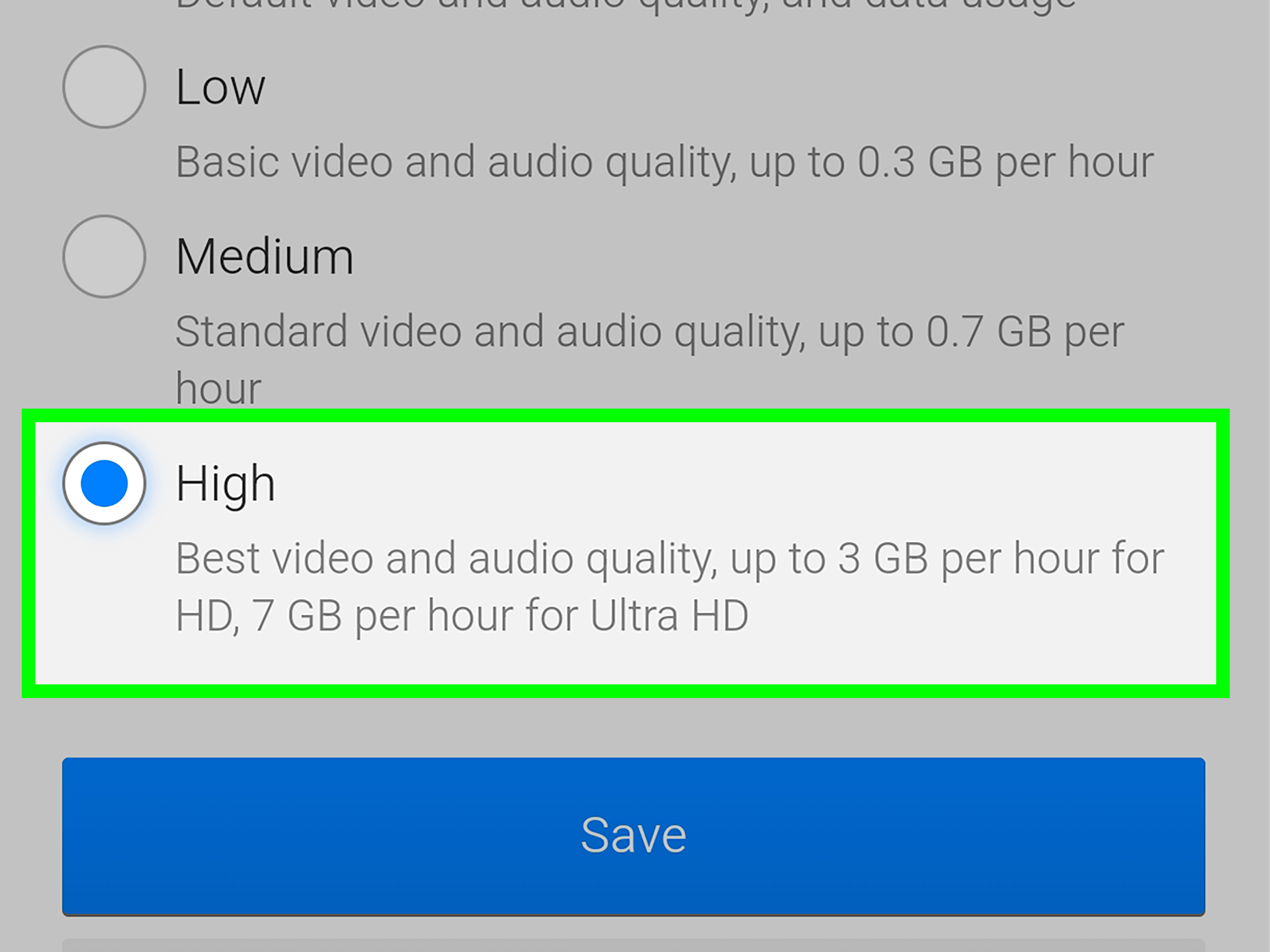
- Open Playback Settings.
- Choose a data usage option such as Low, Medium, High, or Auto.
- Save the setting.
These settings are useful because they affect how much data Netflix is willing to use per screen. In general, higher playback settings allow better quality, assuming your device, plan, and connection can support it.
A simple way to think about it is this: if Netflix is trying to save data at the account level, the app cannot magically override that and start spraying high-bitrate video everywhere like a fire hose.
Which Setting Should You Pick?
Best for unlimited data
Use Maximum Data in the app and High or Auto in Playback Settings. This gives Netflix more room to deliver the best quality your iPhone or iPad can handle.
Best for limited mobile data plans
Use Save Data or Wi-Fi Only. This is the smarter choice if you want to avoid surprise carrier bills or the emotional pain of realizing your monthly data vanished during one season of a crime show.
Best for commuters
Download episodes ahead of time in Standard quality if storage is tight, or in Higher quality if you care more about crisp playback than device space.
Best for iPad users who care about picture quality
Set your account Playback Settings higher, use strong Wi-Fi, and choose Higher quality for downloads. The bigger the screen, the easier it is to notice when video is soft or compressed.
Why Netflix Still Looks Blurry After You Change the Setting
If you already changed the quality settings and Netflix still looks fuzzy, one of these issues is usually the culprit.
Your internet connection is unstable
Netflix adapts video quality in real time. If your connection dips, the video quality can drop to keep playback going. This is why a show may start soft and sharpen later, or look fine one moment and suspiciously mushy the next.
Low Data Mode is turned on in iPhone or iPad settings
Apple’s Low Data Mode can reduce data use on cellular and Wi-Fi connections. If it is enabled, it may interfere with your attempt to get the highest possible streaming quality.
Your device model has limits
Not all Apple devices support the same maximum resolution or HDR playback in Netflix. On supported models, newer iPhones and iPads can do better than older hardware.
Your Netflix plan limits the top quality
Even with perfect settings, you still need a Netflix plan that supports the quality you want. If the plan does not allow a higher tier, the app cannot invent it out of thin air.
The title itself is limited
Some TV shows and movies are not available in HD for downloads, and some devices do not support HD downloads. Sometimes the problem is not your settings at all. Sometimes the content itself is the bottleneck.
How to Improve Netflix Quality Beyond the App Settings
- Switch to strong Wi-Fi: Wi-Fi is usually more stable than cellular for long viewing sessions.
- Turn off Low Data Mode: Check your iPhone or iPad settings for cellular and Wi-Fi data-saving features.
- Pause other heavy internet use: Large downloads, gaming updates, and video calls can fight Netflix for bandwidth.
- Move closer to the router: Old-school advice, still annoyingly effective.
- Restart the app or device: Yes, the ancient ritual still works surprisingly often.
- Update iOS and the Netflix app: Outdated software can cause playback bugs and poor performance.
Supported Quality on iPhone and iPad
Netflix support indicates that many newer Apple devices can stream at better quality than older models. In general:
- Supported newer iPhones can play Netflix in Full HD.
- Supported newer iPhones can also support HDR.
- Supported iPads can play Netflix in Full HD.
- Supported iPad Pro models can support HDR.
If you are using an older iPad or iPhone, that alone may explain why the picture never looks as sharp as you expect. In other words, sometimes the fix is a setting. Sometimes the fix is hardware. And sometimes the fix is accepting that a very old tablet has done its best and deserves a respectful retirement.
Common Questions About Netflix Video Quality on iPhone and iPad
Can you manually choose 720p or 1080p in the Netflix app?
Not in the same direct way some other video apps allow. On iPhone and iPad, Netflix quality is mostly influenced through data settings, playback preferences, device support, and connection quality rather than a simple resolution picker during playback.
Does higher quality use more data?
Absolutely. Better image quality needs more data. That is why Netflix offers data-saving and Wi-Fi-only options in the first place.
Does higher download quality use more storage?
Yes. Higher-quality downloads look better, but they also take longer to download and use more device storage.
Is iPad better than iPhone for Netflix?
For many people, yes. The larger display can make movies and shows more enjoyable. It can also make bad quality more obvious, which is both helpful and deeply rude.
Conclusion
Changing Netflix video quality on iPhone and iPad is not difficult once you know where Netflix hides the important controls. Use Cellular Data Usage in the app to manage streaming over mobile data, use Download Video Quality for offline viewing, and use browser-based Playback Settings to influence quality at the account level.
If your goal is the best picture, combine higher Netflix settings with strong Wi-Fi, a supported device, and a plan that allows better quality. If your goal is to avoid burning through data, switch to Save Data or Wi-Fi Only. The right choice depends on whether you value visual sharpness, storage space, or your monthly carrier bill. Most of us would like all three, but streaming services, much like life, rarely hand out everything at once.
Real-World Experiences With Changing Netflix Video Quality on iPhone and iPad
In real life, changing Netflix video quality usually feels less like a massive technical breakthrough and more like fixing one small annoyance that has been quietly bothering you for weeks. Still, that small fix can make a big difference in how enjoyable the app feels.
For example, a lot of iPhone users notice the issue first during commuting. They open Netflix on cellular data, tap an episode, and the picture looks softer than expected. Faces lose detail, dark scenes get muddy, and action sequences turn into a blur of movement and hope. Switching the app from Automatic or Save Data to Maximum Data can noticeably improve playback on a strong 5G connection. The tradeoff, of course, is data usage. That improvement feels great until the carrier bill arrives with the energy of a jump scare.
iPad users often have a different experience. Because the screen is larger, standard-quality video can look merely acceptable on a phone but obviously compressed on a tablet. Someone watching a movie on an iPad at home may assume Wi-Fi alone guarantees the best image. It does not always. After raising Playback Settings in the Netflix account and choosing higher download quality, many users find the image looks cleaner, especially in bright scenes, wide shots, and subtitles. On a bigger display, sharper playback is easier to appreciate.
Travel is another common situation where these settings matter. Imagine downloading a season of a show before a flight. If the downloads are set to Standard, you can fit far more episodes on the device, which is wonderful for long trips. But some users notice that animated shows, nature documentaries, or visually rich movies look much better when switched to Higher. It becomes a classic travel dilemma: bring more episodes or bring prettier episodes. There is no wrong answer, only different levels of commitment to visual perfection.
Parents also tend to discover these settings quickly. Hand an iPad to a child for a road trip, and suddenly storage space, offline access, and data limits all become urgent life questions. Many families use Wi-Fi Only for streaming and Standard downloads for kids’ content because it is practical, fast, and less likely to eat through storage. For a family movie night on the same iPad later, they may switch to a higher-quality option. It is not glamorous, but it works.
Then there is the surprisingly common “nothing changed, but everything changed” experience. A user tweaks one Netflix setting, turns off Apple’s Low Data Mode, reconnects to stronger Wi-Fi, and suddenly the app looks better without any dramatic overhaul. That is often the lesson with Netflix on iPhone and iPad: quality problems are rarely caused by one thing alone. They are usually the result of several small settings nudging the app in the wrong direction.
The best experience usually comes from matching the setting to the situation. At home on strong Wi-Fi, higher quality makes sense. On a tight data plan, saving data is smarter. For downloads on a long trip, the right choice depends on how much storage you have and how picky your eyes are. Once users understand that Netflix quality is flexible rather than fixed, the app becomes much easier to manage and a lot less mysterious.