

Rhubarb is the garden equivalent of a dependable old pickup truck: a little rugged, not especlls around. But even the toughest rhubarb plant can get crowded, tired, and stingy with its stalks after several years in the same spot. That is when learning how to divide rhubarb plants becomes one of the smartest things you can do for a healthier, more productive patch.
Dividing rhubarb is the process of digging up a mature crown, cutting it into smaller sections, and replanting those pieces so each one can grow into a vigorous new plant. It sounds dramatic, like garden surgery with a shovel, but rhubarb is tougher than it looks. Done at the right time and with the right technique, division can refresh an aging plant, give you more crowns for free, and keep your spring harvest of tart, ruby-red stalks going strong for years.
This guide explains when to divide rhubarb, how to prepare the plant, how to split the crown safely, where to replant the divisions, and how to care for them afterward. Whether your rhubarb is producing skinny stalks, spreading too wide, or simply begging for a new home, this step-by-step guide will help you divide it with confidence.
Why Divide Rhubarb Plants?
Rhubarb is a perennial vegetable, which means it comes back year after year from its crown and root system. A healthy plant can remain productive for a long time, but older crowns eventually become congested. When that happens, the plant may produce thinner stalks, fewer usable stems, more flower stalks, or a crowded center that looks woody and exhausted.
Dividing rhubarb gives the plant a fresh start. Instead of one oversized crown competing with itself for space, nutrients, and moisture, you create several smaller plants with room to expand. Think of it as moving a group of relatives out of one tiny apartment and into separate homes. Everyone suddenly has breathing room, and nobody has to fight over the bathroom.
Gardeners divide rhubarb for several practical reasons:
- To rejuvenate old plants that no longer produce thick, vigorous stalks
- To create more rhubarb plants without buying new crowns
- To move rhubarb to a sunnier or better-drained location
- To reduce crowding in a perennial bed
- To share divisions with neighbors, friends, or family members who appreciate pie
Dividing is also useful when renovating a garden bed. Rhubarb is a heavy feeder, and after years in the same soil, the surrounding area can become depleted. Moving divisions into a new, compost-rich site can improve long-term growth.
When Is the Best Time to Divide Rhubarb?
The best time to divide rhubarb is early spring, just as the plant begins to wake up but before the leaves fully expand. At this stage, the buds are visible, the soil is usually workable, and the plant has the entire growing season to rebuild its roots before winter. In many parts of the United States, this falls somewhere between late March and April, depending on climate.
You can also divide rhubarb in fall after the foliage dies back, especially in mild regions. However, spring division is generally easier because the crown buds are easier to see, and the plant is naturally preparing for active growth. Fall divisions must establish roots before freezing weather arrives, so timing matters more.
Signs Your Rhubarb Is Ready to Be Divided
Most rhubarb plants do not need annual division. In fact, dividing too often can slow production. A good rule of thumb is to divide mature rhubarb every five to ten years, or whenever the plant shows clear signs of decline.
Look for these clues:
- Stalks are getting noticeably thinner each year
- The center of the plant looks woody, crowded, or weak
- The plant produces fewer harvestable stalks
- Flower stalks appear more frequently
- The crown has spread too wide for its space
- You want to relocate the plant to a better garden bed
If your rhubarb is young, strong, and producing thick stalks, leave it alone. A productive rhubarb crown does not need to be disturbed just because the shovel is feeling ambitious.
Tools and Supplies You Will Need
Dividing rhubarb does not require fancy equipment. You probably already own most of what you need. The most important tools are sharp, sturdy, and clean.
- Garden fork or spade
- Sharp shovel, soil knife, or heavy garden knife
- Pruners for trimming damaged roots or old stems
- Compost or well-rotted manure
- Garden gloves
- Watering can or hose
- Mulch, such as straw, shredded leaves, or compost
Clean your cutting tools before dividing the crown. A quick wipe with rubbing alcohol or a disinfecting solution helps reduce the chance of transferring disease. Rhubarb is hardy, but it still appreciates not being sliced with a tool that looks like it spent the winter under a lawn mower.
Choose the Right New Planting Site
Before digging up the original plant, prepare the new location. Rhubarb does best in full sun, although it can tolerate light afternoon shade in warmer regions. The soil should be fertile, well-drained, and rich in organic matter. Poor drainage is a common problem because soggy soil can encourage crown rot.
Choose a site where the plant can stay for several years. Rhubarb grows large, with broad leaves that can spread several feet across. Give each division about 3 feet of space in all directions. Crowding rhubarb against other perennials, fences, or walkways may seem harmless at planting time, but by midsummer those leaves can look like they are trying to start their own country.
How to Prepare the Soil
Loosen the soil deeply before planting. Rhubarb develops a strong root system, so shallow preparation will not give it the start it deserves. Work in several inches of compost or well-rotted manure to improve fertility, drainage, and moisture retention.
If your soil is heavy clay, consider planting rhubarb on a slightly raised mound or raised bed. This helps water drain away from the crown. If your soil is sandy, compost is especially important because it helps hold moisture and nutrients.
A soil test is helpful if your garden has struggled in the past. Rhubarb prefers fertile soil with a slightly acidic to neutral pH, but it is fairly adaptable as long as drainage and organic matter are good.
How to Divide Rhubarb Plants Step by Step
Once the timing is right and the new site is ready, you can divide the plant. Work on a cool, cloudy day if possible. This reduces stress on the exposed roots and gives the divisions a gentler transition.
Step 1: Water the Plant Before Digging
Water the rhubarb deeply the day before division if the soil is dry. Moist soil is easier to dig, and hydrated roots handle transplanting better. You do not want mud soup, but slightly damp soil helps the crown lift more cleanly.
Step 2: Cut Back Old Stems and Debris
Remove dead leaves, old stalks, weeds, and mulch from around the crown. If new shoots are already emerging, handle them gently. Young rhubarb buds can be surprisingly firm, but they are not shovel-proof.
Step 3: Dig Around the Crown
Use a garden fork or spade to dig in a circle around the plant, staying several inches away from the crown. Push the tool deep into the soil and gently lift from different sides. Rhubarb roots can be thick and stubborn, so take your time. The goal is to loosen the root mass without chopping it into confetti.
Once the crown begins to move, lift the entire plant out of the ground. Large crowns may be heavy, so do not be surprised if the plant feels like it has been secretly training at the gym.
Step 4: Inspect the Crown
Shake or brush off loose soil so you can see the structure of the crown. Look for healthy buds, firm roots, and solid crown tissue. Remove any mushy, diseased, or dead sections. Healthy rhubarb crown tissue should feel firm, not slimy or hollow.
If the center is old and woody, you can discard that portion and keep the younger, more vigorous outer sections. Those outer pieces usually produce the best new plants.
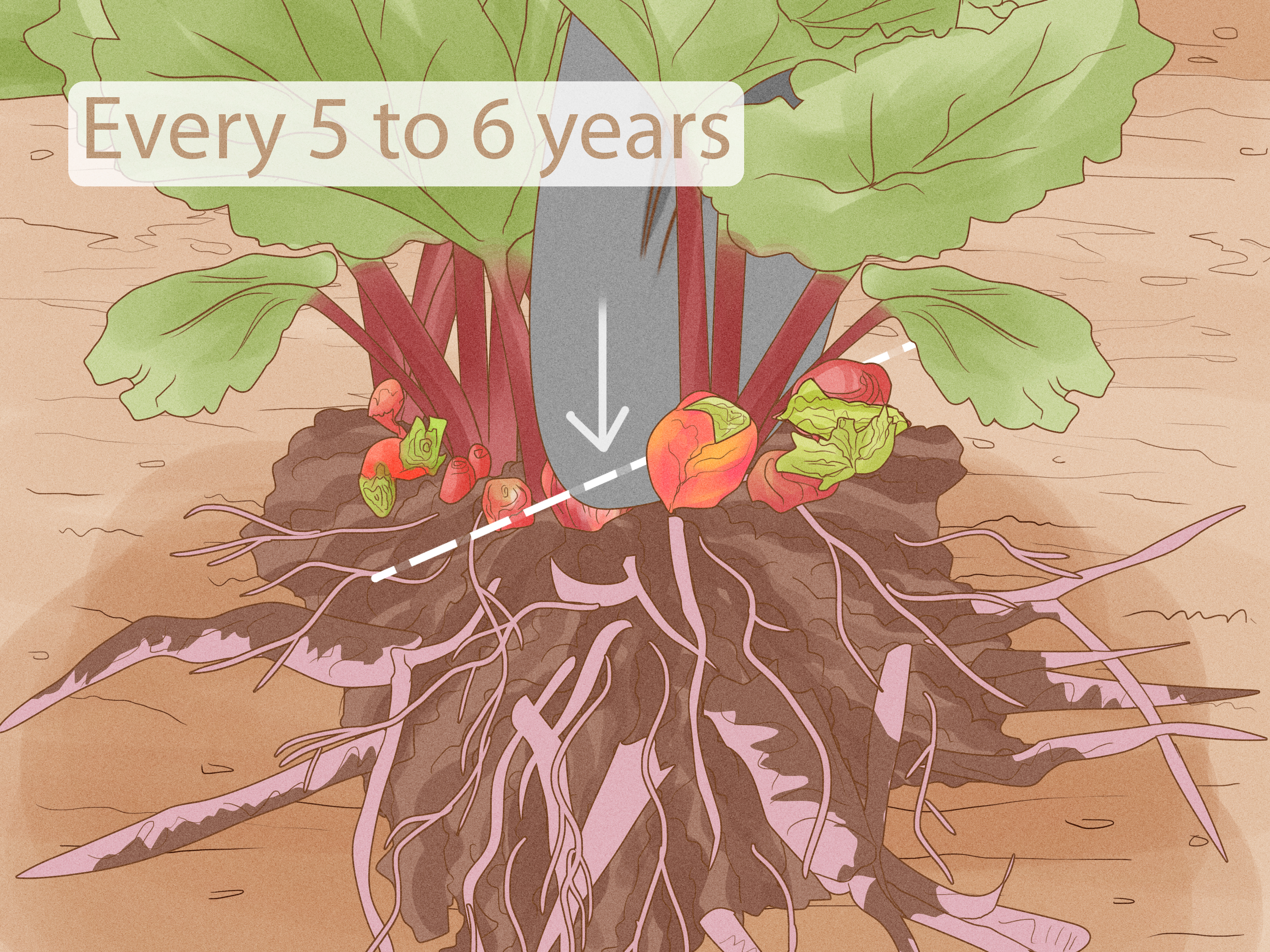
Step 5: Cut the Crown Into Divisions
Using a sharp shovel, garden knife, or pruning saw, cut the crown into sections. Each division should have at least one strong bud and a portion of healthy root attached. Larger divisions with two or three buds often establish faster, but single-bud sections can also grow if they have enough root.
A mature, healthy crown may produce several new plants. Do not make the divisions too tiny. Small pieces may survive, but they usually take longer to become productive. For the average home gardener, fewer strong divisions are better than many weak ones.
Step 6: Replant at the Correct Depth
Plant each rhubarb division so the buds sit about 1 to 2 inches below the soil surface. Planting too deeply can slow growth, while planting too shallowly can expose the crown to drying or winter injury.
Spread the roots naturally in the planting hole, then backfill with amended soil. Firm the soil gently around the crown to remove air pockets, but do not stomp on it like you are packing a suitcase before vacation.
Step 7: Water Thoroughly
Water each newly planted division well. This settles the soil around the roots and helps the plant begin recovery. Keep the soil evenly moist during the first growing season, especially during dry spells. Rhubarb likes consistent moisture, but it does not want to sit in standing water.
Step 8: Mulch Around the Plant
Apply a light layer of mulch around the plant, keeping it slightly away from the crown. Mulch helps conserve soil moisture, suppress weeds, and regulate soil temperature. Compost, straw, shredded leaves, or clean grass clippings can all work well.
How to Care for Rhubarb After Dividing
After division, rhubarb needs time to rebuild. The plant has just been dug, cut, moved, and replanted, which is a lot for any perennial. Good aftercare determines how quickly it recovers.
Water Consistently
Keep newly divided rhubarb evenly moist throughout the first season. Deep watering once or twice a week is usually better than frequent shallow watering. Adjust based on rainfall, soil type, and temperature.
Control Weeds
Weeds compete with young divisions for nutrients and moisture. Keep the area around the crowns weed-free, especially during spring and early summer when the plants are establishing. Hand-pulling is safest near the crown because hoeing too close can damage shallow roots.
Remove Flower Stalks
If a newly divided plant sends up a flower stalk, remove it near the base. Flowering takes energy away from leaf and root growth. Rhubarb is grown for its stalks, not for dramatic floral ambition.
Go Easy on Harvesting
The hardest part of dividing rhubarb is not the digging. It is resisting the temptation to harvest too soon. Avoid harvesting newly divided rhubarb heavily during the first year. Let the leaves feed the roots so the plant can establish. In the second year, take a light harvest if the plant is strong. By the third year, most well-established divisions can handle a normal harvest.
Common Mistakes When Dividing Rhubarb
Rhubarb is forgiving, but a few mistakes can slow recovery or damage the plant.
Dividing Too Often
Rhubarb does not need constant division. If the plant is vigorous and productive, leave it alone. Division is helpful when the crown is old, crowded, or declining, not as an annual ritual.
Planting in Wet Soil
Wet, poorly drained soil can cause crown rot. If your garden stays soggy after rain, improve drainage before planting or use a raised bed.
Making Divisions Too Small
Each section needs at least one healthy bud and a good piece of root. Tiny fragments may not have enough stored energy to establish well.
Harvesting Too Soon
New divisions need leaves to rebuild the crown. Heavy first-year harvesting weakens the plant and can reduce future productivity.
Eating the Leaves
Only rhubarb stalks are eaten. The leaves should be removed and discarded because they contain toxic compounds. They can go into compost if your composting system is managed properly, but they should never be cooked or served.
How Long Does Rhubarb Take to Recover After Division?
Rhubarb often sends up new growth the same spring it is divided, but full recovery takes time. The first year is mostly about root establishment. The plant may look smaller than before, and that is normal. By the second year, it should show stronger growth. By the third year, a healthy division can usually produce a generous harvest.
Patience pays off. A well-planted rhubarb division can become a long-lived, dependable spring crop. Rush it, and you may get a few stalks now but a weaker plant later. Let it settle in, and you will be rewarded with years of pies, sauces, jams, crisps, and that wonderful feeling of harvesting something before the tomatoes have even stopped sulking.
Can You Divide Rhubarb Without Digging Up the Whole Plant?
Yes, you can sometimes divide rhubarb by slicing off a section from the side of the crown while leaving the rest of the plant in place. This works best with large, healthy plants where the outer crown sections are easy to access. Use a sharp spade to cut straight down through the crown, making sure the removed piece has at least one strong bud and attached roots.
However, digging up the whole plant gives you a better view of the crown and allows you to remove old, woody, or diseased sections. If your rhubarb is declining, full lifting and division is usually the better option.
Dividing Rhubarb in Different Climates
Rhubarb performs best in cooler climates where winters are cold enough to give the plant a dormant period. In northern states, early spring division is usually straightforward. In warmer areas, rhubarb may struggle with summer heat, so choose a site with morning sun and some afternoon shade. Mulch can help keep the root zone cooler.
If you garden in a hot region, select heat-tolerant varieties when possible and be extra careful not to stress the plant during warm weather. Divide only during the coolest practical season, and water consistently while divisions establish.
Personal Experience: What Dividing Rhubarb Teaches You in the Garden
Dividing rhubarb is one of those garden jobs that looks intimidating until you actually do it. The first time many gardeners lift a mature crown, they are shocked by how big and rugged it is. It does not look like a delicate vegetable. It looks like something you might find in a fantasy movie, possibly guarded by a troll. The crown is knobby, heavy, and full of stored energy. That is exactly why division works so well.
One of the most useful lessons from dividing rhubarb is that timing makes the whole job easier. When the plant is just waking up in early spring, the buds are visible but the leaves have not become huge and floppy. You can see what you are doing, the weather is cool, and the plant is ready to grow. Waiting until late spring, when the leaves are fully expanded, turns the job into a wrestling match with a green umbrella factory.
Another experience many gardeners share is that the best divisions often come from the outside of the crown. The outer sections tend to have younger, stronger buds and better vigor. The center may be woody or tired, especially in an old plant. It can feel wasteful to discard part of the crown, but removing weak material gives the best pieces a better chance. Gardening often rewards careful editing.
Soil preparation also matters more than people expect. A rhubarb division planted in ordinary compacted soil may survive, but a division planted in loose soil enriched with compost usually takes off faster. Rhubarb has a reputation for being low-maintenance, and it is, but low-maintenance does not mean no-maintenance. Give it rich soil at planting time, and it will act like you handed it a buffet ticket.
The biggest emotional challenge is waiting to harvest. After dividing, those first red stalks can look incredibly tempting. You may stand there thinking, “Surely one little crisp won’t hurt.” But restraint is worth it. Leaves are the plant’s solar panels. The more leaf growth you leave in place during the establishment year, the stronger the crown becomes for future harvests. A small sacrifice in year one often means a much better harvest in years two and three.
Dividing rhubarb is also a satisfying way to share plants. A single mature crown can become several new plants, and rhubarb divisions make excellent garden gifts. They carry a sense of continuity. Many gardeners grow rhubarb from a crown that came from a parent, grandparent, neighbor, or old homestead. That makes rhubarb feel less like a crop and more like a story with roots.
In practical terms, the job is messy, physical, and deeply rewarding. You will probably get soil on your shoes, your gloves, your sleeves, and somehow your face. You may need to lean on the shovel, wiggle the crown loose, and make a few bold cuts. But once the divisions are replanted and watered in, the garden feels renewed. Instead of one tired plant, you now have the beginning of several productive clumps.
The best advice from experience is simple: divide rhubarb only when it needs it, prepare the new site before you dig, keep divisions large enough to thrive, and give the plants time. Rhubarb is not a crop that responds well to impatience. It is a perennial with a long memory, and when treated well, it pays you back every spring with stalks that taste like sunshine, tart candy, and old-fashioned kitchen wisdom.
Conclusion
Learning how to divide rhubarb plants is a practical skill that can extend the life of your garden, improve harvests, and multiply your plants without spending money. The process is simple: divide mature crowns in early spring, keep at least one strong bud and healthy roots on each section, replant in fertile well-drained soil, water well, mulch lightly, and avoid heavy harvesting until the plant is established.
Rhubarb may look rough and rugged, but it responds beautifully to thoughtful care. Give it space, compost, moisture, and a little patience, and it will reward you with years of bold stalks for pies, sauces, jams, and desserts that make spring taste like a celebration.
Note: This article is written for web publishing in standard American English and is based on established U.S. extension-style gardening guidance for dividing and caring for rhubarb plants.