

Finding a stud in a plaster wall can feel like trying to locate a shy raccoon in a dark attic: you know it is there, but it refuses to introduce itself politely. Unlike modern drywall, plaster walls are thick, dense, uneven, and often built over wood lath, metal lath, or plasterboard. That extra complexity is why a standard stud finder may beep like it just discovered buried treasure, only for you to drill and find… absolutely nothing. Charming, right?
The good news is that you can find studs behind plaster walls with patience, smart clues, and a few simple tools. Whether you are hanging shelves, mounting a mirror, installing a handrail, or putting up a TV bracket, the goal is the same: locate solid framing, verify it, and avoid turning your wall into Swiss cheese. This guide explains seven practical tips and tricks for finding studs in plaster walls, plus safety advice and real-world experience from old-house-style projects.
Why Plaster Walls Make Stud Finding More Difficult
Before grabbing a drill, it helps to understand what you are dealing with. Many older homes have plaster applied over narrow wood strips called lath. The lath is nailed horizontally across vertical studs, and then layers of plaster are pressed over it. In some homes, especially mid-century houses, you may find gypsum lath, plasterboard, or metal lath instead.
This matters because plaster is usually thicker and harder than drywall. Wood lath also contains many small nails, and those nails can confuse magnetic and electronic stud finders. A tool may detect lath nails instead of the actual stud edge. Meanwhile, uneven plaster thickness can throw off electronic sensors. Translation: your stud finder is not broken; it is just having an emotional moment.
Most wall studs are commonly spaced 16 inches on center, though 24 inches on center is also possible, and older homes may vary. Around doors, windows, corners, chimneys, and remodeled walls, spacing can become less predictable. That is why measuring is helpful, but verification is essential.
Tools That Help You Find a Stud in a Plaster Wall
You do not need a truck full of professional equipment. For most plaster-wall projects, these tools are enough:
- A strong rare-earth magnet or magnetic stud finder
- A tape measure
- A pencil or painter’s tape for marking
- A flashlight
- A deep-scan stud finder or multi-scanner
- A small drill bit or thin finish nail for confirmation
- A level
- A screwdriver for removing outlet or switch cover plates
If your home was built before 1978, assume lead-based paint may be present unless testing proves otherwise. Avoid unnecessary sanding, cutting, or aggressive drilling, and keep dust controlled. For larger projects, consider professional testing or lead-safe renovation practices. Also remember that walls can hide electrical wires, plumbing, gas lines, and other surprises. Old homes have personality; sometimes that personality is “mystery pipe behind the wall.”
Tip 1: Use a Strong Magnet to Find Lath Nails or Fasteners
A strong magnet is one of the best low-tech methods for finding studs in plaster walls. In drywall, magnets usually locate screws or nails that fasten drywall to studs. In plaster-and-lath walls, magnets may catch the small nails that attach wood lath to the studs. This is useful because those lath nails often line up vertically along the stud.
How to Use the Magnet Method
Wrap a rare-earth magnet in painter’s tape, masking tape, or a thin cloth so it does not scratch the wall. Move it slowly across the wall in a loose S-pattern. When it pulls or sticks, mark that spot lightly with pencil or tape. Then move the magnet straight up and down from that mark. If you find several magnetic hits in a vertical line, you likely found the stud line.
Do not trust one magnetic hit by itself. Plaster walls can contain random metal objects, old repair mesh, corner bead, electrical boxes, or stray fasteners. The magic is in the pattern. One hit is gossip; several hits stacked vertically are evidence.
Tip 2: Start at Electrical Outlets and Switches
Electrical boxes are often attached to the side of a stud. That makes outlets and switches useful starting points when trying to find framing behind plaster. Turn off power to the area if you plan to remove a cover plate or inspect closely. You do not need to pull the outlet out of the wall. In most cases, simply removing the cover plate gives you a small view of the box and the surrounding wall opening.
How to Read the Outlet Clue
After removing the cover plate, shine a flashlight around the edge of the electrical box. Look for the side where the box appears attached or where the gap is tightest. The stud is usually on that side. Once you identify it, measure 16 inches left or right and check for the next stud. In older plaster walls, do not assume every stud is perfectly spaced. Use the measurement as a clue, then verify with a magnet, tapping, or a small pilot hole.
Important safety note: never stick metal tools deep into the electrical box, and do not poke around wiring. The goal is to observe, not perform amateur electrical archaeology.
Tip 3: Look for Nail Patterns in Baseboards and Trim
Trim carpenters usually nail baseboards, crown molding, and chair rails into studs so the trim stays secure. That means trim can give away stud locations. Look carefully along baseboards for small filled nail holes, slight dimples, paint differences, or tiny depressions.
Why Trim Clues Work Well in Old Houses
In many plaster-wall homes, the wall surface itself may be too textured or too thick for easy scanning. Trim, however, is often attached directly through the plaster into framing. If you see a repeating pattern of nail holes every 16 inches or so, you may have found the rhythm of the wall framing.
Once you identify a likely nail line in the baseboard, use a level to mark a vertical line upward. Then test that line with a magnet or small pilot hole at the height where you plan to hang your item. Do not rely only on the baseboard mark, because trim nails can miss studs too. Yes, even carpenters have off days.
Tip 4: Try the Knock Test, but Use It Wisely
The old knock test is simple: tap horizontally across the wall with your knuckle and listen for changes. The space between studs often sounds more hollow, while the area over a stud sounds more solid or dull. On drywall, this can work surprisingly well. On plaster walls, it can be less obvious because plaster is harder and denser.
How to Improve the Knock Test
Tap in small intervals, about one inch apart, and compare the sound instead of expecting a dramatic difference. Start near an outlet, switch, or trim clue where a stud is likely nearby. Once you think you hear a solid area, mark it and keep tapping past it to find where the sound becomes hollow again. That helps you estimate the stud width.
The knock test works best as a supporting method, not the final verdict. Think of it as a helpful neighbor who may or may not remember where the property line is.
Tip 5: Shine a Flashlight Across the Wall
A flashlight can reveal subtle wall clues that overhead room lighting hides. Hold the flashlight close to the wall and shine it across the surface at a sharp angle. This side lighting can show small bumps, nail pops, repaired holes, vertical ridges, or faint depressions.
What to Look For
Look for repeated marks that form a vertical line. Previous owners may have mounted shelves, pictures, or hardware into the same stud. Old patched holes can be especially useful. If several repairs line up vertically, there is a good chance someone found the stud before you. Congratulations: you are now benefiting from the ancient wisdom of former homeowners and their questionable bracket choices.
After identifying a likely vertical line, confirm it with another method. A flashlight can reveal clues, but it cannot guarantee framing behind the plaster.
Tip 6: Use a Deep-Scan or Multi-Scanner Stud Finder
Some electronic stud finders struggle with plaster walls, especially thick plaster over lath. However, deeper-scanning models and multi-scanners can still be useful. Tools with deep-scan modes, metal detection, and live-wire warnings may perform better than basic edge-finding stud finders.
How to Get Better Results With a Stud Finder on Plaster
Read the tool instructions first, because calibration matters. Start scanning from a spot where you believe there is no stud. Move slowly and keep the tool flat against the wall. Mark both edges of the detected area, then find the center. Repeat the scan from the opposite direction. If the results disagree wildly, the wall may be too dense or irregular for that tool.
When using a stud finder on plaster, trust repeated readings more than single beeps. If the tool shows the same location several times, and that location also matches magnet or trim clues, you are getting close. If the scanner claims the entire wall is one giant stud, politely set it down and try another method.
Tip 7: Confirm With a Small Pilot Hole
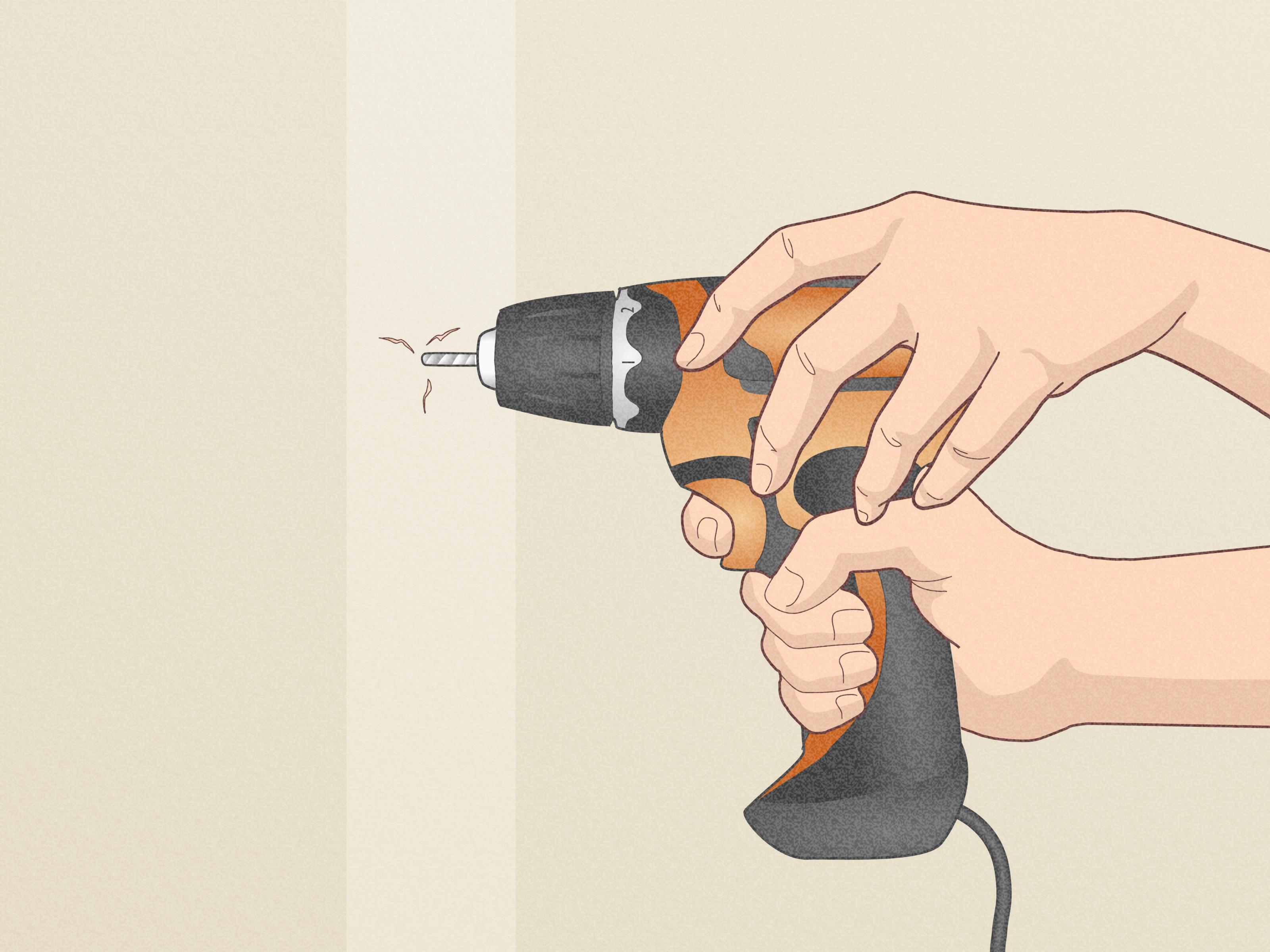
For heavy items, confirmation is not optional. Once you have a likely stud location, use a tiny drill bit or thin finish nail to test the spot. Choose a location that will be covered by the item you are hanging, such as behind a shelf bracket or mounting plate.
How to Confirm Without Making a Mess
Drill slowly through the plaster. If the bit suddenly passes through empty space, you probably missed the stud. If it meets steady resistance after the plaster layer, you likely hit wood framing. A thin finish nail can also work; if it bites firmly into wood, you found solid backing.
Use the smallest practical hole and keep your test area neat. If you miss, patching one tiny hole is easy. Patching twenty enthusiastic holes is still possible, but your wall may start judging you.
Best Method for Heavy Items: Combine Three Clues
If you are hanging a lightweight picture, one reliable clue may be enough. But for shelves, mirrors, cabinets, handrails, or TV mounts, use at least three methods. For example:
- Find a vertical fastener pattern with a magnet.
- Check whether it lines up with trim nail marks.
- Confirm with a small pilot hole before installing hardware.
This layered approach reduces mistakes. Plaster walls can fool individual tools, but they have a harder time fooling multiple methods at once.
Common Mistakes to Avoid
Assuming Every Stud Is Exactly 16 Inches Apart
Sixteen inches on center is common, but old houses are not always common. Remodels, additions, doorways, windows, and repairs can interrupt spacing. Measure, but verify.
Trusting One Stud Finder Reading
Electronic stud finders can misread plaster, lath, metal mesh, pipes, or wiring. Scan several times and compare the result with other clues.
Using Wall Anchors When You Really Need Studs
Some hollow-wall anchors work for lighter loads, but heavy or load-bearing items should be fastened into studs or proper blocking. Handrails, large shelves, and TV mounts deserve real structure, not wishful thinking.
Ignoring Electrical and Plumbing Risks
Never drill blindly near outlets, switches, plumbing fixtures, radiators, or kitchens and bathrooms without extra caution. Use a scanner with live-wire detection when possible, and stop if anything feels wrong.
When You Should Call a Professional
Call a professional if you are mounting very heavy items, drilling near electrical panels or plumbing, working on crumbling plaster, or dealing with suspected lead paint or asbestos-containing materials. A contractor, carpenter, or qualified handyman can locate framing more confidently and install blocking if needed.
You should also get expert help if the wall feels unstable. Plaster that is detached from lath may sound hollow across a large area, crack when pressed, or flex slightly. In that case, the issue is bigger than finding a stud. The wall may need repair before it can safely support anything.
Real-World Experiences: What Actually Works on Plaster Walls
After working with plaster walls, one lesson becomes clear fast: no single method deserves a crown. A magnet may find nails beautifully on one wall and then act completely confused on the next. A stud finder may work in a hallway but fail dramatically in a bedroom with thicker plaster. The best approach is to treat stud finding like detective work. You collect clues, compare them, and avoid making bold decisions based on one suspicious beep.
One practical experience involves hanging a heavy mirror on an old plaster wall near an entryway. The electronic stud finder gave inconsistent readings, probably because the plaster thickness changed across the wall. A rare-earth magnet found several tiny hits in a vertical line near the baseboard. The baseboard also had two small filled nail holes that lined up with those magnetic hits. A small pilot hole confirmed wood behind the plaster. The mirror went up securely, and the wall survived with dignity intact.
Another common situation happens when installing shelves. Shelves create outward pulling force, especially when loaded with books, plants, or the kind of decorative objects people buy and then call “minimalism.” In that case, wall anchors alone may not be enough. It is better to find at least one stud for each bracket, or use a mounting board fastened into multiple studs. The board can spread the load, and the shelf brackets can attach to the board. This is especially helpful when stud spacing does not match the perfect shelf location.
Handrails are another project where guessing is not acceptable. A handrail needs real support because people lean on it, grab it, and sometimes depend on it to prevent a fall. In plaster walls, brackets should be fastened into studs or solid blocking. If the bracket locations do not line up neatly, choose strength over symmetry. A slightly uneven bracket layout is better than a beautiful handrail that wiggles like a loose tooth.
One useful trick is to mark suspected studs with painter’s tape instead of pencil at first. Put a small vertical strip where the magnet hits, another where the stud finder reacts, and another where trim nails suggest framing. Step back and look for alignment. This visual map makes patterns easier to see. Once you are confident, make light pencil marks only where hardware will cover them.
It also helps to test lower on the wall first, especially near baseboards. If a tiny pilot hole is needed, it is less noticeable close to trim than at eye level. After confirming the stud line near the baseboard, use a level to transfer the location upward. Still, confirm again at the actual mounting height before drilling large screws. Old studs can twist, walls can be uneven, and previous renovations can create surprises.
Patience is the real secret. People get into trouble when they rush from “maybe this is a stud” to “let’s mount a 65-inch TV.” Plaster walls reward slow work. Spend ten extra minutes checking the wall, and you may save yourself an afternoon of patching, repainting, and muttering words your grandmother would not appreciate.
Conclusion
Learning how to find a stud in a plaster wall is part science, part observation, and part old-house negotiation. Start with visible clues like outlets, switches, and trim nails. Use a strong magnet to locate fasteners. Try the knock test and flashlight method for extra evidence. Use a deep-scan stud finder when available, but do not trust it blindly. Finally, confirm with a tiny pilot hole before hanging anything heavy.
The safest and smartest method is to combine several clues until they all point to the same vertical line. Plaster walls may be stubborn, but they are not impossible. With the right approach, you can hang shelves, mirrors, handrails, and décor securely without turning your wall into a renovation crime scene.
Note: This article is written in original American English and synthesized from practical home-improvement, building, tool-use, and safety guidance for plaster walls, stud spacing, magnetic detection, scanner use, and older-home renovation precautions.