

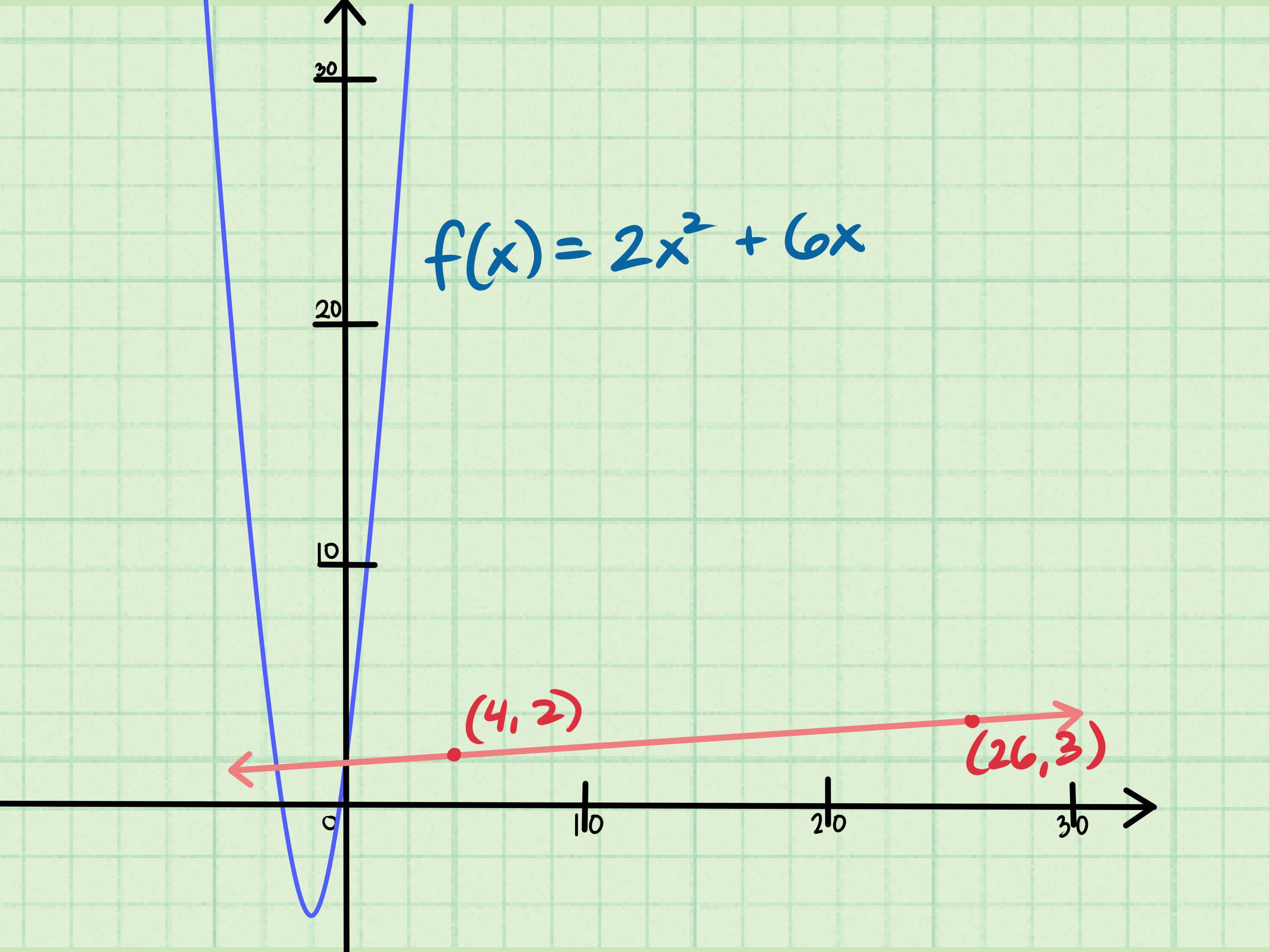
Finding the slope of an equation sounds like one of those math skills that should require a chalkboard, a dramatic teacher, and possibly a thunderstorm outside the window. Good news: it does not. Once you understand what slope means, spotting it becomes surprisingly manageable. In fact, slope is just a way to describe how steep a line is and which direction it moves.
In plain English, slope tells you how much y changes when x changes. If a line climbs as it moves from left to right, it has a positive slope. If it slides downward like it forgot its backpack on a hill, it has a negative slope. A horizontal line has a slope of zero, and a vertical line has an undefined slope because division by zero is still math’s way of saying, “Absolutely not.”
This guide explains how to find the slope of an equation using three easy methods: reading slope from slope-intercept form, rearranging an equation into slope-intercept form, and using two points from the equation. Each method includes examples, shortcuts, and common mistakes to avoid.
What Is Slope?
Slope is the ratio of vertical change to horizontal change. You may hear it called rise over run, which means:
Slope = rise / run = change in y / change in x
In formula form, slope is usually written as:
m = (y2 – y1) / (x2 – x1)
The letter m represents slope. Nobody can fully agree on why the letter is m, but math has many little mysteries, and this one is harmless enough to let live.
Method 1: Find the Slope from Slope-Intercept Form
The easiest way to find the slope of an equation is when the equation is already written in slope-intercept form:
y = mx + b
In this form, m is the slope and b is the y-intercept. The y-intercept tells you where the line crosses the y-axis, but for slope, your eyes should go straight to the number attached to x.
Example 1: Simple Positive Slope
Find the slope of:
y = 4x + 9
This equation is already in the form y = mx + b. The number multiplied by x is 4, so the slope is:
m = 4
This means that for every 1 unit x moves to the right, y moves up 4 units. The line rises quickly, like it just drank coffee.
Example 2: Negative Slope
Find the slope of:
y = -2x + 5
The number attached to x is -2, so the slope is:
m = -2
A negative slope means the line falls as it moves from left to right. For every 1 unit increase in x, y decreases by 2 units.
Example 3: Fractional Slope
Find the slope of:
y = (3/5)x – 1
The slope is:
m = 3/5
This tells you the line rises 3 units for every 5 units it runs to the right. Fractions are not villains here; they are just slopes wearing tiny hats.
Method 2: Rearrange the Equation into Slope-Intercept Form
Sometimes an equation is not politely written as y = mx + b. It may appear in standard form, which usually looks like this:
Ax + By = C
To find the slope, solve the equation for y. Once y is alone, the coefficient of x is the slope.
Example 1: Rearranging a Standard Form Equation
Find the slope of:
3x + 2y = 10
Step 1: Move 3x to the other side.
2y = -3x + 10
Step 2: Divide everything by 2.
y = (-3/2)x + 5
Now the equation is in slope-intercept form. The slope is:
m = -3/2
The negative sign tells you the line goes downward from left to right.
Example 2: A Cleaner Rearrangement
Find the slope of:
4x – y = 8
Step 1: Move 4x to the right side.
-y = -4x + 8
Step 2: Divide by -1.
y = 4x – 8
The slope is:
m = 4
Be careful with negative signs. They are small, sneaky, and responsible for many dramatic homework moments.
Shortcut for Standard Form
If your equation is in the form:
Ax + By = C
The slope can be found using:
m = -A / B
For example, in 3x + 2y = 10, A = 3 and B = 2, so:
m = -3/2
This shortcut is useful, but only if the equation is truly in standard form. If the terms are scattered around like laundry on a teenager’s floor, rearrange first.
Method 3: Find Two Points and Use the Slope Formula
If you cannot quickly read the slope from the equation, another reliable method is to choose two points on the line and use the slope formula:
m = (y2 – y1) / (x2 – x1)
This method works well when you are given a graph, a table, or an equation from which you can calculate points.
Example 1: Using Two Points
Find the slope of the line passing through:
(2, 3) and (6, 11)
Use the formula:
m = (11 – 3) / (6 – 2)
Simplify:
m = 8 / 4 = 2
The slope is:
m = 2
This means the line rises 2 units for every 1 unit it moves right.
Example 2: Finding Points from an Equation
Find the slope of:
y = 3x – 2
You already know from Method 1 that the slope is 3. But let’s prove it using two points.
Choose x = 0:
y = 3(0) – 2 = -2
So one point is:
(0, -2)
Choose x = 2:
y = 3(2) – 2 = 4
So another point is:
(2, 4)
Now use the slope formula:
m = (4 – (-2)) / (2 – 0)
m = 6 / 2 = 3
The slope is still 3. Math loves consistency, even when it pretends to be complicated.
How to Tell What Kind of Slope You Have
Positive Slope
A positive slope means the line rises from left to right. Example:
y = 5x + 1
The slope is 5, so the line goes upward.
Negative Slope
A negative slope means the line falls from left to right. Example:
y = -4x + 7
The slope is -4, so the line goes downward.
Zero Slope
A horizontal line has a slope of zero. Example:
y = 6
No matter what x is, y stays 6. There is no rise, so the slope is 0.
Undefined Slope
A vertical line has an undefined slope. Example:
x = -3
Here, x never changes. Since slope requires dividing by the change in x, and the change in x is 0, the slope is undefined.
Common Mistakes When Finding Slope
Mistake 1: Confusing x and y
When using the slope formula, always subtract y-values on top and x-values on bottom. The correct formula is:
m = (y2 – y1) / (x2 – x1)
Do not flip it unless you enjoy creating mathematical chaos.
Mistake 2: Forgetting to Solve for y
If the equation is not in slope-intercept form, do not grab the first number you see and call it slope. In 2x + 5y = 20, the slope is not 2. First solve for y:
5y = -2x + 20
y = (-2/5)x + 4
The slope is -2/5.
Mistake 3: Ignoring Negative Signs
Negative signs change the direction of the line. A slope of 3 and a slope of -3 are not cousins who can swap places. One rises; the other falls.
Quick Practice Problems
Problem 1
Find the slope of:
y = 7x – 4
Answer: 7
Problem 2
Find the slope of:
5x + y = 12
Solve for y:
y = -5x + 12
Answer: -5
Problem 3
Find the slope between:
(1, 4) and (5, 12)
m = (12 – 4) / (5 – 1) = 8 / 4 = 2
Answer: 2
Real-Life Meaning of Slope
Slope is not just a classroom decoration. It shows up everywhere. In business, slope can describe profit growth over time. In science, it can represent speed, temperature change, or reaction rates. In construction, slope helps describe ramps, roofs, roads, and drainage. In everyday life, it explains why walking up one hill feels like a heroic quest while another feels like a mild inconvenience.
For example, if a delivery fee increases by $3 for every extra mile, the slope is 3 dollars per mile. If a car travels 60 miles every hour, the slope of its distance-time graph is 60 miles per hour. Slope is really just a rate of change, which makes it one of the most practical ideas in algebra.
Which Method Should You Use?
Use Method 1 when the equation is already in slope-intercept form. This is the fastest method because the slope is right in front of you.
Use Method 2 when the equation is in standard form or another rearranged form. Solve for y, then identify the coefficient of x.
Use Method 3 when you are given two points, a graph, or a table. The slope formula is reliable and works even when the equation is not immediately available.
Experiences and Study Tips: Learning Slope Without Losing Your Mind
Many students first meet slope and think, “Why are we suddenly climbing imaginary hills in algebra?” That reaction is completely normal. Slope feels strange at first because it connects numbers, graphs, equations, and movement all at once. But once you realize that slope simply measures change, the topic becomes much friendlier.
One helpful experience is to connect slope to walking. Imagine standing on a sidewalk. If the sidewalk is flat, your height does not change as you move forward. That is a zero slope. Now imagine walking up a ramp. Each step forward also takes you a little higher. That is a positive slope. If you walk down the ramp, that is a negative slope. If you try walking straight up a wall, congratulations, you have discovered an undefined slope and possibly a need for better hobbies.
Another practical tip is to say “rise over run” out loud while solving problems. It may sound simple, but it keeps your brain from flipping the fraction. Rise means vertical change, so it belongs on top. Run means horizontal change, so it belongs on the bottom. When using two points, that means y-values go on top and x-values go on the bottom.
Students also improve faster when they check slope visually. After finding a slope, ask yourself: should this line rise, fall, stay flat, or stand vertical? If your answer says the slope is positive but the graph clearly falls from left to right, something went wrong. This quick visual check catches many errors before they turn into lost points.
When working with equations, the best habit is to solve for y before making any decisions. Students often see an equation like 6x + 3y = 12 and rush to say the slope is 6. Not quite. After solving, you get y = -2x + 4, so the slope is -2. The slope does not officially reveal itself until the equation is written as y = mx + b.
It also helps to practice with small numbers first. Use points like (0, 1) and (2, 5) before moving to fractions and negatives. Once the process feels automatic, harder numbers become less intimidating. Math confidence is built the same way muscles are built: repetition, patience, and occasionally wondering why this seemed easier yesterday.
If you are studying for a quiz, make a three-column practice sheet. In the first column, write equations already in slope-intercept form. In the second column, write equations that need rearranging. In the third column, write pairs of points. Then practice choosing the right method before solving. This trains your brain not just to calculate slope, but to recognize the fastest path.
Finally, remember that slope is a language of change. Whenever one quantity changes in relation to another, slope may be hiding nearby. The more you notice it in prices, speed, graphs, ramps, and patterns, the less it feels like a random algebra rule and the more it feels like a useful tool.
Conclusion
Learning how to find the slope of an equation becomes much easier when you know which method to use. If the equation is in y = mx + b form, the slope is the coefficient of x. If the equation is in standard form, rearrange it until y is alone. If you have two points, use the slope formula. That is the whole slope toolkit: read it, rearrange it, or calculate it.
Slope may look intimidating at first, but it is really just a measurement of change. Once you understand that, every equation starts to look less like a puzzle and more like a set of directions. And unlike assembling furniture, these directions actually make sense after a little practice.